03Minami
Dotonbori: Osaka’s Canal of Signs, Stages and Snacks
道頓堀駅Namba, exit 14
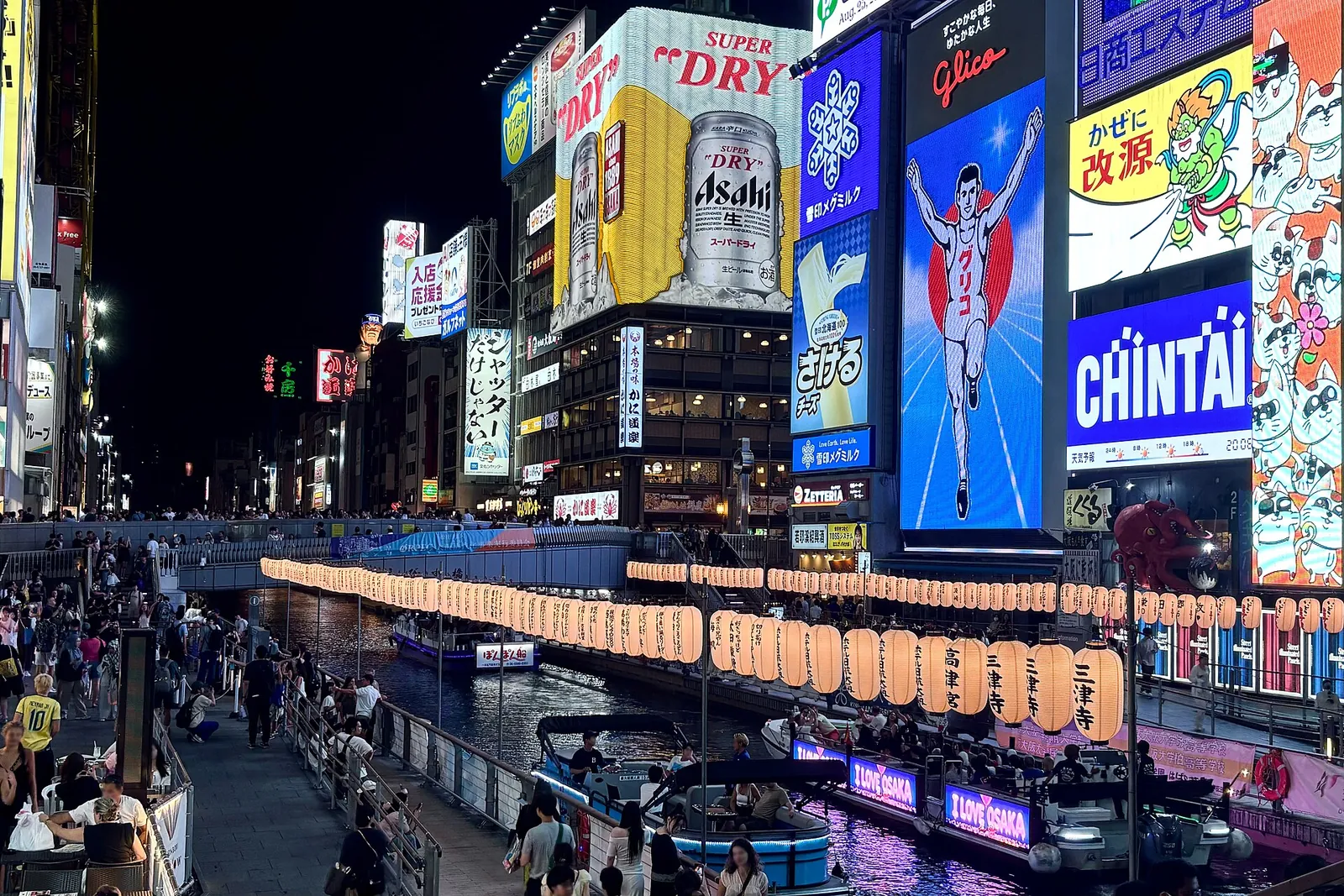
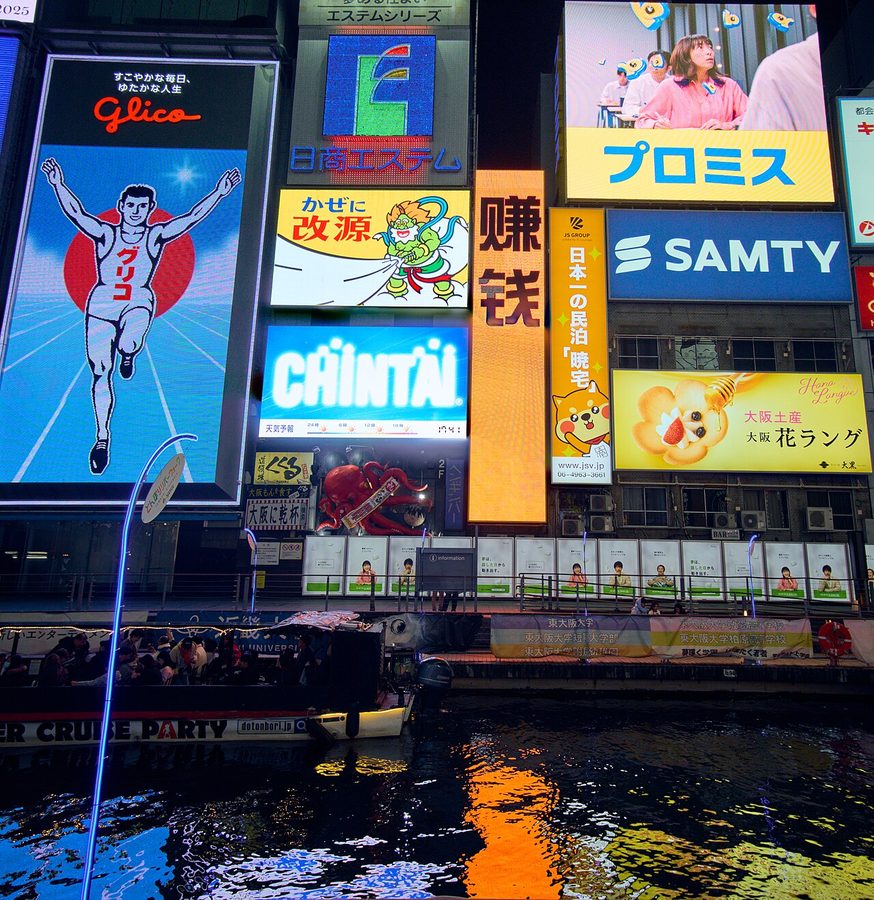
At the end of November 2026 the most photographed man in Osaka stops running. Glico is retiring the sixth version of its runner sign above Ebisubashi, the one that has lit the canal since 2014, and from December the wall where he stood is a building site. The seventh is due in spring 2027.
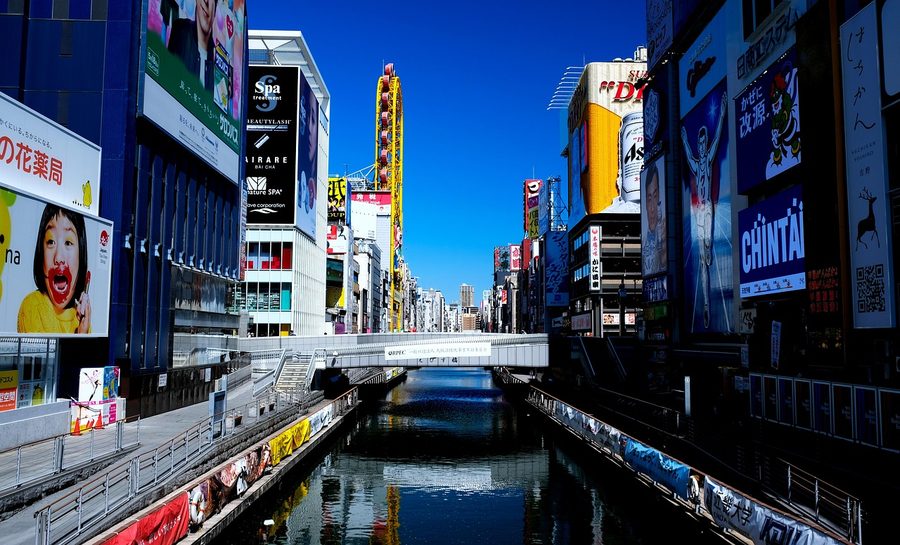
The crowd on the bridge will not notice much. It is there every evening, four or five deep along the rail, phones raised at the wall of signs, while below it the boats slide past and the takoyaki queues fold back on themselves. The runner was never really the point. The point is the street that grew up around a ditch some merchants dug four hundred years ago, and that has been selling the city a good night out ever since.
Dotonbori (道頓堀) is a canal, the street on its south bank, and the name Osaka uses for the whole loud stretch from Nipponbashi to Daikokubashi. It costs nothing to walk. What follows is where the money goes when you stop walking, and how to see it without spending the evening in somebody else’s photograph.
Contents目次
- 01A ditch, a merchant and a muddle over his name
- 02Ebisubashi and the Glico runner
- 03Tombori River Walk and the boats
- 04Hozenji and Hozenji Yokocho
- 05Soemoncho, across the water
- 06Eating on and off the main street
- 07The theatres on the street now
- 08Day, night, crowds and the Tigers
- 09Getting there and getting round
A ditch, a merchant and a muddle over his name
In 1612 a group of merchants began cutting a waterway at their own expense, from the southern end of the Higashi-Yokobori canal west towards the Kizu River, nearly three kilometres in all. The work stopped for the sieges of Osaka Castle. One of the partners, Doton, fought on the Osaka side and died in the summer campaign of 1615. His cousin Doboku finished the canal the same year on the orders of the new lord of Osaka, Matsudaira Tadaakira, and it was named after the man who started it.
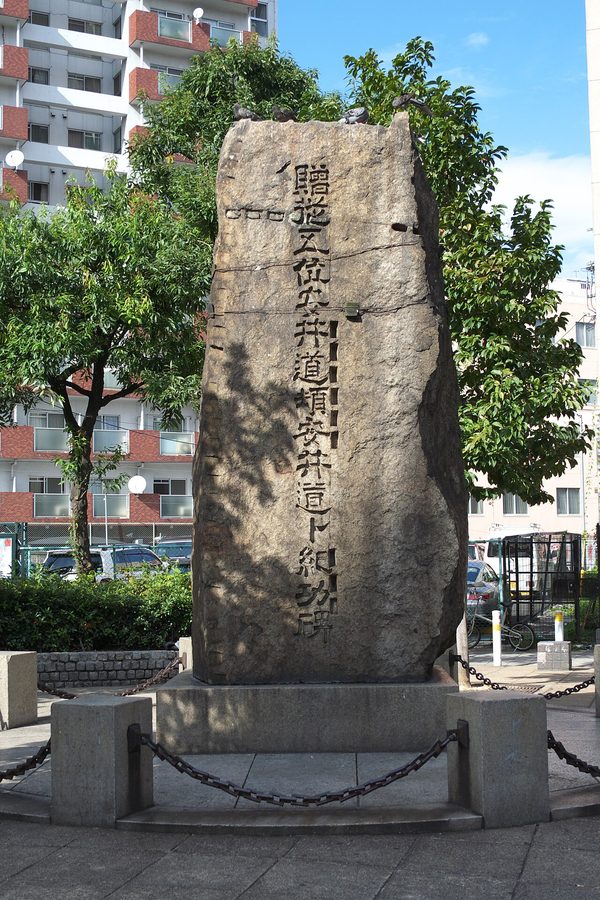
Who Doton was is less settled than the stone at Nipponbashi suggests. The Dotonbori shopping association’s history page calls him Yasui Doton, as do the city’s tourist office and most guidebooks. The association’s own timeline of the street opens instead with “Nariyasu Doton and others” breaking ground, and the Soemoncho shopping street’s history calls him Nariyasu Doton, a landowner from Hirano, south-east of the city.
That is the version the more recent histories prefer. The canal does not care: it is Dotonbori either way.
The canal was a commercial bet, and the bet that paid was entertainment. Around 1626 Doboku, known as Yasui Kyubei and by then the senior town elder for southern Osaka, had the city’s playhouses moved from Kanshiromachi, around today’s Minami-Semba, to the south bank. The north bank filled with teahouses that arranged tickets, food and private rooms for the audiences. That split still shapes what you see: amusements and big frontages on the south side, eating and drinking houses facing them across the water.
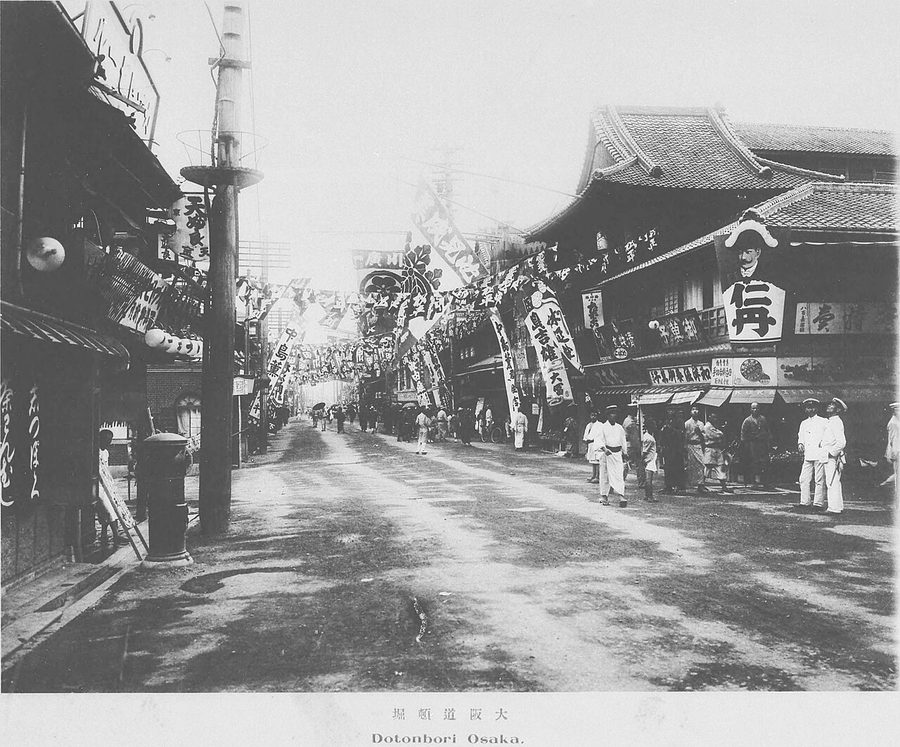
By the late seventeenth century the south bank was the centre of theatre in western Japan. Most of Chikamatsu Monzaemon’s plays had their first performances at the Takemoto-za, the puppet theatre that opened here in 1684, and its Dotonbori neighbours. Five licensed houses, the Naniwa-za, Naka-za, Kado-za, Asahi-za and Benten-za, stood in a row with official drum towers over their doors, and Osaka called the street Yaguramachi, “drum tower town”. For a performer, a Dotonbori billing meant you had arrived.
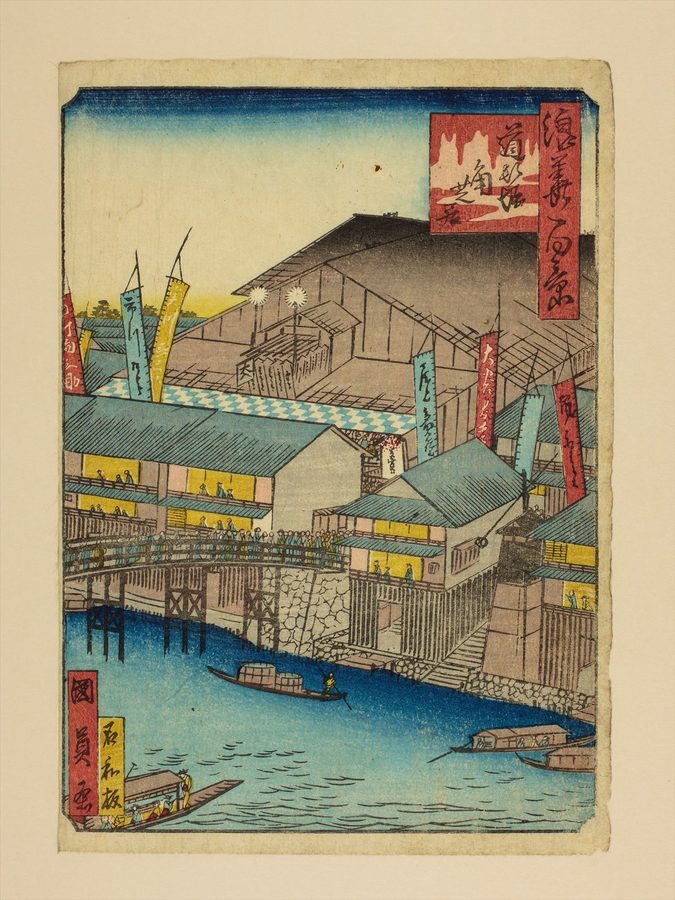
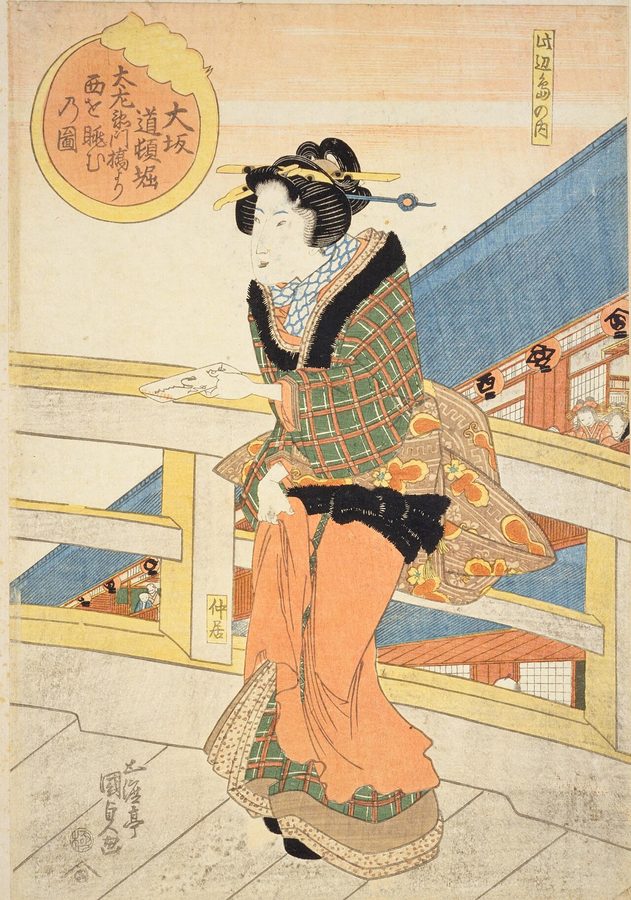
None of the old buildings survived. Three fires in 1876 took the theatres one after another, the March 1945 air raids burned every theatre on the street except the Shochikuza, and the economics of the late twentieth century finished what the bombs had started. Dotonbori was rebuilt after the war, which is why it feels like a stage set: the stage is the only part that was never knocked down.
Osaka had been an imperial capital at Naniwa nearly a thousand years before any of this; that story belongs to the palace site beside the Osaka Museum of History. Dotonbori is the merchant city’s own creation, and it has always sold the same thing: a night out you could afford.
Ebisubashi and the Glico runner
Ebisubashi (戎橋) is the bridge everyone means when they say “meet me at Dotonbori”. Osaka City’s bridge records say it was probably built at about the same time as the canal, and that the name most likely comes from its place on the road to Imamiya Ebisu Shrine, though nobody can prove it. It was a townspeople’s bridge, kept up by the neighbouring streets, and it was repaired or rebuilt thirteen times between 1694 and the iron bridge of 1878. For a while it was called Ayatsuri-bashi, “puppet bridge”, after the puppet theatre at its south end.
The present bridge replaced one built in 1925, more than seventy years old by then, and its design came out of an open competition. The middle is a round plaza, the city’s idea of a theatre in the round, with ramps down to the river walk on both sides. It is a bridge designed for standing on, and everyone uses it that way.
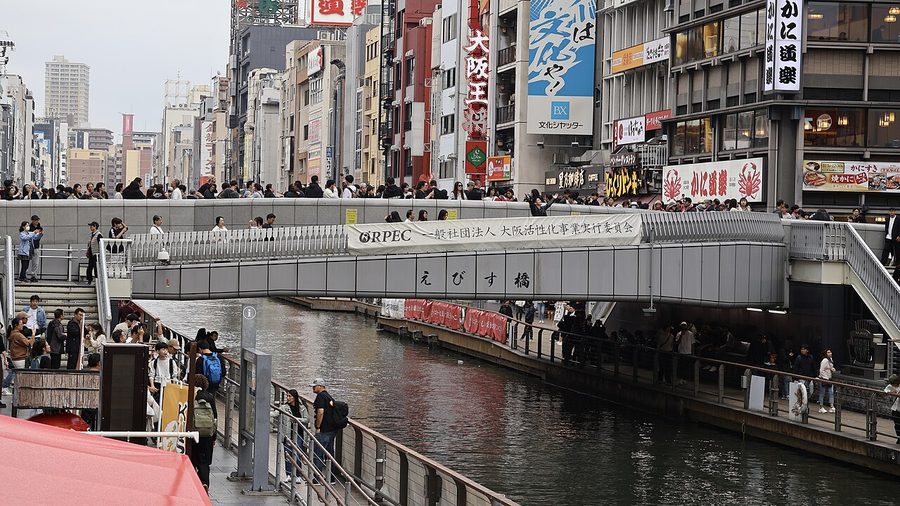
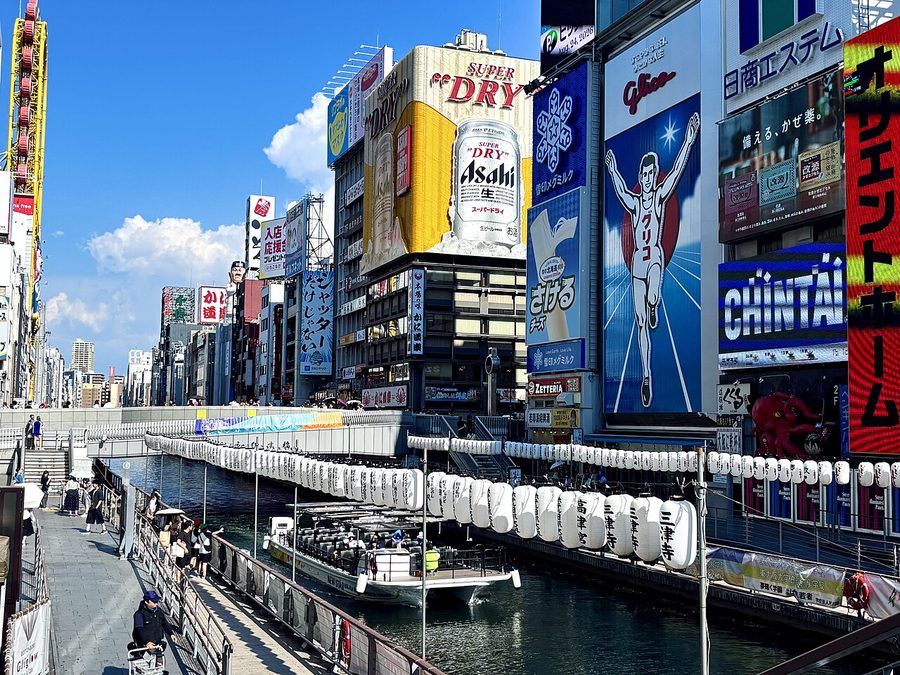
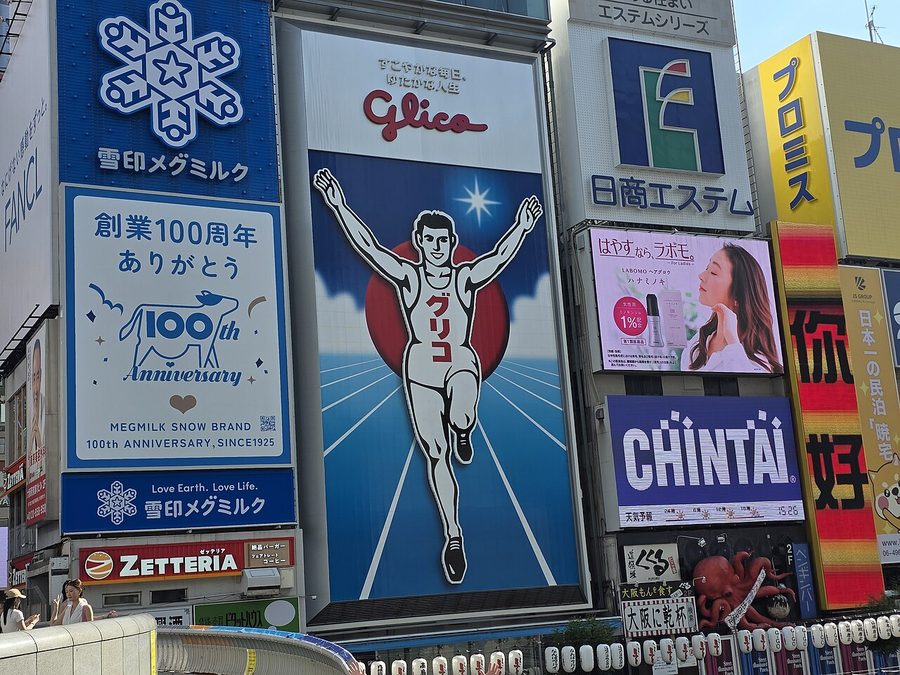
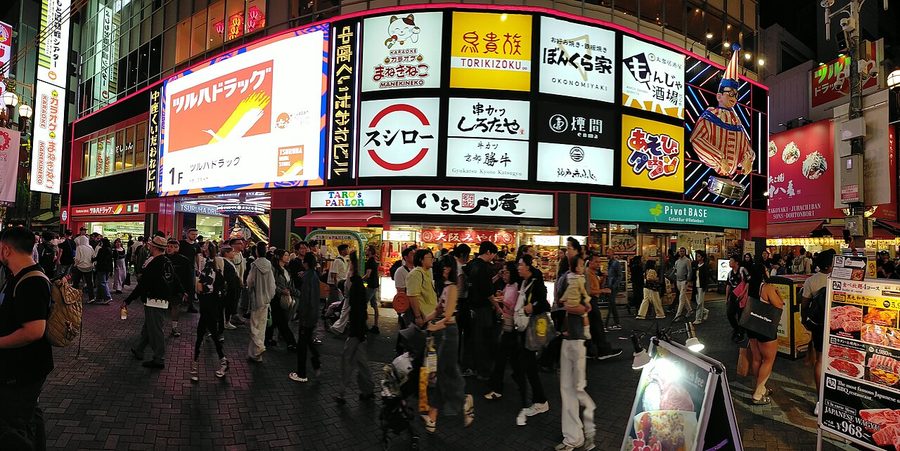
The runner on the south-west corner is the reason for the crowd. Glico’s mark, a man crossing the finishing line with both arms up, was drawn in 1920 and became famous on the packet of the company’s first product, a nutritional caramel sold from 1922. The first Glico tower went up beside the bridge in 1935, and in April 2003 the city listed the sign as part of its official townscape, alongside far more respectable buildings.
The company’s page for the sign gives the current one as 20 metres high and 10.38 metres wide, with about 140,000 LED chips, lit from sunset to midnight. In October 2026 Glico announced that the sixth sign would end its run at the end of November, with work starting in December and the seventh due in spring 2027; press reports gave ageing LEDs as the reason. If you are in Osaka over the winter of 2026–27, expect a hoarding where the runner was. The rest of the wall stays lit.
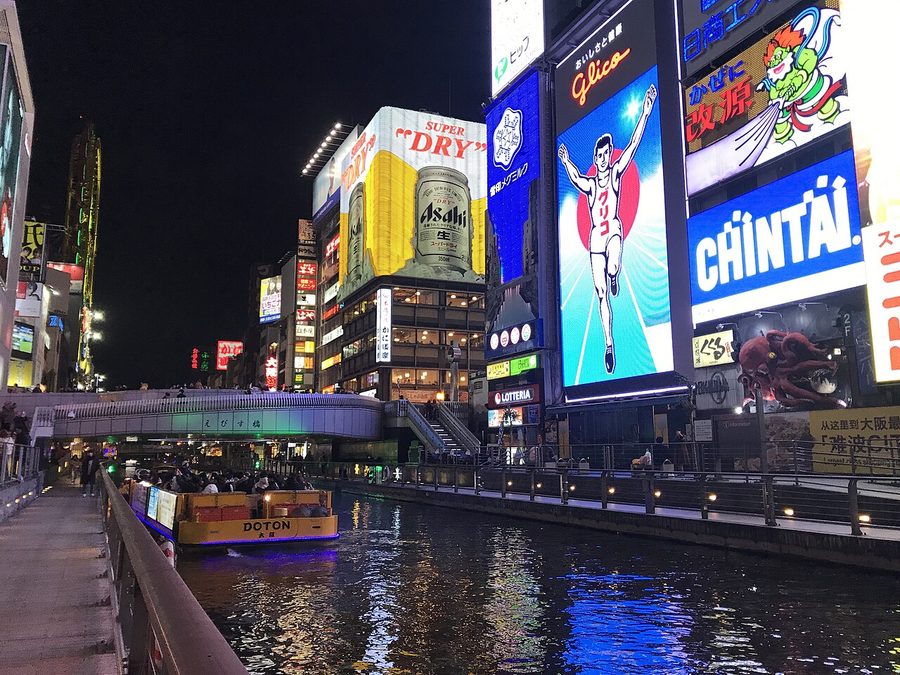
The other giants on the wall
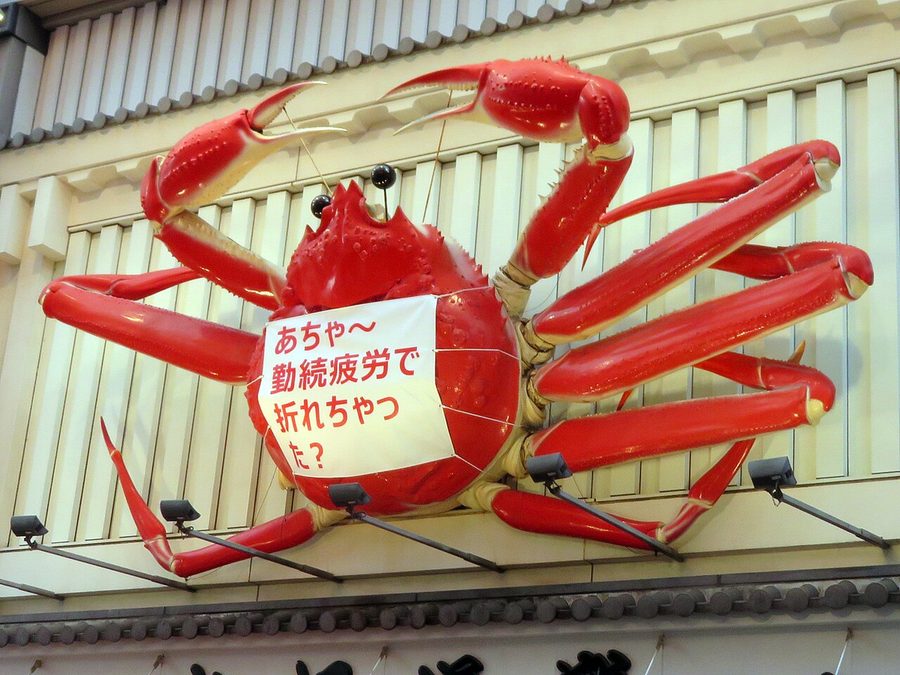
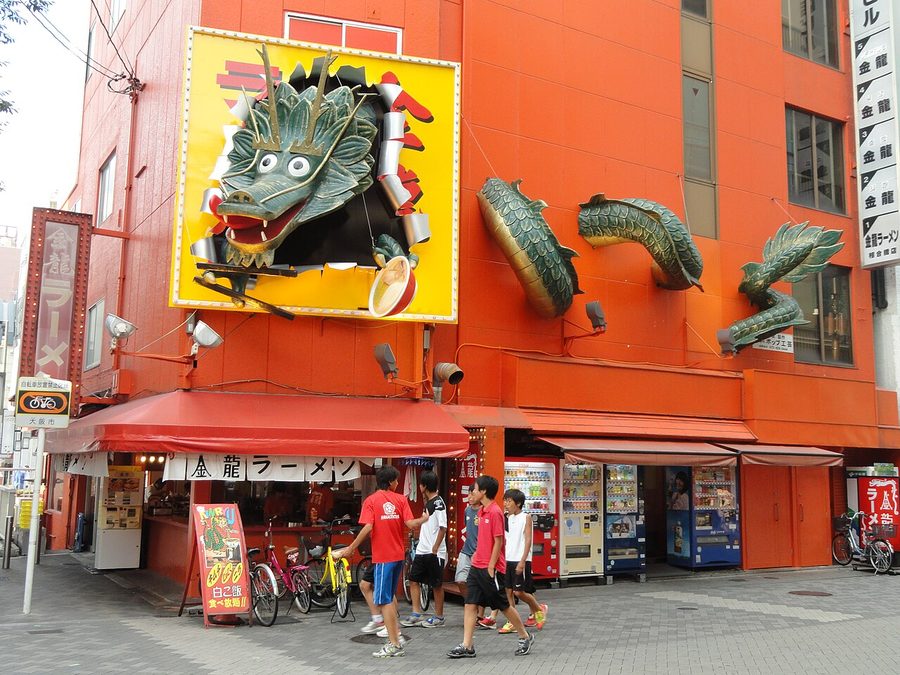
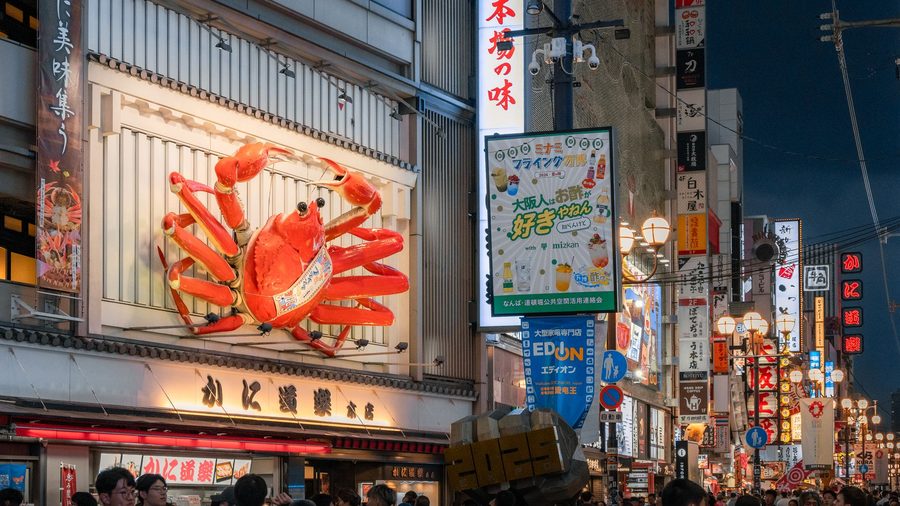
The Glico sign is flat. Most of Dotonbori’s famous signs are not. The restaurants along the south bank compete with three-dimensional models bolted to their fronts, a crab, an octopus, a squid, a cow, a dragon, and the shopping association happily describes the street as a theme park of dolls.
The crab is the one to know. Kani Doraku opened on Dotonbori in 1960 and its main shop still carries the red crab over the door, a short walk east of Ebisubashi.
Along the street, the green dragon over Kinryu Ramen’s Dotonbori shop has a shorter tail than it used to. It went up around 1992; the tail stuck out over the plot next door, the neighbour sued, and after the courts ordered it removed, the man who made it cut it off himself at about 01:30 on 23 August 2024 while tourists cheered. The owners said the dragon would be given painted tears.
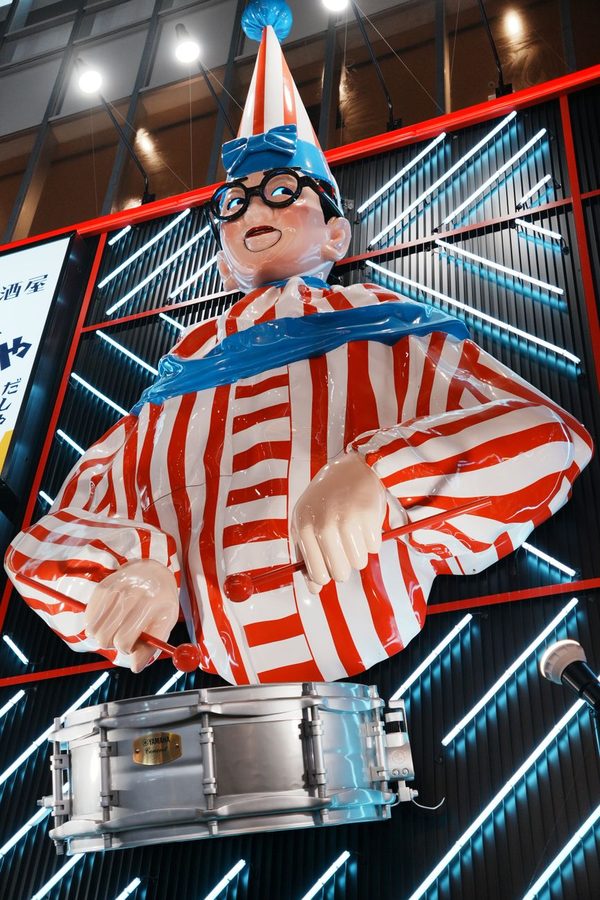
Then there is Kuidaore Taro, the drummer in the striped suit and round glasses. He used to beat his drum outside the Kuidaore restaurant, whose name is Osaka’s favourite word about itself: kuidaore, roughly “eat until you drop”, from the old saying that Kyoto ruins itself on clothes and Osaka on food. When the restaurant closed, Taro was briefly out of work. He now fronts the Nakaza Cuidaore Building, which reopened after a refit in March 2025, and he has his own queue for photographs.
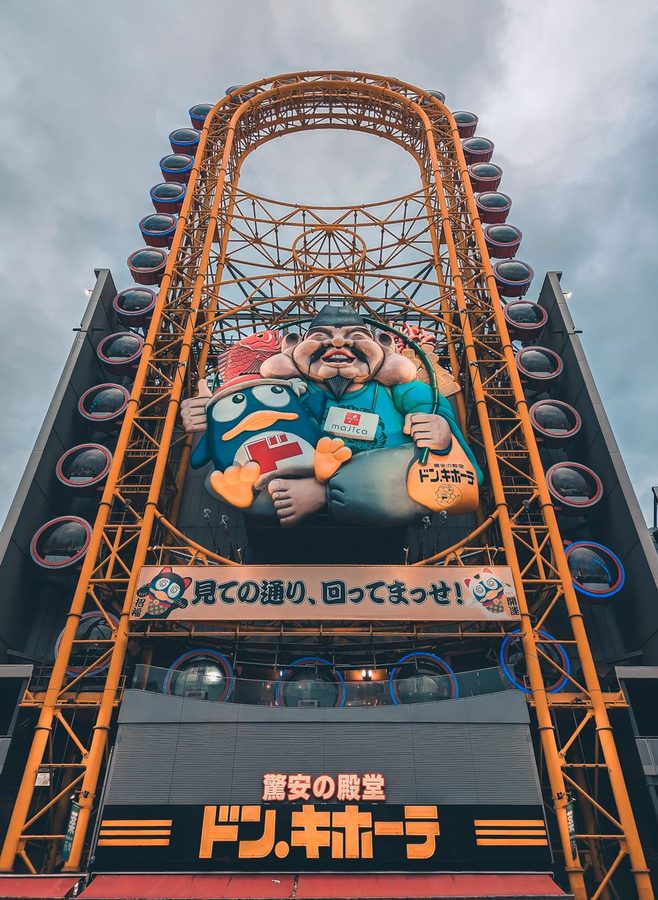
All this signage has a cost. On 18 August 2025 a fire broke out near ground level in a building in Soemoncho and climbed the outdoor signboards to the upper floors and the building next door, according to the Asahi’s report on the first anniversary. Two Osaka firefighters died. Look up at the wall with that in mind.
Tombori River Walk and the boats
For much of the twentieth century Dotonbori turned its back on its canal. Since December 2004 that has changed. The Tombori River Walk (とんぼりリバーウォーク), a paved promenade a level below the street, was opened in stages and now follows both banks from Nipponbashi west to Ukiniwabashi, the footbridge by Minatomachi River Place, about two kilometres in all, and it is free; Nankai, the railway company, runs its office.
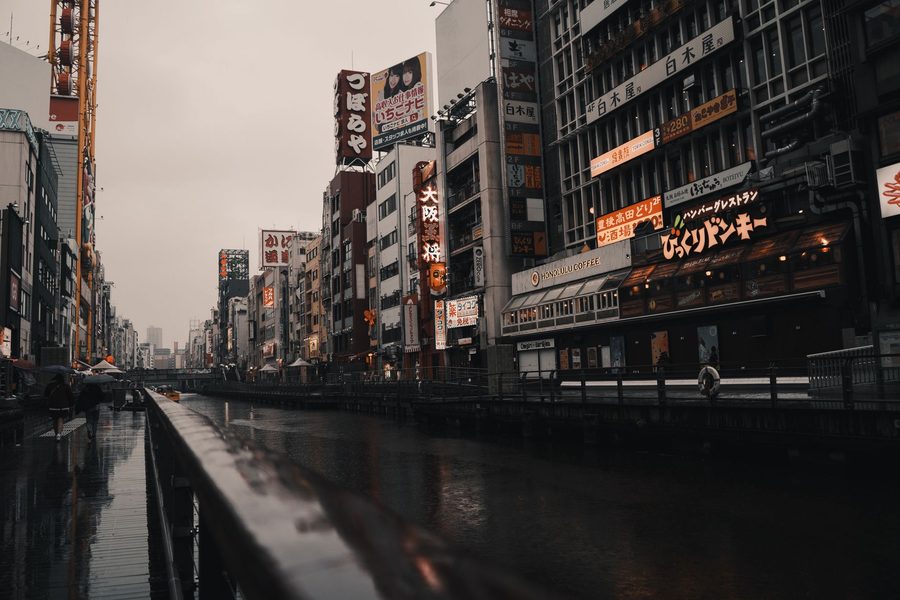
This is where I would spend most of an evening. The walk is calmer than the street above, the signs reflect in the water, and the best view of the Glico wall is from the south bank just west of Ebisubashi. Every summer from July the Dotonbori River Mando-sai hangs lanterns along about 800 metres of the canal from Fukaribashi to Nipponbashi; in 2026, when they were lit on 1 July, there were a record 2,080, some carrying the names of idol groups and paid for by their fans, as Namba Keizai Shimbun reported.
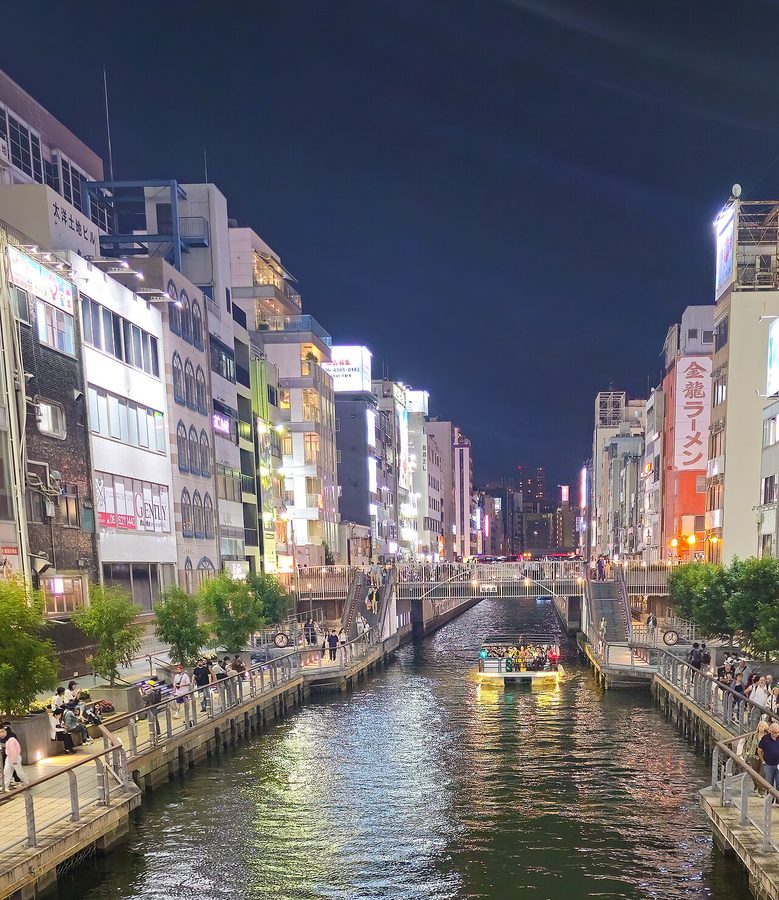
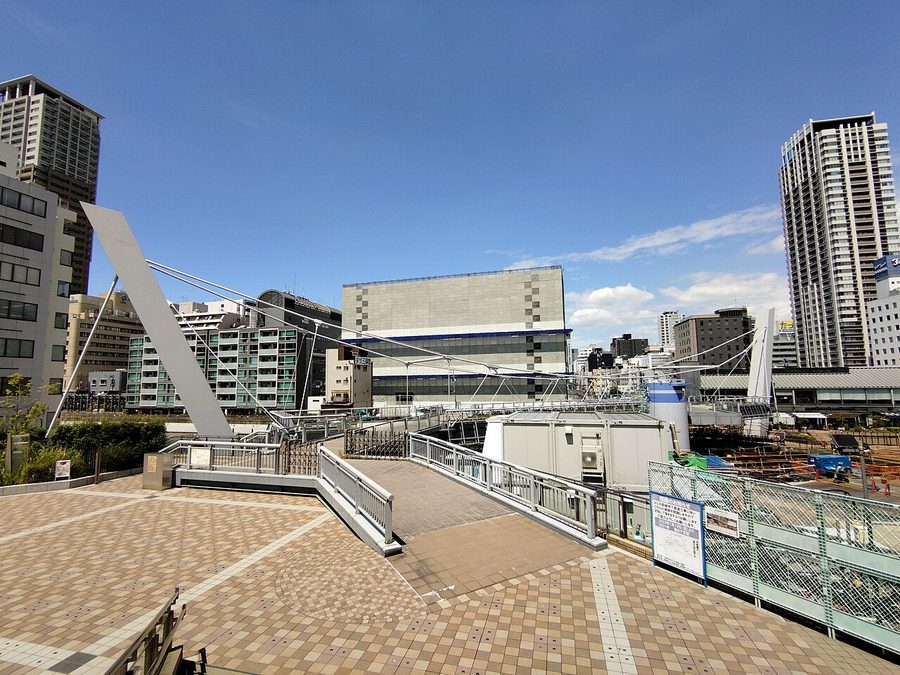
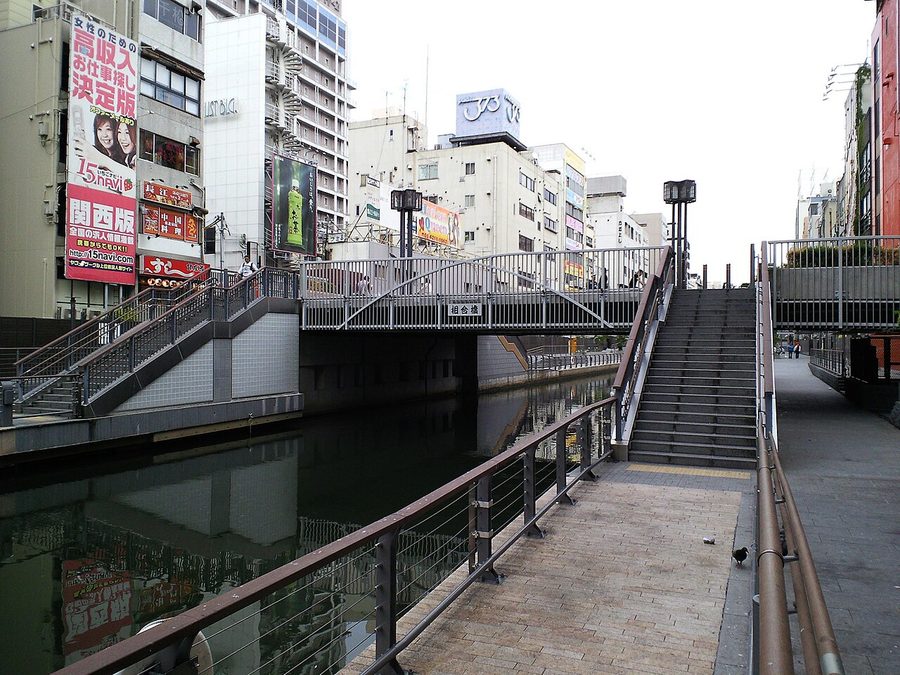
The Tombori River Cruise is the boat most people take. According to Ipponmatsu Kaiun’s cruise page, it leaves the Tazaemonbashi landing on the hour and half-hour from 11:00 to 21:00, takes about 20 minutes, and turns at Nipponbashi and again at Minatomachi River Place, passing under nine bridges with a guide talking you through them. Fares as of November 2026 are ¥2,000 for adults, ¥1,000 for secondary-school and university students with ID, and ¥500 for primary-school children; one preschool child per adult rides free.
Tickets are sold on the day, for a set departure, at the counter by the river entrance of the Don Quijote store with the yellow Ferris wheel; the counter opens an hour before the first boat, and seats can also be booked and paid for online up to ten minutes before a sailing. The boats are open to the sky and run in light rain, with simple raincoats handed out, but they stop for weather, tides, river works and festivals. The same company runs a 40-minute jazz boat on set dates for ¥3,500.
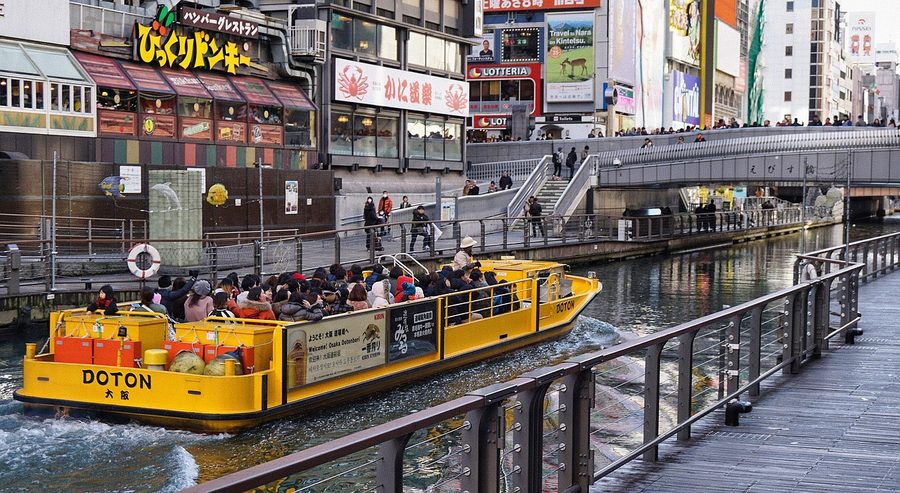
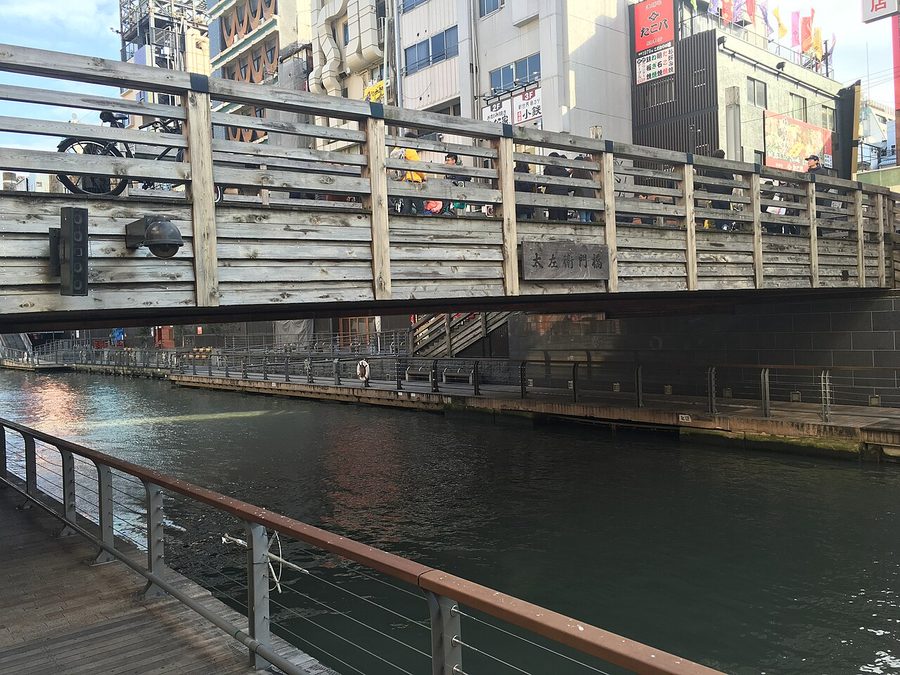
Is it worth ¥2,000? It is a pleasant twenty minutes, and the view from water level is unlike anything you get on foot. It is not essential. If money or time is short, walk the south bank from Dotonbori-bashi to Nipponbashi and back at dusk and you will have seen most of it for nothing.
Hozenji and Hozenji Yokocho
Two minutes south of the canal, behind the takoyaki stands, the noise drops away. Hozenji (法善寺) is a small temple of the Jodo sect that moved here from Uji in 1637. Its priest Chuyo Sennen held a thousand-day cycle of prayers for the dead of the cremation grounds, cemeteries and execution ground that then surrounded Namba, and the district still carries the name: Sennichimae, “in front of the thousand days”.
The air raid of 13 March 1945 burned every hall. Only one statue came through, the west-facing Fudo Myoo now known as Mizukake Fudo (水掛不動), “the water-splashed Fudo”. Hozenji’s own account says the splashing began after the war, when a woman praying there scooped up the water left as an offering and threw it over the statue, and everyone since has done the same. Decades of water have given the figure a thick green coat of moss.
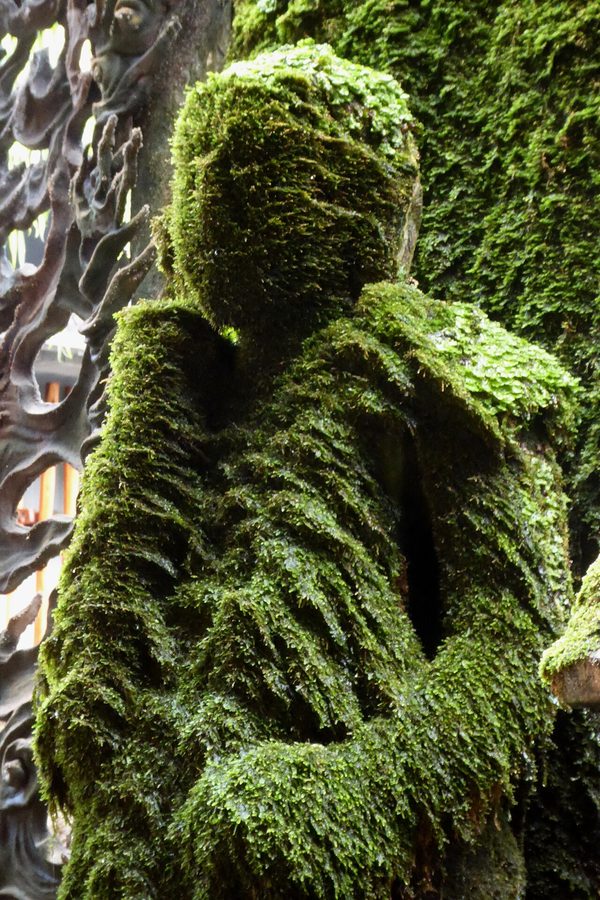
The routine is simple. Take a ladle from the basin, pour water over the statue, put your hands together, and move aside for the next person. The temple is open 24 hours; the office that sells charms and temple seals is open 10:00–18:00. It costs nothing, and the cooks of the surrounding lanes are among its most regular visitors, which tells you something about the food.
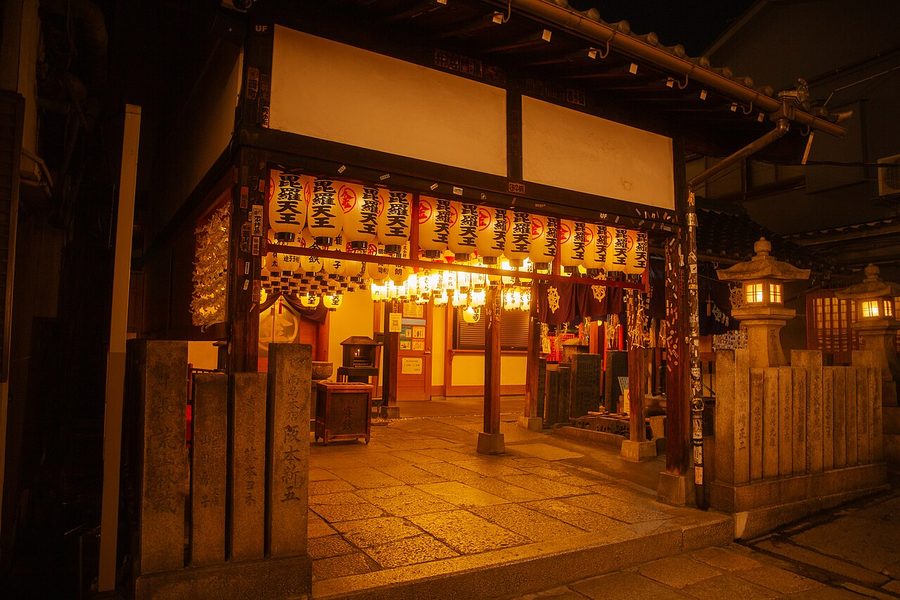
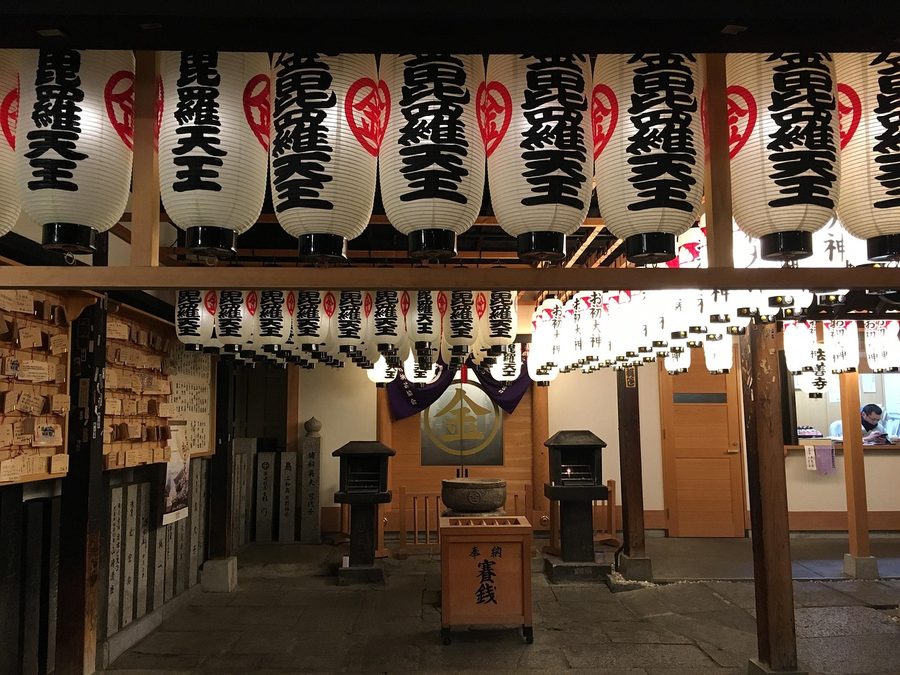
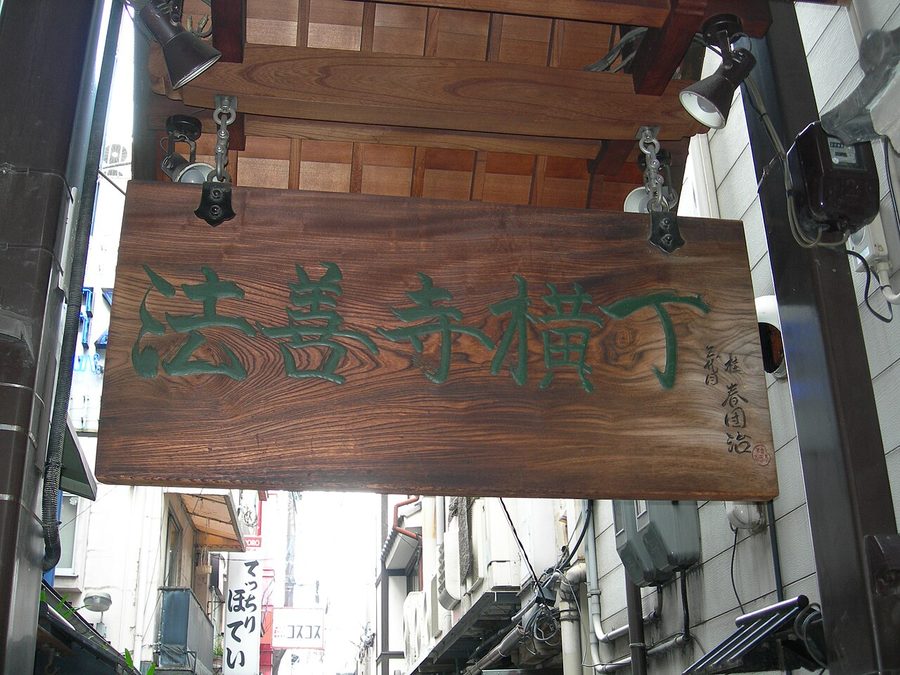
Hozenji Yokocho (法善寺横丁) is the lane that grew out of the stalls in the temple grounds: two stone-paved alleys, each about 80 metres long and under three metres wide, with a gate at either end. The lettering on the west gate was written by the comedian Fujiyama Kanbi and on the east gate by the storyteller Katsura Harudanji III. Oda Sakunosuke made the lane famous with his 1940 novel Meoto Zenzai, and it is where I would take anyone who thinks Dotonbori is only neon.
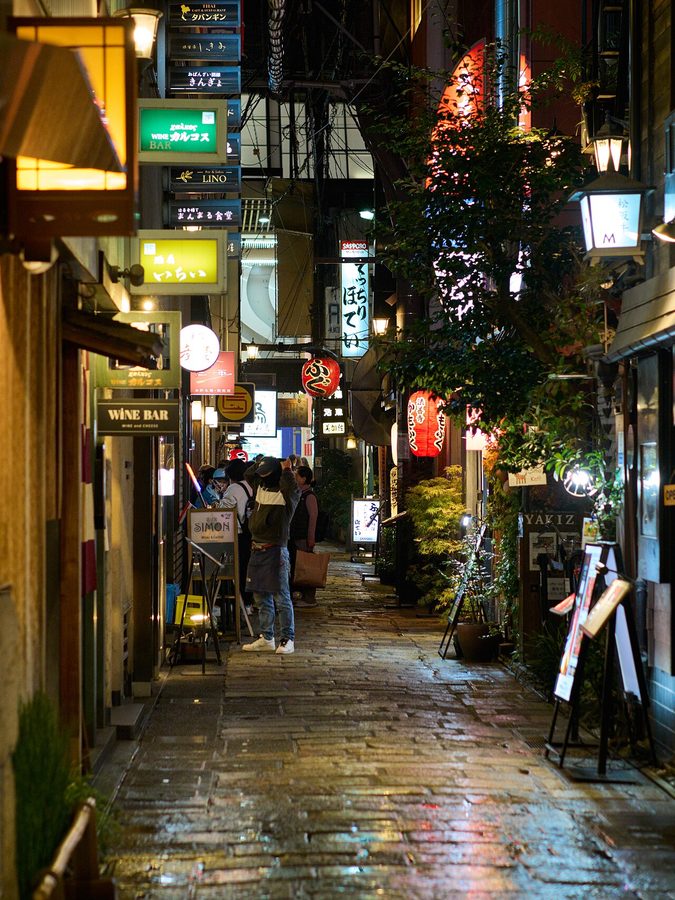
The lane has nearly been lost twice. On 9 September 2002 a gas explosion during the demolition of the old Naka-za theatre next door set fire to 19 shops. Building law would have forced the alley to be widened to four metres, which would have ended it; instead the owners and the city used a rule that treats the whole block as one site, so the lane could be rebuilt at its old width in fire-resistant buildings. A second fire on 2 April 2003 burned the south side and killed one person, and every shop was trading again by 27 March 2004, as the urbanist Hashizume Shinya recalled in a May 2026 column on the lane’s recovery.
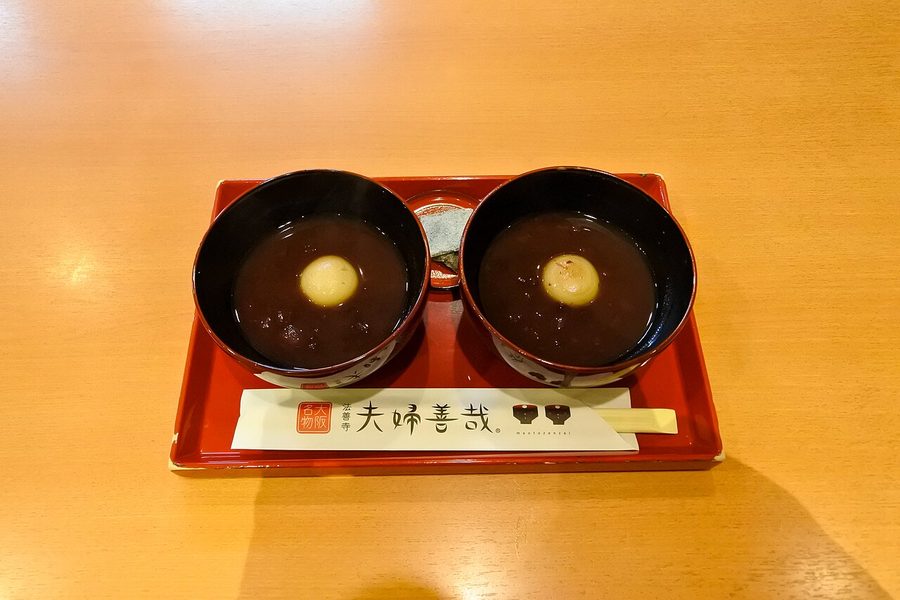
Meoto Zenzai (夫婦善哉), beside the temple, is the lane’s oldest name. It opened in 1883 as a sweet shop called Ofuku, run by a chanter from the puppet theatre, and its trick has never changed: one order of zenzai, sweet red-bean soup with rice cake, comes in two small bowls. The shop’s history page tells the story of the first customers who asked why. Couples share it for luck; the shop was still serving in November 2026.
Soemoncho, across the water
Turn round on Ebisubashi and look across the canal. Soemoncho (宗右衛門町) is the bank opposite the signs, the strip from Ebisubashi east to Nipponbashi, and it was the teahouse half of the theatre district from the start. The Soemoncho shopping street’s history says the name probably comes from Yamanokuchiya Soemon, a town elder in the mid-1600s, and that 27 teahouses held licences here by 1703.
Under the Meiji emperors it became one of the five geisha quarters of Nanchi, and the grandest of them. Theatre-goers crossed the bridges after a show to eat and drink, Semba merchants did business over dinner, and around 1935 the five quarters together counted some 750 teahouses and 2,800 geiko. The war shut it down. The district that came back after 1945 was bars, clubs and late restaurants, and the teahouse names went with the old buildings.
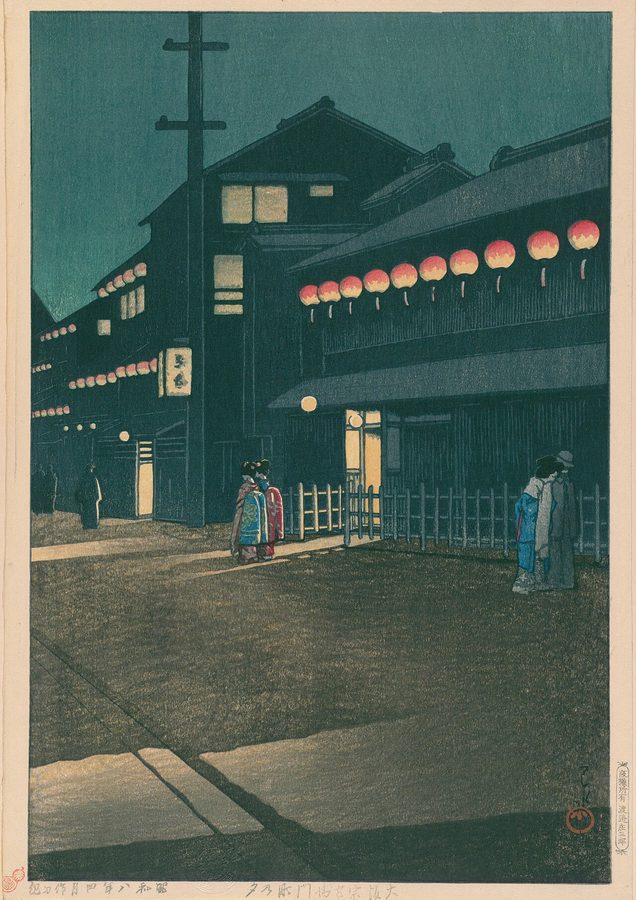
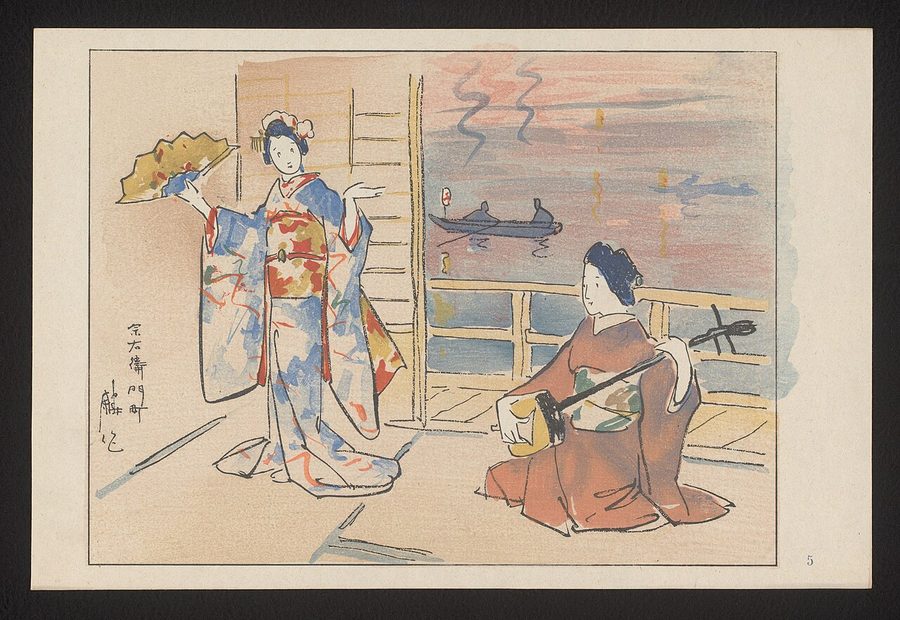
Today Soemoncho is the north bank of the river walk, the long block of Don Quijote and restaurants that the cruise boats use as a landmark, and behind it a dense grid of bars and clubs. It is not dangerous, but it is the part of Dotonbori where you should keep your wits. Touting has been banned across Minami under an Osaka City bylaw since October 2014; anyone who stops you in the street to offer a bar, a club or a cheap drink is breaking it, so keep walking.
Eating on and off the main street
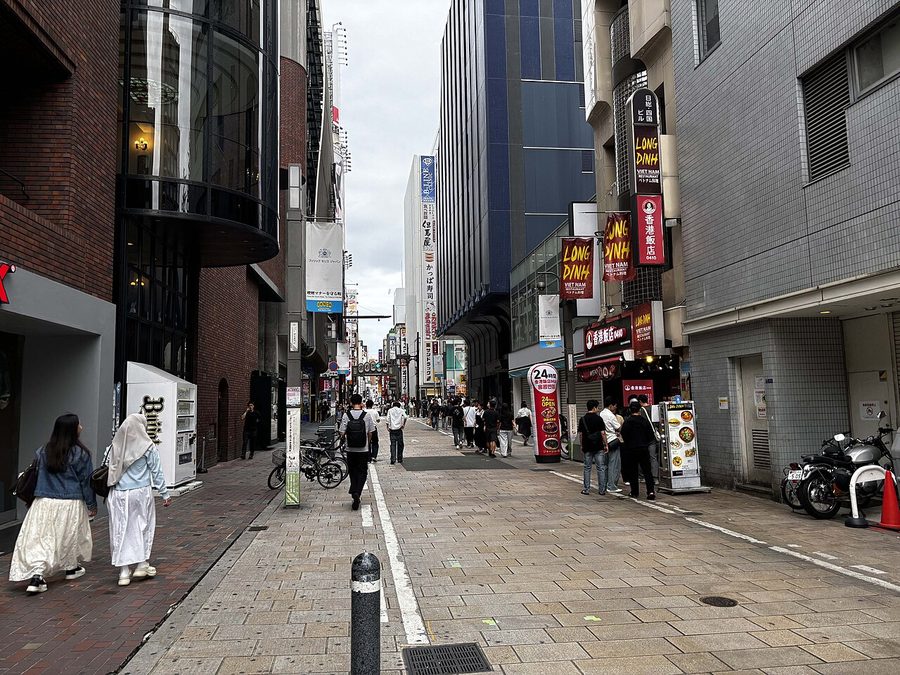
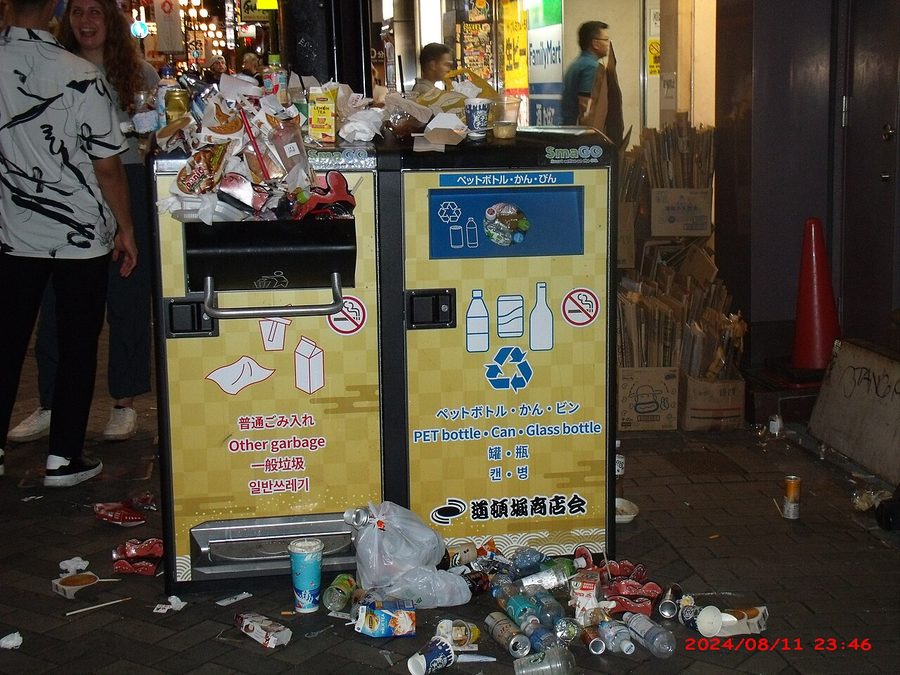
Dotonbori’s food is cheap, hot and quick, and the street sells far more of it than it can seat. The rule I use is simple: eat the street snacks on the street, and go a block or two off it, or into Hozenji Yokocho, for anything you want to sit down for. Keep some cash; many stands are cash only, and bins are rare.
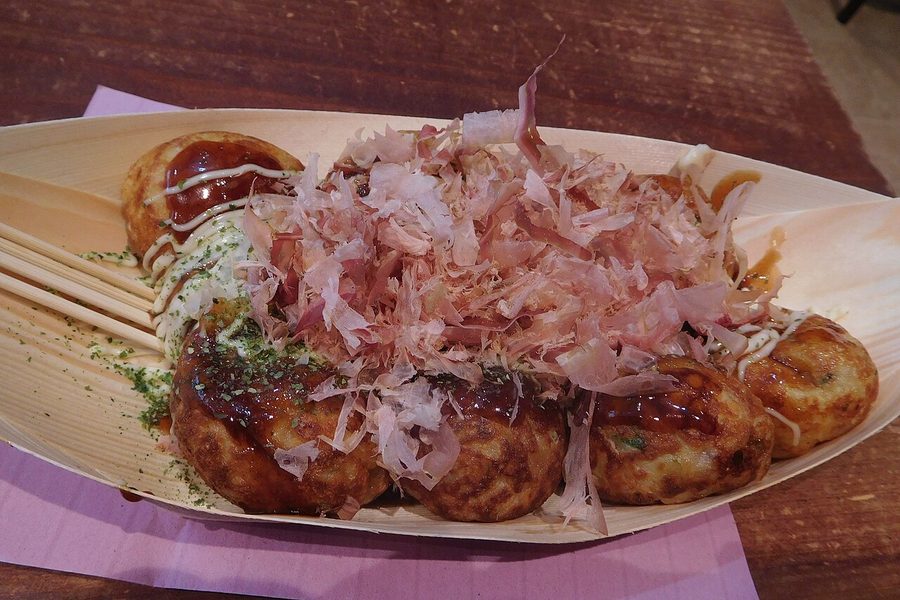
Takoyaki (たこ焼き), batter balls with octopus inside, are the default. Kukuru, a Dotonbori name with a giant octopus over its main shop at Dotonbori 1-10-5 by Ebisubashi, puts big pieces of octopus in a soft batter and finishes each tray with a splash of white wine. Its own site gives the main shop’s hours as 10:30–21:30 for takeaway on weekdays (eat-in 11:00–20:30) and 10:00–21:45 at weekends (eat-in 10:30–20:30).
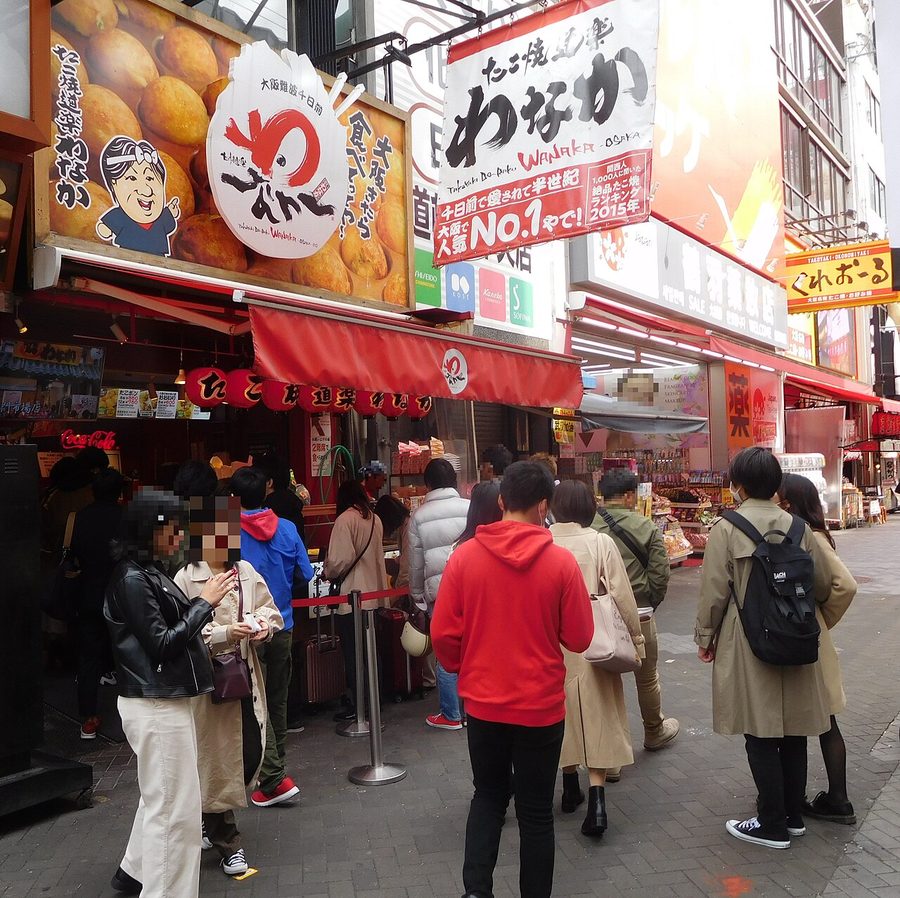
Wanaka, which began as takoyaki grilled under the eaves of a Sennichimae sweet shop, runs a Dotonbori branch too. Let the first ball cool; the middle stays molten long after the outside is safe to hold.
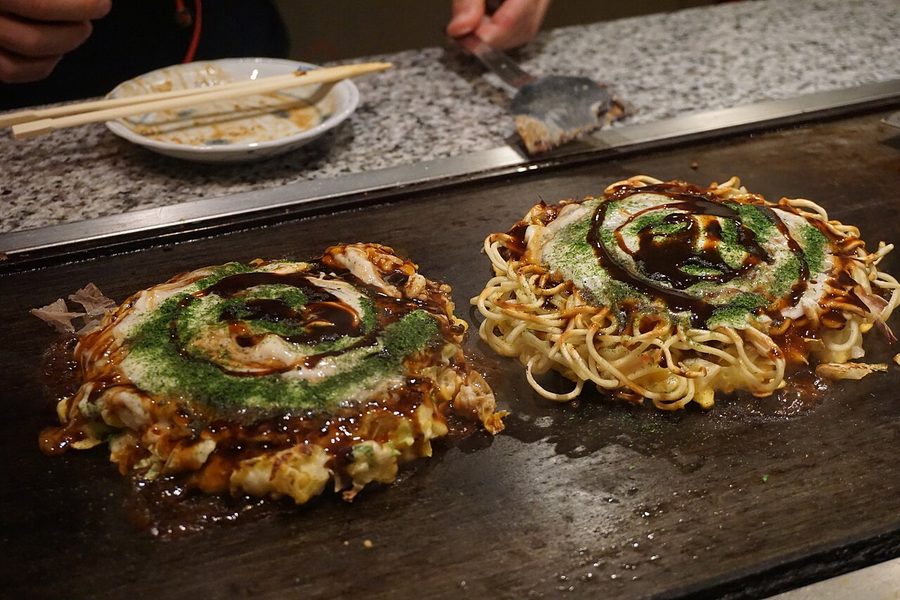
Okonomiyaki (お好み焼き), the cabbage pancake cooked on a hotplate, is the sit-down meal. Mizuno, a family okonomiyaki house at Dotonbori 1-4-15 just inside the arcade that runs south from the street, has been here more than 70 years and is best known for a version made with grated yam and no flour at all. According to Mizuno’s own site it is open 11:00–22:00 (last orders 21:00) every day, having dropped its Thursday closing in February 2026, with a set lunch on weekdays until 15:00. There is even a pancake on the menu dedicated to Yasui Doton.
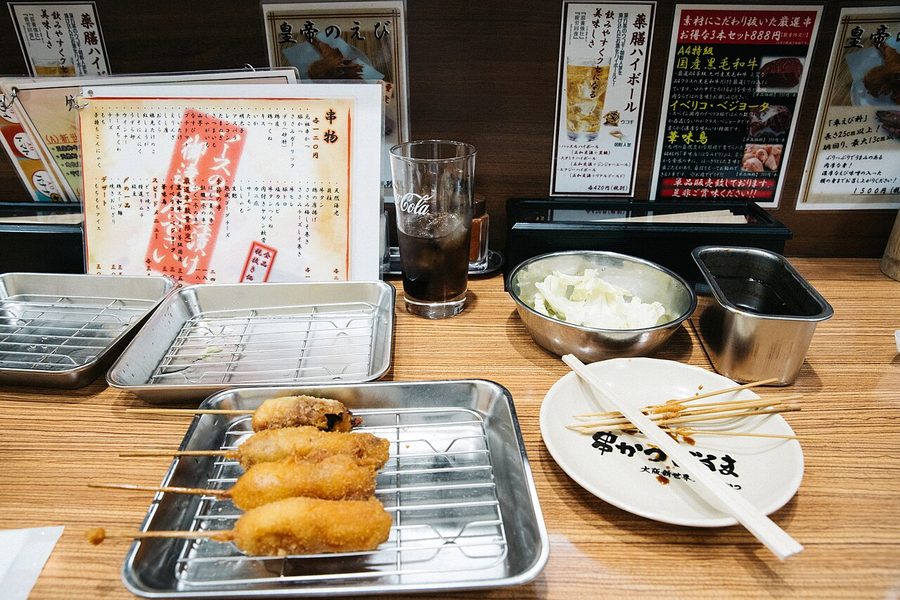
Kushikatsu (串カツ), skewers fried in breadcrumbs, belong to Shinsekai, but Daruma, the Shinsekai chain with the scowling chef statue, has two shops here. Its store list gives the Dotonbori shop’s hours as 11:00–22:30 on weekdays and 10:30–22:30 at weekends and on holidays, open every day, and the quieter Hozenji shop at Namba 1-1-4 as 11:30–22:30 on weekdays, with an average spend there of ¥1,500–2,500. The rule on the sign over the sauce pot is the only one that matters: no double-dipping. Use the free cabbage to scoop more sauce.
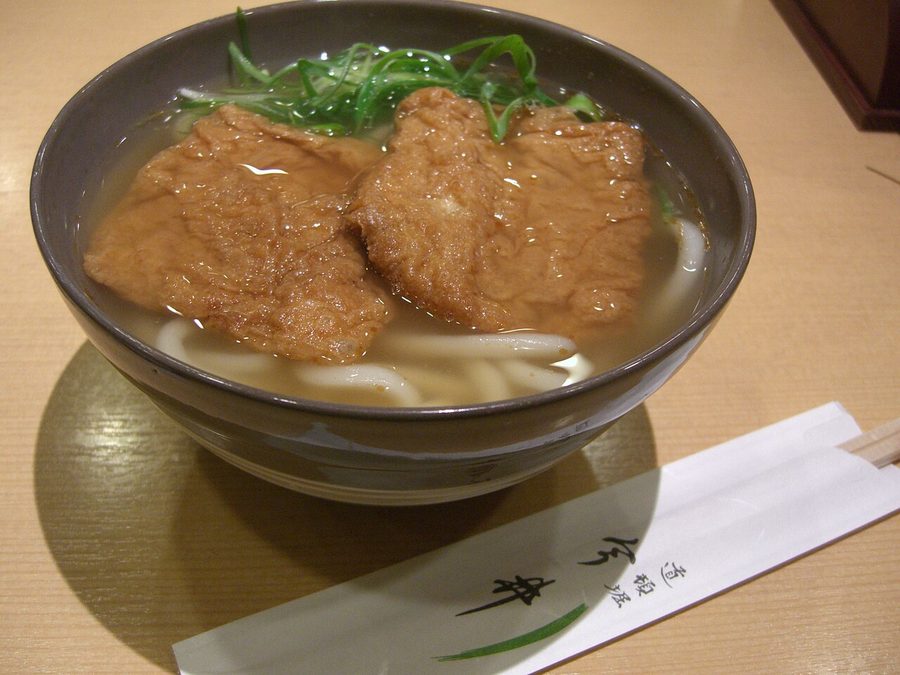
For something quieter, Dotonbori Imai has served noodles on the street since 1946. Kitsune udon (きつねうどん), udon with sweet fried tofu, is ¥930 at the main shop, Dotonbori 1-7-22, according to Imai’s page for it, which gives the hours as 11:30–21:30 (last orders 21:00), closed Wednesdays (open when Wednesday is a holiday) and on the fourth Tuesday of the month except in December. It is the meal I would pick on the street: Osaka’s own dish, made properly, for less than a boat ticket.
Crab is the splurge. Kani Doraku’s main shop, at Dotonbori 1-6-18, is open 11:00–23:00 and closes only on 31 December, and its signature since 1960 has been kanisuki, crab simmered in a hotpot and finished with rice cooked in the broth.
Ramen is the late one. The Kinryu shops, the ones with the dragons, run around the clock and serve just two dishes, ramen and ramen with roast pork, with garlic, kimchi and chive kimchi on the counter to help yourself. It is not the best ramen in Osaka. At three in the morning it does not have to be.
Two more places are a short walk away. Kuromon Market, east past Nipponbashi, is where some Minami cooks still buy their fish and where you can eat it at the stalls. And if you just want a cheaper, quieter dinner, Namba, two streets south, is where Osaka people eat when they are not showing anybody round.
The theatres on the street now
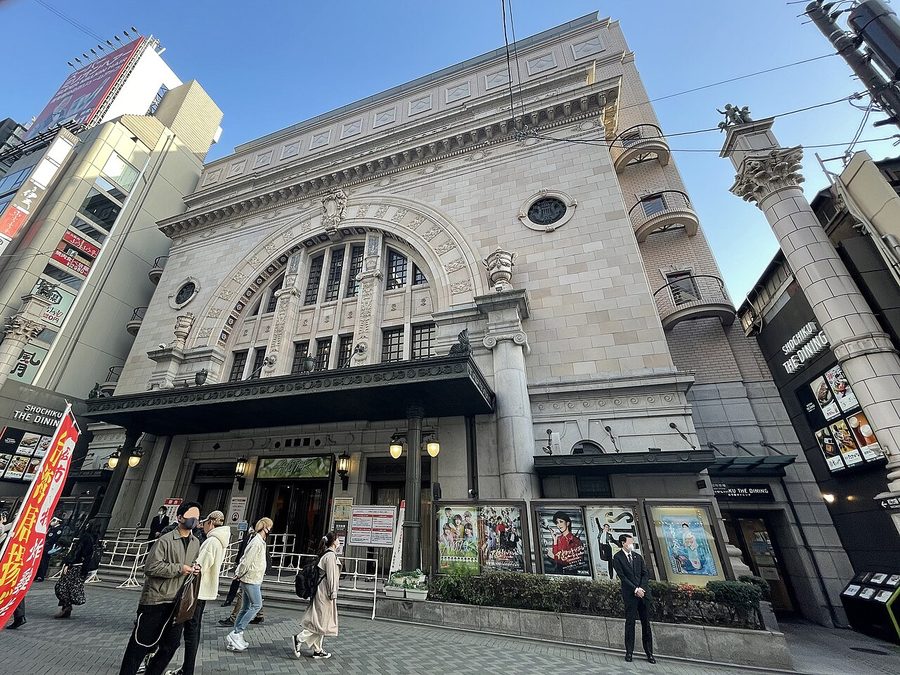
For four centuries the answer to “what’s on in Dotonbori” was a play. That ended in May 2026, when Osaka Shochikuza (大阪松竹座), the last big theatre on the street, held its final programme. It had opened in 1923 as a cinema and revue house behind an arched stone front, showed films until 1994, and was rebuilt behind that front in 1997 as Shochiku’s Osaka stage for kabuki and plays.
The ending was messier than a single closing night. At the end of March 2026 the owner, Shochiku, was reported to be talking to the city and prefecture about keeping a theatre on the site; on 14 April its board decided to demolish the building, arch and all, at a cost of about ¥2 billion, as the Yomiuri reported. Demolition began in November 2026, and the site is due to be cleared by mid-November 2028. What replaces it has not been settled, and Shochiku’s page for the theatre simply lists it as closed.
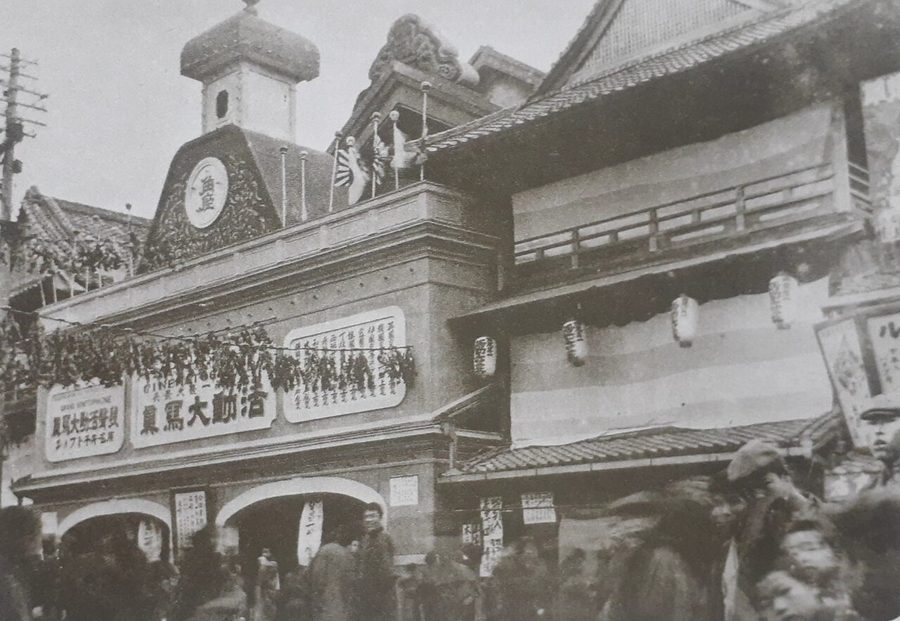
The old five houses had gone one by one in the late twentieth century. The Naka-za, home of the Shochiku New Comedy troupe, closed and was being pulled down when the 2002 explosion set Hozenji Yokocho alight. Its plot is now the Nakaza Cuidaore Building, and that is where the stage on Dotonbori survives.
On the sixth floor, Yoshimoto Dotonbori Theater is the comedy giant Yoshimoto Kogyo’s first theatre on the street: about 87 seats, food and drink at your seat, and shows from about 17:00 on weekdays and from 11:00 at weekends and holidays, depending on the programme. Most shows are in Japanese.
Small stages have struggled. Dotonbori ZAZA, a live venue for young comedians, closed on 6 May 2024 and moved to Shinsekai. For the big Osaka comedy houses you now walk five minutes south to Namba Grand Kagetsu, Yoshimoto’s flagship. For puppets, the National Bunraku Theatre is ten minutes east by Nippombashi Station, and opens booking for its January 2027 programme on 8 December 2026.
The theatre street’s memory is kept by a small private museum. The Kamigata Ukiyoe Museum, facing the Mizukake Fudo at Namba 1-6-4, shows prints made in Osaka, mostly portraits of the actors who played Dotonbori’s stages. It is open 11:00–18:00 (last entry 17:30), closed Mondays or the next day when Monday is a holiday, and costs ¥700 for adults. There is no lift; the two gallery floors are up the stairs.
Day, night, crowds and the Tigers
Dotonbori has two faces and I would see both. By day the shops are open, the queues are shorter, Imai and the okonomiyaki houses are calm, and the signs are just signs. After sunset the LEDs and neon come on and the street does what it was built for. The best hour is dusk, from about half an hour before sunset, when the sky is still blue behind the wall.
Crowds peak on Friday and Saturday nights, holiday weekends and a few fixed dates. On Halloween 2026, which fell on a Saturday, Ebisubashi became so packed it was hard to cross. If you dislike crowds, come early in the morning, before the shops open, or late on a weeknight. On ordinary evenings the river walk is calmer than the street, and Hozenji Yokocho calmer than both.
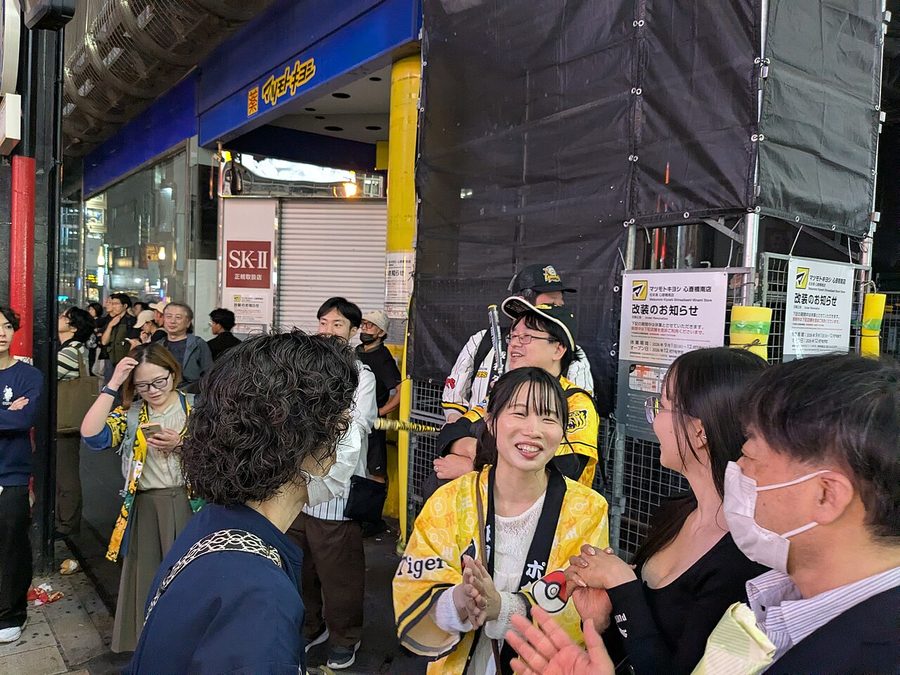
Then there are the Hanshin Tigers, Osaka’s baseball team, and the fans who celebrate a title by jumping off Ebisubashi into the canal. The habit dates from the 1985 championship. In 2003 about 5,300 dives were counted and a man in his twenties died; in 2005 the city put a three-metre temporary wall along the bridge, and the count fell to about 60, according to a Sanyo Shimbun report on the precautions.
On 3 October 2026 the Tigers won the Central League for the second year running, the first back-to-back title in the club’s history. About 800 police were on duty and kept the bridge clear, so the fans jumped from the river walk instead: Nikkan Sports counted at least ten people diving 23 times in the hour after the final out. Do not join them. The water is a health risk, people have died, and the governor’s message before the game was blunt: the Dotonbori is not a river for jumping into.
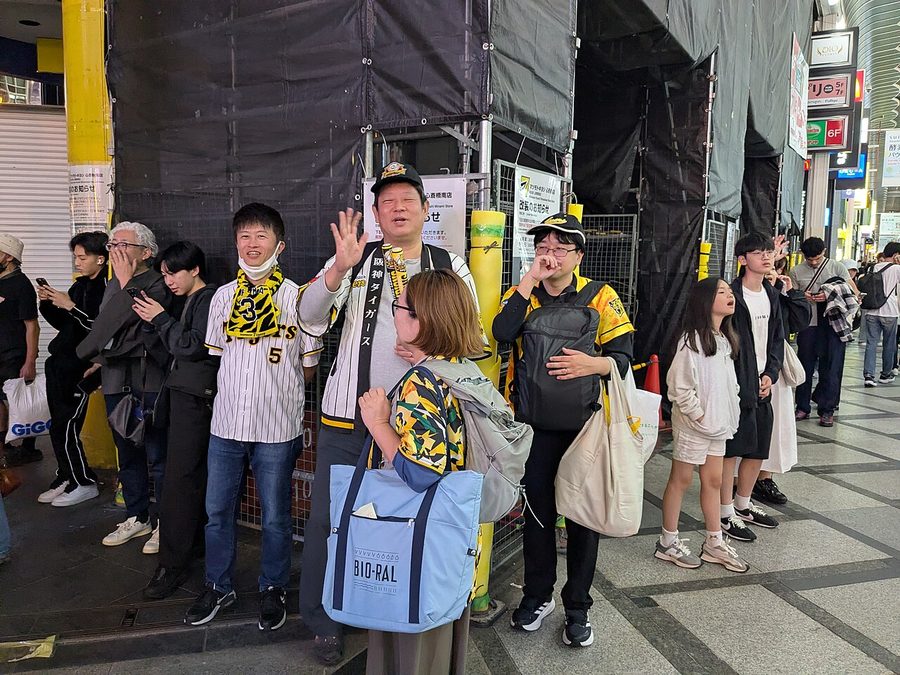
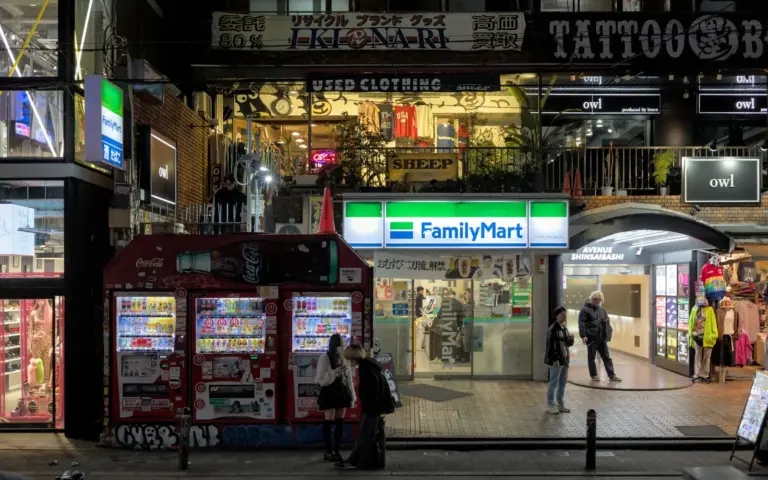
Otherwise Dotonbori is a safe place, busy and well lit until late. The risks are ordinary ones: pockets in the Ebisubashi crush, touts in Soemoncho, and bars that do not show prices, so ask before you sit. Photograph the signs, not the people eating under them, and step out of the flow of the river walk when you stop.
Getting there and getting round
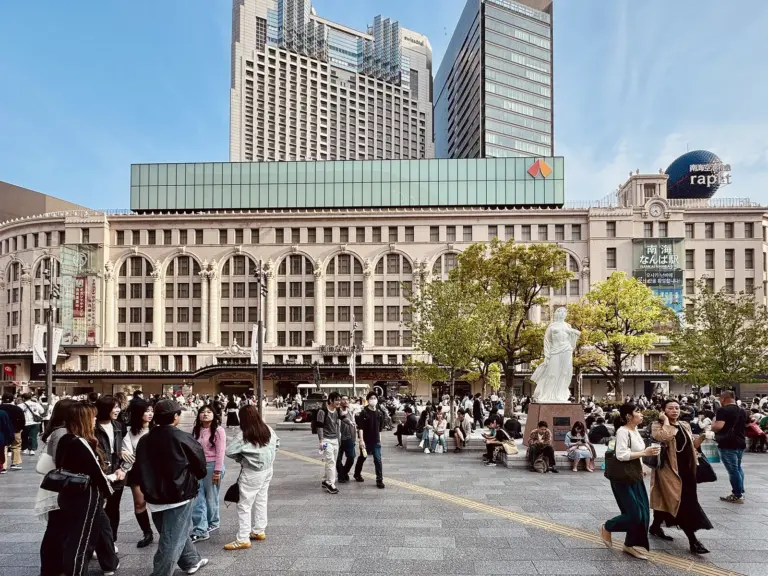
The canal is a short walk from three stations. From Namba Station (Osaka Metro Midosuji Line), exit 14 puts you about three minutes south of Ebisubashi; the Sennichimae and Yotsubashi Lines, Kintetsu and Hanshin all stop at Namba too. Hozenji’s own directions use the Namba Walk underground mall: exit B16 from Namba, or exit B18 from Nippombashi Station (Osaka Metro Sakaisuji and Sennichimae Lines), each about a minute from the temple. Nankai Namba, the airport train’s terminus, is about ten minutes on foot.
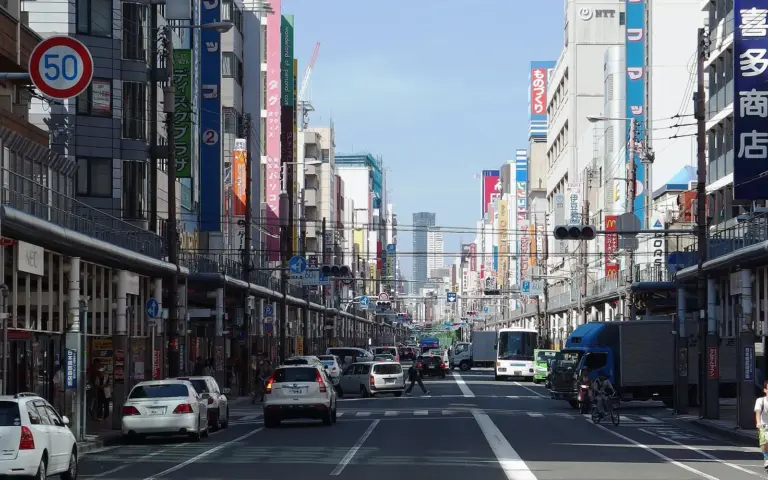
From the north, the covered Shinsaibashi-suji arcade runs straight south from Shinsaibashi Station and ends at Ebisubashi. To the west, Amerikamura is a short walk across Midosuji; to the east, Nipponbashi bridge leads to Den Den Town. Dotonbori fits into almost any first day, and the things to do in Osaka list shows where it sits with the rest of the city.
A good loop takes two hours without a meal. Start at the stone at Nipponbashi, walk the south bank of the river walk west to Ebisubashi, cut through to Hozenji and splash the Fudo, eat something in the lane, then cross the water into Soemoncho and come back east along the north bank under the Ferris wheel.
Finish on Ebisubashi at dusk, when the runner, or this winter his hoarding, catches the last of the blue. He will be back in the spring. The bridge, the boats and the takoyaki queue will not have noticed he was gone.