03Minami
Den Den Town: Osaka’s Anime, Games and Electronics Street
でんでんタウン駅Ebisucho, exit 1-A
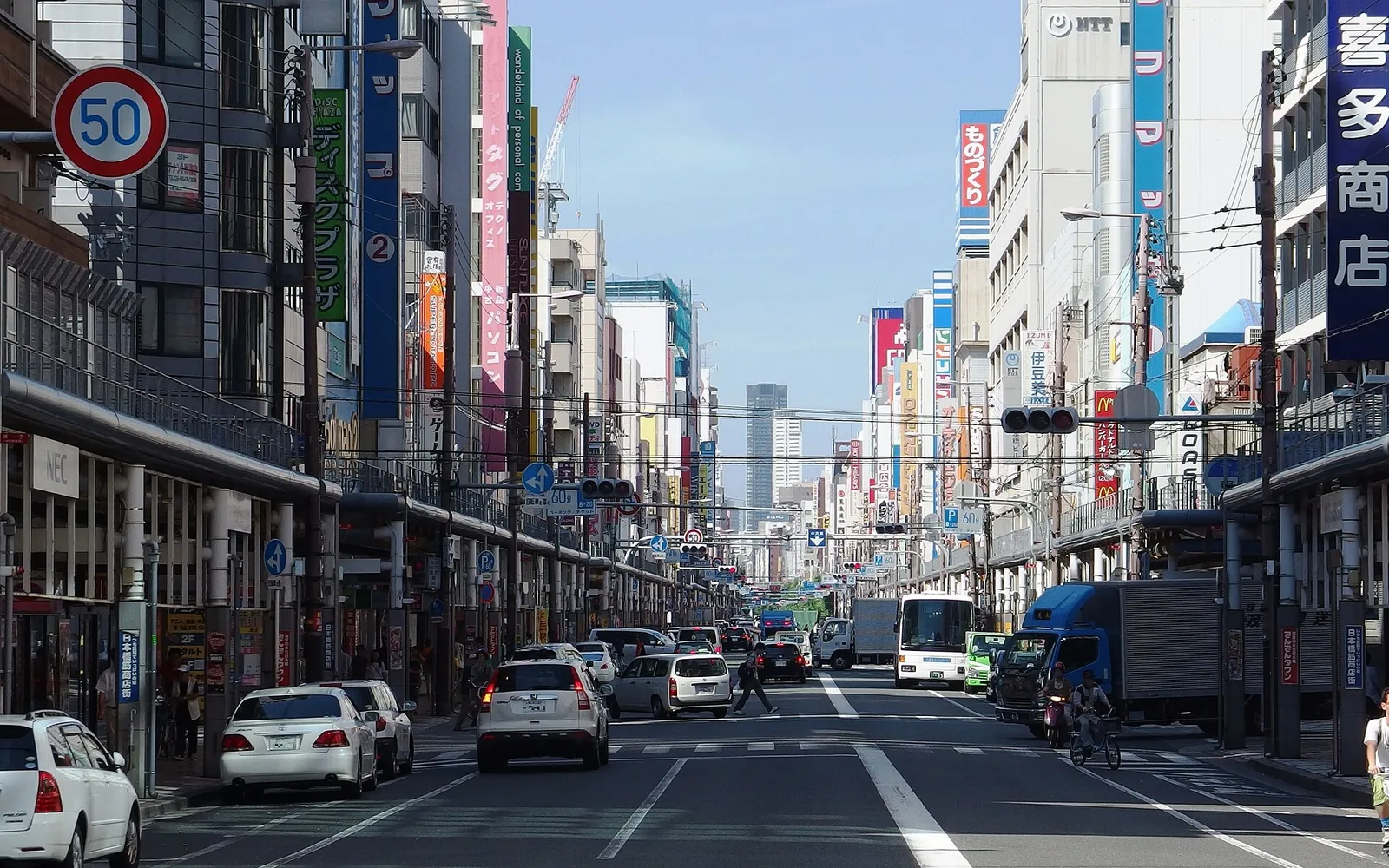
Photo: Mc681, CC BY-SA 4.0
At half past ten on a weekday the shutters along Sakaisuji (堺筋) are still coming up one by one, and the first sound out of Den Den Town (でんでんタウン) is a chiptune jingle leaking from a retro game shop. By noon the hobby floors are full, the card shops have queues at the counter, and someone in a maid costume is holding a sign on the corner of a side street. By nine in the evening most of the shops are shut again.
This is Nipponbashi (日本橋), the south side of it, Osaka’s answer to Akihabara and a district that has reinvented itself about once a generation: inn street, curiosity market, book town, radio town, appliance town, and now figures, retro games, trading cards and anime. Osaka shortens the name to Ponbashi. Tokyo has its own Nihonbashi with the same kanji, so type “Nipponbashi Osaka” into a map app, not just the characters.
If you are deciding between this and Akihabara, the short answer is that Den Den Town is smaller, cheaper to walk around, and done properly in an afternoon. I would come here with a list and a budget, because the second-hand shelves are deep and the price for the same game or figure can change from one shop to the next.
Contents目次
- 01From inn street to Den Den Town
- 02Finding your way: Sakaisuji and Ota Road
- 03What to buy, and where
- 04Maid cafes, concept cafes and the touts
- 05The Nippombashi Street Festa
- 06Takashimaya East Annex: the store that survived the fire
- 07Gokai Hyakkaten: the name with no building left
- 08Tax-free, voltage and region locks
- 09Getting there
- 10An afternoon, in order
From inn street to Den Den Town
The road through the district is older than anything sold on it. Sakaisuji follows the start of the Kishu-kaido (紀州街道), the old highway south to Sakai and Wakayama, and it was also the pilgrims’ road to Sumiyoshi Taisha. In the Edo period this stretch was lined with inns and cheap lodgings and went by the name Nagamachi (長町). Yaji and Kita, the two rogues of the comic travel bestseller Tokaidochu Hizakurige, stay here on their tour of the Kansai.
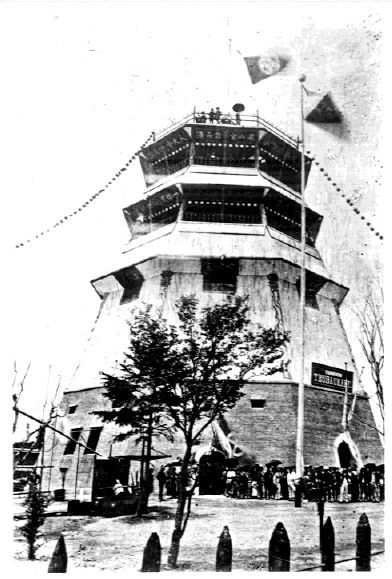
The shopping street proper starts with a tower. In 1888 a five-storey lookout called Chobokaku (眺望閣) went up near here, about 31 metres tall and the first high-rise in Osaka, with kimono, furniture, stationery and toys sold inside like a department store. It came down after about fifteen years, but the stalls that had grown up around it kept its nickname, Gokai, “five floors”, and second-hand goods, antiques and imported curios turned Nipponbashi into the city’s street for finds.
Two things in the next generation made Sakaisuji a main street. The 1903 National Industrial Exposition was held next door, on the ground that became Shinsekai, and the lodging-house slum behind Nagamachi was cleared for it. Then in 1912 the municipal tram reached Sakaisuji, and until Midosuji was finished in 1937 this was Osaka’s main street. The department store Matsuzakaya arrived in 1923, and by the late 1930s Nipponbashi had more than sixty second-hand bookshops, a book town spoken of alongside Tokyo’s Kanda.
Radio came in through the bookshops. Shops selling radios, gramophones and records followed the students and readers, and around 1940 seven or eight radio and parts dealers were trading here. The air raid of 13 March 1945 burned the whole district except the Matsuzakaya building. When trade restarted in 1946, the shops that did best sold valves and parts from military surplus to people building their own radios, and food shops and grocers switched trades to join them.
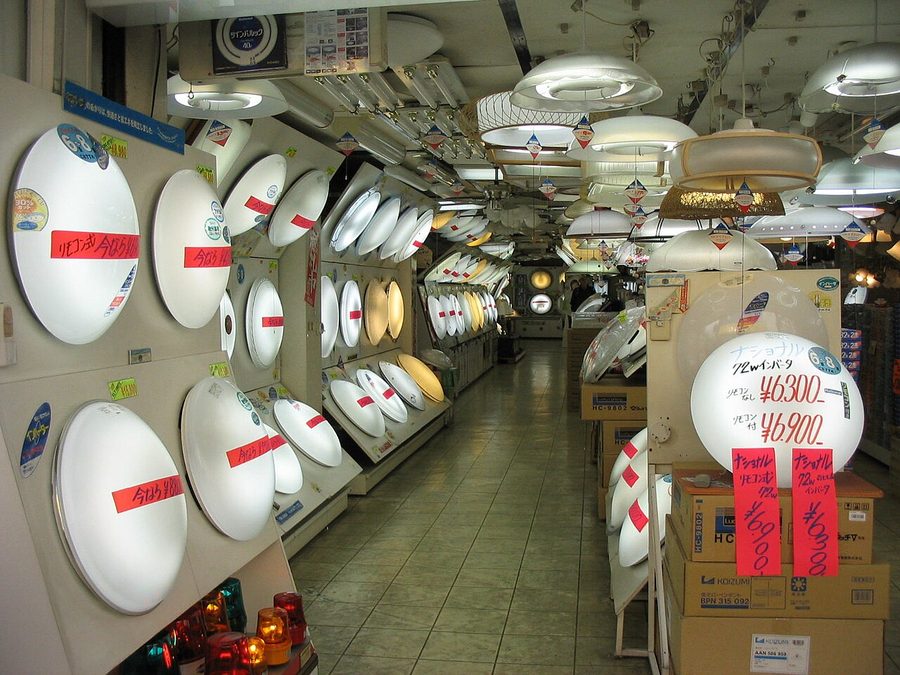
Then came the boom. Black-and-white televisions, washing machines and fridges in the 1950s, colour TVs, air conditioners and hi-fi after that, and the parts dealers turned into appliance stores selling to ordinary households for the first time. The shop associations adopted the nickname Den Den Town in 1978; the den is generally taken as the first syllable of denki, electricity, said twice.
The shopping street’s own history tells the rest plainly. Big out-of-town electrical chains and then online shopping took the appliance trade, but the personal computer boom that followed Windows 95 brought in PC shops, which brought games, which brought anime shops, and by the 2000s the district had turned into what Osaka calls “Akiba in the east, Ponbashi in the west”.
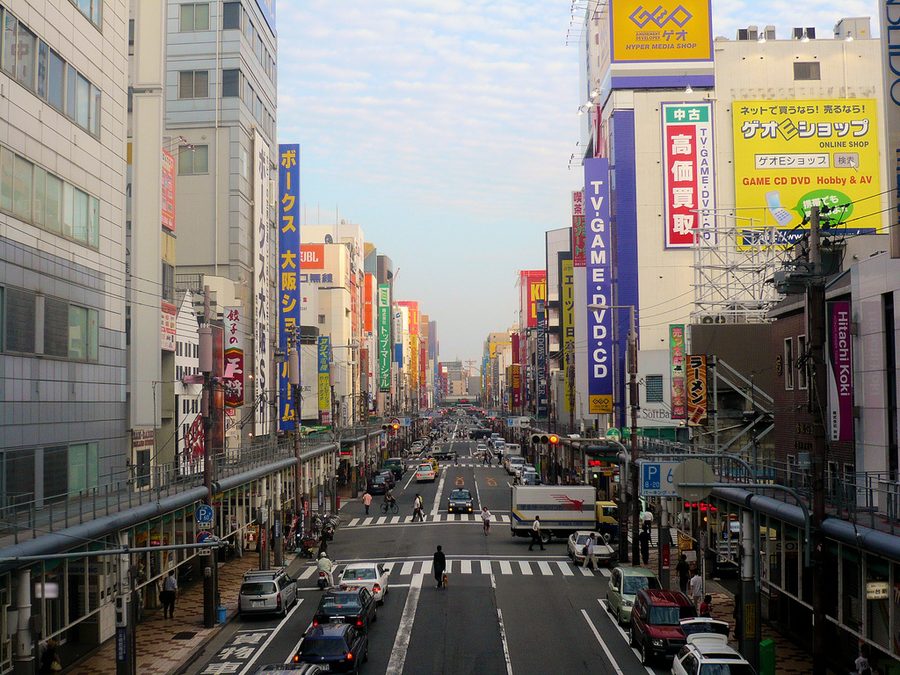
The change has not stopped. A long-running electrical materials dealer on the Sakaisuji arcade closed its shop in September 2025 and a toy store aimed at overseas visitors opened in the building in October 2026; a hardware shop on the other side of the road gave up its shopfront the same month and moved upstairs; and an apartment hotel opened on Ota Road (オタロード) in June. If you remember Den Den Town from ten years ago, expect fewer electronics shops and more figures, cards and hotels.
Finding your way: Sakaisuji and Ota Road
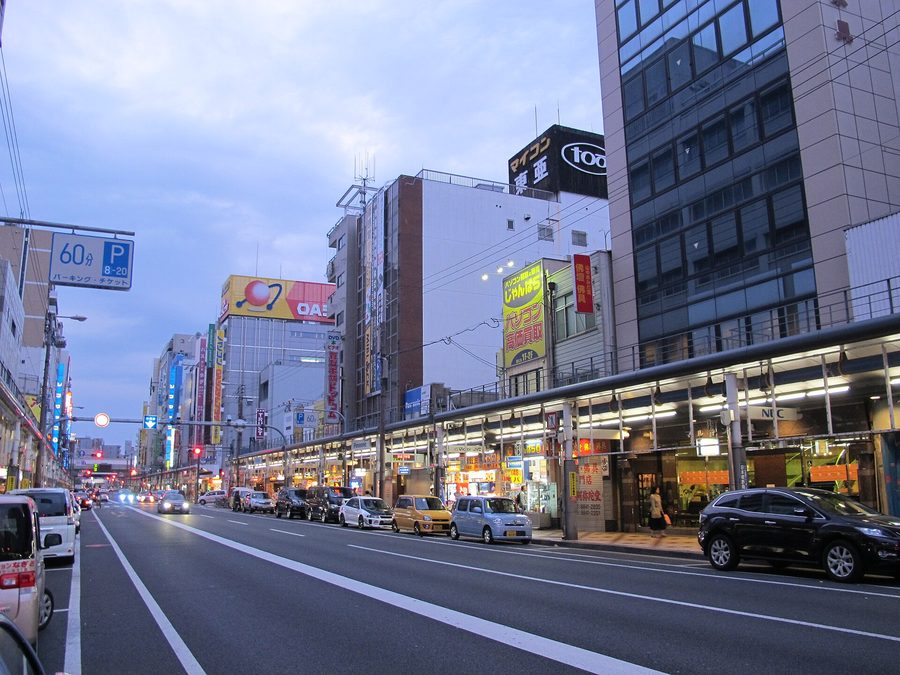
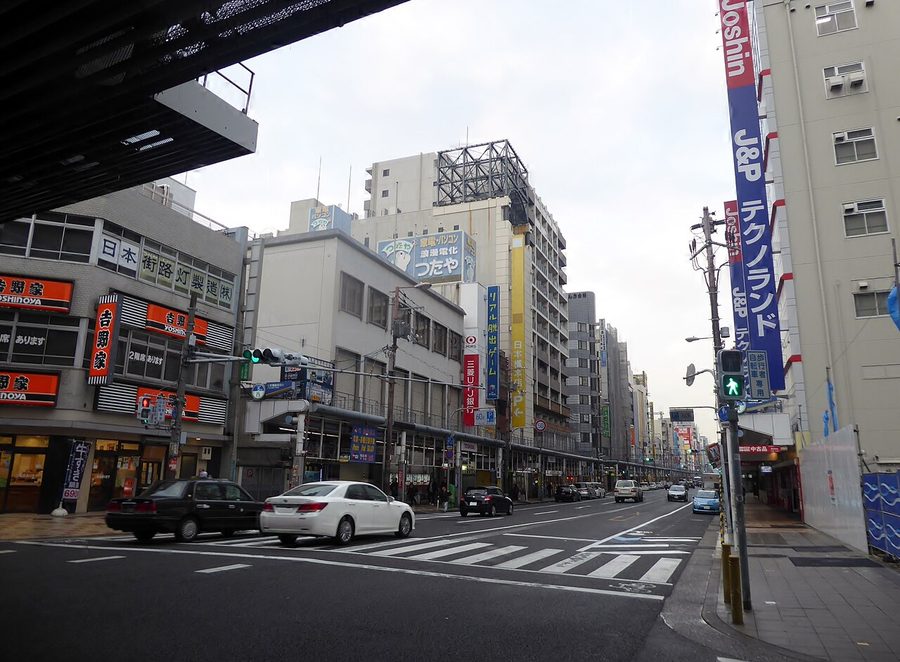
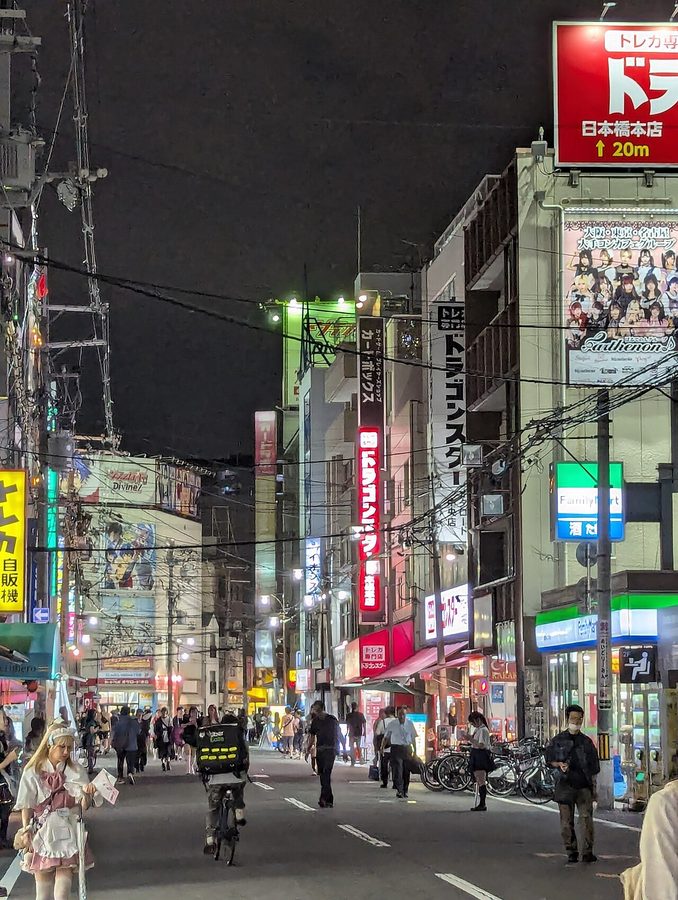
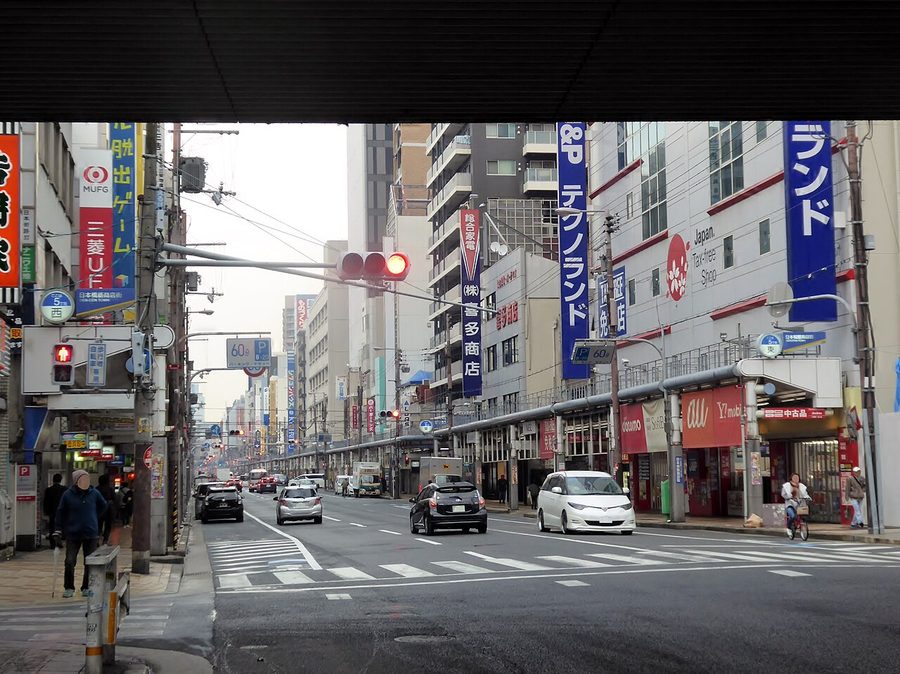
The district is two parallel streets and the lanes between them. Sakaisuji is the wide avenue, with a covered pavement on both sides, running from the Nipponbashi 3-chome crossing in the north to the Ebisucho junction in the south; the big electronics, hobby and model shops sit along it. Ota Road, one block west, is narrower, busier on foot, and where most of the anime goods, card shops, small figure dealers and maid cafes are packed in.
Nothing opens early. Most shops raise their shutters between 10:00 and 12:00 and close between 20:00 and 21:00, with a few card shops open later. The best time is a weekday afternoon; on Saturday and Sunday afternoons Ota Road is shoulder to shoulder.
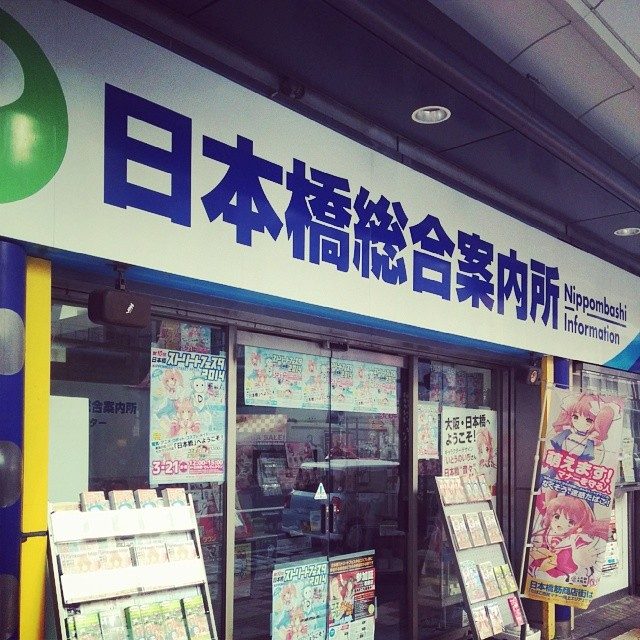
The shop associations run the Nipponbashi general information centre (日本橋総合案内所), about 100 metres north of exit 1-A of Ebisucho Station on the east side of Sakaisuji. It opens 11:00–19:00 and closes on Wednesdays, or the next day when Wednesday is a holiday. It has area maps, short-term luggage storage and currency exchange for US dollars, pounds, euros, yuan, Taiwan and Hong Kong dollars, won, Singapore and Australian dollars, baht, ringgit and rupiah.
What to buy, and where
Hours below are the shops’ own as of November 2026, and they change; check a shop’s page on the day if you are crossing town for one place. The second-hand shops buy as well as sell, so what is on the shelves keeps changing.
Model kits, figures and railway models
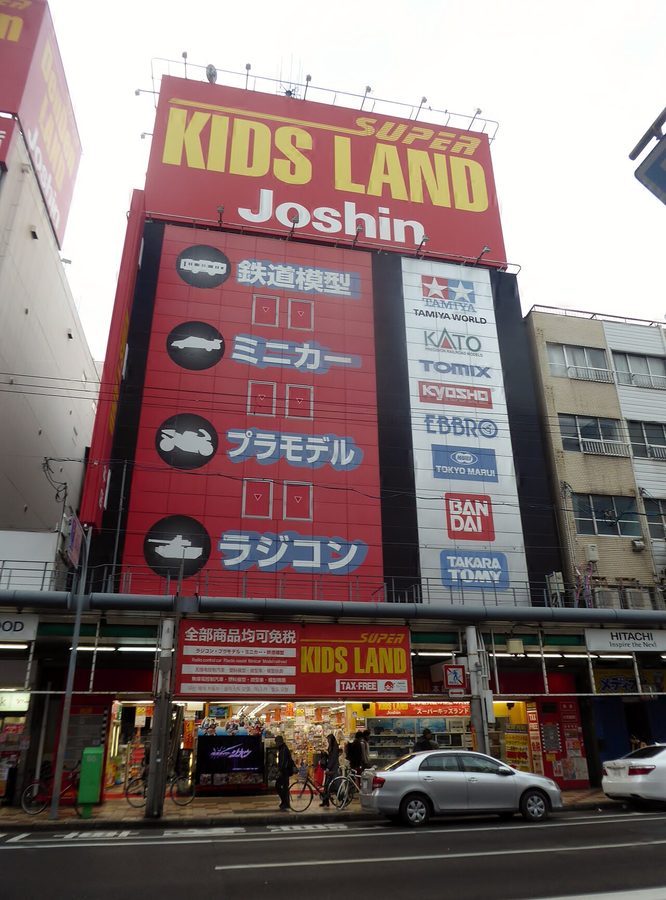
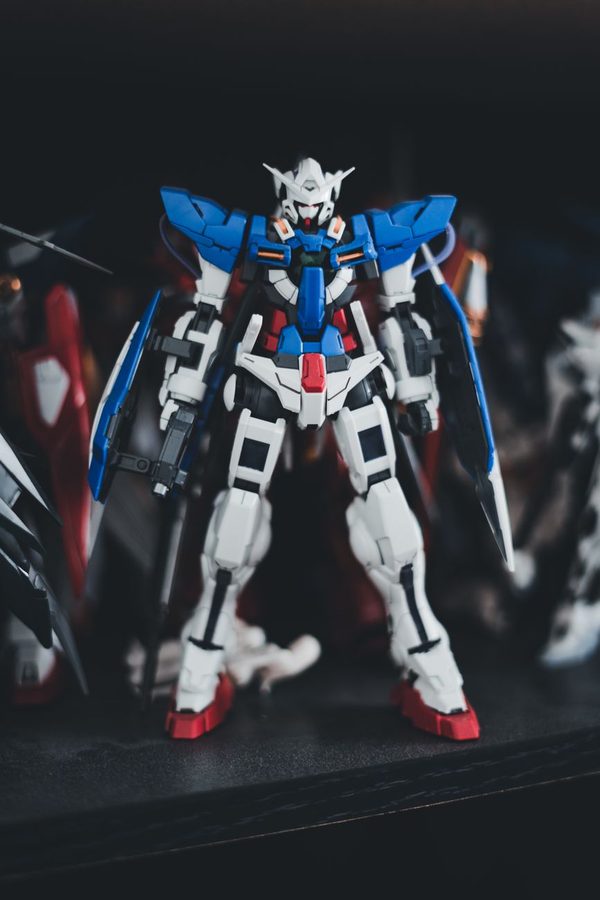
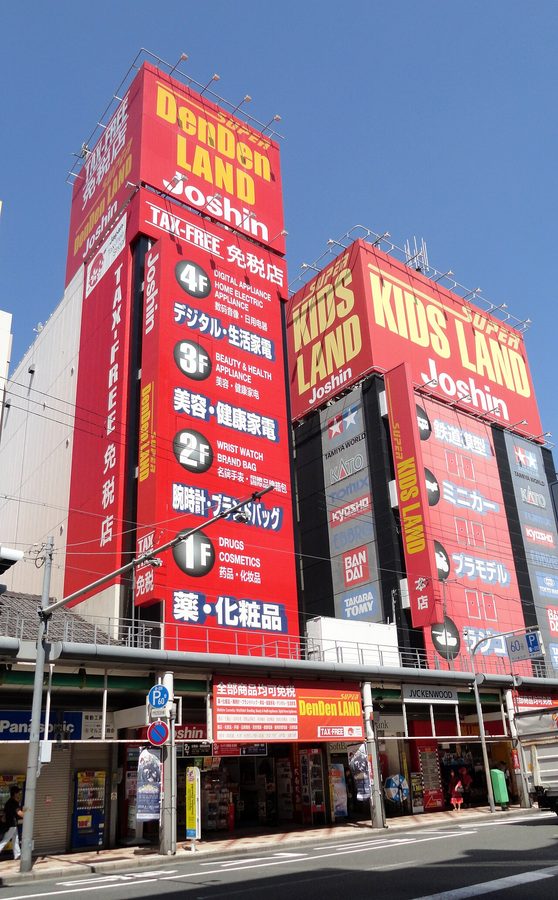
The Joshin Super Kids Land head store at 4-12-4 Nipponbashi is the place for new kits: Gundam plastic models, scale models, railway models, minicars and radio control on separate floors, open 10:00–20:00 every day. Joshin has its head office in Nipponbashi and ran a radio store here in the post-war years, and its red buildings are the easiest landmark on Sakaisuji.
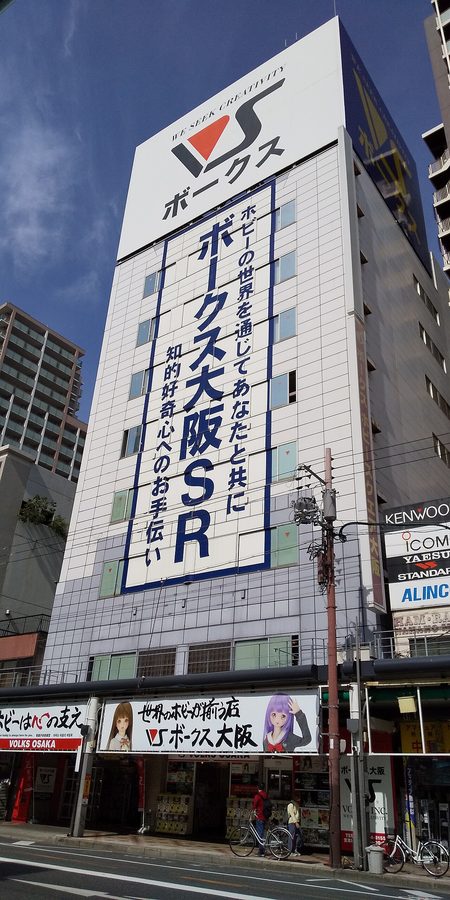
Further south at 4-9-18, the Volks Osaka Showroom claims the most sample models on display in Nipponbashi, glass case after glass case of painted kits, plus tools and materials. It opens 11:00–20:00 with no fixed closing day, except when the building itself closes. Even if you never build a model, the finished samples are worth ten minutes.
Second-hand figures are where Den Den Town beats a normal shopping trip. Jungle has its main Osaka store here, with a separate shop for vintage robot and mecha toys, and it is the first place I would look for a figure that sold out years ago. Surugaya is the giant of the used trade: the Surugaya Osaka Nipponbashi main store at 4-11-3 sells figures, plastic models, games, CDs and books, 10:00–21:00 every day, and on 19 October 2026 the chain opened a three-floor Den Den Town store at 4-10-1 devoted to second-hand stock.
Retro games
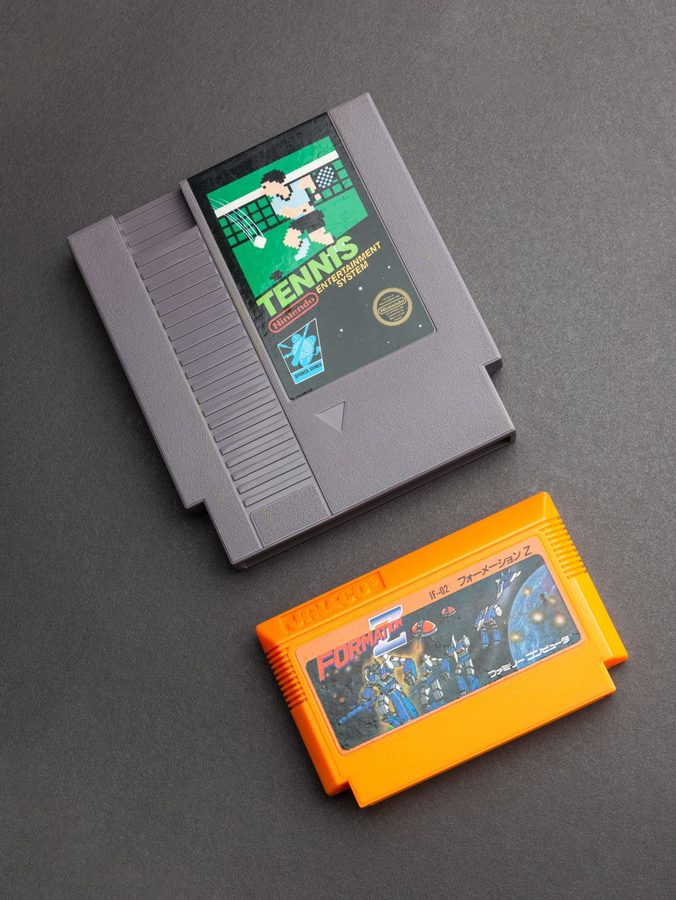
Super Potato Ota Road, on the ground floor at 3-8-18 Nipponbashi, calls itself the biggest retro game stock in western Japan, and the list of systems it carries runs from Famicom and Mega Drive through PC Engine and Neo Geo to the first PlayStation. It opens 11:00–20:00 on weekdays and 10:00–20:00 at weekends and on holidays, every day of the year, with a cheap sweets corner and character goods besides the games. The chain closed its Namba branch in 2021, so this is the one.
Prices for sought-after games are not low, and regulars say the same title can be cheaper at Surugaya or a smaller dealer on Ota Road. Learn three phrases on the price tags: hakosetsu ari (箱説あり), boxed with the manual; soft nomi, cartridge or disc only; and junk, sold untested. Junk is for parts unless you can repair it.
Trading cards
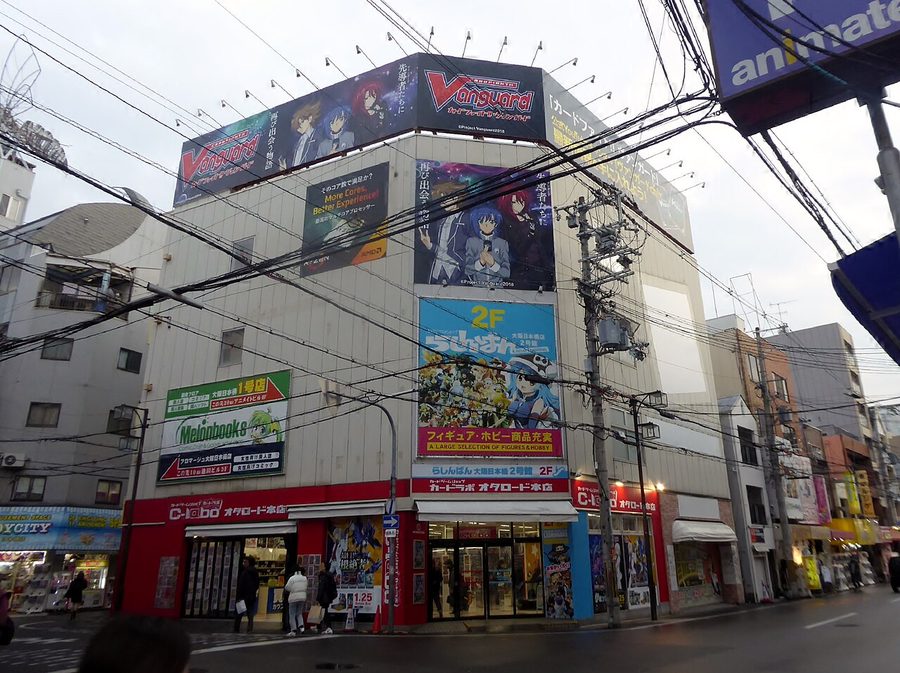
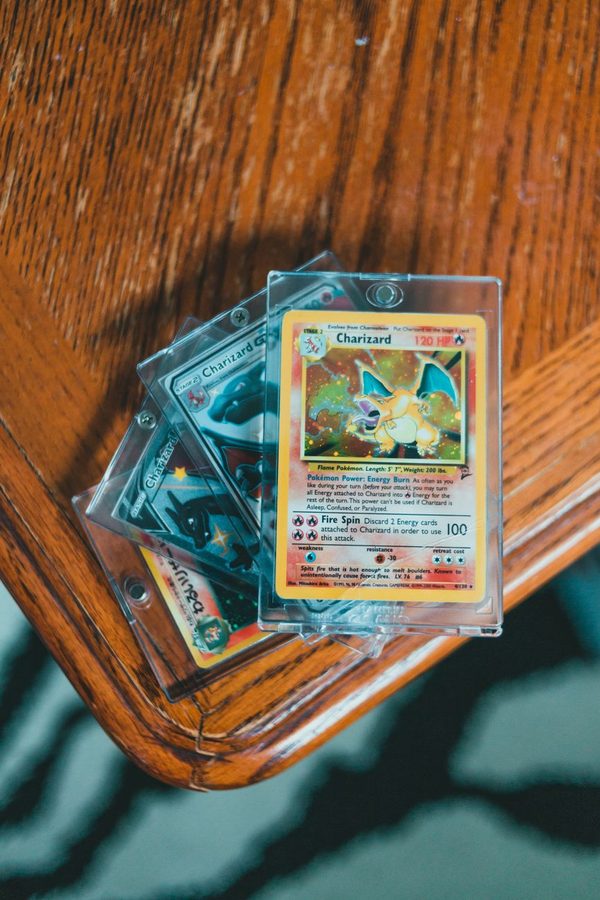
Card shops have taken over more of Den Den Town than any other trade in the last few years, and most of them sell single cards from glass cases as well as packs and boxes. Yellow Submarine Namba, just off Nansan-dori (なんさん通り) at 2-1-3 Nambanaka, sells card games, figures and plastic models and has a duel room, open 12:00–20:00 on weekdays and 11:00–20:00 at weekends and on holidays. Card Labo’s Ota Road head store at 4-16-1 Nipponbashi absorbed the chain’s second Namba branch in 2024.
The cards here are Japanese-language editions, which is what most collectors abroad are after. Singles are priced by condition, so look at the corners and the surface before you pay, and keep the receipt with any expensive card you carry home.
Anime goods and capsule toys
At the north end of Ota Road, Animate Osaka Nipponbashi is the big new-goods store for manga and character merchandise, and a new apartment hotel opened beside it in June 2026. Most of the rest of Ota Road is smaller shops for character goods, cosplay costumes and wigs, and doujinshi, the self-published fan comics, with second-hand dealers on the floors above.
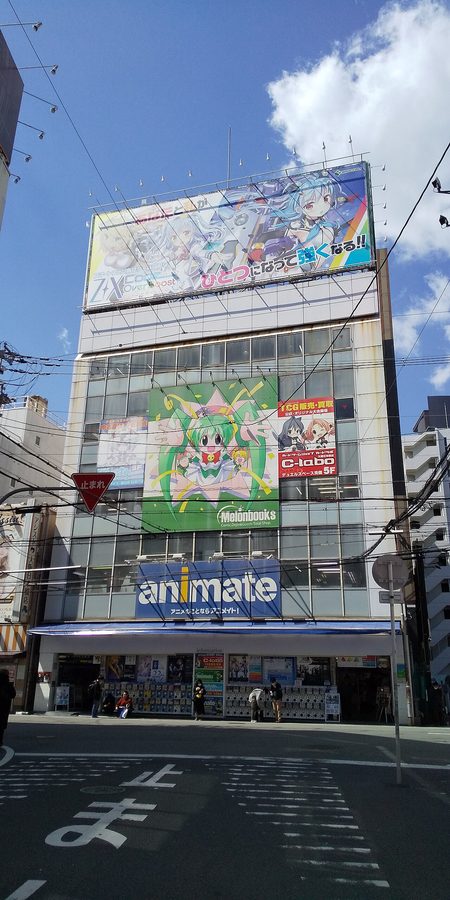
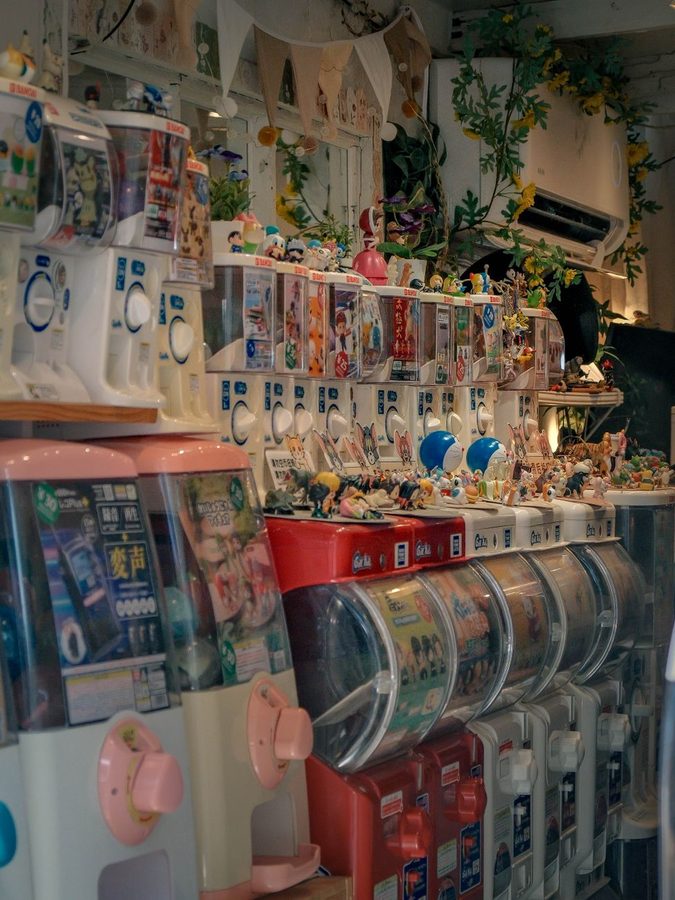
Capsule toy machines, gachapon, fill whole shopfronts on Ota Road and the lanes off it. At a few hundred yen a turn they are the cheapest souvenir in the district, and the addictive kind; set a coin limit before you start.
Electronics, parts and the old trade
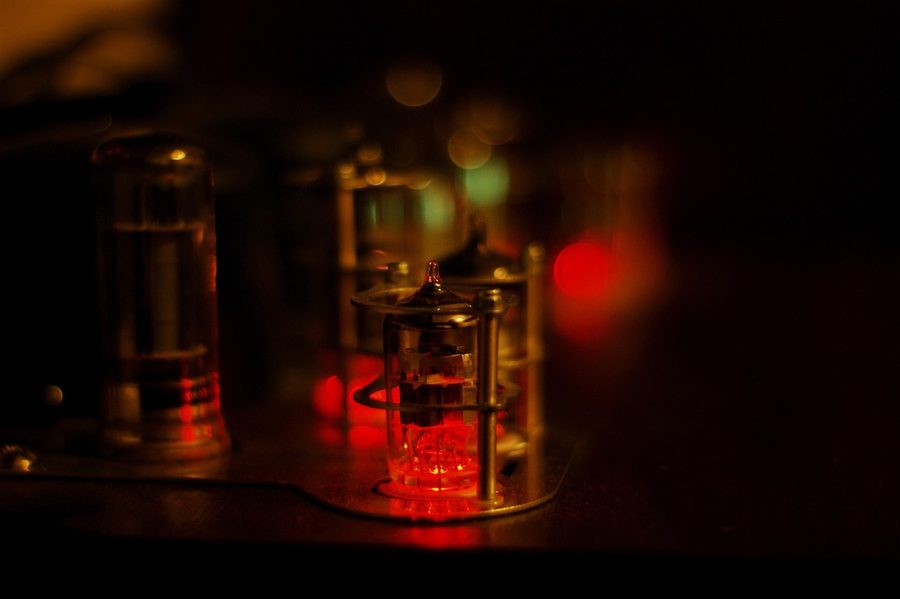
For components, Silicon House, run by Kyoritsu Electronic Industry at 5-8-26 Nipponbashi, is the parts shop that keeps the radio-street tradition going: kits, valve amplifier kits, robots, LEDs, motors and the shelves of the old Digit parts shop, which moved inside in 2021. It opens 10:30–19:30 Monday to Saturday and 10:00–19:00 on Sundays and holidays, with no closing day except over New Year.
Used cameras are not a Den Den Town speciality. PC parts dealers and second-hand phone shops are still scattered along Sakaisuji; check what the same thing costs at home before you buy anything expensive, since tax-free savings now only arrive after you leave the country.
Maid cafes, concept cafes and the touts
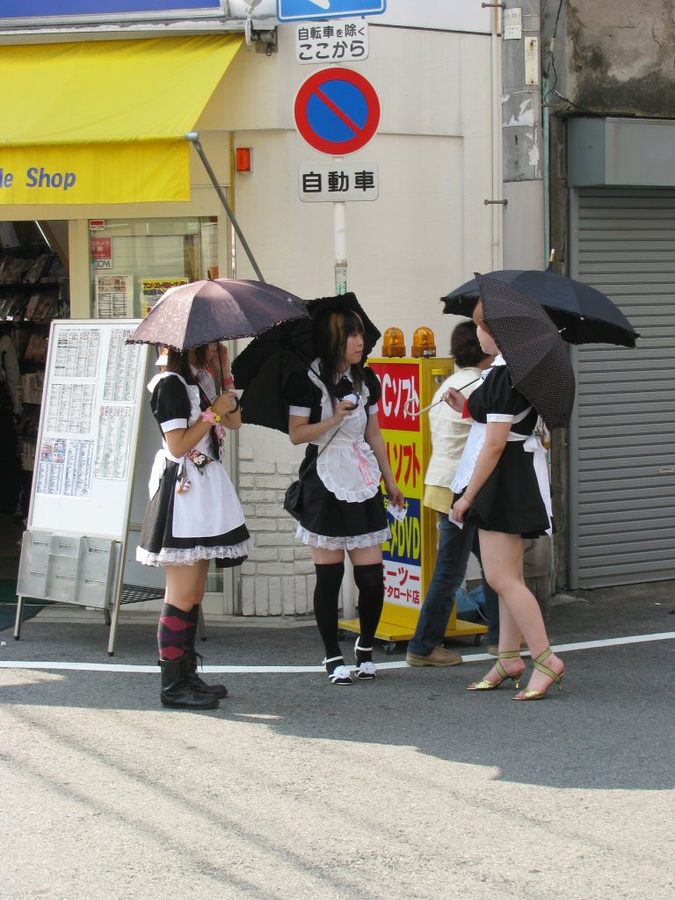
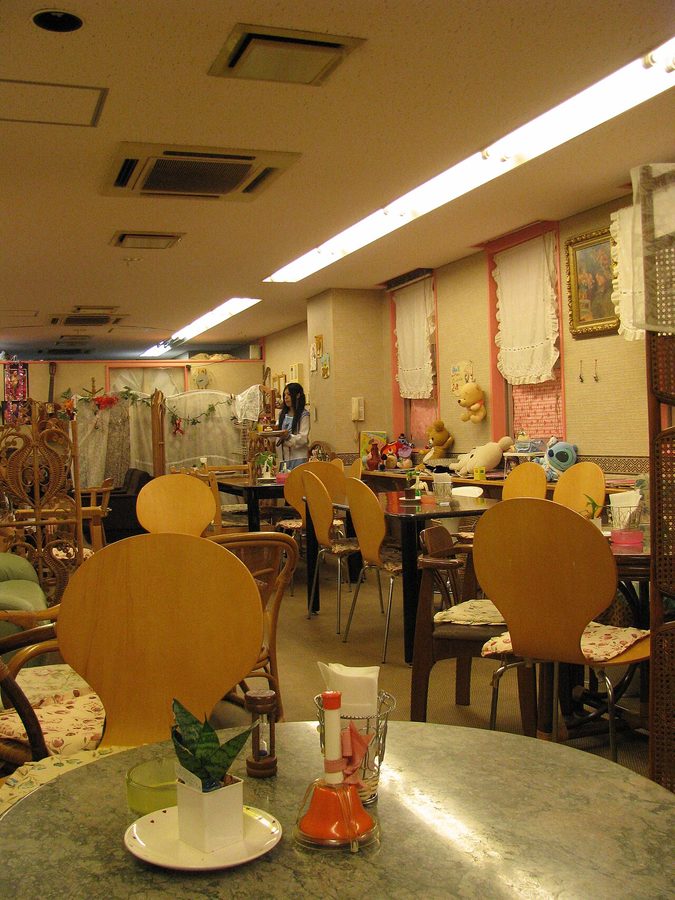
A maid cafe is a cafe where the staff play maids and the customers play returning masters, with set greetings, drawn-on omelettes, little games and paid photographs. It is theatre with a seat charge, and it is aimed squarely at tourists as well as regulars. Maidreamin, the Akihabara chain, runs a branch on Ota Road: entry is ¥880 an hour for adults plus at least one order, and the chain puts a typical visit at ¥1,650–¥5,000 a head as of November 2026. The Ota Road branch opens 11:30–23:00 on weekdays and from 10:30 at weekends.
Concept cafes (konkafe) are the evening version: small bars with a theme, staff called cast, and a bill built from a seat charge per hour, drinks, and drinks bought for the cast. Many are run properly. Operators have set up the Osaka Nipponbashi Concept Shop Association to push for a maid and concept cafe culture people can enjoy safely, and the 2026 Street Festa ran a cast grand prix with it.
The problem is the touts. From late afternoon, staff in costume stand on Ota Road and the side streets with signs and call out to men walking past, and a bar you were walked to by a stranger is the one where you have least say over the bill. Osaka City’s touting ordinance bans touting in designated zones of Kita and Minami, with fines of up to ¥50,000 and patrol staff on the streets since April 2024. Whether or not a given street falls inside a zone, the advice is the same.
So the rule is mine, not the city’s. Choose a cafe yourself from its own website rather than from a person on the street, ask for the price list before you sit down, and leave if the seat charge, the minimum order and the price of a drink for the staff are not on it. Maid cafes in daylight are harmless fun. A stranger steering you to an upstairs bar at 22:00 is not.
The Nippombashi Street Festa
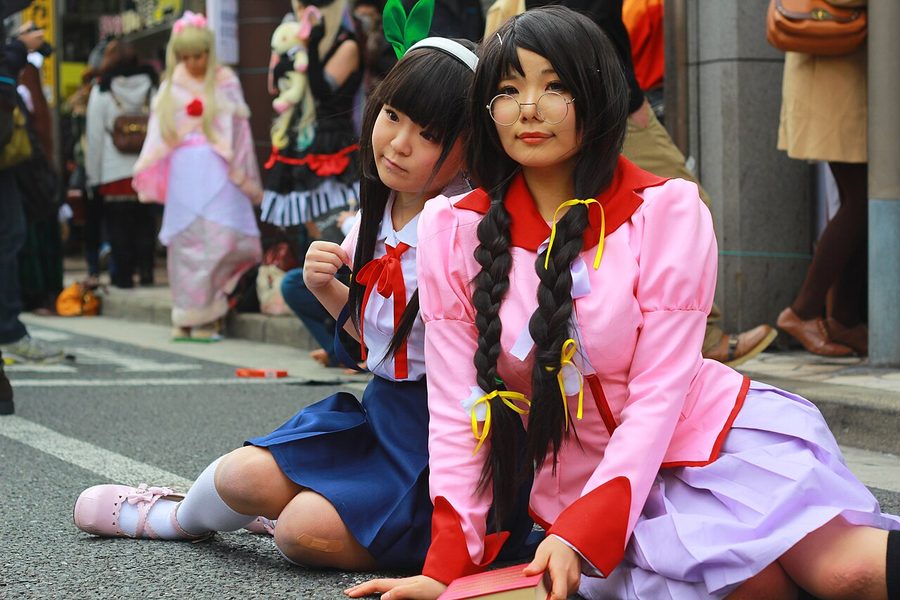
Once a year Sakaisuji closes to traffic and fills with cosplayers. The Nippombashi Street Festa (日本橋ストリートフェスタ) began in 2005 to bring trade back to the shopping street, with 130,000 visitors and 300 cosplayers in its first year. The 19th edition, on Sunday 17 May 2026, drew 240,000 people.
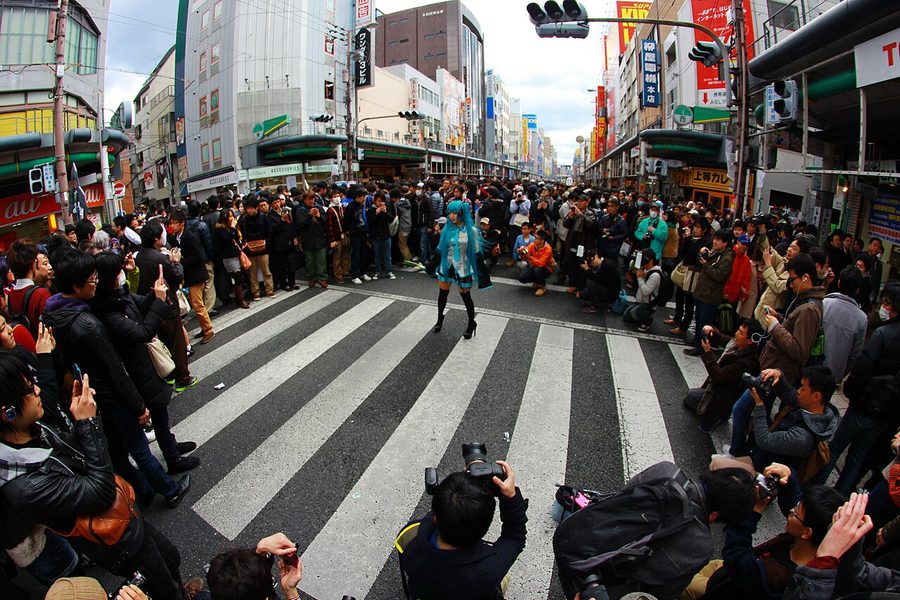
In 2026 Sakaisuji was open to pedestrians from 12:00 to 15:00 between the Ebisucho junction and the Nipponbashi 3-chome crossing, with traffic stopped from 11:00 to 15:30; Ota Road ran its own programme from 12:00 to 14:30, and three side venues, one of them called Gokai Square, ran 11:00–17:00. The day included a cosplay parade of about 500 people, a parade of maid and concept cafe staff, and stages and stalls along the road. Watching is free. Taking part in costume or with a camera needs a paid pass, and the parade needs advance entry.
The 2027 date had not been announced as of November 2026. Earlier editions were held in March, around the spring equinox, so watch the festa’s own page from the start of the year. If you are in Osaka that day, come for the parade and leave the shopping for another afternoon; the shops are packed and Sakaisuji is a crowd.
Takashimaya East Annex: the store that survived the fire
The one building in the district that came through the 1945 air raid is still standing at 3-5-25 Nipponbashi. It was built from 1928 as the Osaka store of Matsuzakaya, a modest department store for the south of the city, which moved to Tenmabashi in 1966. Today it is the Takashimaya East Annex (高島屋東別館), listed as an Important Cultural Property, with a hotel and a food hall inside and the department store’s archives on the third floor.
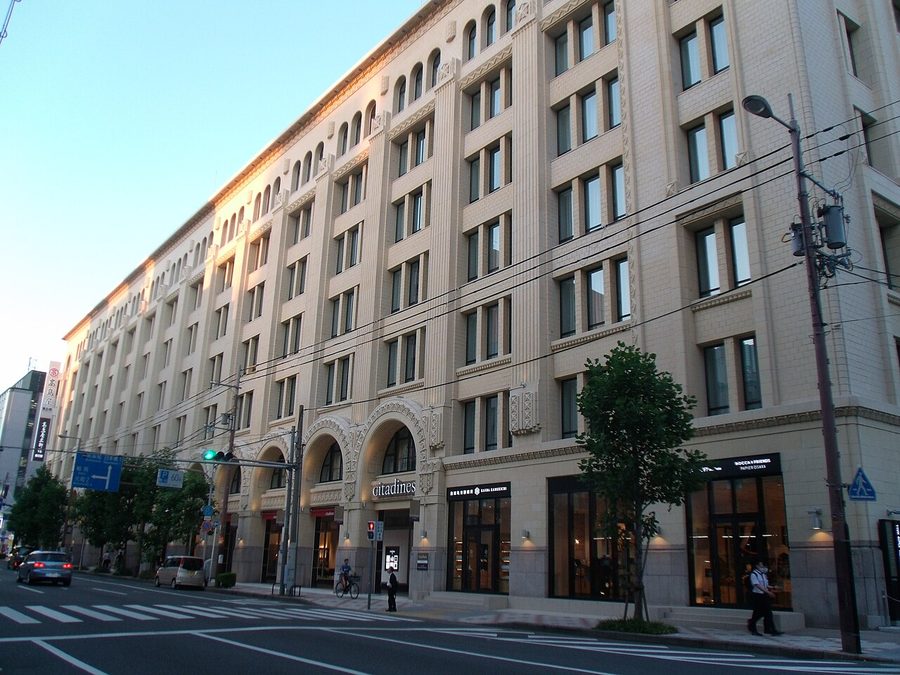
The Takashimaya Archives (高島屋史料館) open 10:00–17:00, last entry 16:30, and close on Tuesdays and Wednesdays, between exhibitions and over New Year. From 21 November 2026 they are showing the fourth part of a series for the company’s 195th anniversary. It is about eight minutes on foot from exit 5 or 10 of Nippombashi Station, and it makes a quiet half hour between hobby shops.
Gokai Hyakkaten: the name with no building left
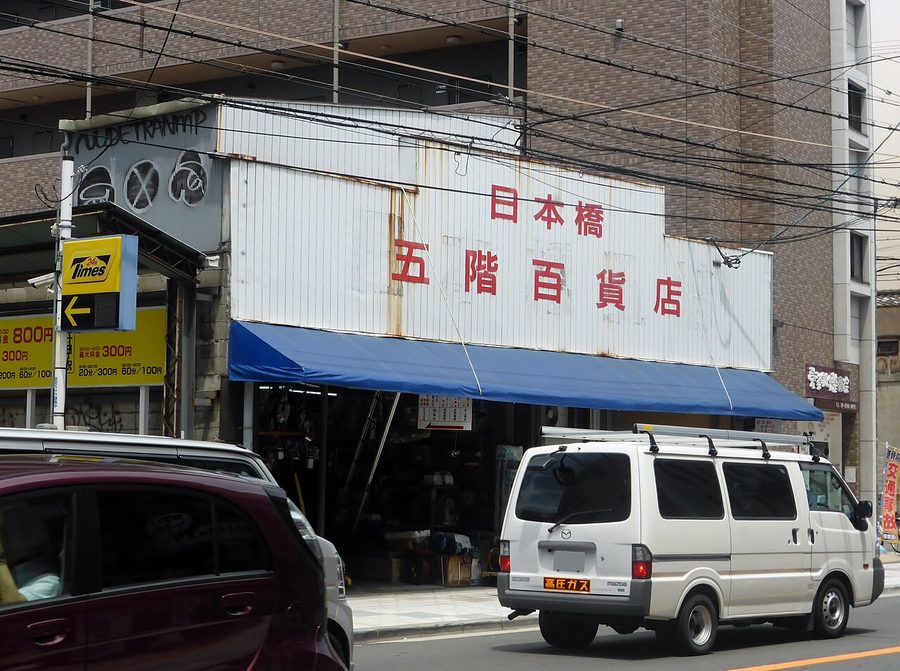
For decades the oddest sight in the district was a market called Gokai Hyakkaten (五階百貨店), “five-floor department store”, in a building of one storey, with a three-storey building of the same name nearby. Both kept Chobokaku’s nickname alive, with tool dealers, a vacuum-tube seller, an American comics shop and second-hand odds and ends under one roof or another.
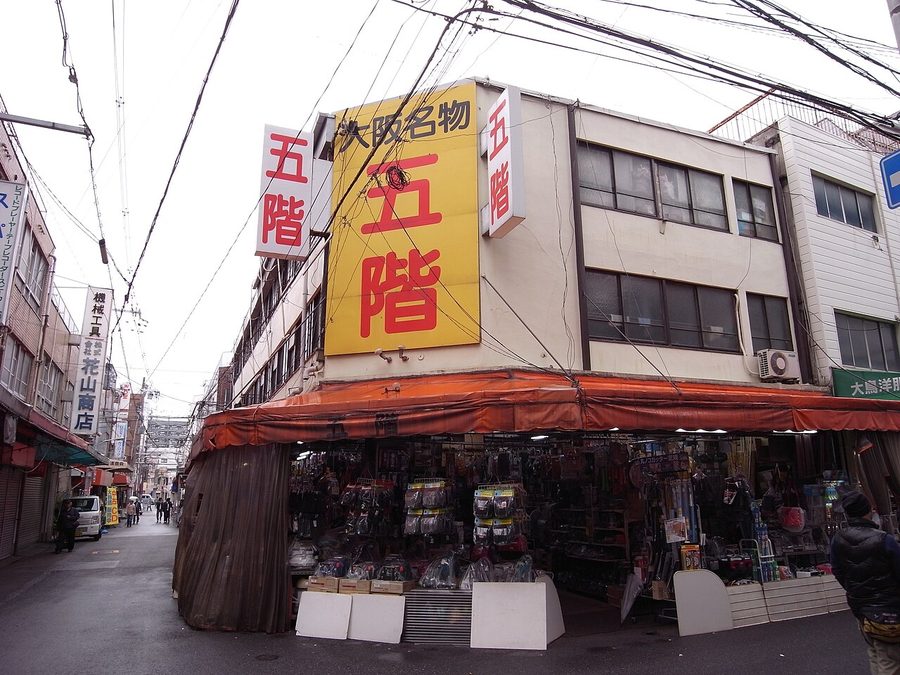
Neither is there now. Demolition of the three-storey building at 4-14-10 Nipponbashi began in September 2025, and the site has been a coin car park since early 2026. The single-storey market was knocked down in late September 2026, and a ten-storey hotel is planned for the plot, due to start in February 2027 and finish in May 2028, according to local shop news. If you came to haggle over tools at Gokai, there is nothing left to haggle with.
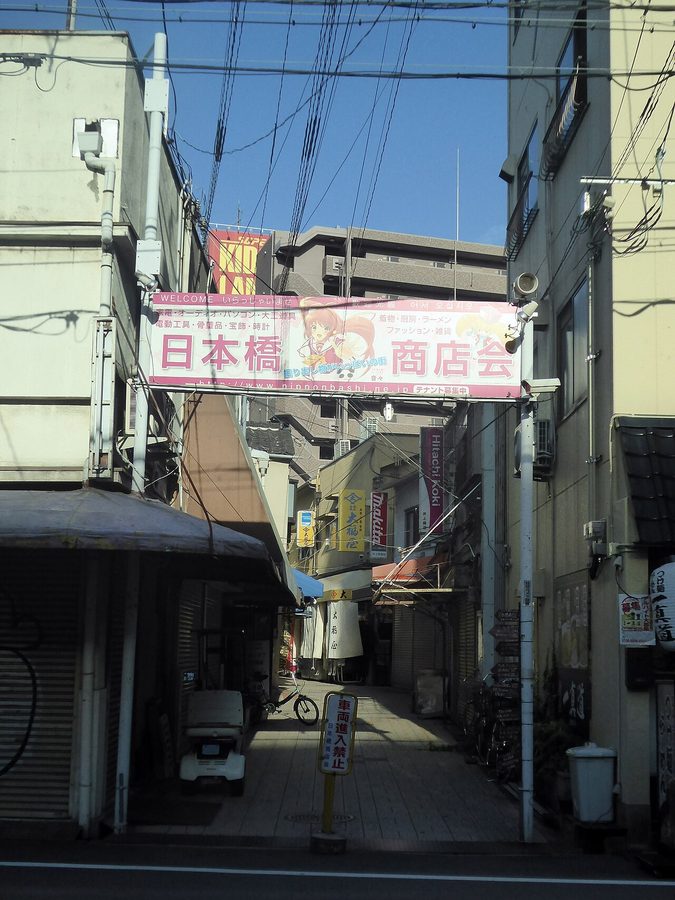
What survives is the street behind it. The Nipponbashi shotenkai, a narrow shopping lane in the same block, once called itself Shin-Gokai, “New Five Floors”, and in 2025 still had a board about Chobokaku inside. The footwear wholesale street, the Okura-ato Nipponbashi Hakimono Ton’ya-gai (御蔵跡日本橋履物問屋街), may no longer trade as a wholesale street, so do not plan a trip around it.
Tax-free, voltage and region locks
Tax-free shopping changed on 1 November 2026. Under the refund system for visitors, you now pay the full price including consumption tax at the shop, show your passport, and get the tax back after customs confirms the goods are leaving the country. The minimum is ¥5,000 before tax at one shop on one day, and the goods must leave Japan with you within 90 days.
The catch is at the airport. You confirm at a kiosk in the departure hall before you check in your bags, with every item from each receipt in hand: if one item from a receipt is missing or already eaten, nothing on that receipt is refunded. At Kansai Airport, short-stay visitors can also do it online through Visit Japan Web. Not every small shop in Den Den Town offers tax-free at all, so ask before you queue, and bring the passport itself, not a photo of it.
Japan runs on 100 volts, at 60 hertz in Osaka, with two flat-pin plugs. Phone and laptop chargers marked 100–240 V work anywhere, but a Japanese console, amplifier or rice cooker rated for 100 V only needs a step-down transformer in a country on 220–240 V. Old consoles also put out a Japanese NTSC picture, which some European televisions will not show without help.
Region locks catch people out on the newest machine too. The cheaper Nintendo Switch 2 sold in Japan, the ¥59,980 Japanese-language model listed on Nintendo’s line-up page, runs in Japanese only and links only to a Nintendo Account set to Japan; Nintendo lists a multilingual version at ¥69,980. Japanese DVDs are region 2, which plays in the UK and Europe but not North America, and Japanese Blu-rays are region A, which is the other way round.
Getting there
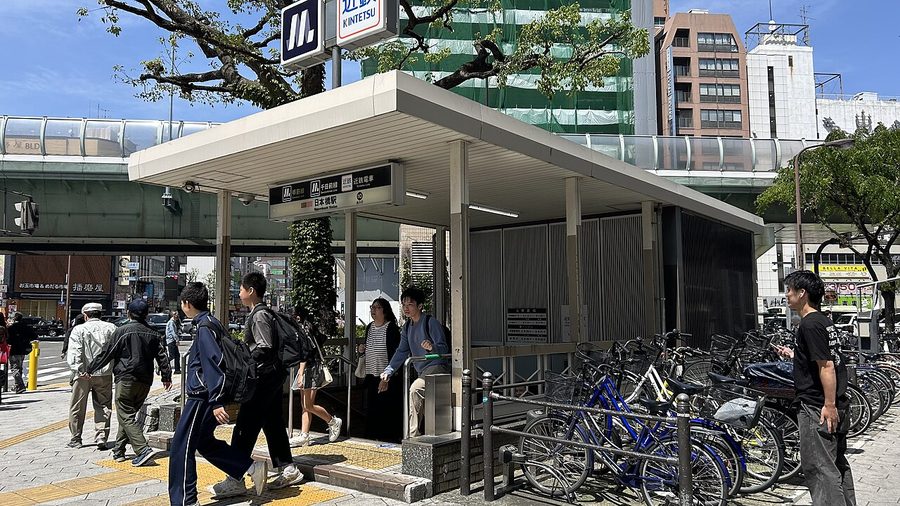
Den Den Town has a station at each end, both on the Osaka Metro Sakaisuji Line and one stop apart. From the north, use Nippombashi Station (Sakaisuji Line and Sennichimae Line; Kintetsu trains stop at the adjoining Kintetsu-Nippombashi), exit 10, signed for Kuromon Market (黒門市場) and Den Den Town, or exit 5, which puts you on the west side of Sakaisuji heading south. Exit 7 is for the bunraku theatre.
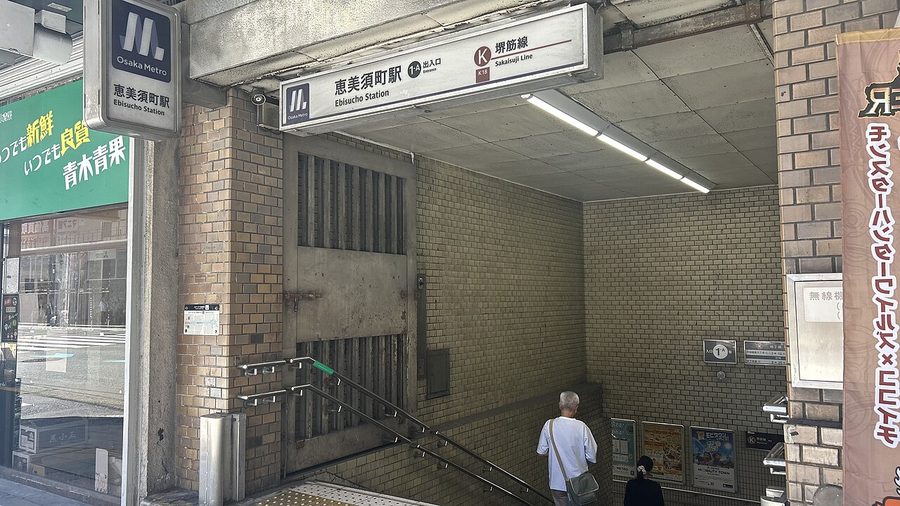
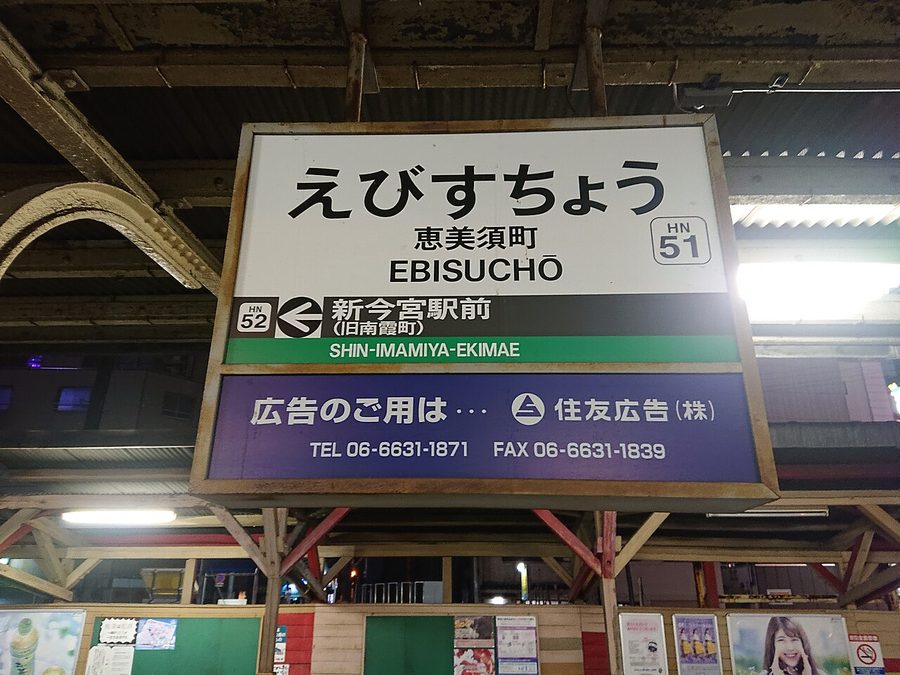
From the south, use Ebisucho Station (Osaka Metro Sakaisuji Line), exit 1-A for the east side of Sakaisuji and the information centre, or exit 1-B for the west side. The station map shows which exit lands on which corner. The Hankai tram also ends at Ebisucho, and exit 3 is the Shinsekai side of the junction.
From Namba, it is quickest on foot. Walk east from the Nankai station along Nansan-dori and turn right at the second corner onto Ota Road; Surugaya puts its main store seven minutes from Nankai Namba Station. Namba itself, with its stations, malls and the Doguyasuji kitchenware arcade, is a district of its own and worth a separate afternoon.
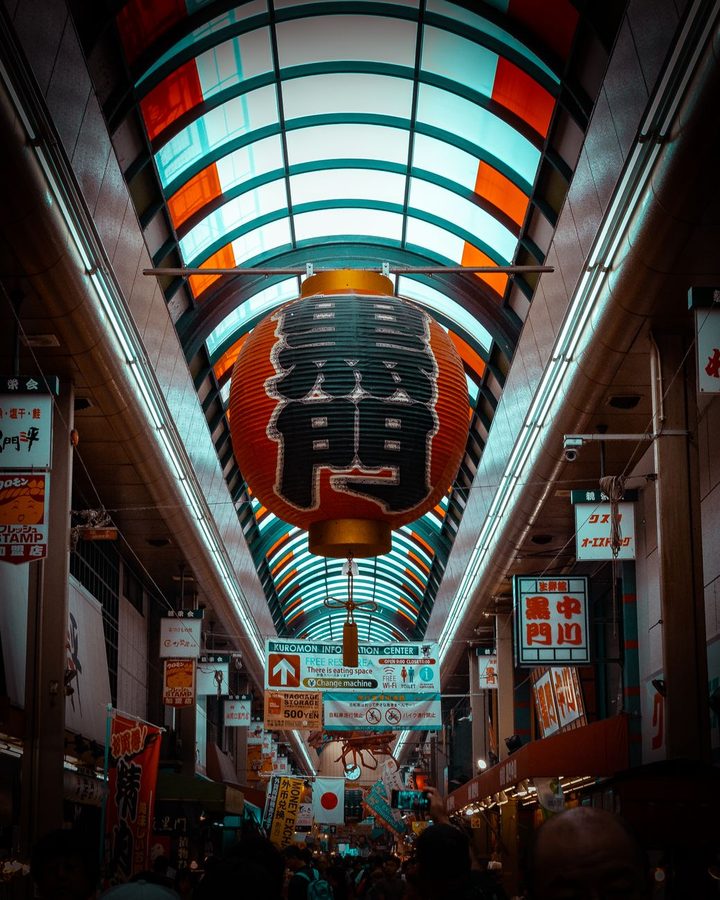
Kuromon, the city’s best-known food market, sits just east of Sakaisuji at the north end of the district, and its stalls are trading while the hobby shops are still shuttered, which makes it the obvious place to eat before you start. At the other end, Shinsekai and its tower are across the Ebisucho junction, so a south-bound walk through Den Den Town ends at the Shinsekai arch.
An afternoon, in order
Eat at Kuromon around 11:00, then walk south down the east side of Sakaisuji past Super Kids Land and Volks to see what new kits cost. Cut west to Ota Road for cards, figures and anime goods, and photograph price tags rather than buying at the first shop; the second-hand dealers are within five minutes of each other. Come back to Super Potato and Surugaya with your list, then walk the last stretch south to Ebisucho.
That last stretch is the one I would not skip. The shops thin out, the pre-war Takashimaya building is well behind you, and the road underfoot is still the old highway south, the one the inns of Nagamachi were built to serve. Cross at the Ebisucho junction and the Shinsekai arch is on the far corner, the tram heads off towards Sakai, and you are carrying a bag of plastic models down a road that has been selling to passers-by for centuries.