03Minami
Namba: Stations, Streets and Where Everything Is
なんば駅Namba (Midosuji Line)
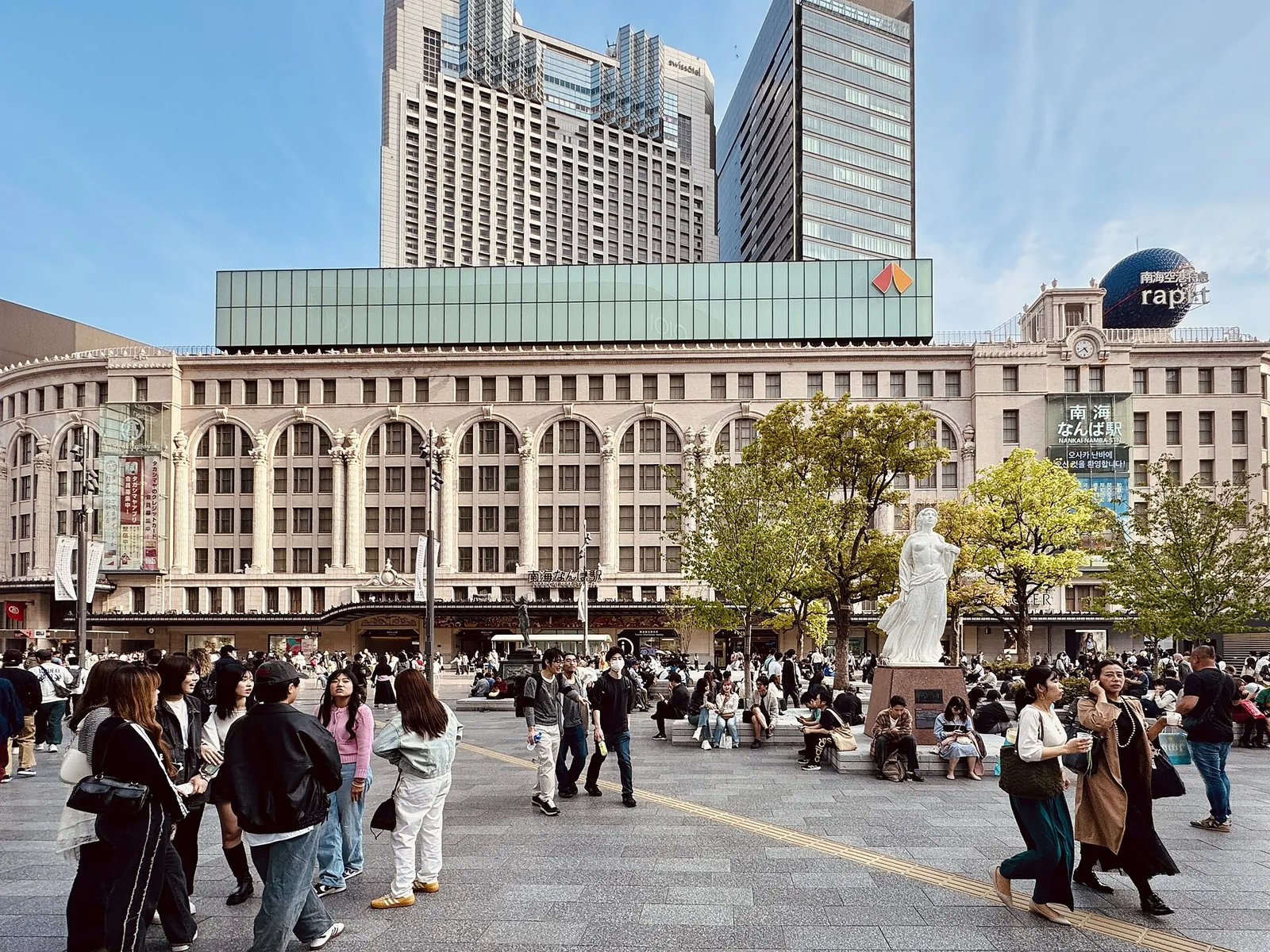
The blue train with the round windows pulls into Nankai Namba thirty-four minutes after leaving Kansai Airport, and almost everyone on it does the same thing. They wheel their cases down from the third-floor platforms, follow the crowd through the station’s big atrium, and step out into a wide paved square in front of a cream-tiled building with columns like a bank. Until November 2023 that square was a road.
Ten minutes later about half of them are lost. Not badly lost, just underground, staring at a sign that lists exits numbered into the twenties and four different stations that are all called Namba. One belongs to Nankai, one to Osaka Metro, one is shared by Kintetsu and Hanshin, and the fourth is JR’s, a fair walk to the west under a round building that looks like a gas holder.
Namba (難波) is the hub of Minami, the south end of Osaka’s day, and it is where most first-time visitors sleep, eat and change trains. It is also the part of the city that rewards a mental map more than any sight in it. Get the map right and every famous street is ten minutes from your hotel door. Get it wrong and you spend those ten minutes in a basement corridor.
Contents目次
- 01What Namba is, and how Minami fits together
- 02The stations, and how not to get lost between them
- 03Namba Hiroba and the Nankai Building
- 04Namba Parks, Namba CITY and the rest: what each is for
- 05Minatomachi River Place
- 06Sennichimae, Doguyasuji and Ura Namba
- 07Eating in Namba beyond Dotonbori
- 08Namba Yasaka Shrine
- 09Sumo in March: Edion Arena Osaka
- 10Where to go next from Namba
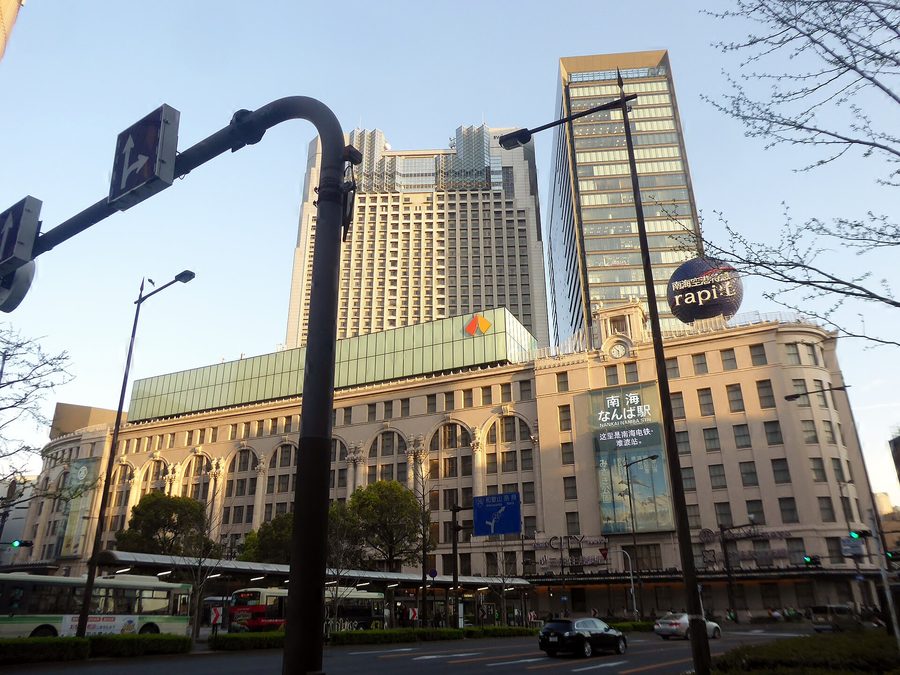
So start with the building. If you face its columns with the plaza at your back, Dotonbori is behind you, Namba Parks is behind the building, Sennichimae and the kitchenware street are to your left, and the Metro and Kintetsu platforms are underground behind you. That is most of the district in one turn of the head.
What Namba is, and how Minami fits together
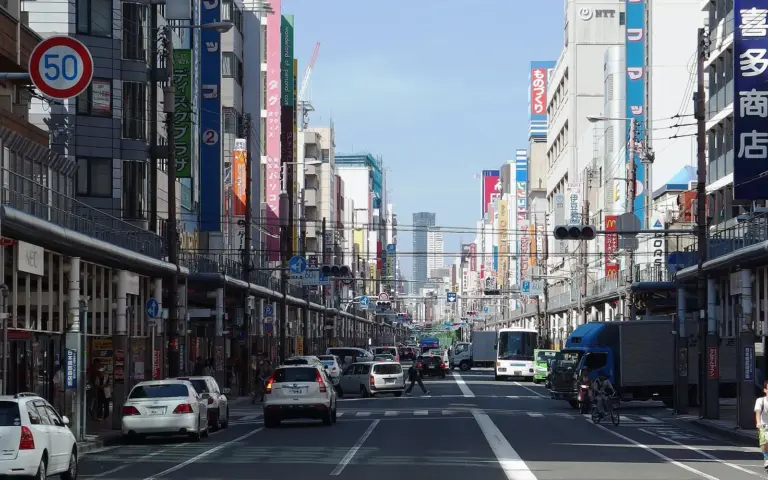
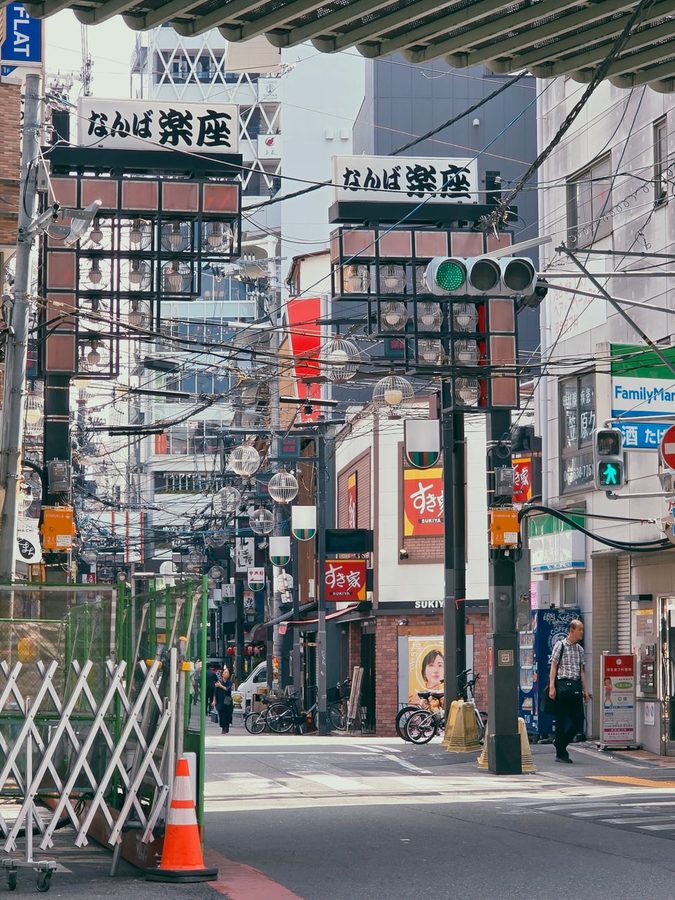
The characters 難波 are the city’s oldest name, and they can also be read Naniwa, which is why stations and shops write the district’s name in plain hiragana as なんば, so nobody reads it the poetic way. The old Namba village sat further north and was pushed south of the Dotonbori canal as the castle town grew in the early 1600s. What Osaka means by Namba today is roughly everything south of Dotonbori and west of Sennichimae, with the stations at its heart.
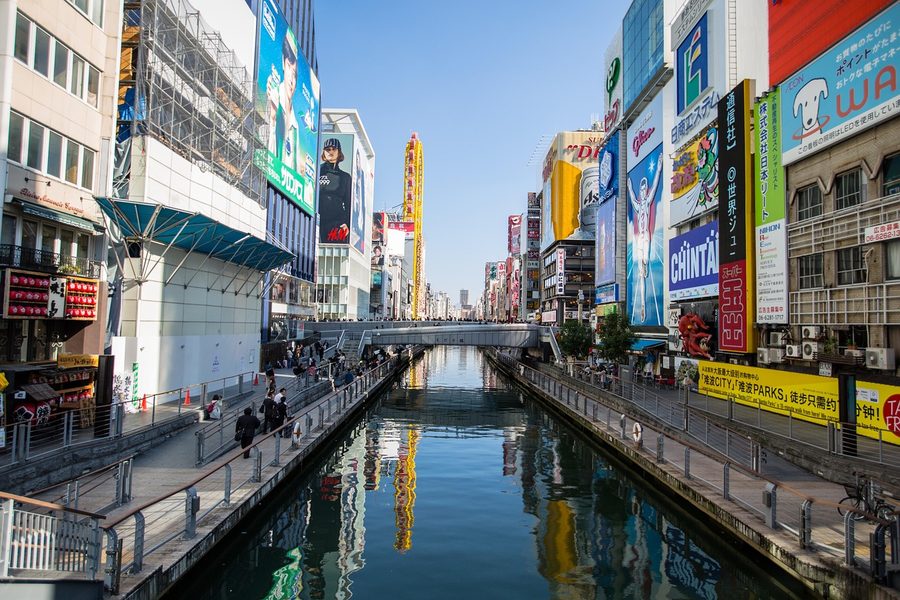
Minami (ミナミ) is the bigger idea: the whole southern entertainment district, from Shinsaibashi down to the Nankai station. Inside it the neighbourhoods are packed so tightly that you can walk between any two of them in a quarter of an hour. Here is the map I keep in my head.
- North: Dotonbori (道頓堀), the canal with the neon, five minutes up Ebisubashi-suji. Beyond it, Shinsaibashi.
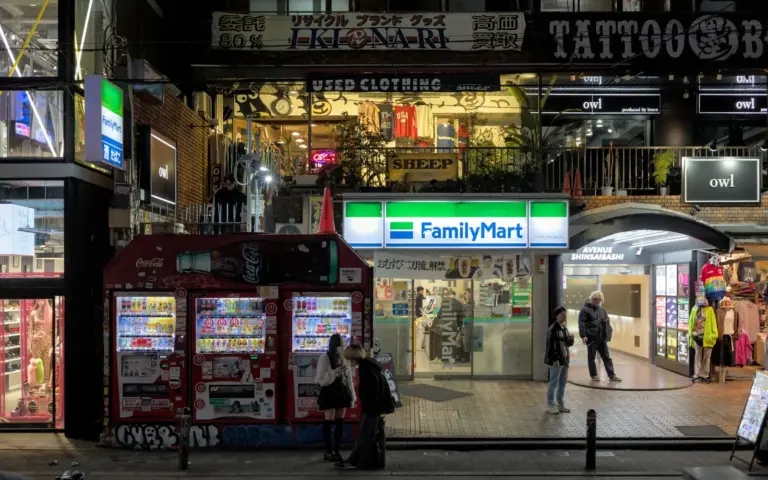
- North-west: Amerikamura (アメリカ村), the young, scruffy fashion quarter west of Midosuji.
- East: Sennichimae (千日前), the theatre and arcade quarter, then Kuromon Market (黒門市場) and Nipponbashi (日本橋) on Sakaisuji, home of the electronics and anime shops of Den Den Town.
- South-east: Ura Namba (裏なんば), “back Namba”, the bar alleys behind Takashimaya.
- South: Namba Parks and the sumo arena, and beyond them the road to Shinsekai (新世界).
- West: Minatomachi, JR Namba and the river, then the cafes of Horie.
People often ask whether to stay in Namba or Umeda. I would stay in Namba if you have three or four days and want to walk out of the hotel into dinner, and if you are flying into Kansai Airport, because the airport train ends here. Umeda, the Kita (north) hub around Osaka Station, is better for day trips to Kyoto and for the Shinkansen at Shin-Osaka, which is fifteen minutes from Namba on the Midosuji Line anyway. Namba is louder, cheaper to eat in and much better after dark.
The stations, and how not to get lost between them
Four stations carry the name, linked underground by two shopping malls: a blessing in the rain, a curse with luggage, because the malls were built for shoppers, not for people looking for platforms. Know which station you need before you go down the stairs.
| Station | Operator and lines | Use it for |
|---|---|---|
| Namba (Nankai) | Nankai Main Line and Koya Line, rapi:t | Kansai Airport, Koyasan, Wakayama, Sakai |
| Namba (Osaka Metro) | Midosuji Line, Yotsubashi Line, Sennichimae Line | Umeda, Shin-Osaka, Shinsaibashi, Tennoji |
| Osaka-Namba | Kintetsu Nara Line, Hanshin Namba Line | Nara; Kobe Sannomiya |
| JR Namba | JR Yamatoji Line (Kansai Main Line) | Tennoji, Horyuji, JR Nara |
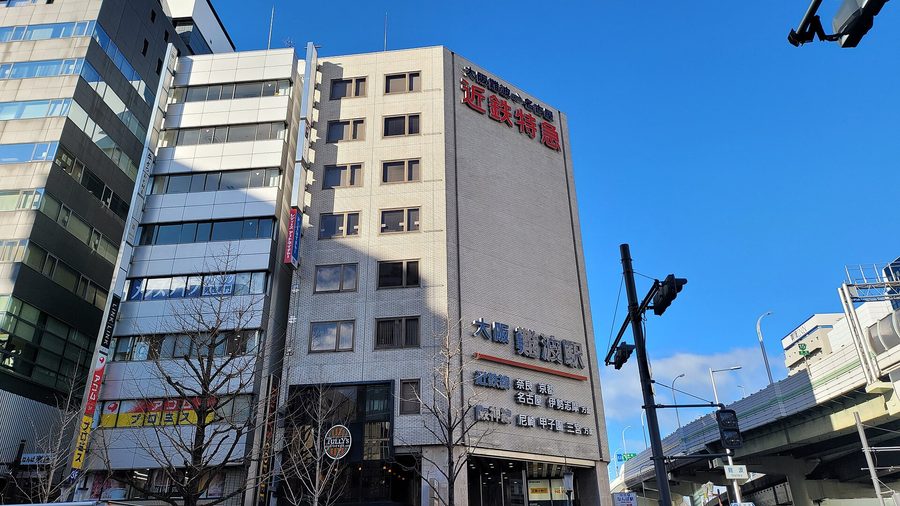
Nankai Namba, the airport station
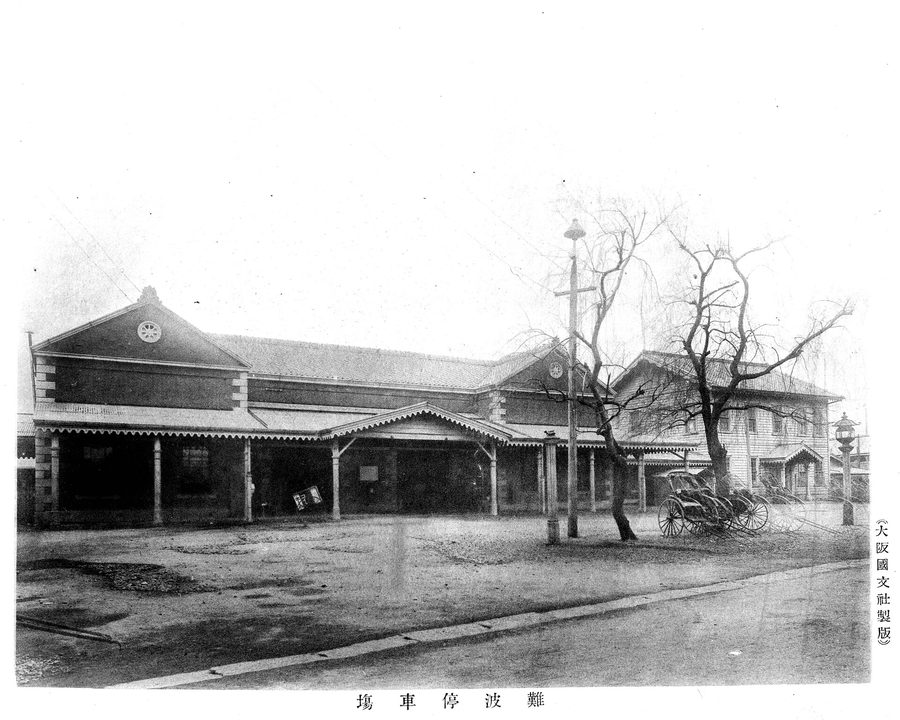
This is the oldest. The Hankai Railway, Nankai’s ancestor, opened a station here in 1885, and the arrival of its trains is what turned the empty ground of Sennichimae into a pleasure district. Today the platforms are on the third floor of the terminal building, and the trains run south to Kansai Airport, Wakayama and, on the Koya Line, to the foot of Koyasan.
The airport train is the rapi:t, Nankai’s limited express with the blue retro-futurist nose. The fastest run takes about 34 minutes. On top of the ordinary fare you pay a limited express charge, which on Nankai’s rapi:t page is ¥700 for a Regular Seat and ¥910 for a Super Seat as of November 2026; buy it on the train and it costs ¥300 more, buy it through Nankai’s ticketless service and it costs ¥150 less. Nankai’s ordinary airport expresses use the same line without the surcharge and take a little longer.
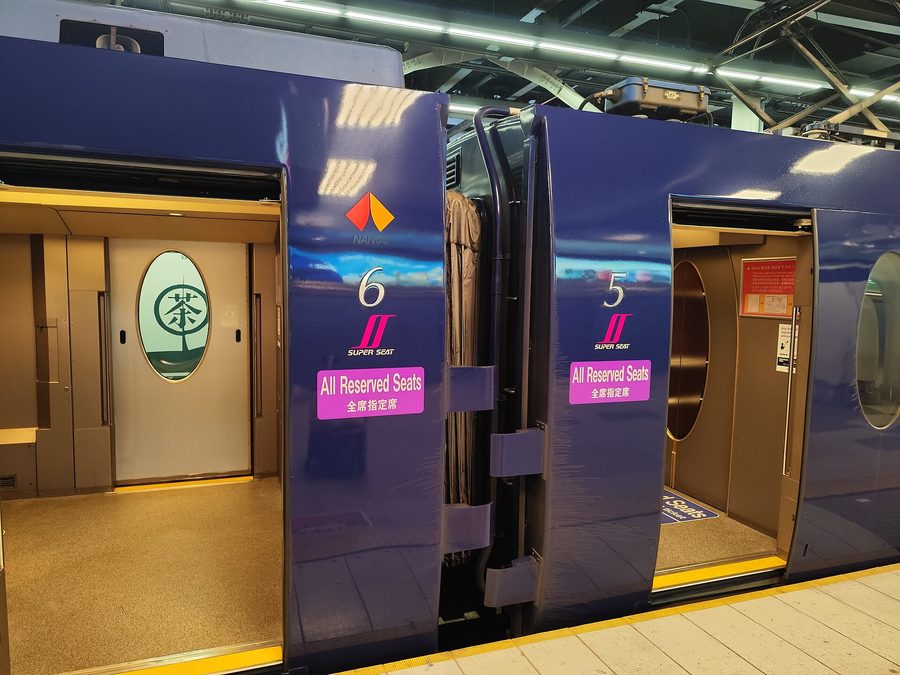
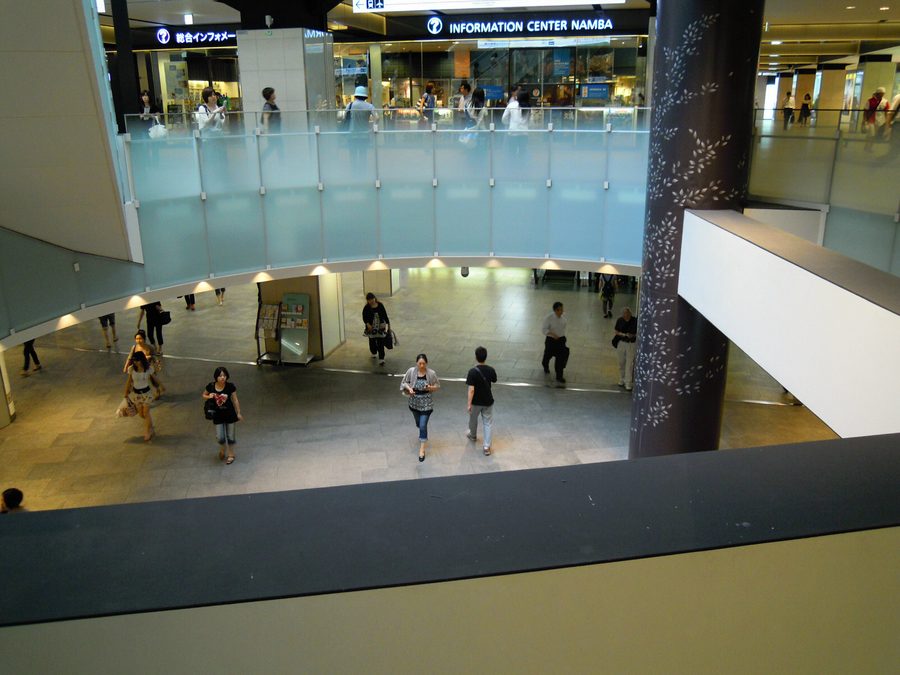
From the airport platforms you go down to the second-floor central gate and into Namba Galleria, the tall atrium under the station. For a generation of Osaka people this was the Rocket Plaza, the meeting point under a full-size model of an N-I rocket. The rocket was removed, or “launched” as Nankai put it, in August 2007, and the court reopened as part of the Galleria in 2009. If an old guide tells you to meet someone at the rocket, you will be waiting a long time.
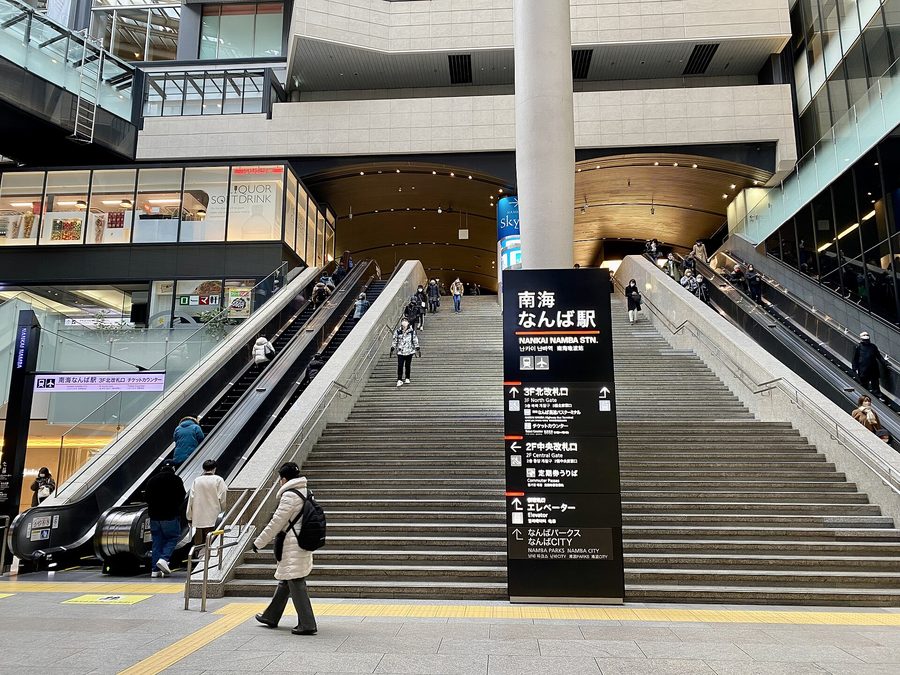
Osaka Metro Namba
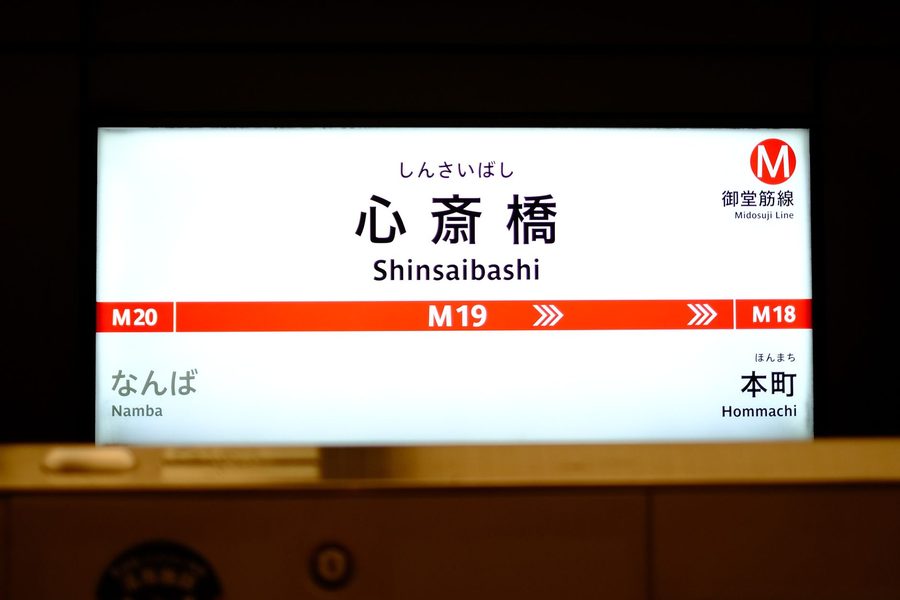
The subway station sits under Midosuji and Sennichimae-dori and serves three lines. The red Midosuji Line is the one you will use most: one stop north to Shinsaibashi, four stops to Umeda (about 8 minutes) and on to Shin-Osaka, and south to Tennoji. The Yotsubashi Line platforms are a long walk west of the others, and the Sennichimae Line runs east to Nippombashi and Tanimachi Kyuchome.
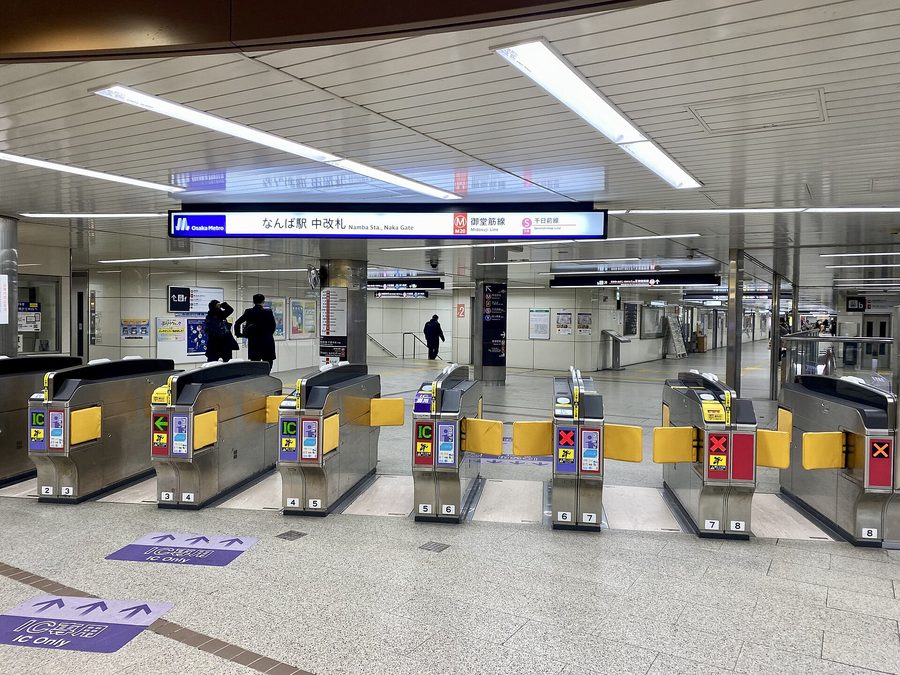
The Metro’s exits are numbered across its whole web of passages under Namba, not line by line. That is useful once you know it: exit 4 comes up at Takashimaya, exit 11 by the Jiyuken curry house, exit 26-B by Minatomachi River Place.
Osaka-Namba, for Nara and Kobe
Kintetsu opened its Namba terminal under Sennichimae-dori in 1970. In 2009 the Hanshin Namba Line arrived from the west and the station was renamed Osaka-Namba, and since then trains run straight through: east to Nara, west to Kobe Sannomiya. The Kintetsu Nara Line’s rapid express reaches Kintetsu-Nara in about 40 minutes, which makes this the easiest way to Nara’s deer park from the south of the city.
JR Namba, the one in the round building
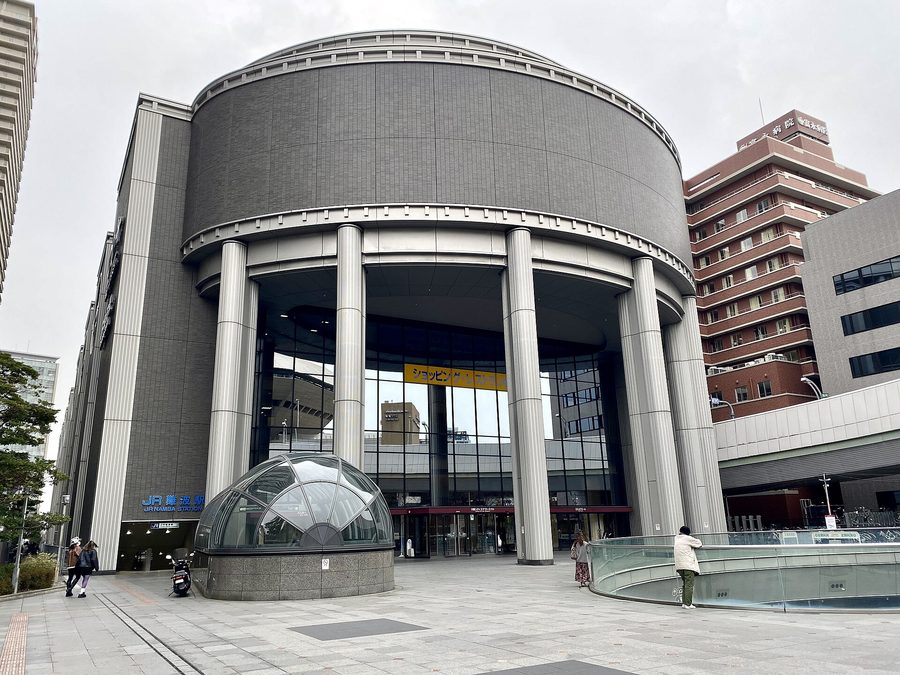
JR Namba was called Minatomachi until 1994, and it is the odd one out: a terminus of the JR Yamatoji Line, a good ten minutes’ walk west of the Nankai station, under the round OCAT building that also holds the city’s airport bus terminal. You cannot take a JR airport train from here. The Kanku Rapid trains that once started here have run from the Osaka Loop Line since 2008, so for the airport by JR you change at Tennoji or Osaka.
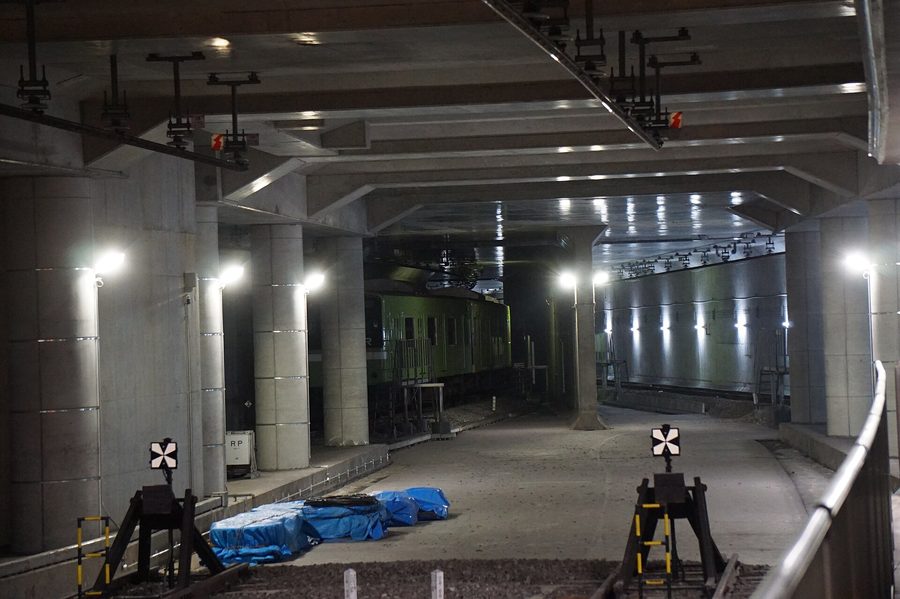
That will change. The Naniwasuji Line, now being dug beneath the west side of the district, is due to open in spring 2031 and will link JR Namba and Nankai directly to the new underground platforms at Osaka Station. Until then, JR Namba is mainly useful for Nara and for the temples of Horyuji.
Namba Walk and NAMBA Nannan: the malls between the stations
Namba Walk (なんばウォーク) runs under Sennichimae-dori from Yotsubashi-suji in the west to Sakaisuji in the east, two long parallel corridors of shops that connect the Metro, Osaka-Namba, Nippombashi and Kintetsu-Nippombashi stations. It opened in 1970 and was called Niji no Machi, “rainbow town”, until 1994, which is why a few older signs still say so. Shops open 10:00–21:00 and restaurants 10:00–22:00, with one closing day a month; Namba Walk’s access page lists which exits serve which station.
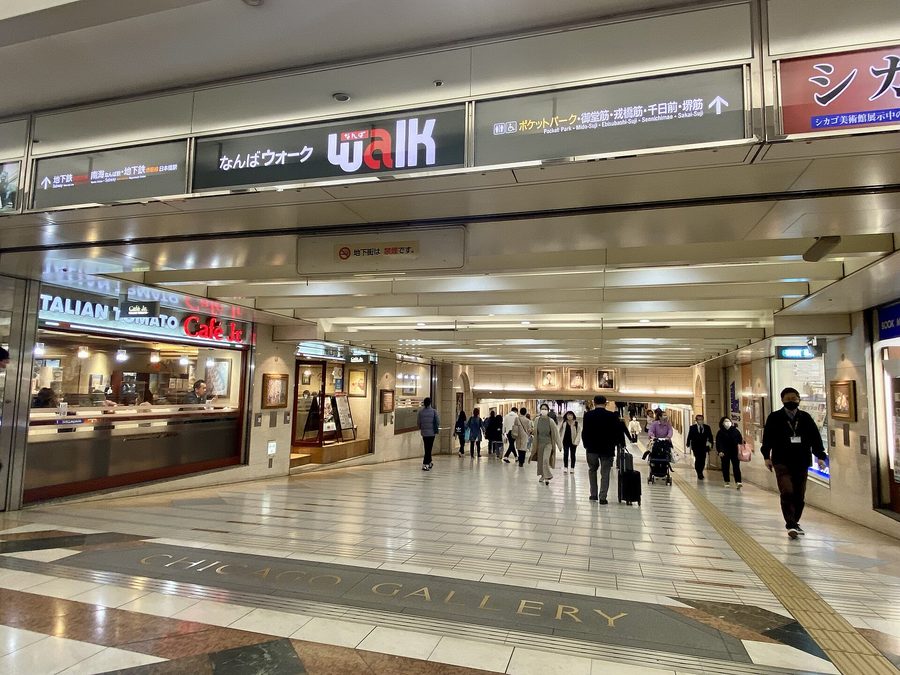
Two things the signs do not tell you. Namba Walk has one escalator and no lift, so with heavy luggage come up through a connecting building such as the Kintetsu Namba building. And its coin lockers are in two spots only, so near the Nankai station use the baggage counter, nest, opposite the second-floor central gate.
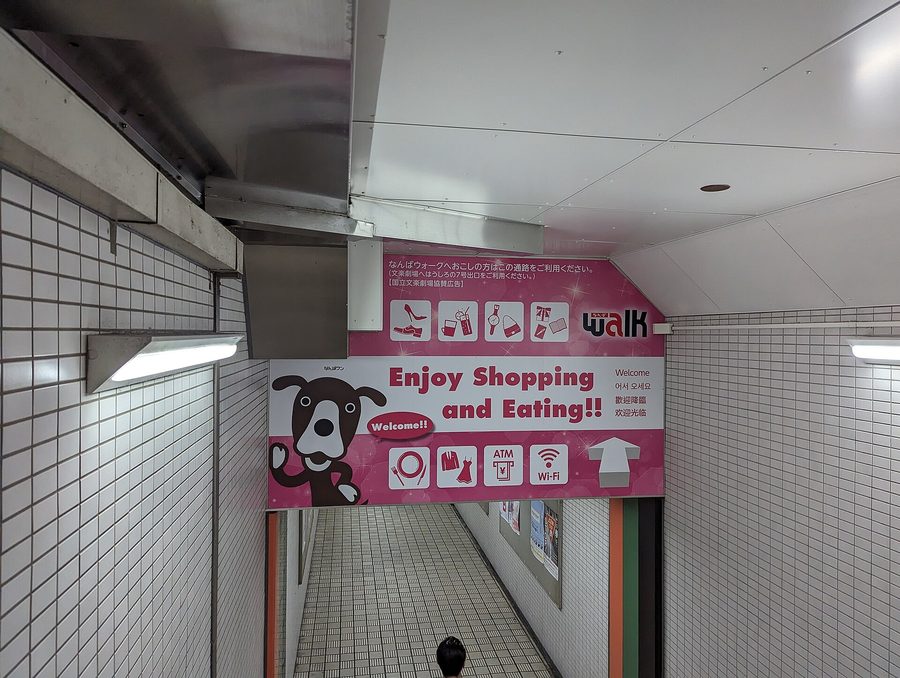
The other mall, NAMBA Nannan (NAMBAなんなん), is the short one under the plaza in front of the Nankai station. It is the city’s oldest: it opened in 1957 as the Namba Chika Center, Osaka’s first underground shopping street, and reopened after a full renovation on 27 March 2025. Its exits come up beside Takashimaya, and it is the covered way between the Nankai end of Namba and the Metro concourse; NAMBA Nannan’s site posts its monthly closing day.
Namba Hiroba and the Nankai Building
The plaza in front of the Nankai station is new. Osaka City closed the road and opened the square as Namba Hiroba (なんば広場) on 23 November 2023, with trees, benches and tables anyone can use, and on 26 December 2024 the city designated it a zone where private groups can hold events. Most of the time it is simply where Namba meets its friends. Nansan-dori, the street running south beside it, is still closed to most traffic while the works finish.
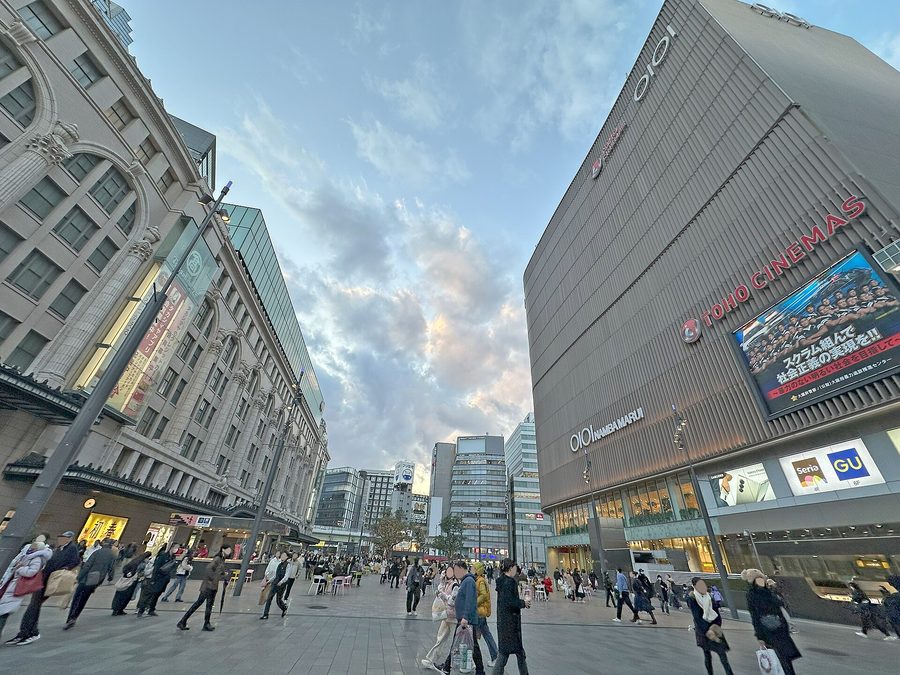
Behind the plaza stands the Nankai Building (南海ビルディング), finished in 1932 to a design by the architect Kuno Setsu, with cream tiles and Corinthian columns running the length of the facade. It was registered as a national Tangible Cultural Property in 2011. Above the main doors, under the canopy, look for the mosaic of festivals along the Nankai lines by the painter Ito Tsuguro, added when the station was rebuilt in the 1970s.
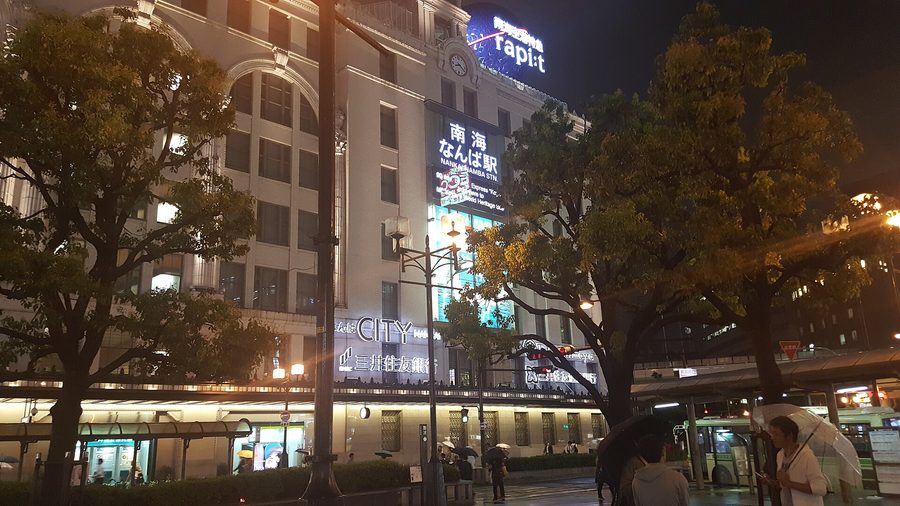
Takashimaya’s Osaka store fills most of the building and has done since it opened as “Nankai Takashimaya” in July 1932, the first department store in Japan with full air conditioning and heating. It is the company’s registered head office, and it is open 10:00–20:00 according to Takashimaya’s store hours page. Go down for the food halls, up for the tax-free counter and the restaurant floors.
Namba Parks, Namba CITY and the rest: what each is for
Nankai owns most of the ground around its station, and its malls are easy to confuse. Namba CITY is the everyday mall under the tracks, Namba Parks is the big one with the roof garden behind the station, and Namba Skyo is the office tower with a few floors of shops. Takashimaya is the department store in front.
Namba Parks and its roof garden
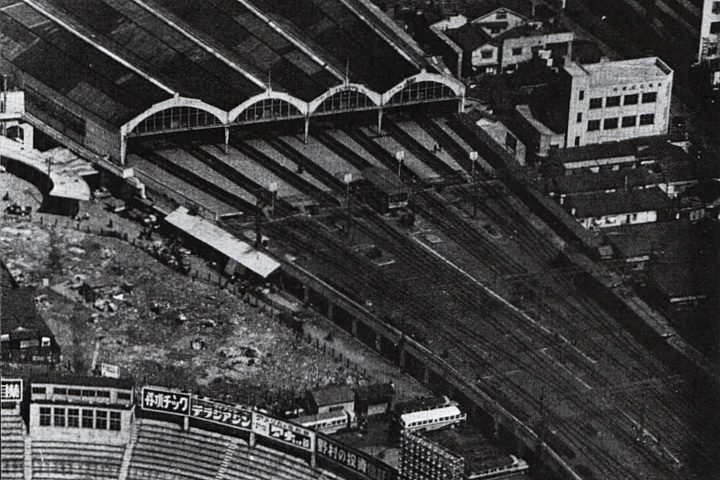
Namba Parks (なんばパークス) stands on the site of Osaka Stadium, the home of the Nankai Hawks baseball team from 1950. The ground’s stands rose right up against the station platforms, and after the team left for Fukuoka the ground limped on as a housing exhibition site until it was demolished in 1998. Before the stadium the site held a tobacco factory, and before that the shogun’s rice warehouses, the Namba Okura, built after the famine of 1732.
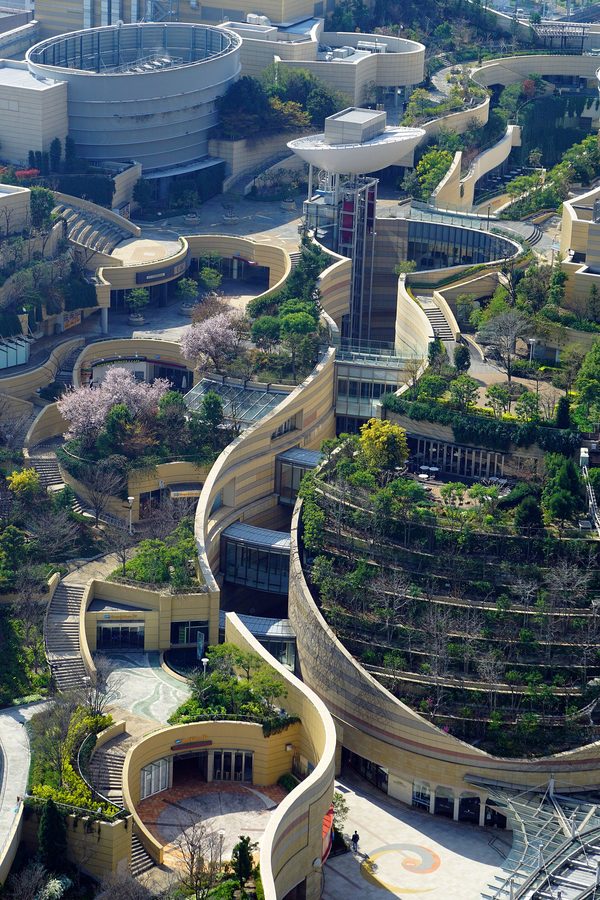
The American architect Jon Jerde designed the mall as a canyon: curving walls in bands of brown and ochre, a ravine-like main street called Canyon Street on the second floor, and stepped terraces climbing south. The first phase opened in October 2003, the second in April 2007. Shops open 11:00–21:00 and restaurants 11:00–22:00, according to Namba Parks’ access page.
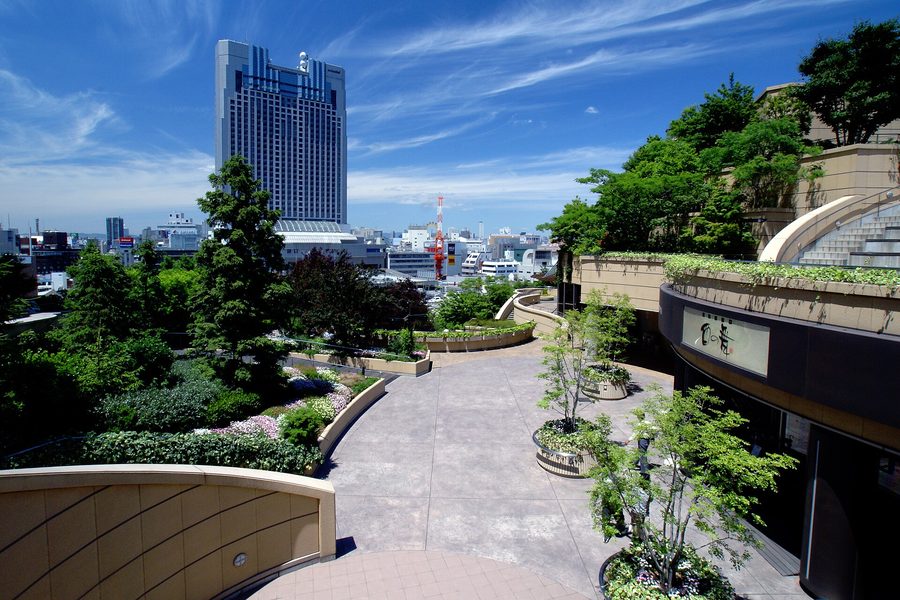
The reason to go is the roof. Parks Garden climbs from the second floor to the ninth over about 11,500 square metres, with some 500 kinds of plants, from mountain cherries and magnolias to a dry-country zone with misting jets. The full-time gardeners work it without pesticides, and birds you would not expect in central Osaka turn up in the trees in autumn and winter. It is free, smoking is banned throughout, and on the sixth-floor terrace you can sit and eat takeaway food or your own.
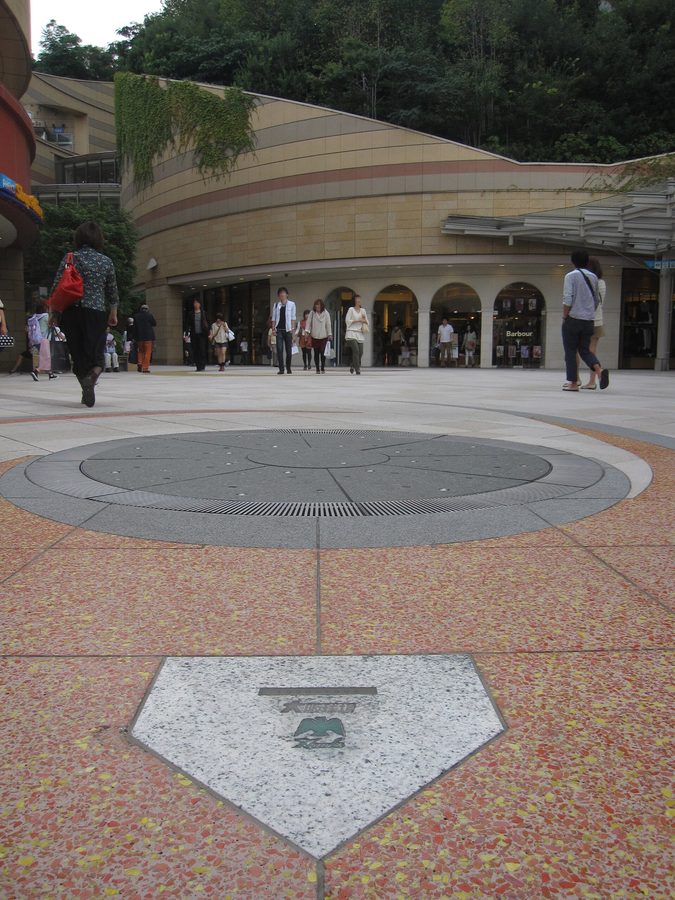
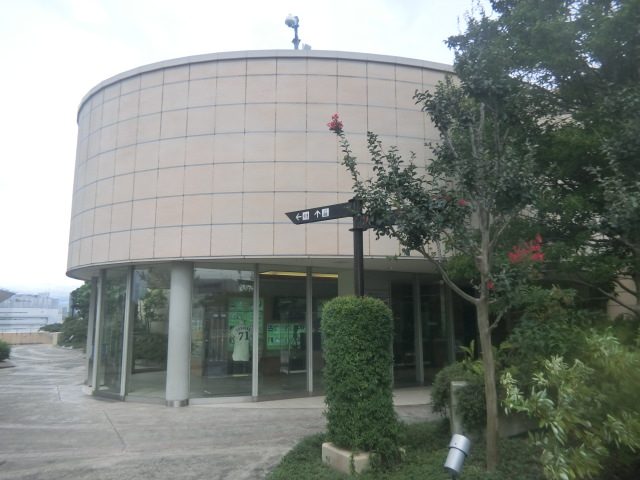
Look down as you walk Canyon Street. Plates marking the old stadium’s home plate and pitcher’s mound are set into the paving, about 30 metres north of where they really were. On the ninth floor, the Nankai Hawks Memorial Gallery tells the club’s fifty years in Osaka, with two Japan Series titles and twelve pennants, through photographs, cups and uniforms.
In winter the garden becomes the centre of Namba Hikari-tabi, the area’s illumination, which lights the Parks terraces 17:00–24:00 along with the streets around the station; the illumination’s own site has each season’s spots. The seventh-floor Namba Parks Museum runs changing exhibitions, mostly anime and pop culture.
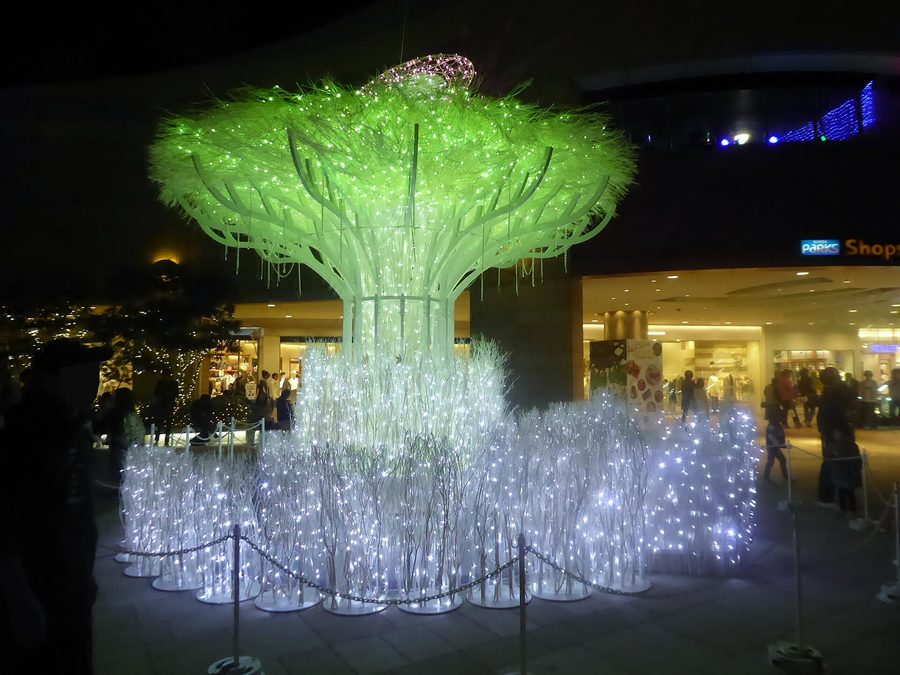
A short walk south of Namba Parks stood the Nihon Kogeikan (日本工芸館), a folk crafts museum in a castle-style building of 1960. It closed on 31 May 2018 so the building could be replaced, and as of November 2026 the galleries had not reopened.
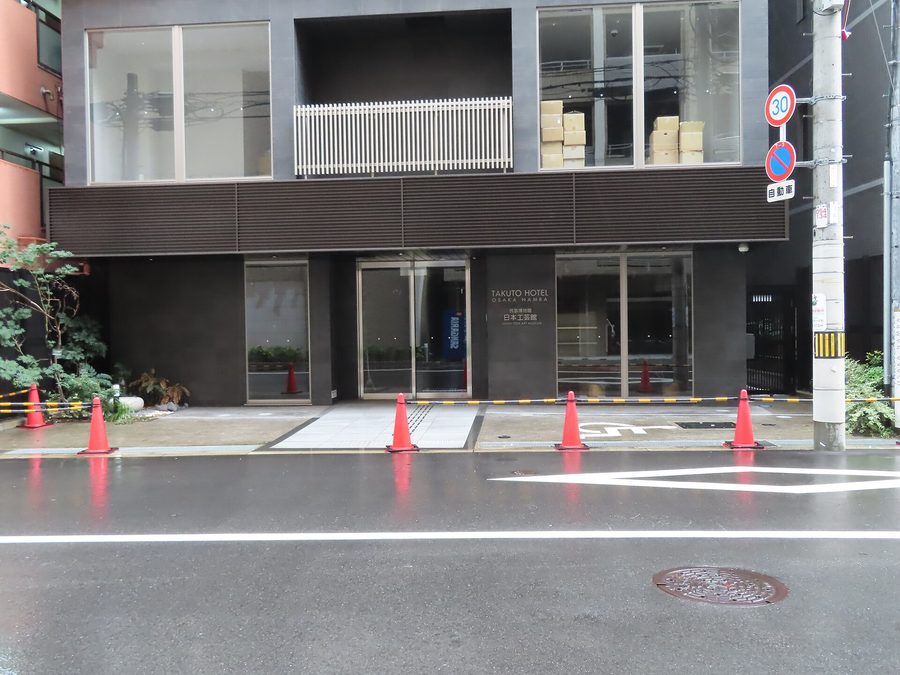
Namba CITY
Namba CITY (なんばCITY) runs underneath the Nankai tracks in two buildings, the main building and the south building, either side of a cross street. It opened in 1978, was Nankai’s first big mall, and now holds around 290 shops: fashion chains, drugstores, gift shops and basement restaurants. Shops open 11:00–21:00 and restaurants 11:00–22:00, the hours on Namba CITY’s access page.
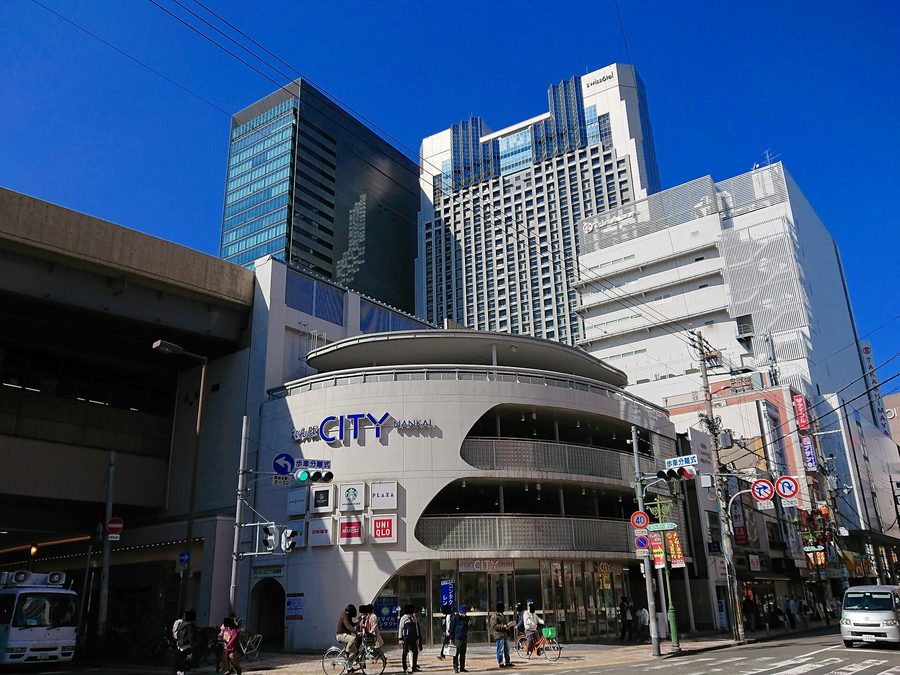
The GU store people ask about is on the second basement of the main building; the other is on the sixth floor of Namba Marui across Midosuji.
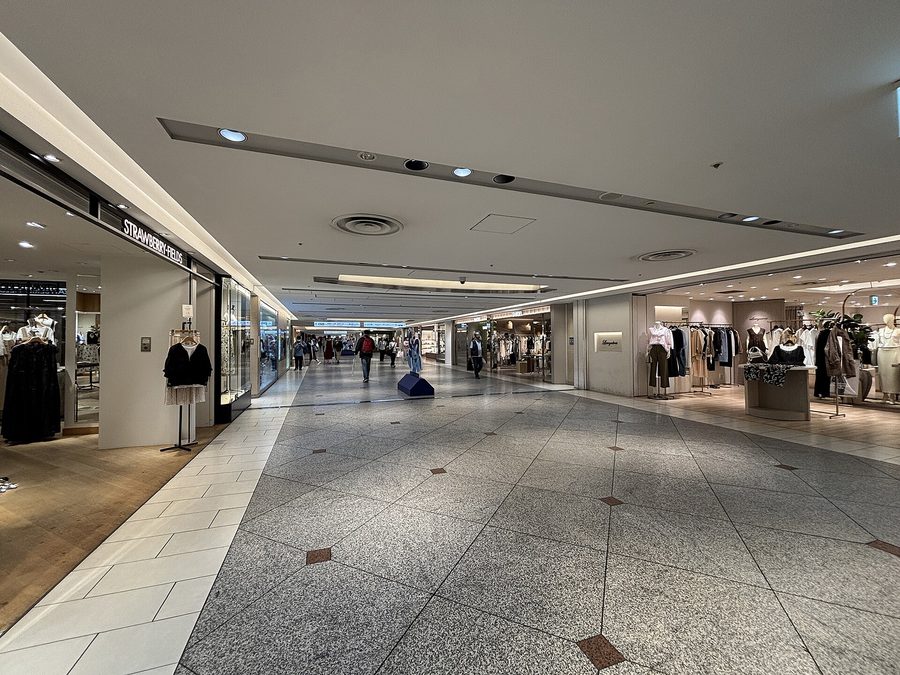
Namba Skyo
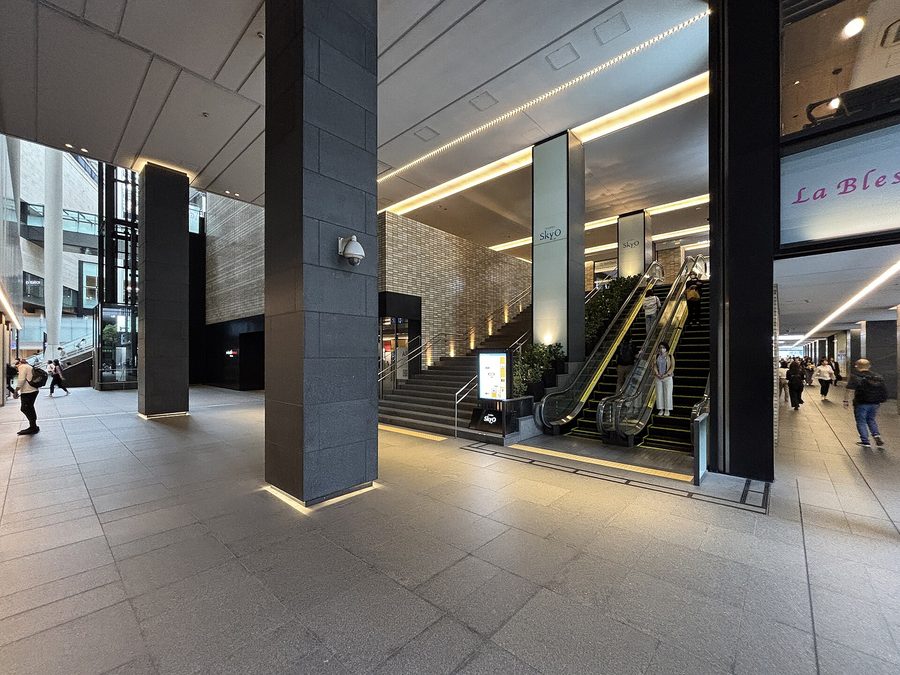
Namba Skyo is the tall glass tower beside the station, built on the site of the old Nankai Kaikan, where the railway once had its head office. It is mostly offices above a few floors of shops, with a direct link to the station; useful when the malls are packed, not a destination in itself.
Minatomachi River Place
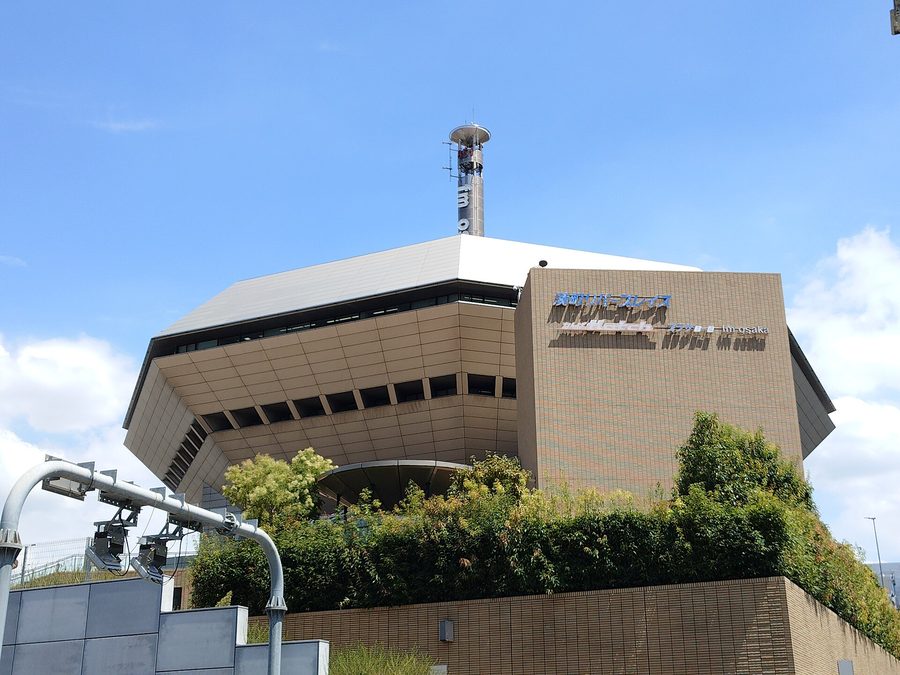
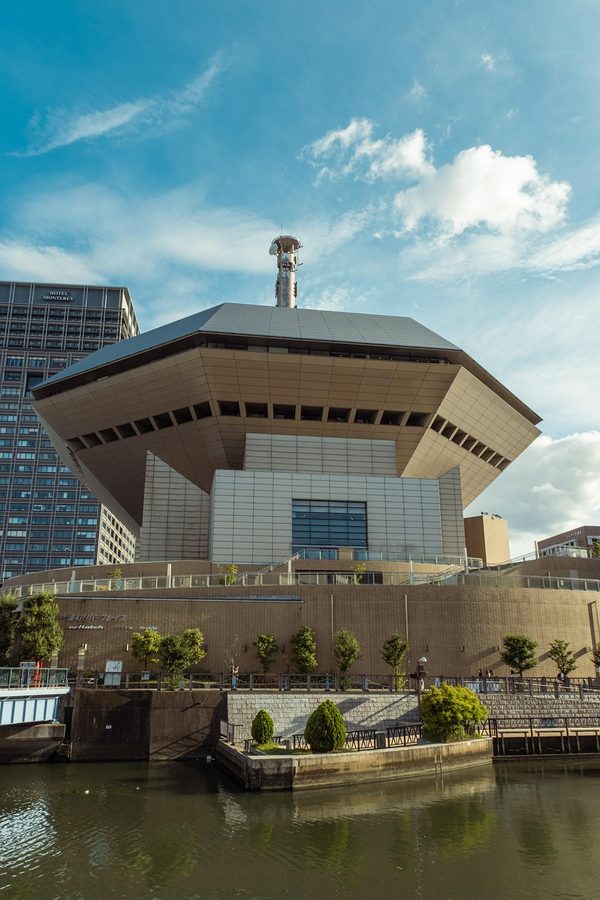
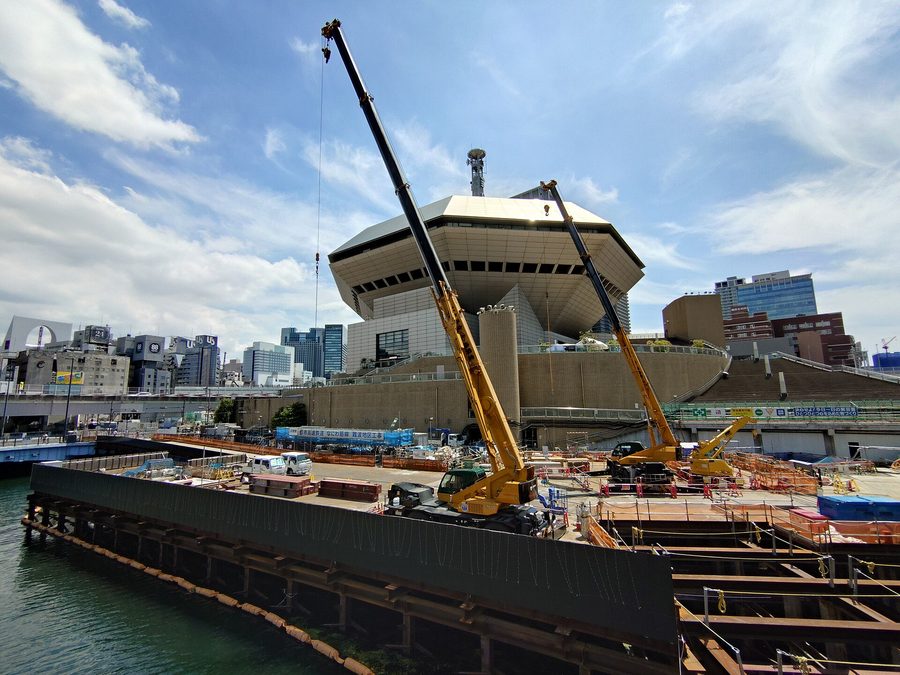
West of the stations, where the Dotonbori canal bends towards the bay, stands an octagonal building that looks as if it landed there. Minatomachi River Place (湊町リバープレイス) opened in July 2002 on the old freight yard of Minatomachi Station. Its core is Namba Hatch, a live music hall on the third to sixth floors whose name comes from the building’s eight sides (hachi is eight), and the FM Osaka radio station has its building here too.
If you are not going to a concert, come for the outdoor plaza: a wide flight of steps running down to the canal promenade, where flea markets and other events are held; the next flea market on the official calendar is on 29 November 2026. The building comes straight up from Osaka Metro exit 26-B, so it is also the most pleasant way into the canal walk east towards Dotonbori.
Sennichimae, Doguyasuji and Ura Namba
Walk east from the Nankai station along the arcades and you are in Sennichimae, the quarter of theatres, cinemas, pachinko halls and cheap eating that grew up between Namba and Kuromon. The name means “in front of the thousand days”, after the thousand-day cycles of Buddhist chanting held at Hozenji and a neighbouring temple. Its history is darker than its neon. From 1615 the ground south-east of those temples was Osaka’s great cemetery, with a crematorium and the execution ground beside it.
When the graves were moved to Abeno in the Meiji era, nobody wanted to buy the land. The city ended up paying buyers ¥5 for every ten tsubo (about 33 square metres) to cover “ash disposal”. Then the railway arrived in 1885, the crowds followed, and by the time a great fire swept the area in 1912 Sennichimae was the entertainment heart of the city.
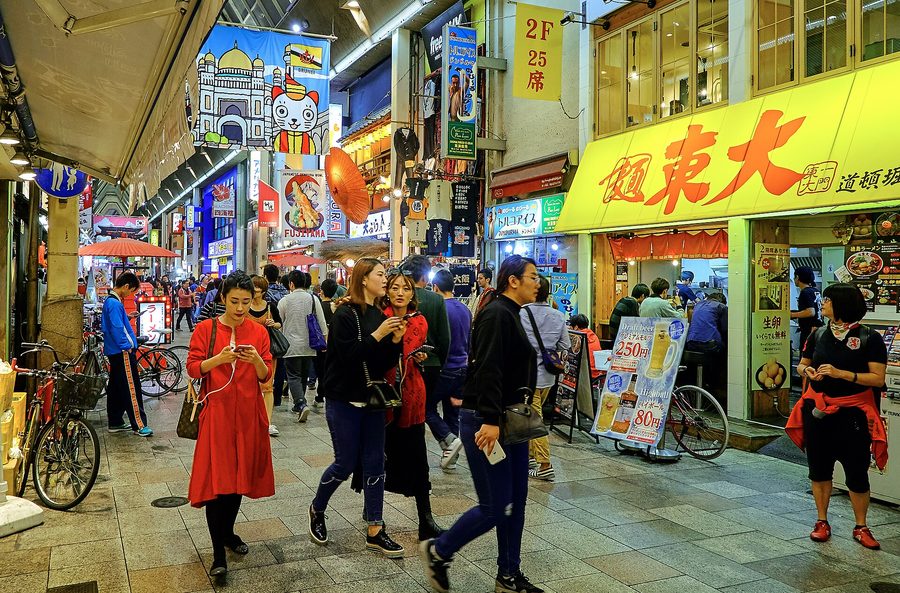
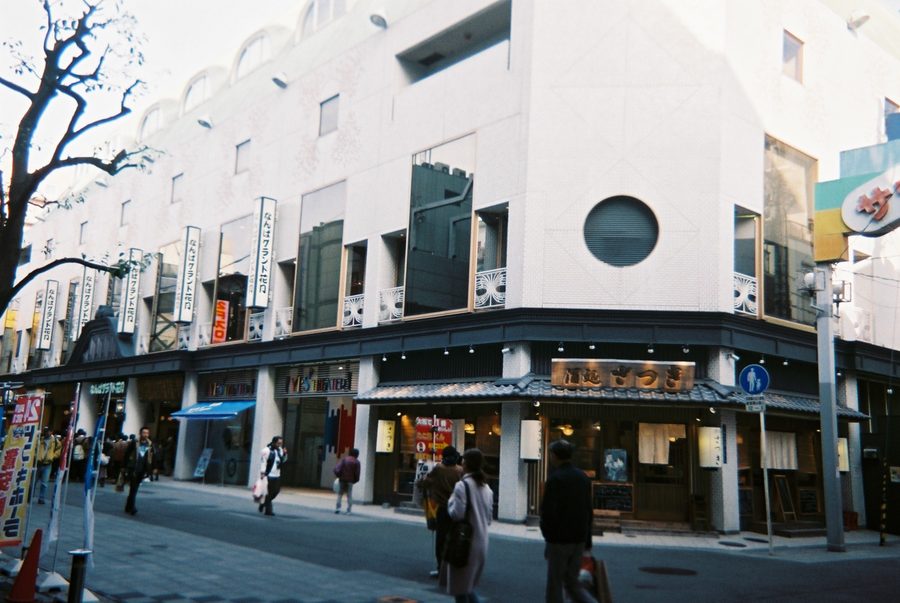
The entertainment never left. Namba Grand Kagetsu, Yoshimoto’s flagship comedy theatre, stands at the southern end of the quarter, and the whole block around it lives off the crowds it brings.
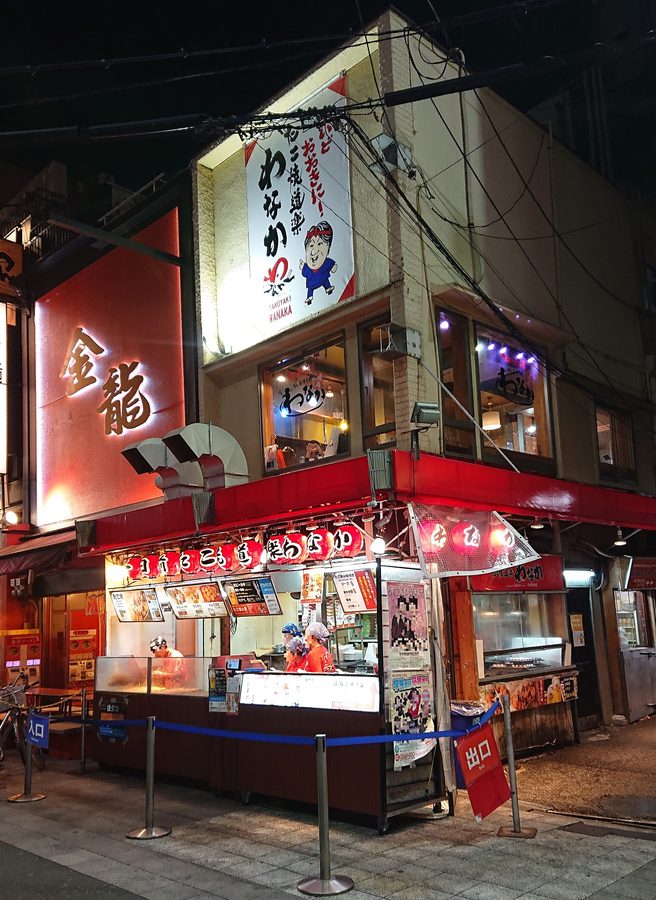
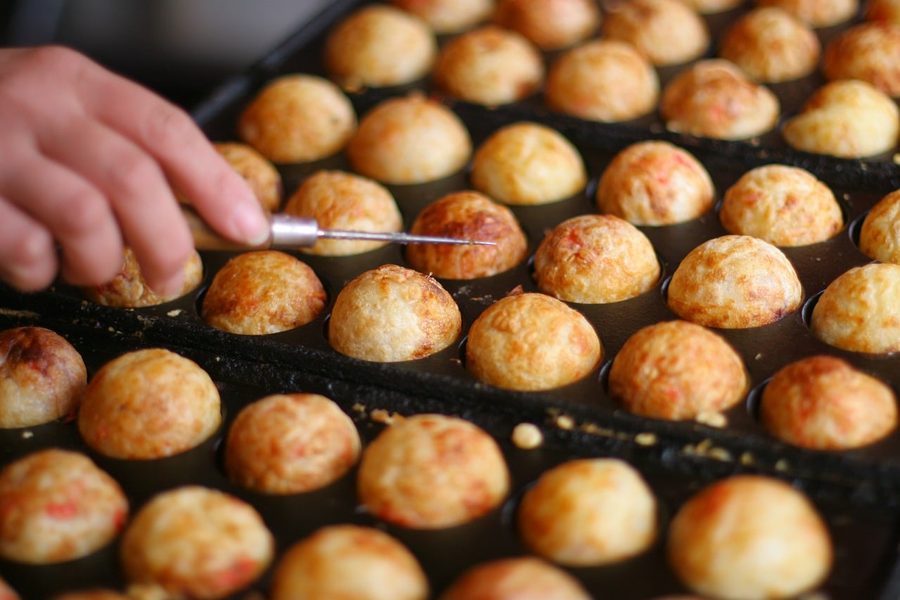
Next door to NGK, at the corner, is the main shop of Takoyaki Doraku Wanaka, which began as a sweet shop that grilled takoyaki (octopus dumplings) under its eaves and found it had a business. They cook on copper plates over a fierce flame, which gives a crisp shell and a soft middle. Wanaka has branches in Dotonbori and Amerikamura now; this is the original.
Doguyasuji, the kitchenware street
Sennichimae Doguyasuji (千日前道具屋筋商店街) is a covered street of about 150 metres beside NGK where the shops sell everything a restaurant needs: knives, copper pots, takoyaki pans, noren curtains, paper lanterns, the plastic food samples in restaurant windows and the signs above them.
It began around 1882 as the approach road from Sennichimae to Shitennoji and the Imamiya Ebisu shrine, lined with second-hand dealers selling to pilgrims. By 1925 about twenty of them had turned to making and selling cooking tools, and the arcade roof went up in 1970 for the Osaka Expo, according to the street’s own history. In Osaka they call it the western twin of Tokyo’s Kappabashi.
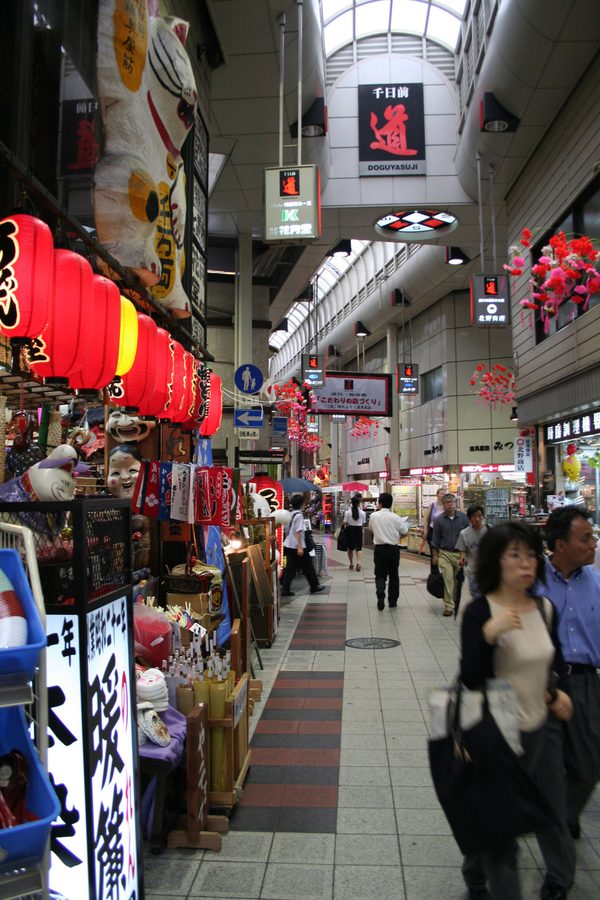
For a visitor, the things worth carrying home are a good knife, sharpened and boxed by the shop, a takoyaki pan if you have a gas hob, and a food sample for the fridge door. The street is closed to traffic from 9:00 until 1:00 the next morning, but it is a trade street, so come in the daytime when the shops are working. On 9 October, Tool Day, it holds its festival.
Ura Namba
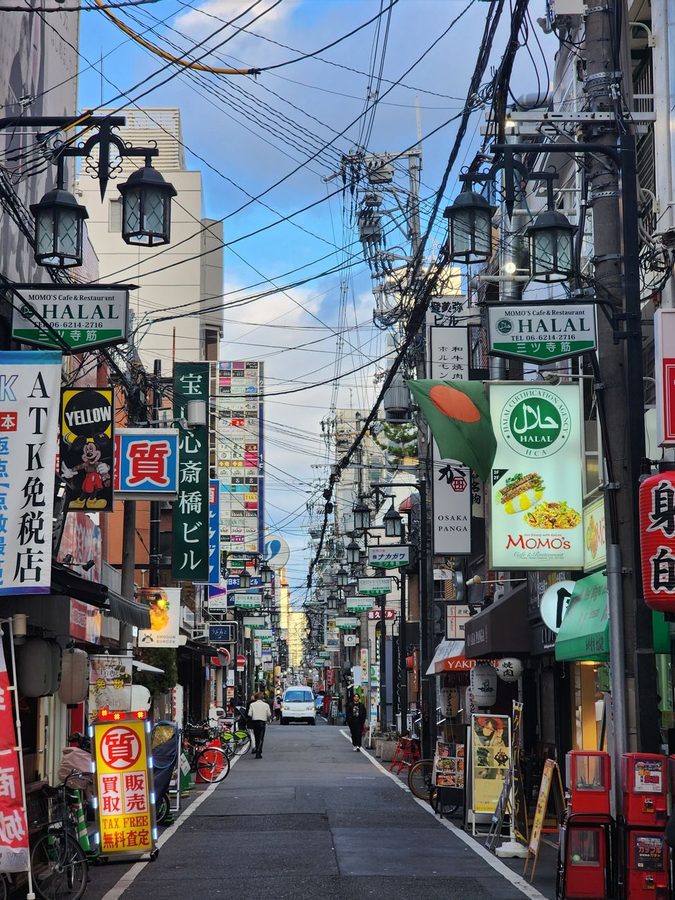
Ura Namba (裏なんば), “back Namba”, is the block of narrow streets between Sennichimae in the north and Nansan-dori in the south, Kuromon Market in the east and Takashimaya in the west. The name only caught on around 2010, when small bars and standing bars started opening in the old buildings there. It is not a sight. It is where you go after 18:00 for a drink and a few skewers in a room with eight stools: walk the lanes and go into whichever place is full but has one gap.
North of Sennichimae, the stone-paved lane of Hozenji Yokocho and the moss-covered Fudo statue of Hozenji (法善寺) are a two-minute walk from the canal, and they belong to the Dotonbori evening rather than to Namba.
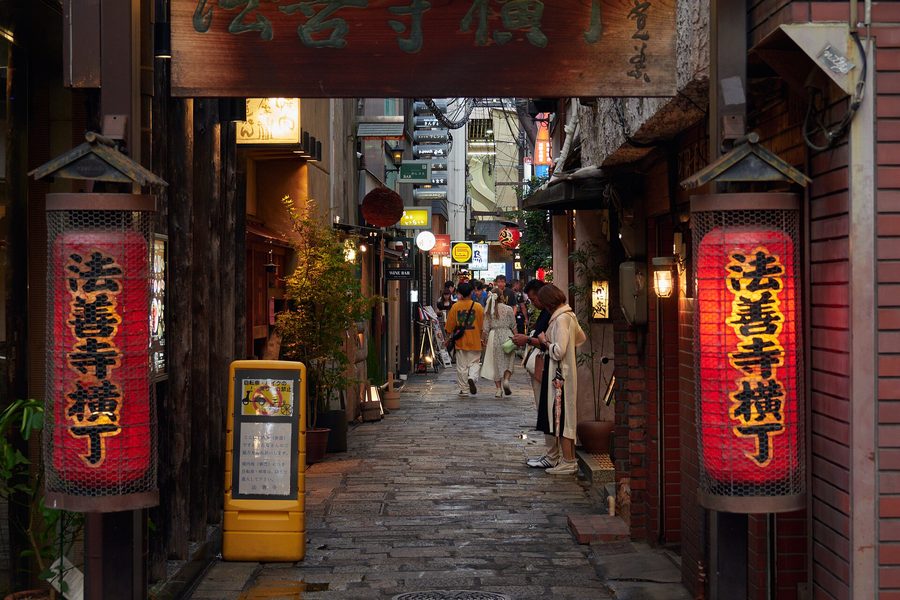
Eating in Namba beyond Dotonbori
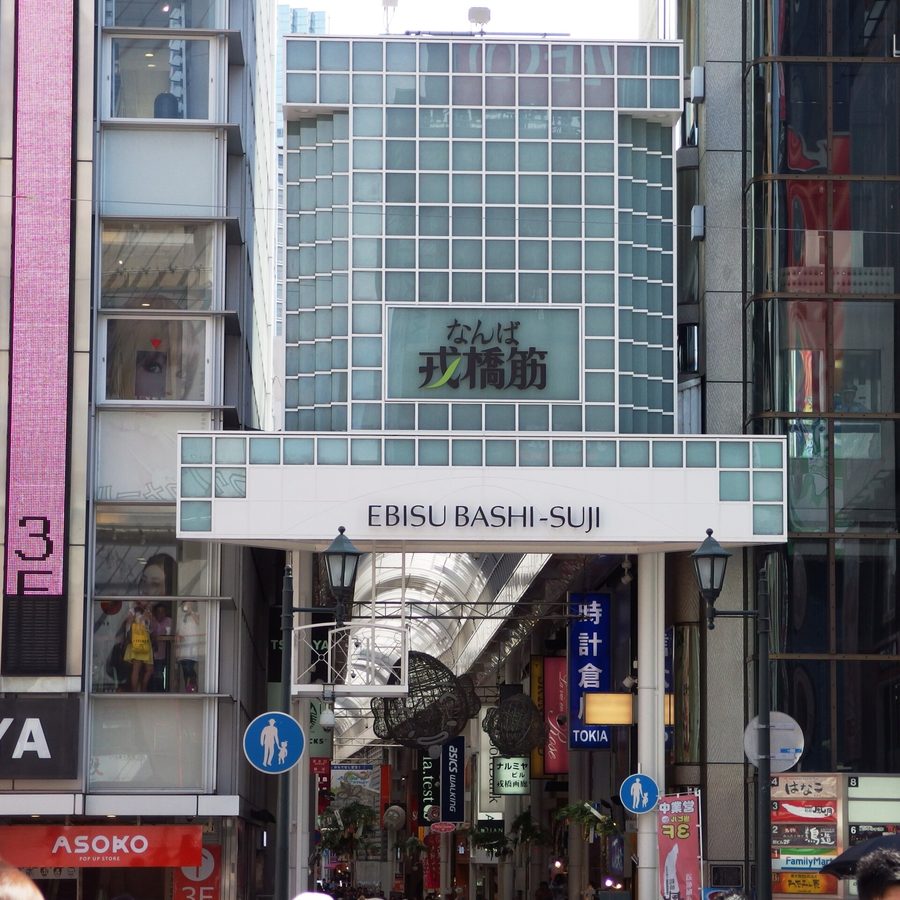
Most visitors eat on the canal and pay for the view. Namba proper, two or three streets south, is where Osaka people eat, and some of the city’s oldest names are within a few minutes of the station, two of them on the arcade that runs from the station to the canal, Ebisubashi-suji (戎橋筋).
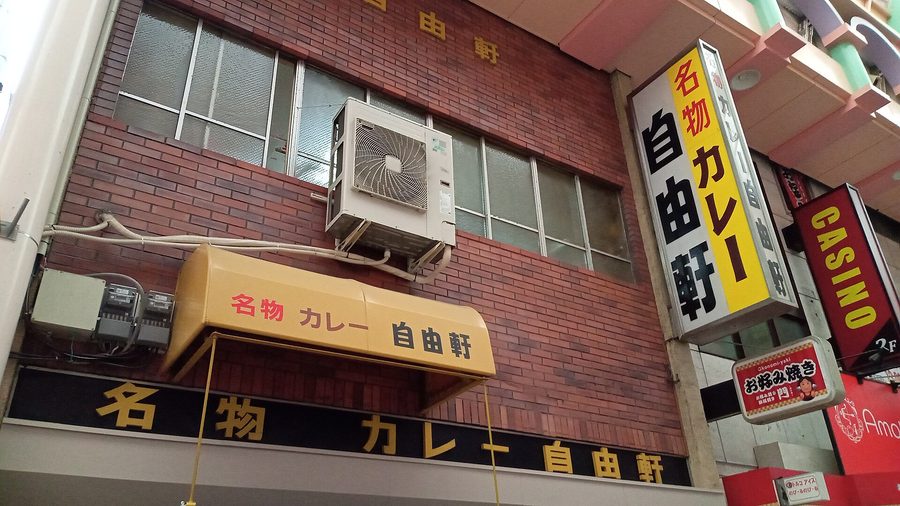
In the Sennichimae lanes, Jiyuken (自由軒) opened in 1910 as one of Osaka’s first Western-style restaurants, and it still serves the dish that made it famous: the meibutsu (signature) curry, rice already mixed through with curry with a raw egg cracked on top, for ¥990. The novelist Oda Sakunosuke ate here and put the place into his story “Meoto Zenzai”. The Namba main shop is two minutes from exit 11, open 11:00–20:00 (last order 19:45), closed on Mondays, or the next day when Monday is a holiday; the branch at Tenpozan closed in September 2026, so this is now the only one.
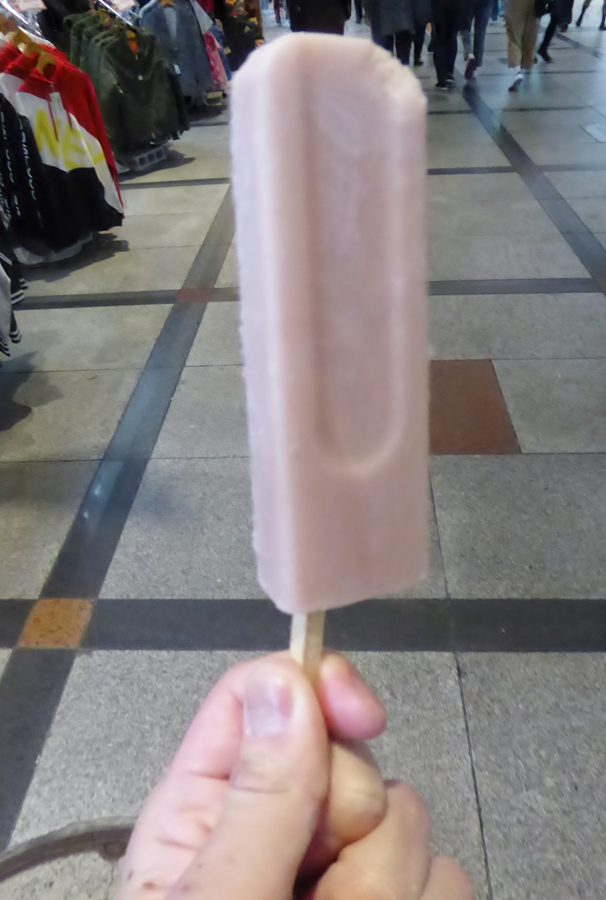
On Ebisubashi-suji itself, Hokkyoku (北極), “the North Pole”, has sold handmade ice candy since 1945, when its founder started selling cold sweets for ¥20 near the bridge in a city with almost nothing to eat. Eight craftsmen still make about 6,000 a day, on sticks of cypress and cedar from Yoshino, set at a slant. Milk, azuki bean, cocoa, matcha and pineapple are ¥200 each, and strawberry, mango, ramune soda, mixed juice and grape are ¥230, according to the shop’s flavour list. The shop does not publish its hours.
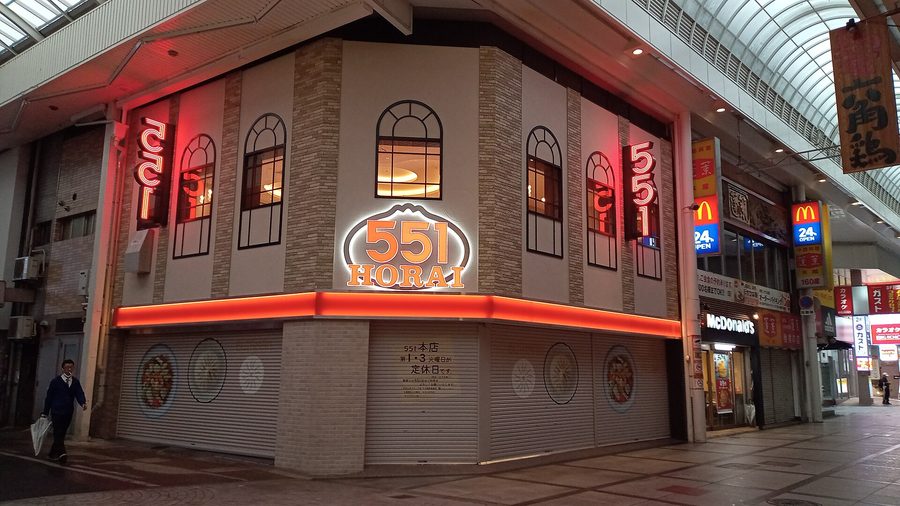
Further up the same arcade is the main shop of 551 Horai, whose butaman (steamed pork buns) are the box half the passengers on any train out of Osaka seem to be carrying. Buy them hot here for the walk, or boxed for the journey.
For anything else, Takashimaya’s basement food halls sell bento (boxed meals) you can carry up to the Parks Garden terraces, and the restaurant floors of Namba Parks and Takashimaya are calm when the arcades are packed.
Namba Yasaka Shrine
West of Namba Parks, in the quiet streets of Motomachi, a stage shaped like a giant lion’s head stares out over a small shrine yard. Namba Yasaka Shrine (難波八阪神社) was the guardian shrine of the old Namba village, and by the 11th century it was known for its cult of Gozu Tenno, a plague-averting deity. It burned in the air raid of March 1945, and the present halls, lion stage included, were finished in May 1974.
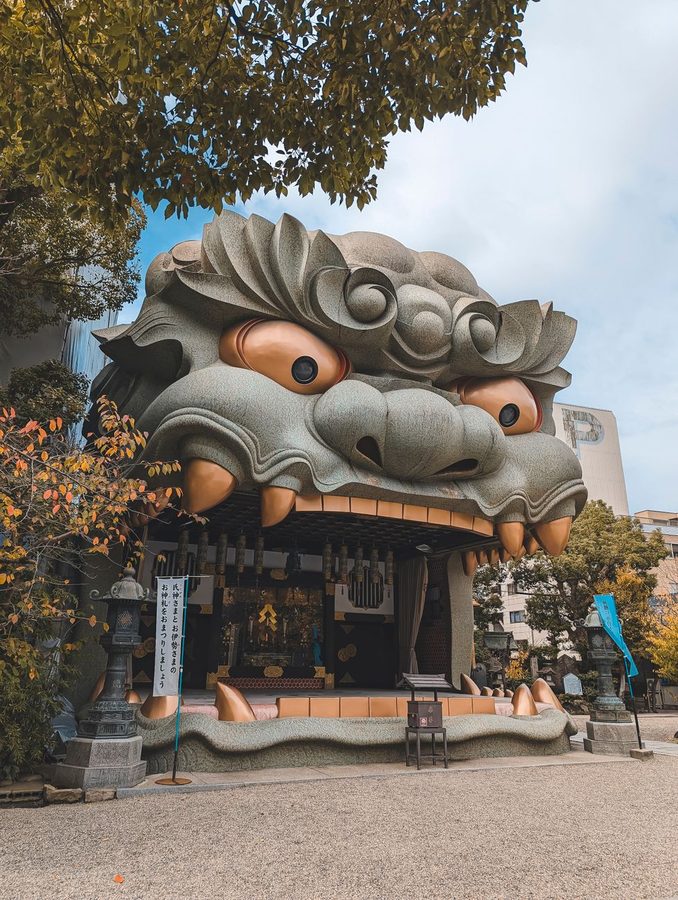
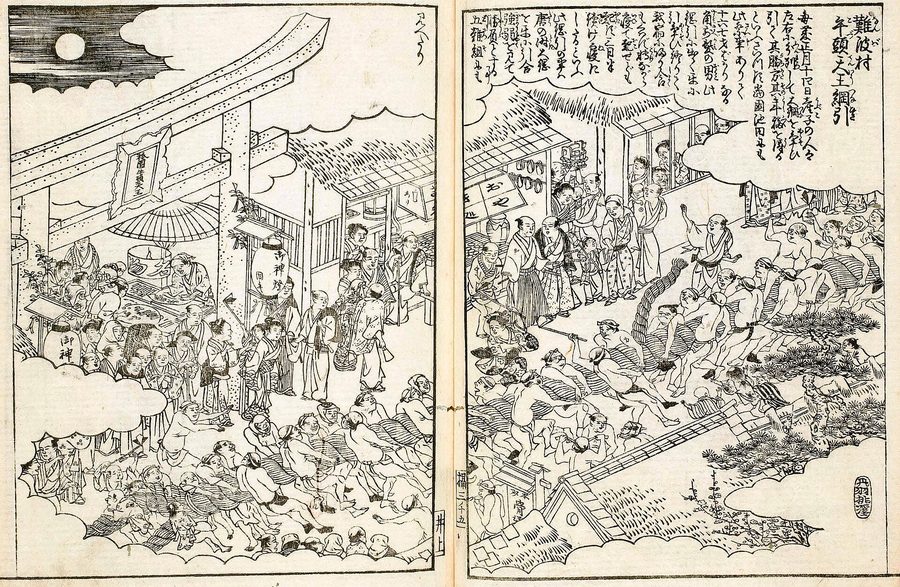
The shrine’s tug-of-war ritual, held on the third Sunday of January, re-enacts the god Susanoo’s fight with an eight-headed serpent, and in 2001 it became the first intangible folk cultural property designated by Osaka City. In summer the shrine’s festival on 12–14 July begins with a procession of boats on the Dotonbori canal. It is about six minutes’ walk from the Midosuji or Yotsubashi Line platforms at Namba.
Sumo in March: Edion Arena Osaka
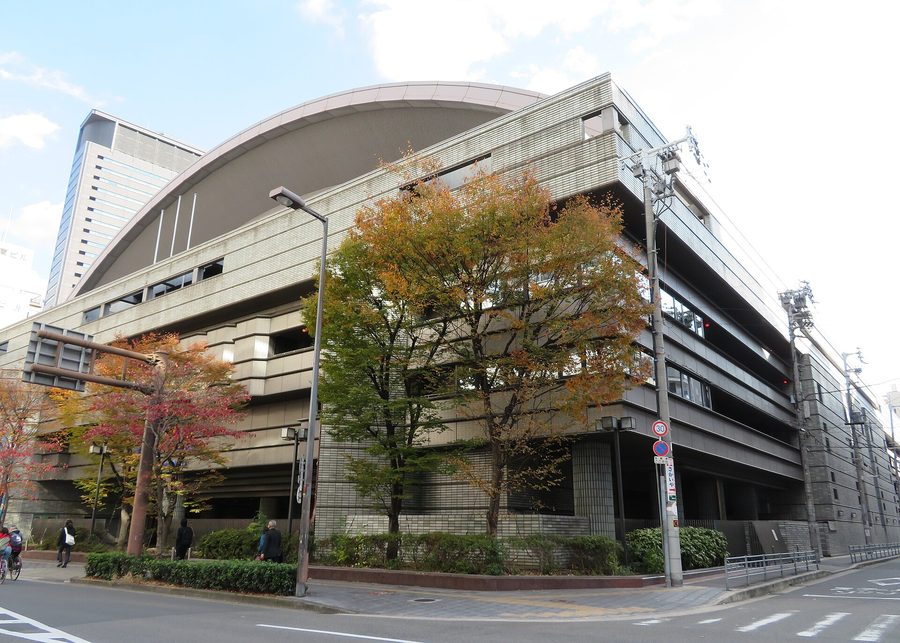
The plain concrete hall south of Namba Parks is Edion Arena Osaka, the Osaka Prefectural Gymnasium, and every March it hosts one of the six annual Grand Sumo tournaments. If you will be in Osaka in March, look for tickets well before you travel.
Where to go next from Namba
Namba is a base more than a destination. These are the places I send people next.
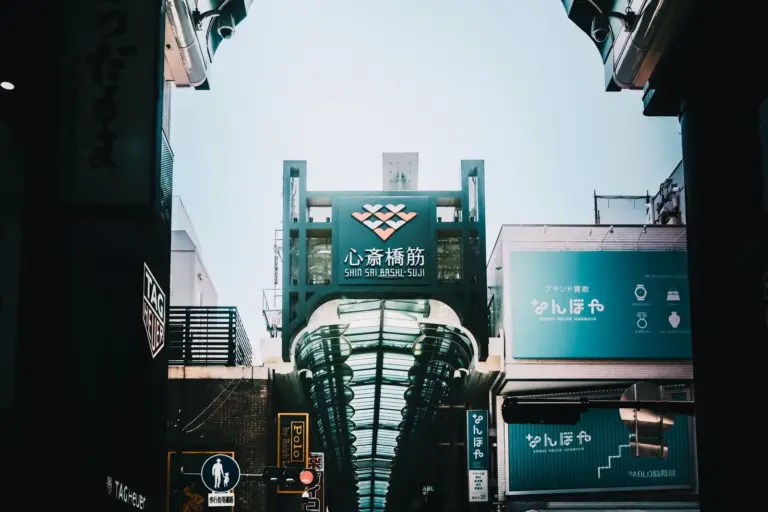
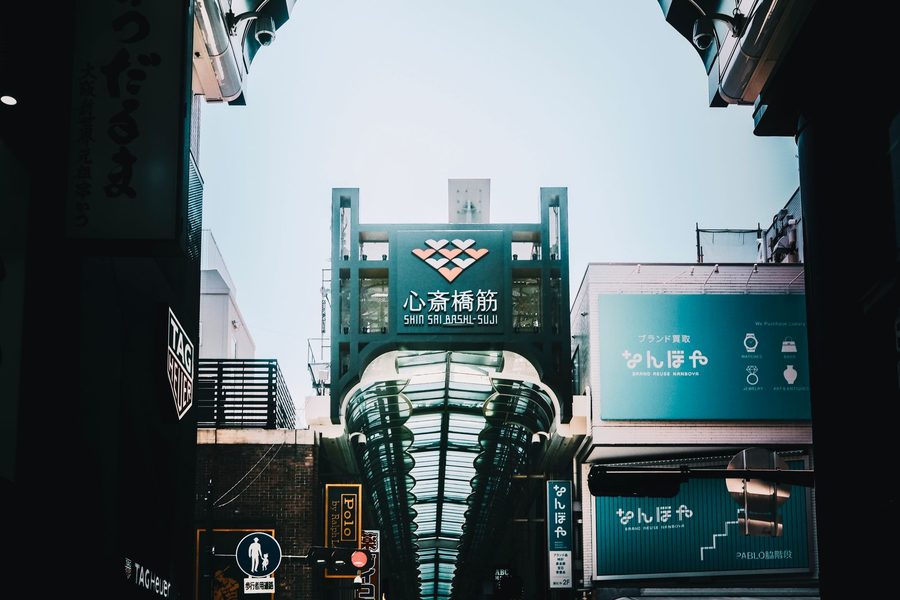
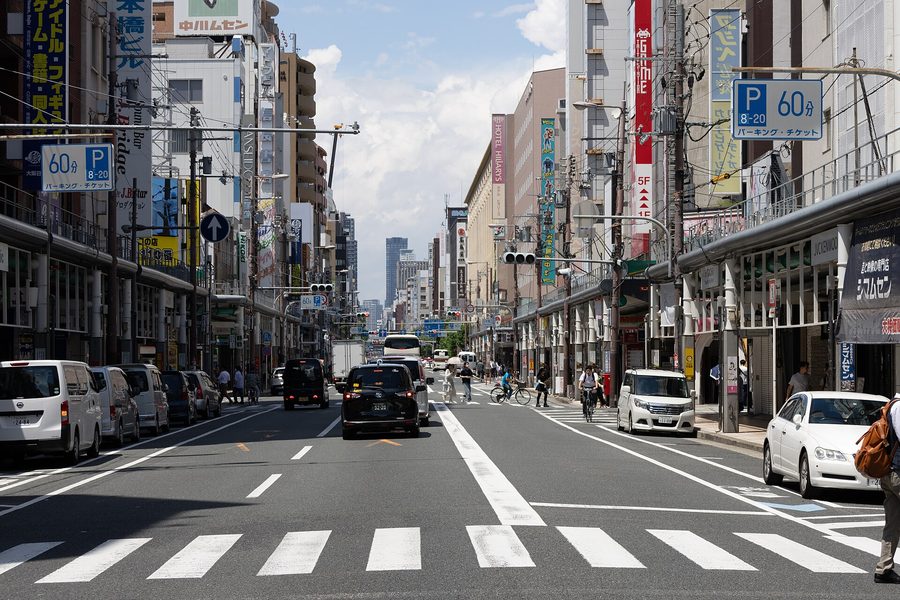
- Shinsaibashi and Amerikamura. One stop north on the Midosuji Line, or a 10 to 15 minute walk up Midosuji or through the arcades. Shinsaibashi-suji is the long covered shopping street; Amerikamura, west of it, is cheaper and younger.
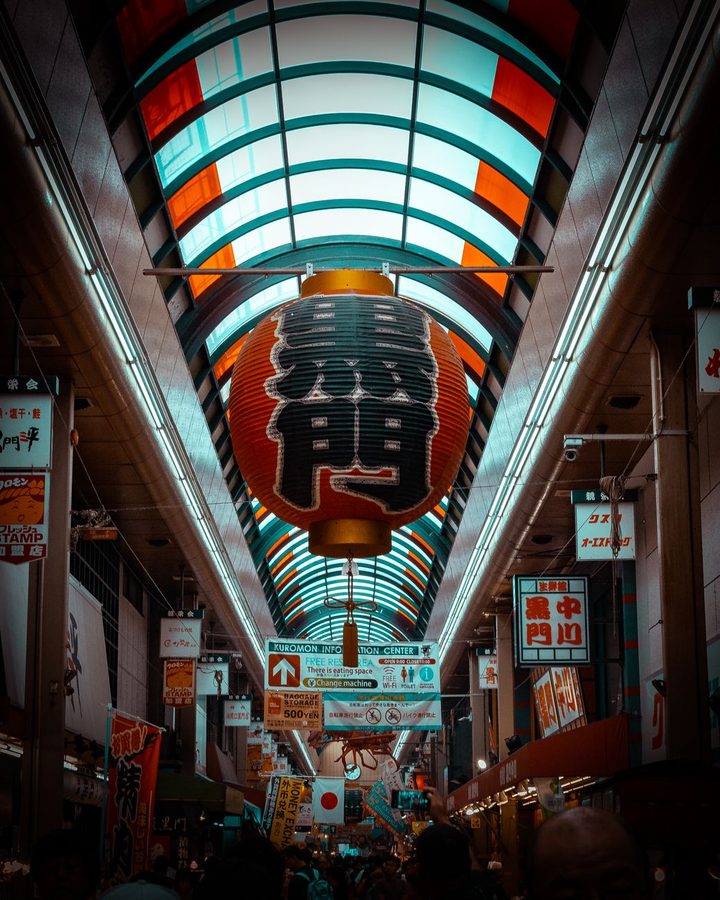
- Kuromon Market and Den Den Town. Ten minutes east on foot. Kuromon is the food market; Den Den Town on Sakaisuji is anime, figures and electronics. The National Bunraku Theatre is beside Nippombashi Station.
- Shinsekai and Tsutenkaku. Twenty minutes’ walk south, or two stops south on the Midosuji Line to Dobutsuen-mae. The Tsutenkaku Tower stands in the middle of it, and Spa World is on the far side.
- Osaka Castle. Take the Sennichimae Line east and change to the Tanimachi Line at Tanimachi Kyuchome for Osaka Castle and, next to it, the Osaka Museum of History above the excavated palace site.
- Senba. Two stops north on the Midosuji Line to Hommachi for the old merchant quarter and Ikasuri Shrine.
- Further out. Nara on the Kintetsu line from Osaka-Namba, about 40 minutes; Kobe Sannomiya on the Hanshin line; Koyasan on Nankai’s Koya Line; Kansai Airport on the rapi:t.
For the rest of the city, things to do in Osaka has the full list.
Go back, finally, to the plaza where the airport train left you. Stand with your back to the cream columns of the Nankai Building, and you can now point out the whole of Namba without moving your feet: the canal ahead, the kitchenware street to your right, the roof garden behind you, and under your shoes the corridor to every train in the city. Walk north up Ebisubashi-suji, buy an ice candy at the North Pole, and in five minutes you are on the bridge.