03Minami
Shinsaibashi: The Arcade, Midosuji and the Back Streets
心斎橋駅Shinsaibashi, exit 5
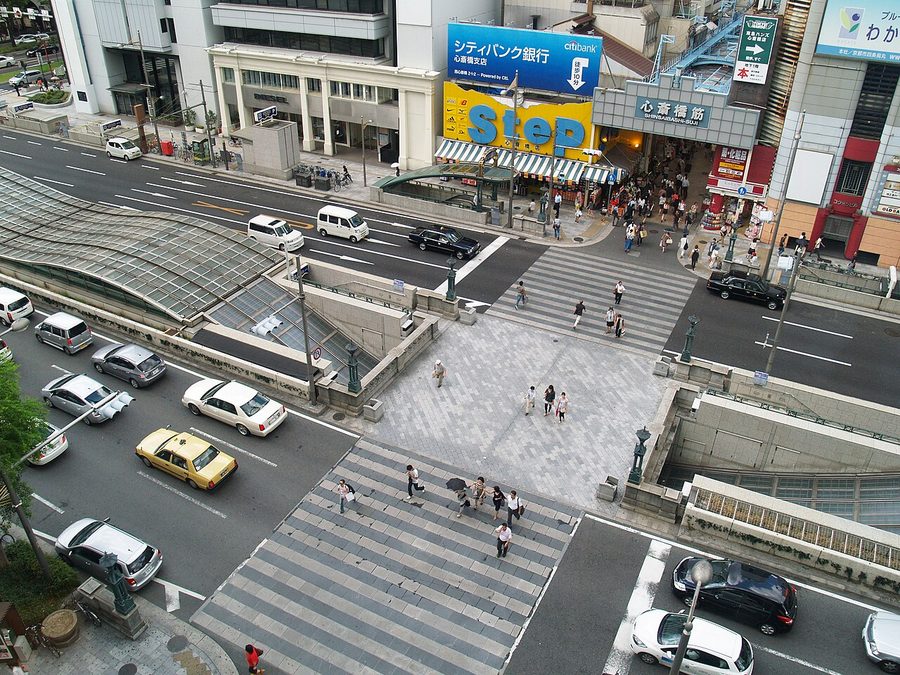
Osaka arranges to meet at Shinsaibashi (心斎橋) all day long, and nobody can show you the bridge. The name is on the station, on the steel gates of the arcade, on the department store bags and on hotel signs all over Minami. The bridge itself lost its canal more than sixty years ago, and what is left of it stands in the middle of a main road, over a thin strip of water laid there to stand in for the river.
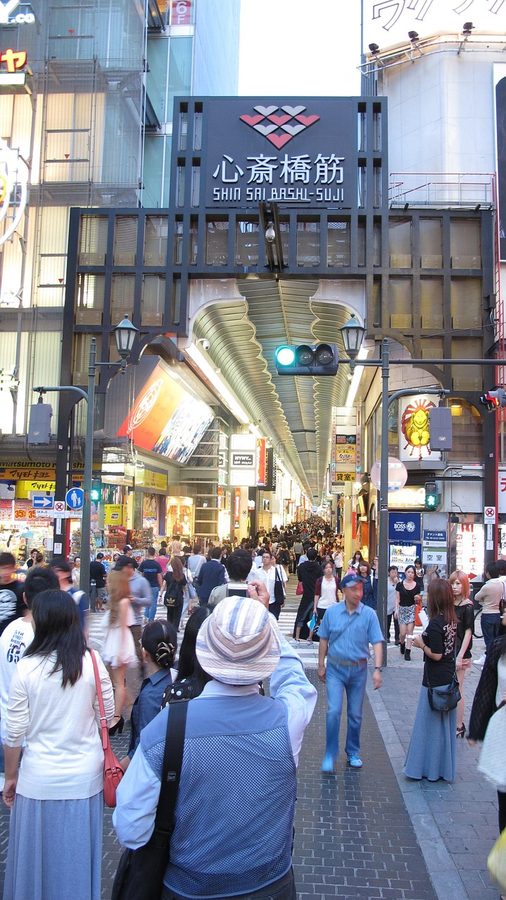
That is Shinsaibashi in one picture: a place named after something you cannot see, selling things you can buy anywhere, and still worth an afternoon. The covered street runs north from the Dotonbori canal for roughly 600 metres. One block west, Midosuji carries the city’s most expensive shop windows under a double row of ginkgo trees, and under both of them a shopping mall fills the bed of the old canal.
I would not come here for the shopping alone. I would come for the 300-year-old department store with hawks over its door, a tea shop that has been pouring on this street for eighty years, the ginkgo in late November, and the back streets of Minamisenba, where the crowds thin out after one block. Here is how to do it without spending the whole day shuffling behind someone’s suitcase.
Contents目次
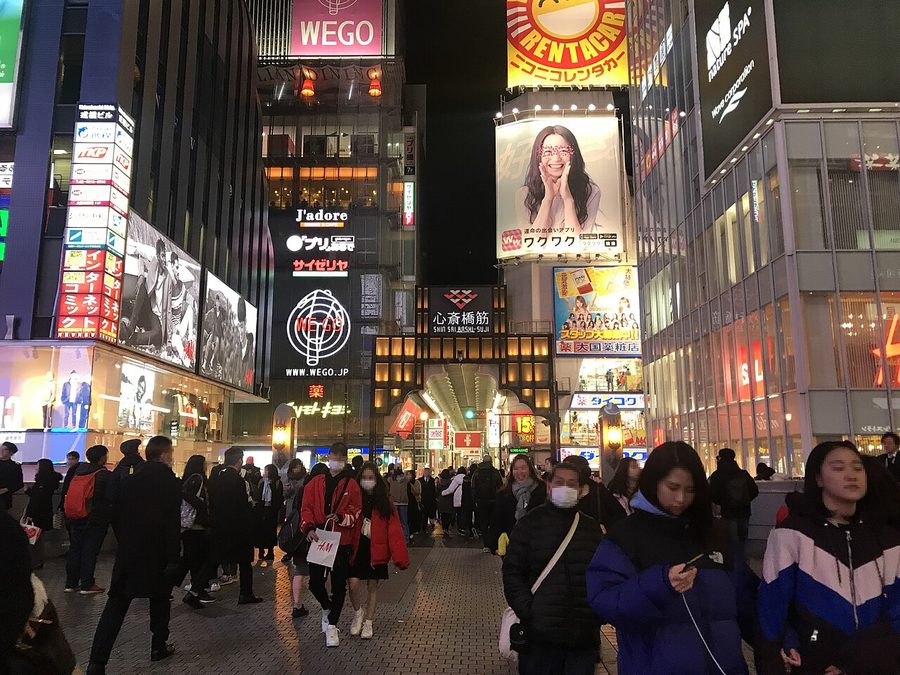
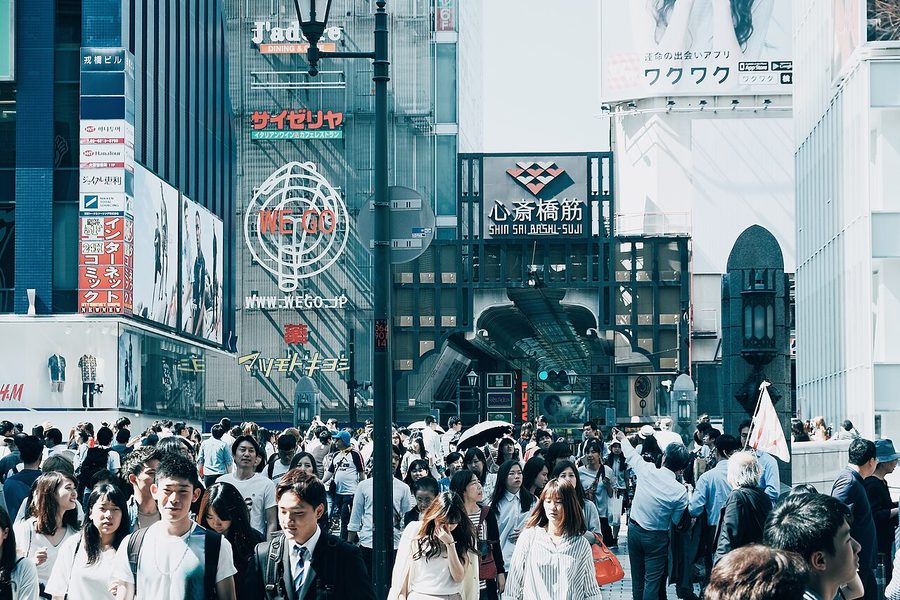
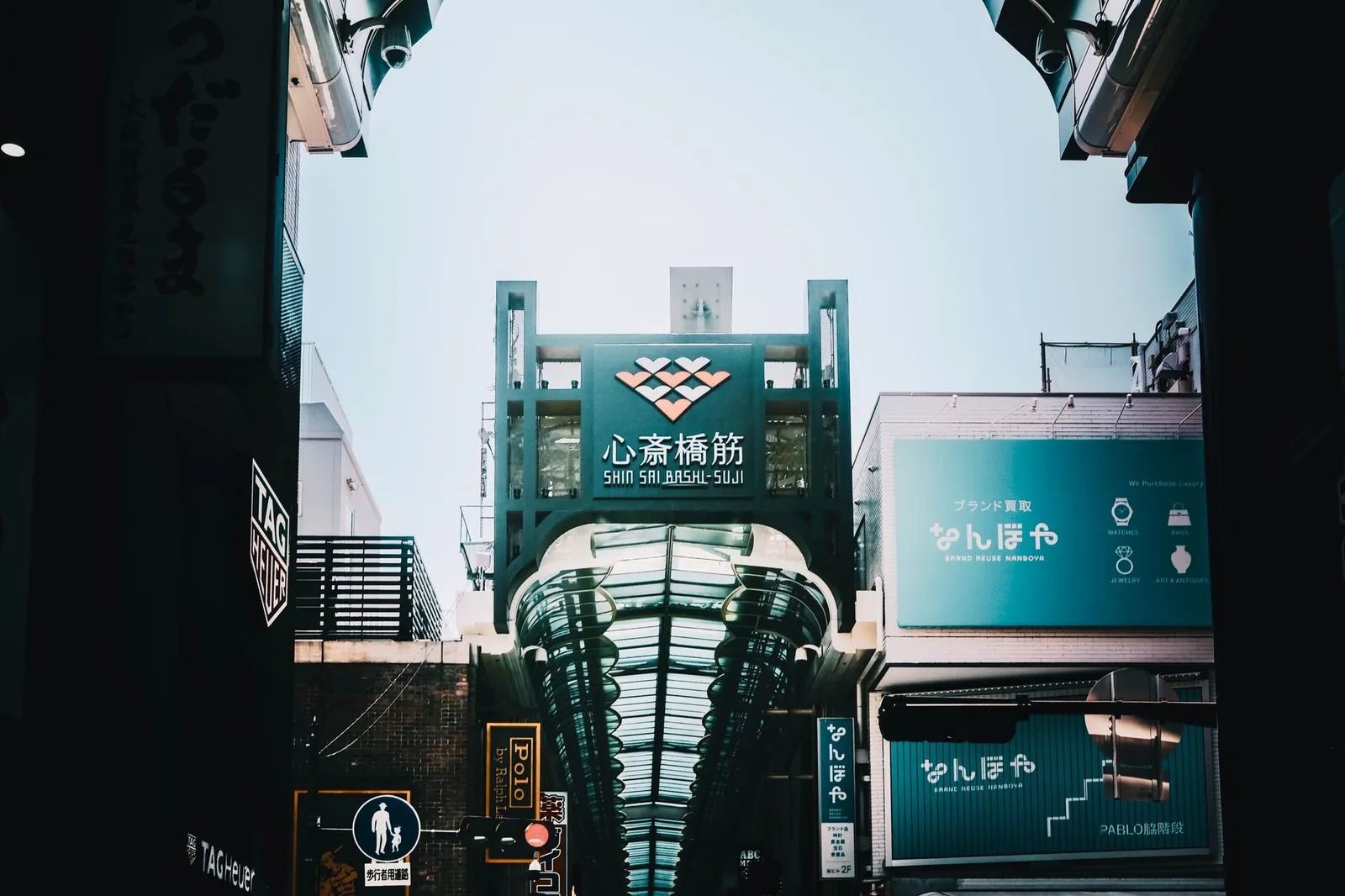
Shinsaibashi is not part of Dotonbori, though the two run into each other. The arcade’s south gate faces Ebisubashi across Soemoncho-dori, so you can stand on the canal and look straight up Shinsaibashi-suji (心斎橋筋). Dotonbori is the canal, the signs and the food; Namba, beyond it, is the railway hub; Shinsaibashi is the shopping district north of the water, running up to Nagahori-dori (長堀通) and the edge of Senba, the old merchant quarter.
The bridge that went underground
The bridge came first and the shops followed. According to the shopping street’s own chronology, Okada Shinsai, one of four men who dug the Nagahori canal (長堀川), put a wooden bridge across it in 1622, most likely the same year the canal was cut. It was about 35 metres long and 4 metres wide, and like most of the two hundred or so bridges in Edo-period Osaka it was a townsmen’s bridge, built and kept up by merchants rather than by the shogunate.
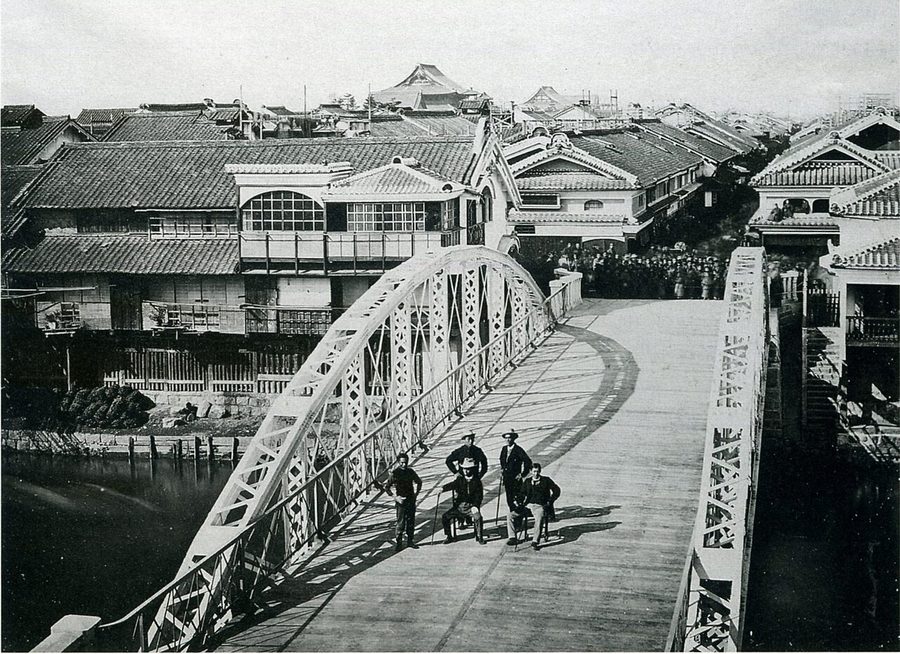
In 1873 the wooden bridge was replaced by an iron arch imported from Germany, a novelty Osaka printmakers drew more than once. In 1909 came a stone bridge with two arches, which reflected in the water like a pair of glasses and was nicknamed Megane-bashi. That stone bridge became the symbol of the street on postcards for half a century.
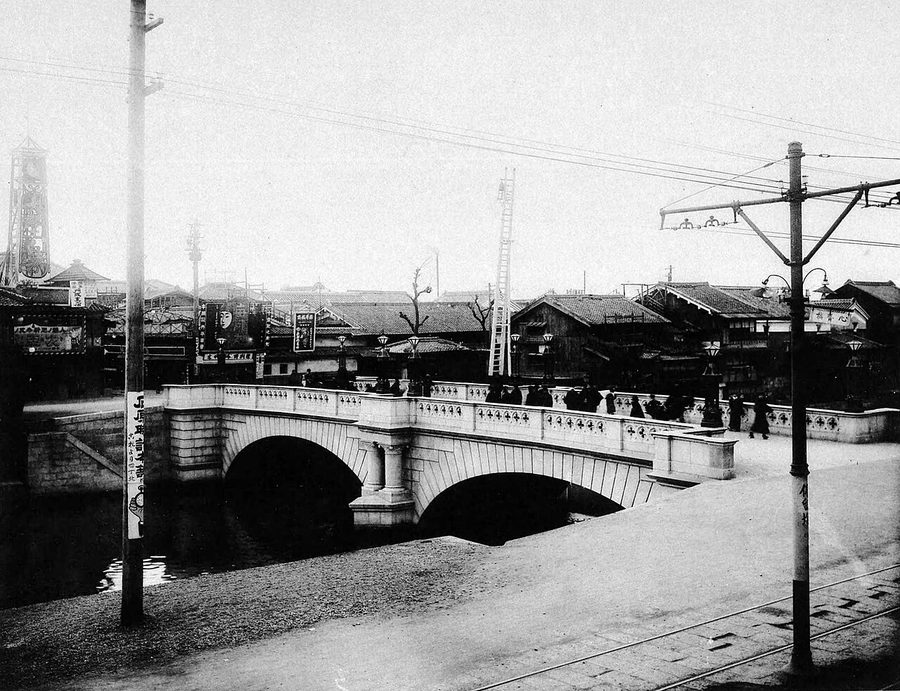
Then the water went. The canal was filled in for a road, and in 1964 the stone bridge was rebuilt on top of a pedestrian overpass across the new Nagahori-dori, opened with a first crossing on 23 November that year. For a few seconds it appears in Ridley Scott’s film Black Rain. The overpass came down for the subway works of the 1990s, and in 1997, when Crysta Nagahori opened below, parts of the old stone railings were set into the central reservation, with gas lamps and a little channel of water under them.
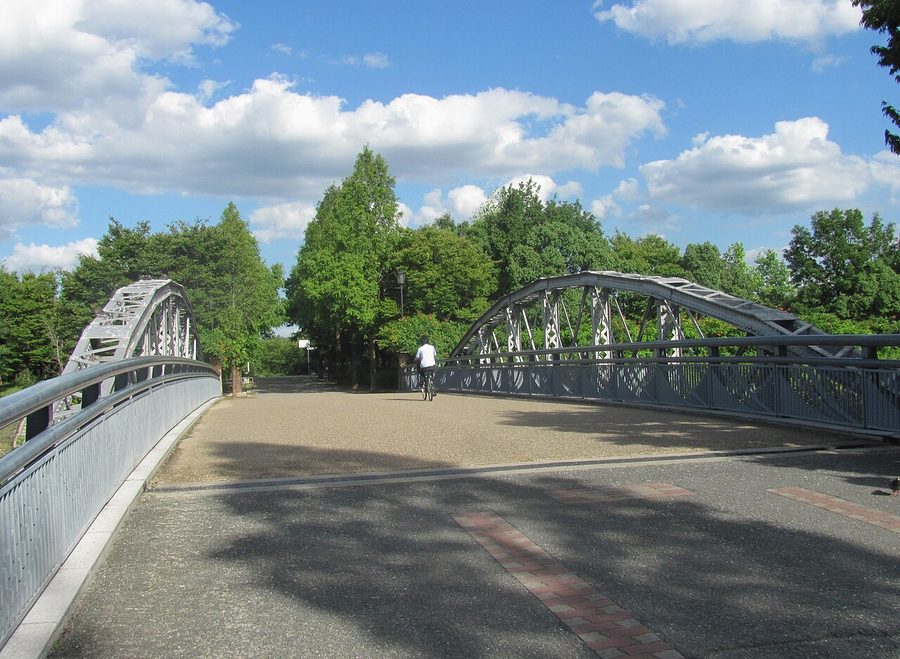
The 1873 iron arch had a longer afterlife. Daimaru’s own history of the bridge notes that it now stands in Tsurumi Ryokuchi park in eastern Osaka, where it is counted as the oldest iron bridge in Japan. It is a long ride out for a footbridge, so treat it as a curiosity for anyone already going to the park.
Books, kimono and the Shin-bura stroll
The street was busy long before the department stores. A 1748 directory quoted in the street’s history lists lacquerware dealers, booksellers, antique shops, scroll mounters, koto and shamisen makers and ornament sellers, and the stretch north of the bridge was Osaka’s book row, where publishers sold their own titles. The pull was geography: Shinsaibashi-suji was the walk between the Shinmachi pleasure quarter to the north-west and the Dotonbori theatres to the south.
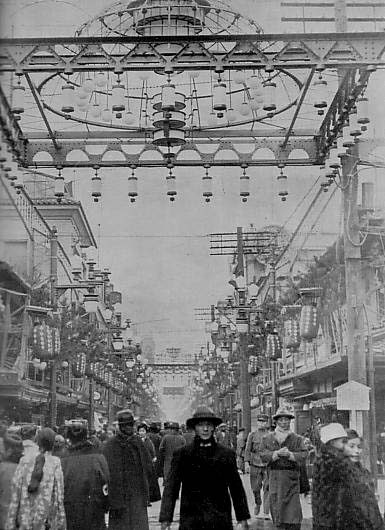
Two habits from that era are worth knowing. The Junkeimachi night market, just north of the bridge, was famous enough to surprise visitors from Edo, and the October sale called Seimon-barai (誓文払い), when merchants cut prices to make amends for a year of sharp dealing, was in effect Osaka’s first bargain season. By the 1920s and 1930s the street was modern Osaka’s showroom, and an aimless stroll along it had its own word, Shin-bura, the Osaka answer to Tokyo’s Ginza stroll.
The oldest name still trading is the one you cannot miss. Daimaru traces itself to Shimomura Hikoemon, who opened a kimono shop called Matsuya here in 1726 and sold for cash at marked prices, which was a radical idea at the time. Customers took their shoes off at the door until 15 May 1916, and the street’s history records that letting people walk in with their shoes on tripled the number who came in and doubled sales.
Shinsaibashi-suji: what the arcade sells now
The arcade covers the whole run from Nagahori-dori to Soemoncho-dori, with one break at Suo-machi-suji, and continues north of Nagahori-dori as the Senba Shinsaibashi-suji arcade. The main section is about 600 metres: a ten-minute walk if the street is empty, and it never is. The street is public, so it never closes; the shops mostly keep roughly department-store hours, opening at 10:00 or 11:00 and closing at 20:00 or 21:00.
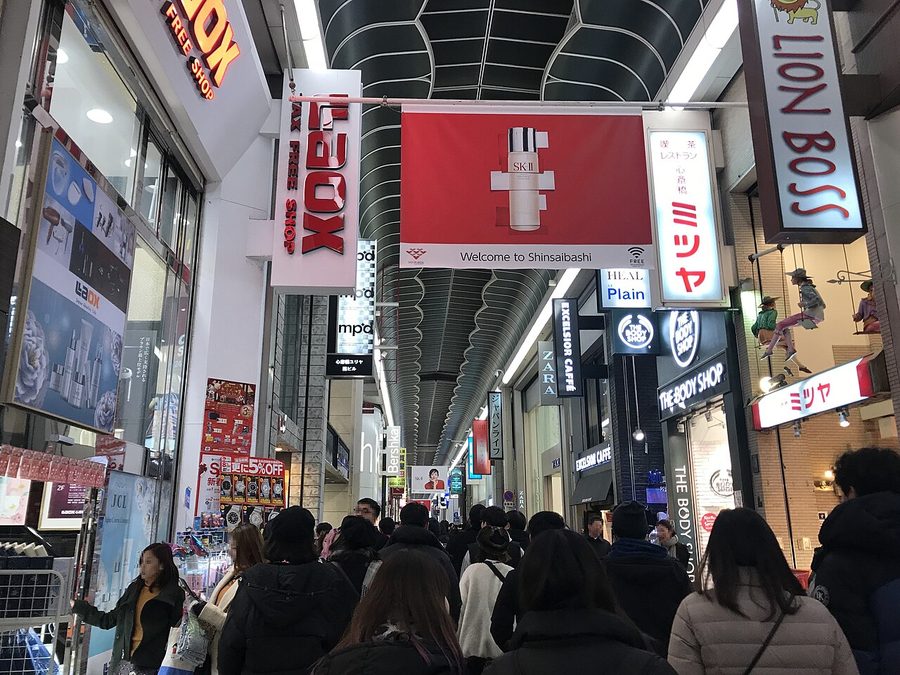
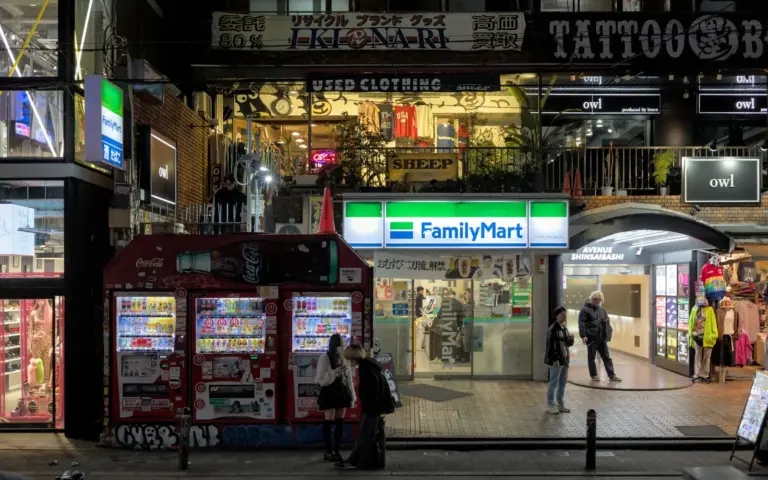
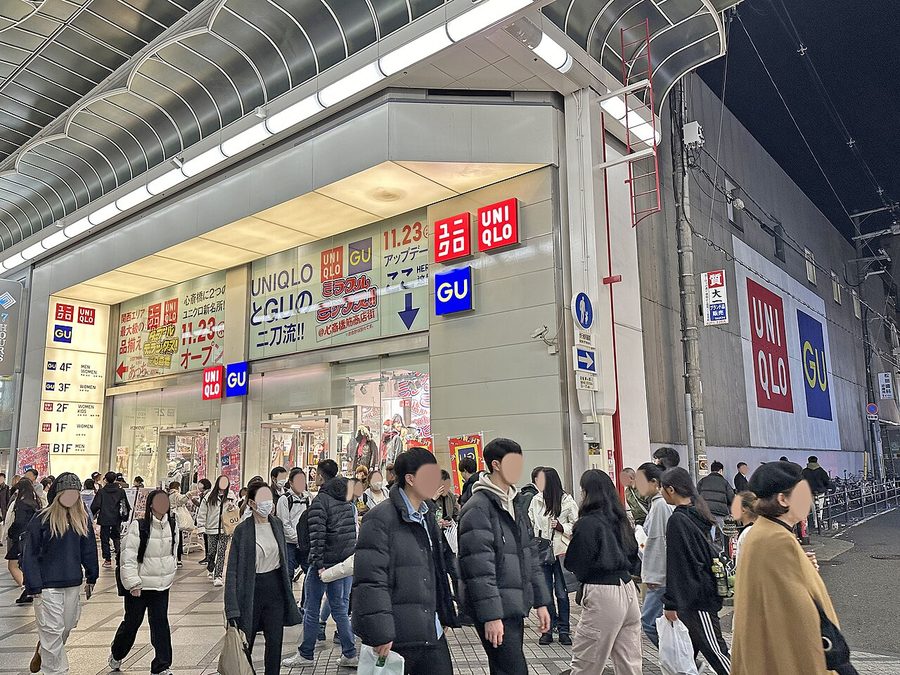
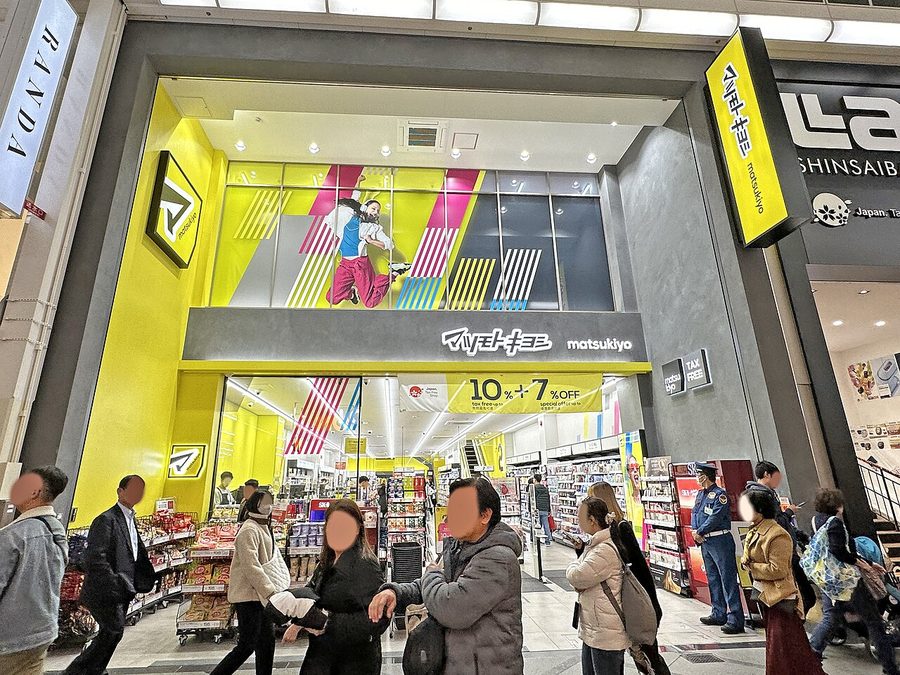
Be clear about what you will find. The street-level mix is now drugstores, sneaker shops, fast fashion, capsule-toy shops, second-hand designer shops and phone-case stores, and the shopping street’s own map lists eight drugstores, three of them branches of the same chain. If you came for cosmetics, sunscreen and snacks for the flight home, this is the most efficient street in the city. If you came for something you cannot buy in your own country, you will have to look harder.
The old names that survive
A few shops on the arcade have been here for generations, and they are the reason I walk it slowly. Ujien, a Kyoto tea merchant founded in 1869, has its main shop at Shinsaibashi-suji 1-4-20, open 10:30–21:00, with a tea room called Kissako on the second floor (11:00–19:45, last order 19:00) for matcha parfaits and zenzai, sweet red-bean soup.
A few doors down at 1-5-19, Ujikoen has sold Japanese tea on this street since 1946 and is marking its eightieth year. The counter at the back, where staff brew gyokuro in a small pot in front of you, reopened on 1 November 2026 after renovation and as of November 2026 serves on Fridays, weekends and holidays, 14:00–17:00 (last order 16:30). The shop opens 12:00–19:00, but it has changed its hours several times this year, so check Ujikoen’s Shinsaibashi page before making a detour for the tea.
For prints rather than tea, Nakao Shoten, a second-hand bookshop opened in 1967, sells Edo-period books, maps, old postcards and ukiyo-e on the arcade; its notices were still being updated in November 2026. Upstairs in the Fujiya building at 2-2-23, the small Osaka Ukiyoe Museum shows original woodblock prints; until 24 January 2027 the show is Hokusai and Hiroshige. The museum’s visitor page gives 10:00–17:00 (last entry 16:30), ¥1,000 for adults and ¥600 for students, and warns that there is no lift to the third floor.
Tax-free shopping changed in November 2026
If you last shopped tax-free in Japan before November 2026, the system is different now. Under the refund method announced by the Japan Tourism Agency, you pay the full price including consumption tax, register your purchase and refund details at the shop with your passport, then have the goods checked at the customs kiosk at the airport, before you check your bags and within 90 days of buying. The refund comes after that check.
Two rules catch people out. Food, drink and cosmetics no longer need sealed bags, but they lose their eligibility if you open or use them in Japan, and customs checks each receipt as a whole, so if one item on it is missing, nothing on that receipt is refunded. Daimaru’s service page sets the threshold at ¥5,000 before tax in a day, with receipts combinable, and runs refund counters on the main building’s ninth floor (10:00–20:00) and the south building’s fourth floor (12:00–20:00).
When to go, and the crowds
The arcade is at its worst on weekend afternoons and on any evening when the Hanshin Tigers win something. On a weekday morning it is a ten-minute walk; on a Saturday afternoon I would allow at least twice that. Rain makes it busier, because the covered street and the mall below are the only dry way through Minami.
Midosuji: ginkgo, flagships, Daimaru and PARCO
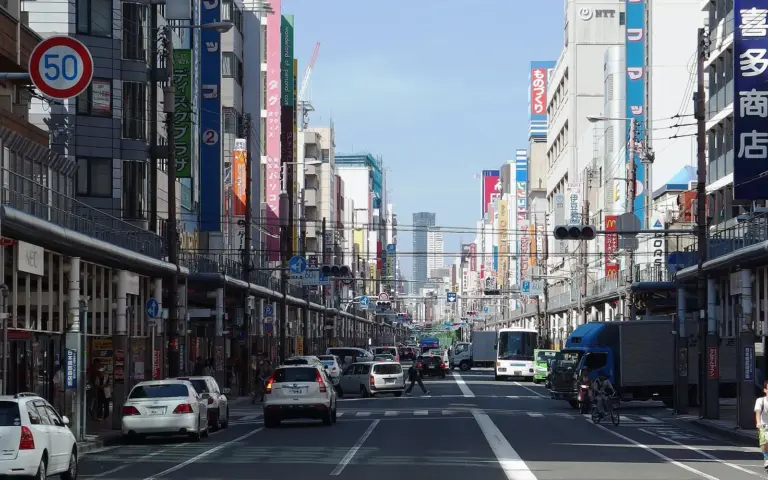
Walk one block west through any side street and you are on Midosuji (御堂筋), the boulevard named after the two Buddhist temples on it further north, Kita Mido and Minami Mido. It runs about 4 kilometres between Umeda and Namba and is 44 metres wide, and it took until 1937 to finish, because the city widened an old 6-metre street and dug the first subway line underneath it at the same time.
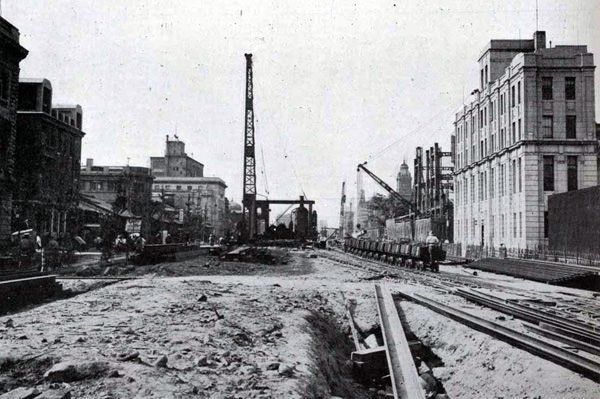
The ginkgo were an argument. Osaka City’s account of the trees says the planning meeting favoured plane trees, then the fashion, until a minority argued that ginkgo had dignity, shade in summer and colour in autumn, and were native to the East and so would interest foreigners. The compromise put plane trees north of Oebashi and ginkgo to the south; 928 were planted between 1933 and 1937, and the city designated the avenue a cultural property in fiscal 2000.
The trees turn gold in late November and early December, and on a still morning the pavement around the Shinbashi crossing at Nagahori-dori is covered in leaves. Every new tree the city plants is a male, because the females drop ginkgo nuts, soft and famously smelly, all over the pavement. The city still gathers the nuts from the old trees and gives them away at its autumn street event.
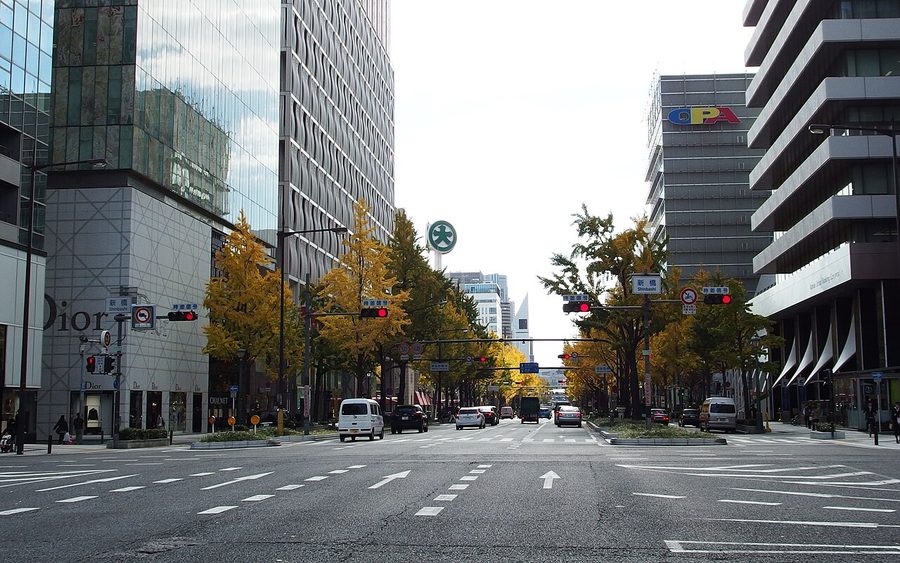
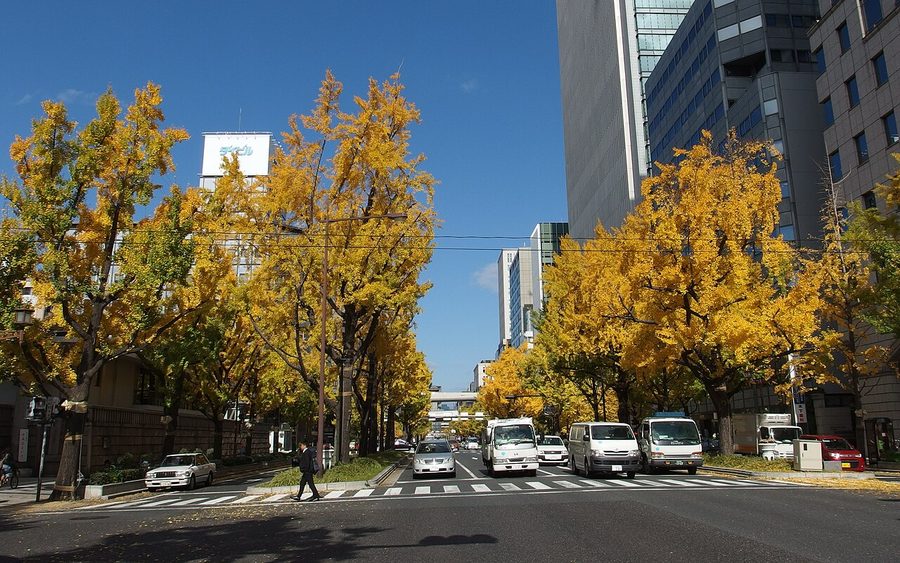
Midosuji is also slowly becoming a walking street. Under the city’s 2019 vision for the boulevard, the side lanes between Nagahori-dori and the Dotonbori canal have been under conversion to pavement since October 2022, and the widened west pavement from the Shimizu-machi crossing to Dotonbori-bashi opened on 7 March 2025, according to the city’s notice. It makes the walk from Shinsaibashi to Namba along Midosuji far more pleasant than it was.
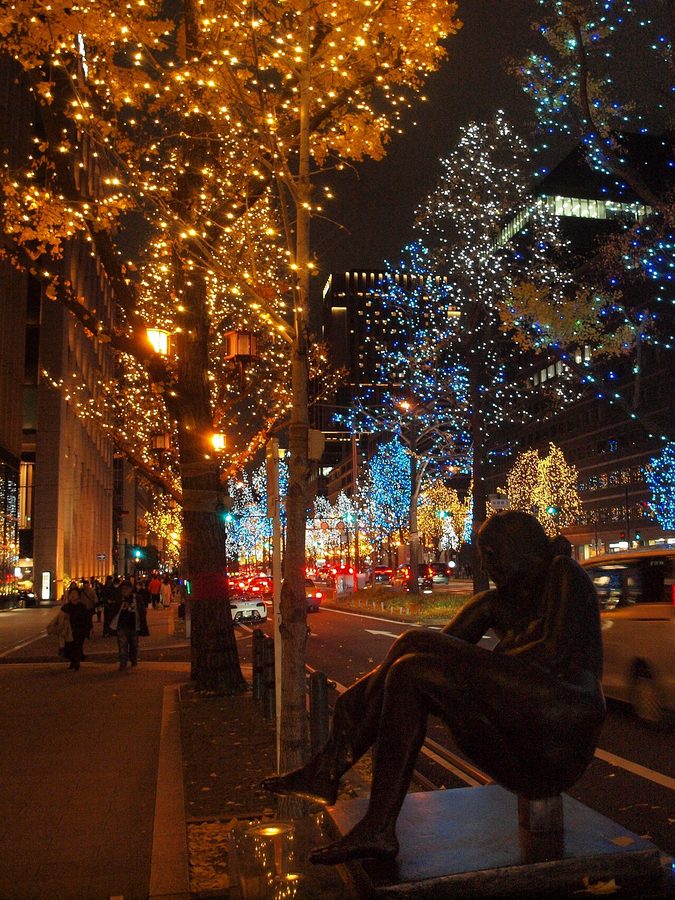
From 3 November to 31 December 2026 the trees are wrapped in lights for the Midosuji illumination, from about 17:00 until 01:00, along the whole boulevard from the Hanshin-mae crossing in Umeda to Namba-nishiguchi. Each section has its own colour, and in 2026 the colours follow the decades of the boulevard’s history, ahead of its ninetieth birthday in 2027.
The flagship stores
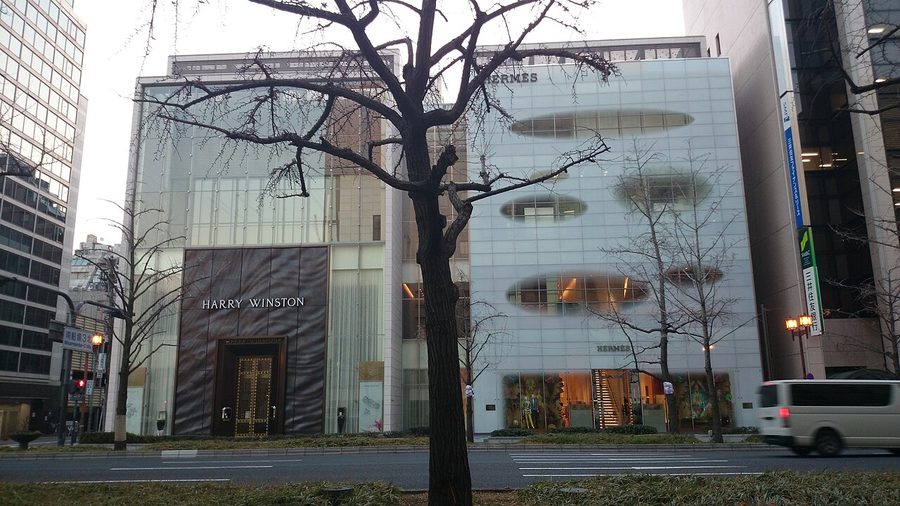
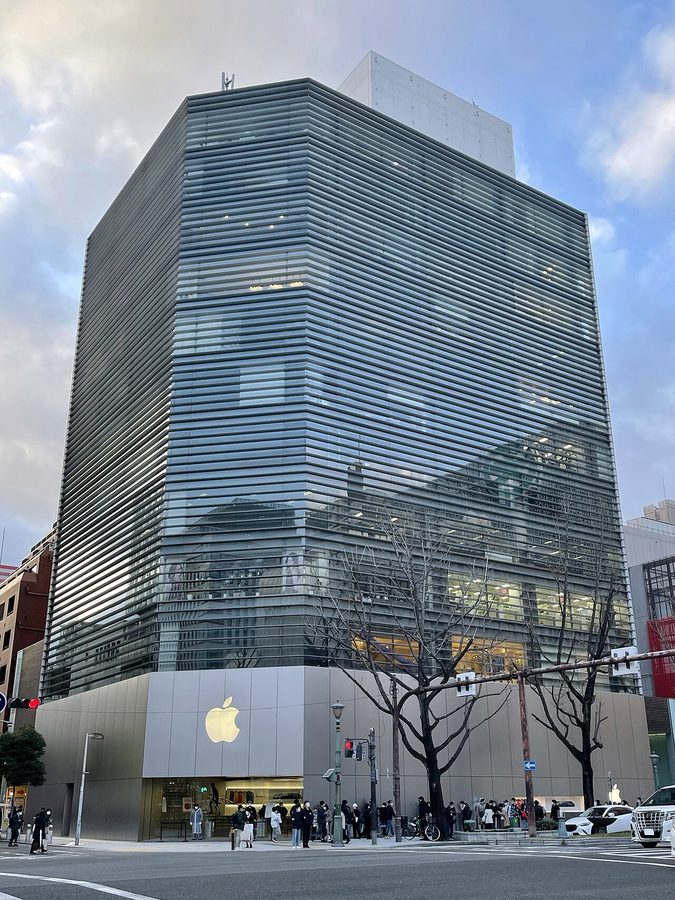
On both sides of the Nagahori-dori crossing, Midosuji is Osaka’s answer to Omotesando: the European luxury houses have their own buildings here, glass boxes and stone facades one after another. I find them more interesting as architecture than as shops, and window-shopping costs nothing. Apple Shinsaibashi sits on Midosuji in its own glass block and is open 10:00–21:00, according to Apple’s store page.
Daimaru and its Vories building
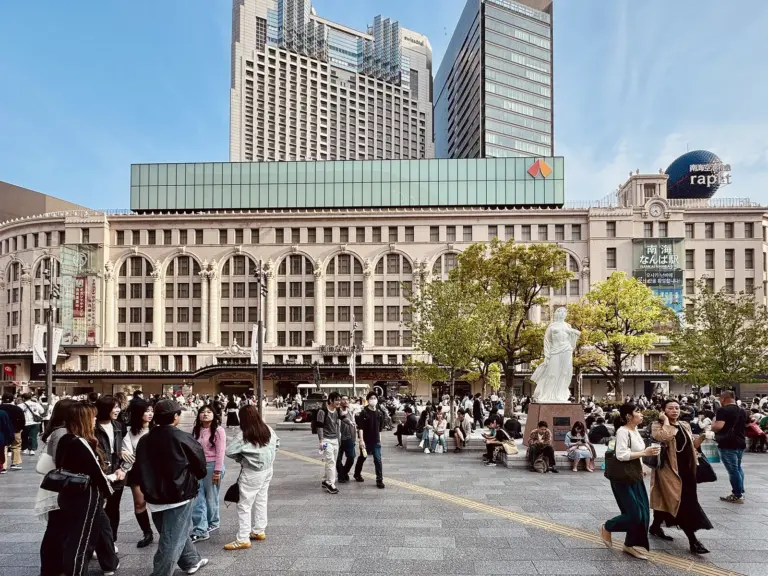
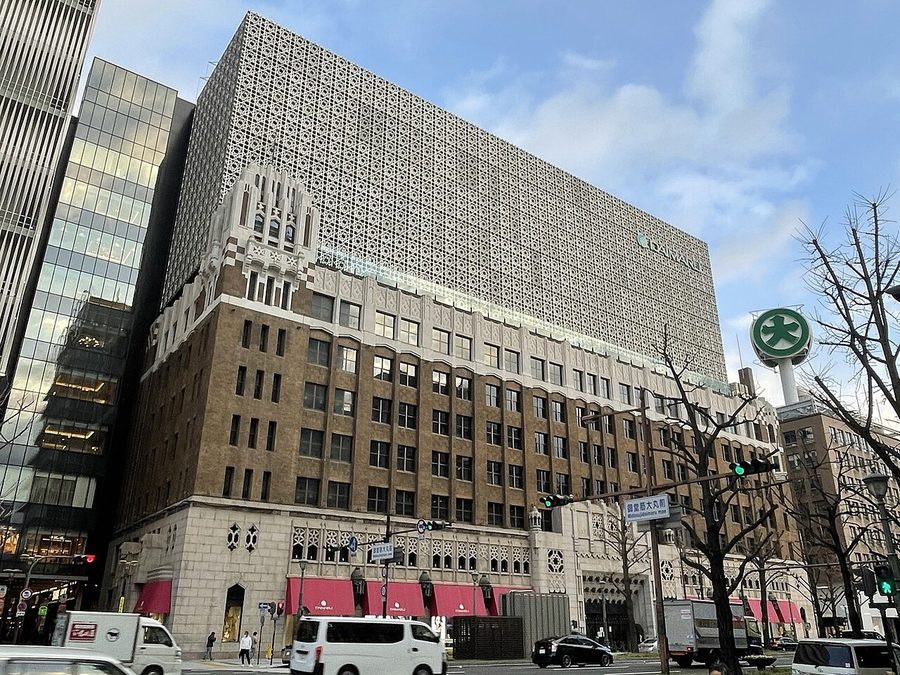
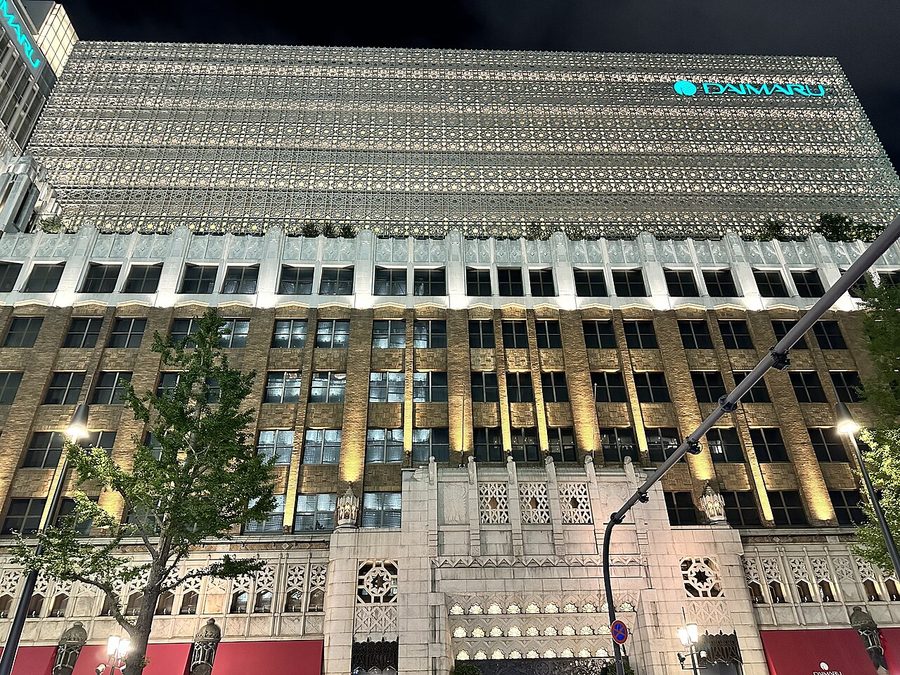
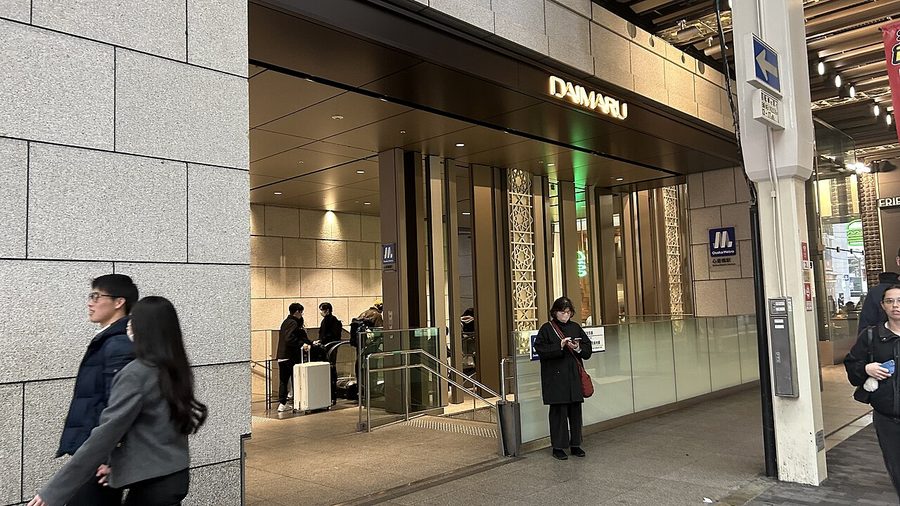
Daimaru Shinsaibashi fills a whole block between Midosuji and the arcade, and the main building is the one thing in Shinsaibashi I would tell everyone to see. William Merrell Vories, an American architect who worked in Japan, designed it in stages between 1922 and 1933, in a Gothic-meets-art-deco style. It closed at the end of 2015 and reopened in September 2019, rebuilt with its Midosuji wall reproduced; Daimaru’s guide to the building says about 67 per cent of the 1,258 interior parts were reused.
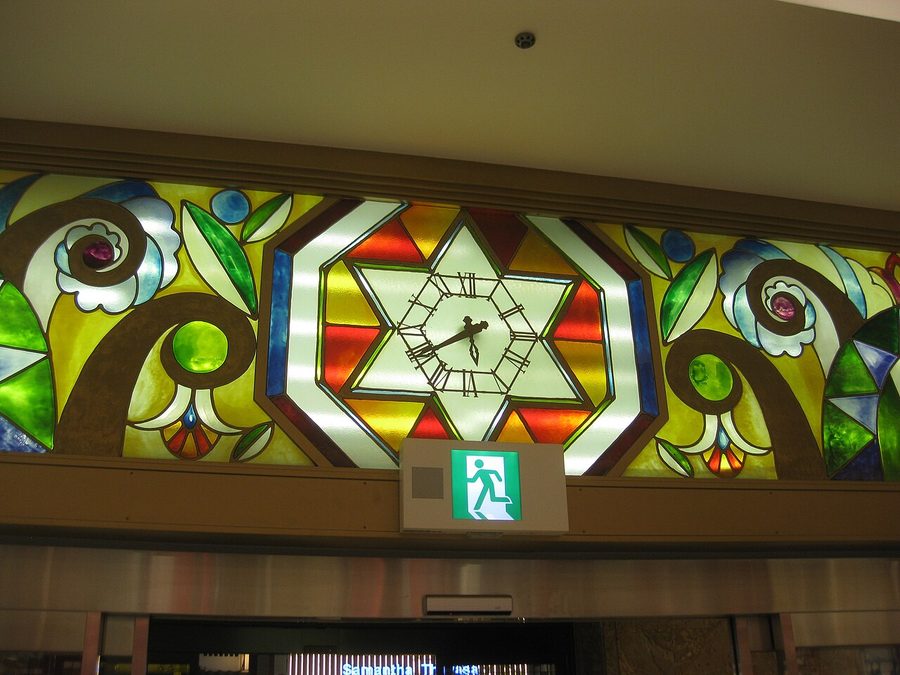
Look for the details on the way in. Over the Midosuji entrance, three hawks and three pelicans watch the door; inside it, stained glass shows Aesop’s fox and the grapes. On the arcade side, a peacock with spread wings is carved over the central entrance. The ceiling of the ground floor is a geometric art deco pattern with an eagle on the beams, and the seventh-floor terrace is the best place to see the pointed Crystal Tower ornament on the Midosuji front up close.
The store is open 10:00–20:00 and closes only on 1 and 2 January, with the tenth-floor restaurants open 11:00–22:00. The ninth floor holds Pokemon Center Osaka DX (10:00–20:00), reached directly from Shinsaibashi Station’s exit 4 underground. On the fifth floor the Salon de The Vories serves tea under lamps saved from the old building. Visitors on their first trip to Japan, in the country for less than six months, can show a passport at the ground-floor information counter for a 5 per cent discount coupon, with exclusions.
Shinsaibashi PARCO
PARCO is the building north of Daimaru’s main store, connected to it on several floors. It opened on 20 November 2020 in what was the Sogo department store and then Daimaru’s north building. The first PARCO had stood on the arcade itself from 1971 until 2011, and its eighth-floor live house, Club Quattro, now plays in Umeda; the old site holds a ZARA.
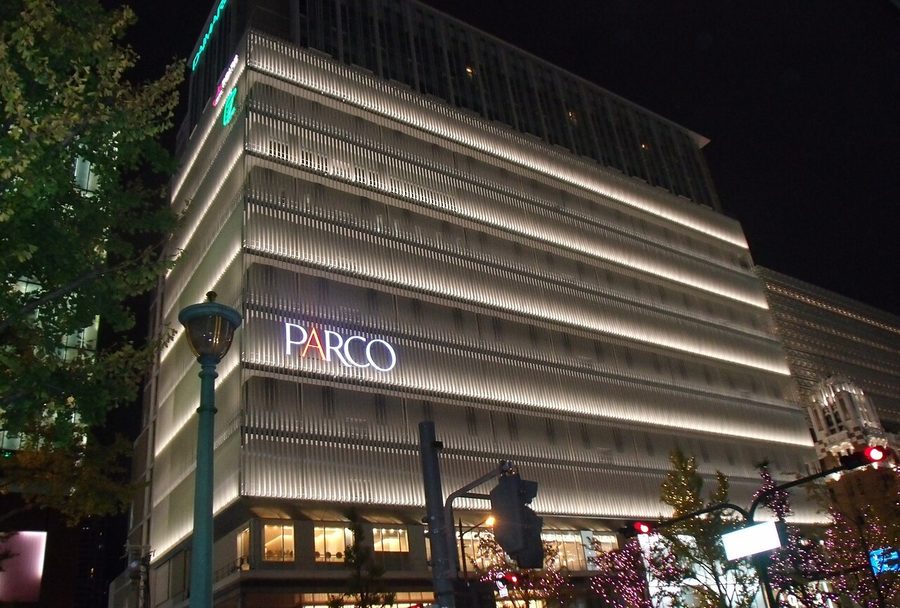
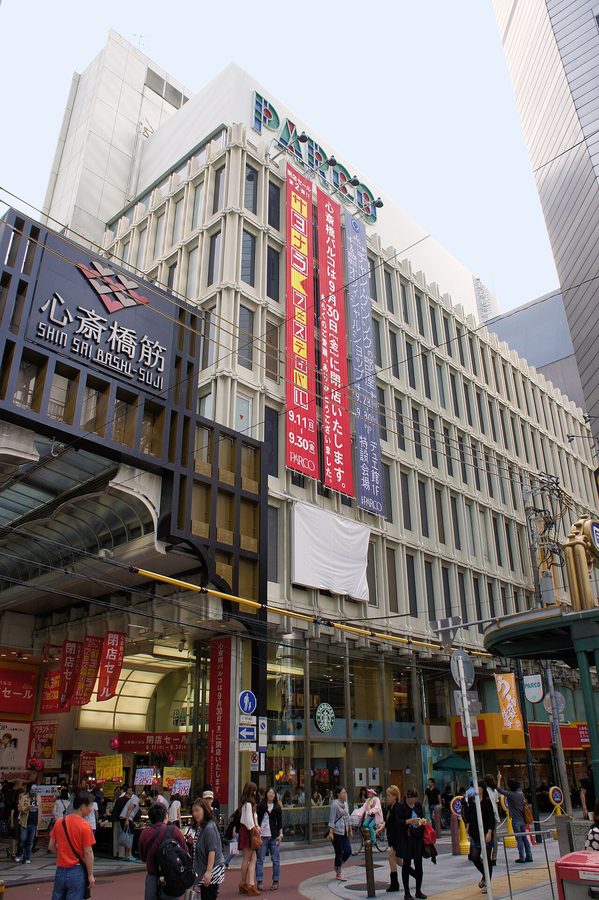
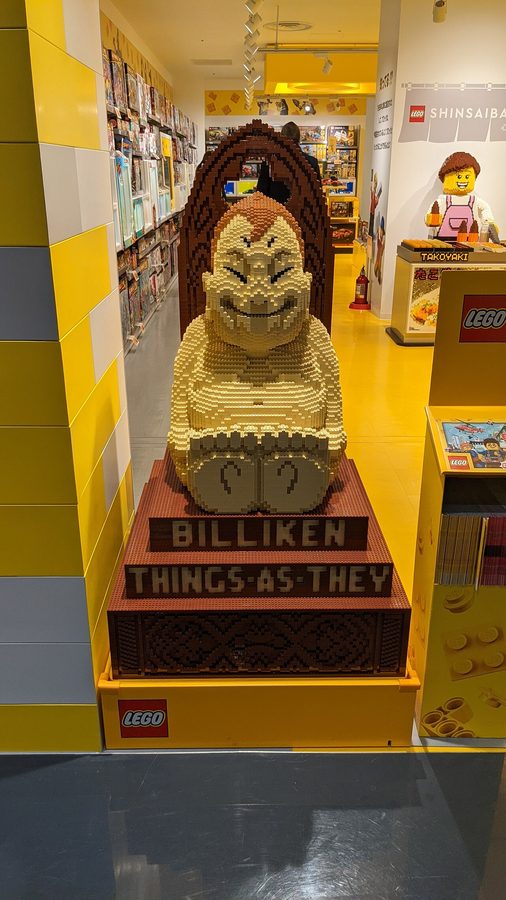
The fifth and sixth floors are where I would spend time: character and game shops including the Capcom Store Osaka, the Godzilla Store Osaka, the Studio Ghibli shop Donguri Kyowakoku, Chiikawa Land, a Lego store and a Sega Store that opened in October 2026. The second basement is a lane of small counters and bars lit in neon, open 11:00–23:00, and on the B1 floor a Starbucks Reserve opens at 8:00, earlier than anything else in the building. PARCO’s opening hours page has shops at 10:00–20:00 and the thirteenth-floor restaurants at 11:00–22:00.
Crysta Nagahori: the canal bed you can shop in
When it rains, go down. Crysta Nagahori (クリスタ長堀) runs under Nagahori-dori from Yotsubashi-suji in the west to Sakaisuji in the east, in the space where the canal used to be, and the operator gives its length as about 730 metres. Its floor area of 81,765 square metres, car park included, makes it one of the biggest single underground malls in Japan.
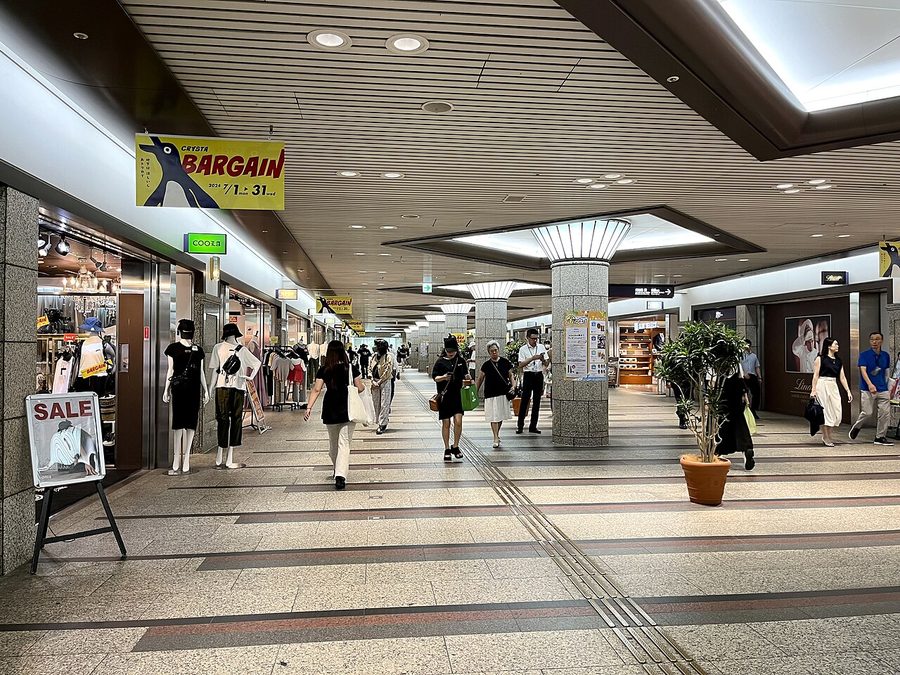
The mall links three subway stations: Shinsaibashi (Midosuji Line exit 2, and the Nagahori Tsurumi-ryokuchi Line directly), Yotsubashi (exit 1-B) and Nagahoribashi on the Sakaisuji Line (exit 2-A). It has about 100 shops, mostly fashion, accessories, cafes and services, and a waterfall plaza, Taki no Hiroba, where the mall holds its events. Shops open 11:00–21:00 (20:30 on Sundays) and restaurants 11:00–22:00; it closes on 31 December, 1 January and the third Monday of February, according to Crysta’s access page.
You will read that it is the largest underground mall in Japan, and that needs a footnote. The claim is about the floor area of a single mall, not the number of shops, and Crysta connects to no other mall, so it will not take you underground to Namba. For that you need the train.
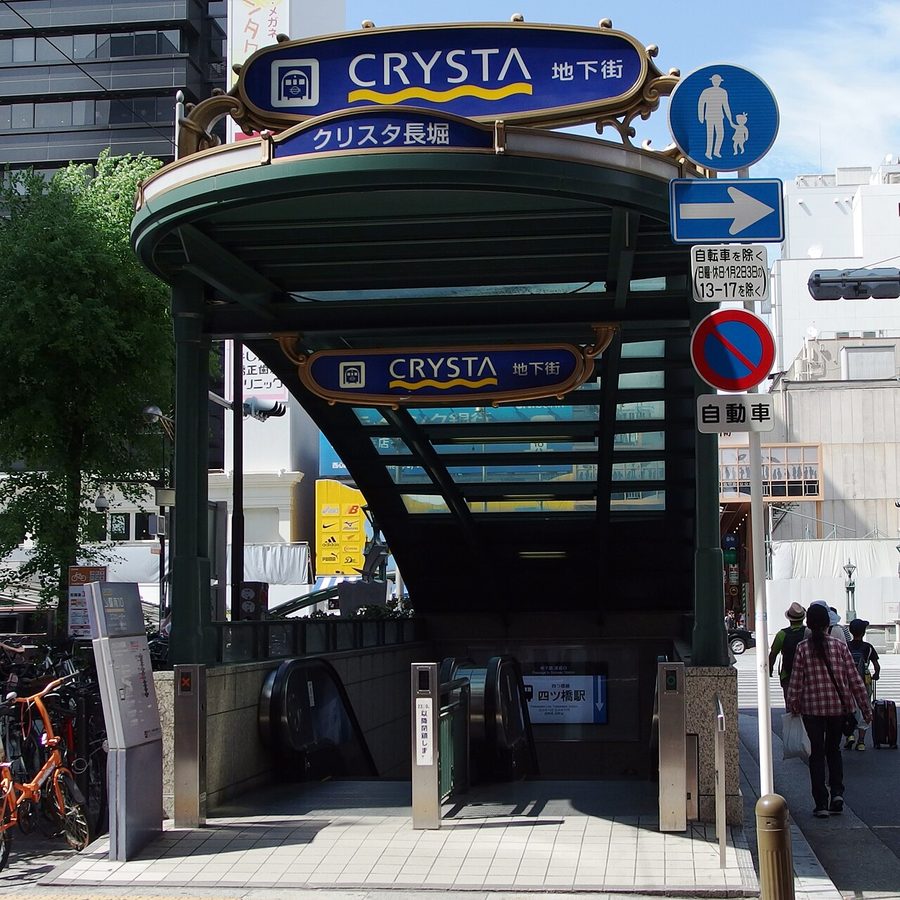
Crysta also answers a question Osaka people ask: where do you kill time in Shinsaibashi? Between Crysta, the tea counters on the arcade, the ukiyo-e museum and Daimaru’s terrace, you can spend a wet afternoon in Shinsaibashi without opening an umbrella.
Minamisenba and the streets east of Midosuji
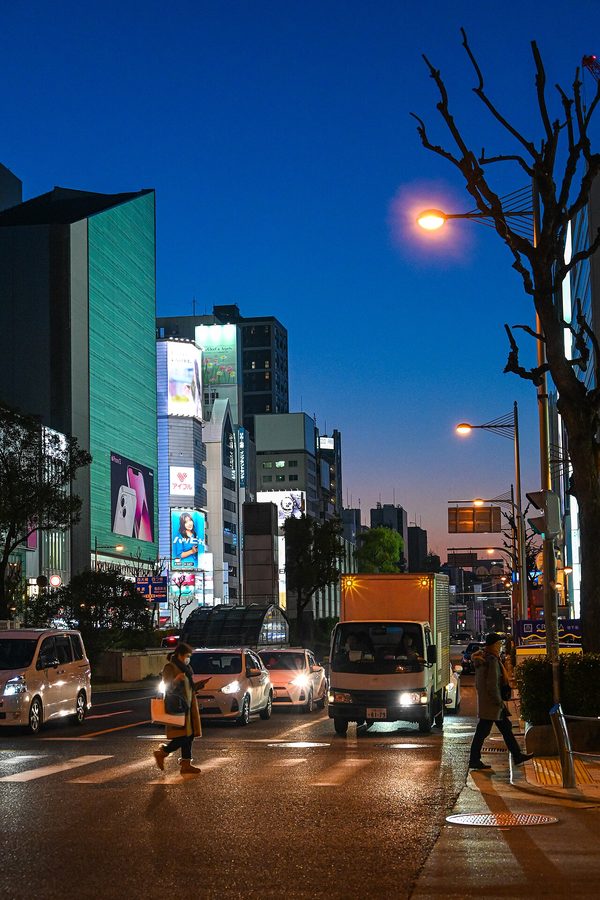
North of Nagahori-dori the district changes its name to Minamisenba (南船場) and its pace to something like normal. This was the southern edge of Senba, the merchant grid, and the side streets on both sides of Midosuji are a mix of offices, small shops and cafes, and the odd merchant house that has traded here since the Edo period. It is where I would walk after the arcade, mainly because nobody is pushing.
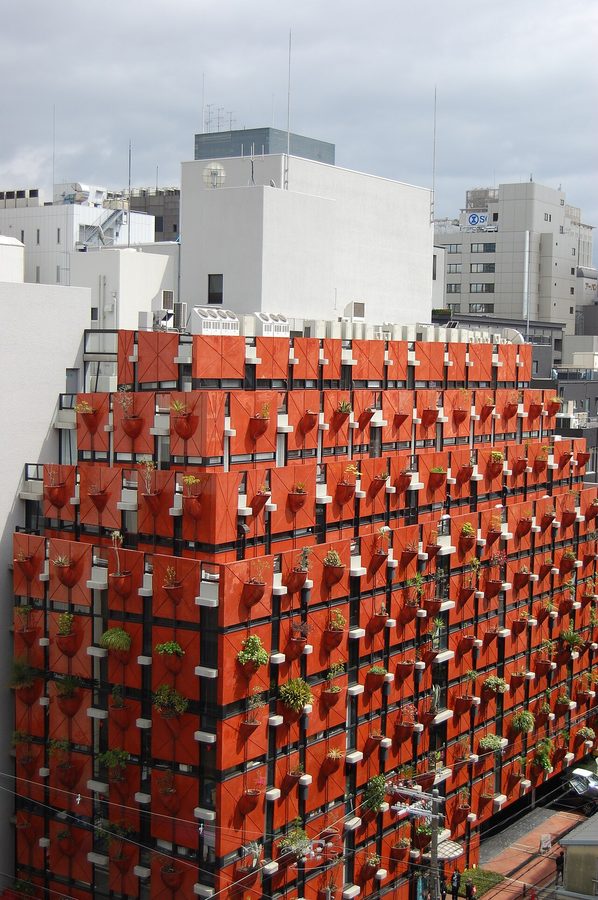
The best-known address here is a kelp shop’s head office. Ogura-ya Yamamoto, a kombu (kelp) merchant founded in 1848 at Junkeimachi, built its headquarters in 1993 to a design by the Italian architect Gaetano Pesce: the Organic Building, a red-orange facade studded with planters. You see it from the street at Minamisenba 4-chome; the company’s history lists the building, and its shop nearby at Minamisenba 4-10-26 sells the salted kombu it is known for, on weekdays only, 10:00–17:30.
A few streets west, near the Yotsubashi end, is the main shop of Aranzi Aronzo, the Osaka character-goods label behind a cast of deadpan stuffed animals, 35 years old in 2026. It still has its own shop: the Osaka shop page gives Minamisenba 4-13-4, a bare-concrete building with a large white rabbit at the door, open 11:00–18:00 and closed on Wednesdays and over New Year (30 December to 2 January). The basement cafe is closed for now. The shop’s own tip is to take the North 12 stairs out of Crysta Nagahori and walk straight north.
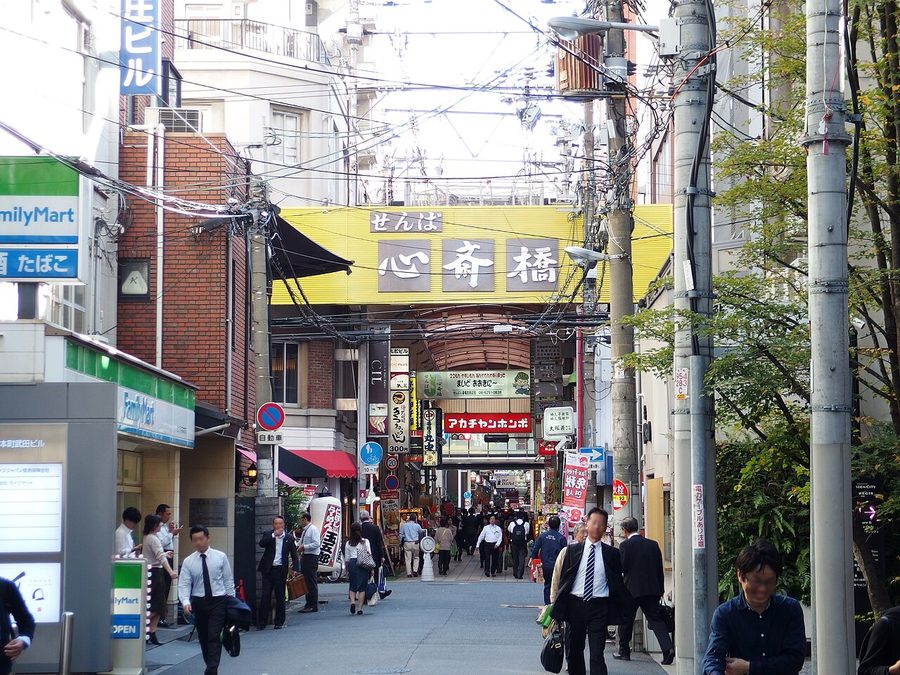
Follow the arcade north from Nagahori-dori and it becomes the Senba Shinsaibashi-suji, roofed in stretches up to Hommachi, with fewer tourists and more lunchtime set meals. Senba deserves a morning of its own, and Ikasuri Shrine, tucked among the office towers, is a short walk west of Midosuji near Hommachi.
Eating and drinking without the Dotonbori queues
The canal is ten minutes away, and its queues for takoyaki and okonomiyaki are part of the show. For a sit-down meal, Shinsaibashi has two better bets indoors and one outdoors, and the indoor ones are department stores, where Osaka has always eaten on a shopping day.
Daimaru’s tenth-floor restaurants and its second-basement counters are open 11:00–22:00, with last orders at 21:00 in the basement, and the seventh-floor terrace restaurant runs to 22:00 as well. PARCO’s second basement is the livelier one: a standing bar, a takoyaki counter that puts a whole small octopus in each ball, a working-man’s Chinese bar and an Osaka-style canteen, all open to 23:00. It feels like an old Osaka drinking lane rebuilt indoors, which is exactly what it is meant to be.
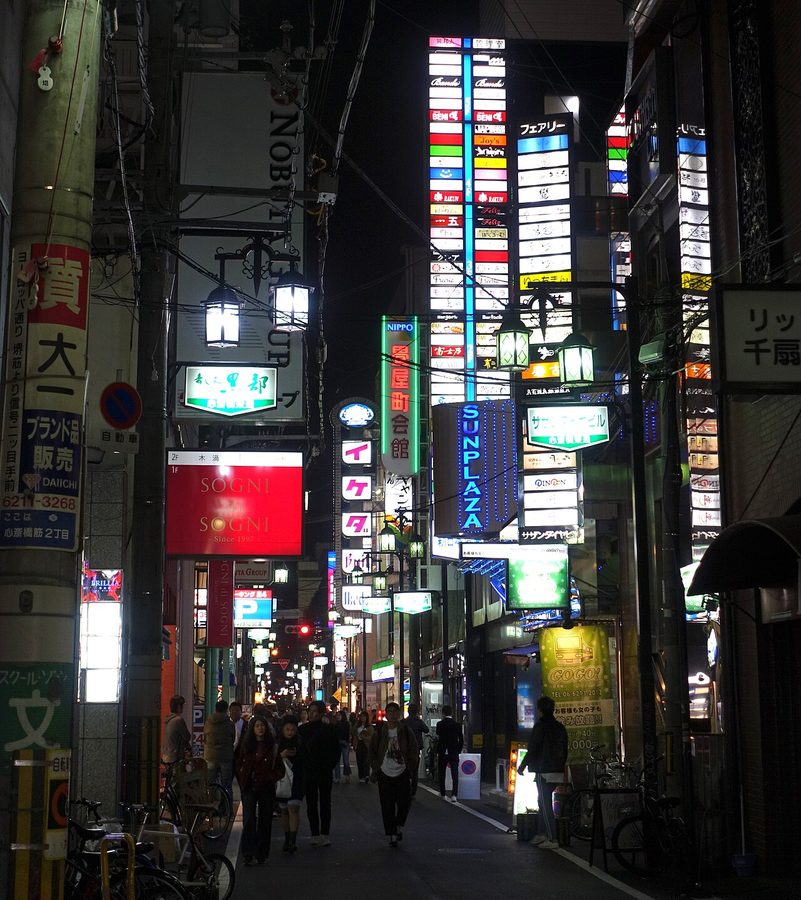
For something sweet, the second floor of Ujien is a calmer option than any queue on the canal. East of the arcade, Higashi-Shinsaibashi (東心斎橋) is the bar district, its small places mostly on the upper floors of narrow buildings; the ones with prices outside are safe, and the ones with a man outside offering a deal are not. South of it, Soemoncho faces the canal and has the same rule.
Across Midosuji, Amerikamura has the cheaper takoyaki stands and the younger crowd, and about twenty minutes east on foot, Kuromon Market is the place for seafood cooked on the spot. If you are heading on to Den Den Town for electronics and anime, the market is on your way.
Getting to Shinsaibashi
Shinsaibashi Station is on the Osaka Metro Midosuji Line (M19), one stop and about two minutes north of Namba and six minutes south of Umeda, according to the shopping street’s access page. The Nagahori Tsurumi-ryokuchi Line (N15) also stops here, and a passage inside the gates, with a moving walkway, links it to Yotsubashi Station (Y14) on the Yotsubashi Line.
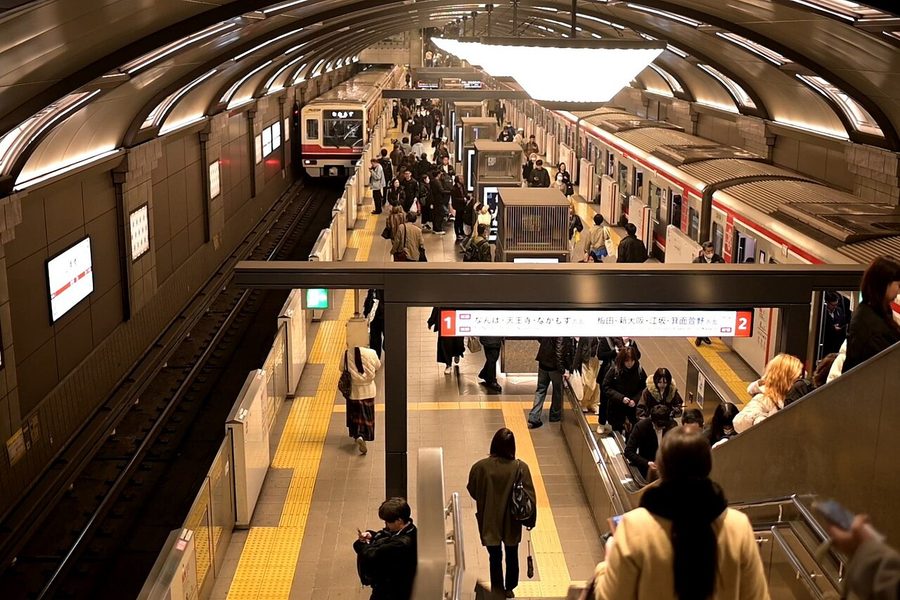
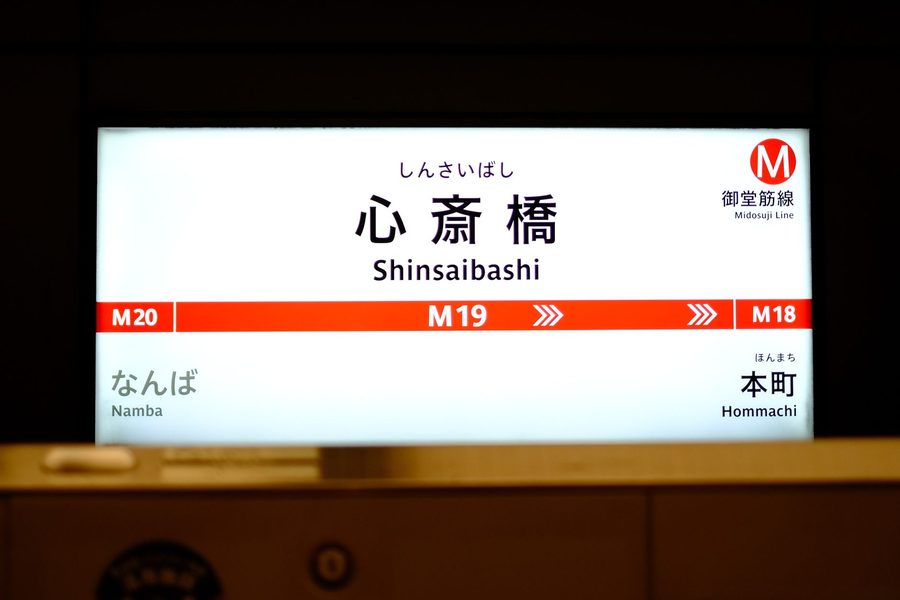
Which exit you use matters more than which line. From the south gates, exits 4-A and 4-B come up by PARCO, exits 5 and 6 by Daimaru and the arcade, and the Pokemon Center is reached directly underground. From the north gates, exit 2 leads into Crysta Nagahori and exits 1 and 3 come up near Nagahori-dori. Exit 7, on the west side of Midosuji, has been closed since 12 September 2026 for the rebuilding of the building it connects to, according to Osaka Metro’s station guide.
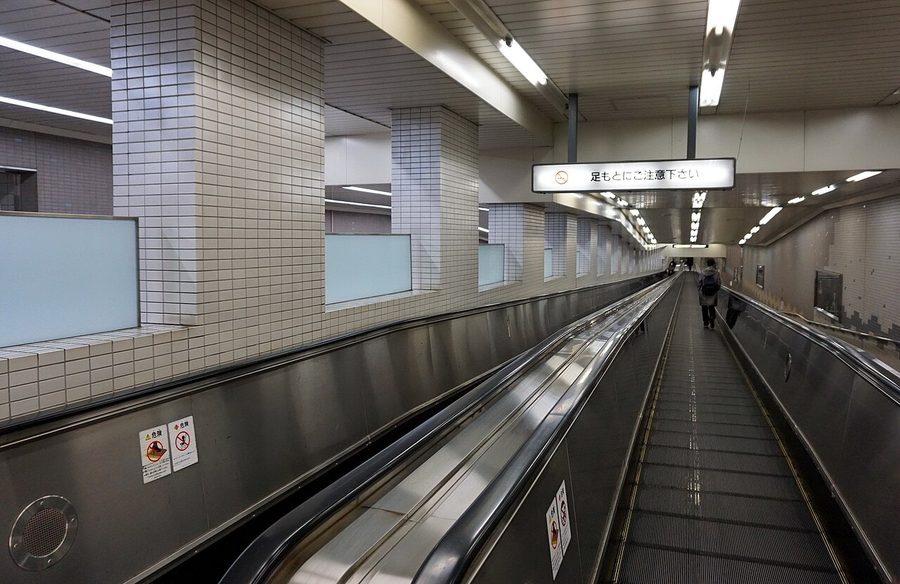
Walking from Namba is easy and usually better. From the Namba Station exits, head north up Ebisubashi-suji, cross the canal on Ebisubashi and you are at the arcade’s south gate in five to ten minutes; walking the whole arcade to Shinsaibashi Station’s north end adds another ten. On the way back, Midosuji’s widened west pavement is the quicker walk south. Shinsaibashi fits easily into one day with Namba and Dotonbori, and the rest of the things to do in Osaka are a subway ride away.
When you come up on Nagahori-dori, cross to the central strip before you go anywhere else. Stand by the old stone railings, listen to the little stream running under them, and look south down the arcade. You are on the bridge, and from here the whole street is still doing what it did in 1622: selling to people on their way to somewhere more fun.