04Tennoji & Shinsekai
Tennoji Park and Zoo: Keitakuen, Art Museum, Tenshiba
天王寺公園駅Tennoji (Midosuji Line), exit 5
Stand on the lawn at Tenshiba with Tennoji Station behind you and you can price the whole afternoon from one spot. The grass under your feet costs nothing. The garden behind the trees to your right charges ¥300, cash only. The museum on the rise above it asks ¥500 for its own collection and four times that for the big autumn show, and the zoo gate straight ahead charges ¥800, up from ¥500 before 1 July 2026.
All four sit inside Tennoji Park (天王寺公園), 26.1 hectares that Osaka laid out on the grounds of a trade fair. For a quarter of a century the city fenced the middle of it off and charged you to walk in. The fence has gone, the entrance is now a café lawn run by a railway company, and the zoo has spent five years tearing out old cages and building new habitats.
So the question is not whether to come, because you will pass through on the way from Tennoji to Shinsekai anyway. It is which of the paid parts earns your money. My short answer: the garden always, the zoo if you have two hours and a child or a soft spot for hippos, and the museum when its exhibition is one you would cross town for.
Contents目次
An exposition ground that became a park
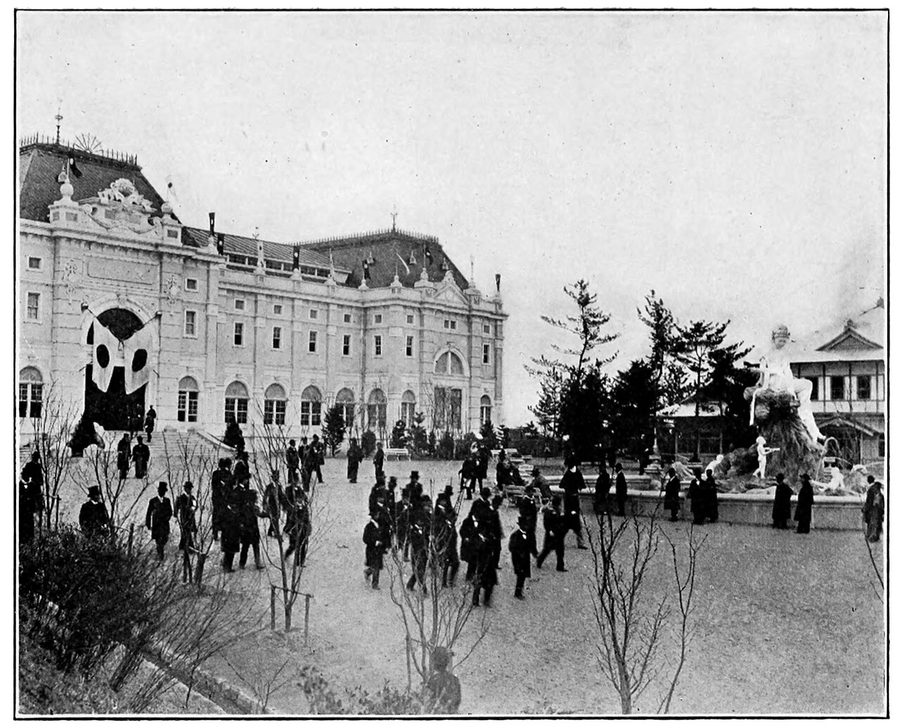
The park exists because of the fifth National Industrial Exposition, which Osaka hosted in 1903. When the fair closed, the site was split in two. The western part became the entertainment district of Shinsekai (新世界), and the eastern part opened as a city park on 15 October 1909, as Osaka City’s own park page dates it.
The pieces arrived over the next three decades. The zoo opened on 1 January 1915, the third in Japan after Tokyo’s Ueno and Kyoto’s. The Sumitomo family, Osaka’s richest merchant house, built a mansion and garden on the hill at the north end, then gave both to the city in 1926 on condition that a museum went up on the house site. The museum opened in 1936, and the garden opened to the public with it.
Then the park went the way of its neighbourhood. After the Tennoji Exposition of 1987, the city fenced the central part and from 1990 charged an entry fee; Japanese accounts of the time say the aim was partly to clear out people sleeping rough. Karaoke stalls lined the road between the park and the museum until the city removed them in 2003.
The fees ended in stages. Entry became free in December 2014, the railway group Kintetsu took over management of the entrance area, and on 1 October 2015 it reopened as Tenshiba (てんしば), a lawn ringed by cafés and restaurants. Since 1 April 2015 the only part of the park itself that charges is the garden. The zoo and the museum, which have their own operators, charge separately.
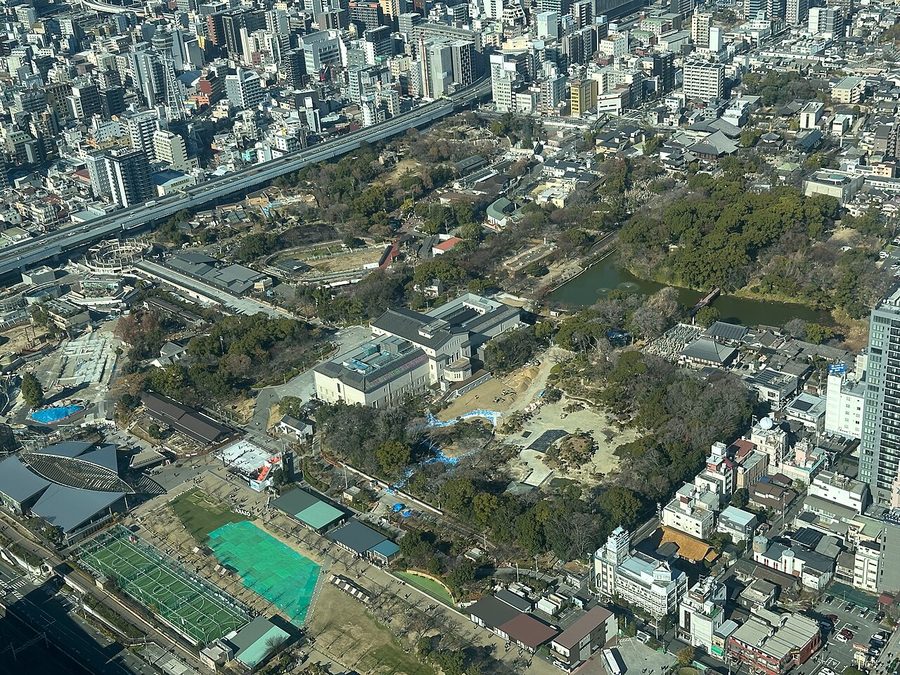
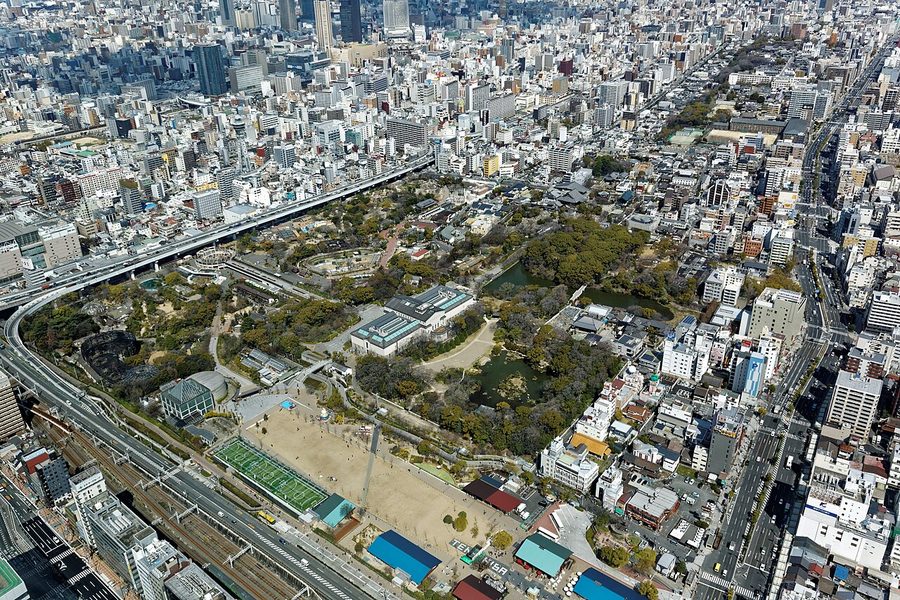
The layout is simple once you have seen it from above. Tenshiba is the south-east corner by the station. The zoo fills the south-west, running all the way to Shinsekai. The museum and its garden sit in the middle of the northern half, and Chausuyama (茶臼山), a wooded mound with a pond at its foot, closes off the north end.
Tennoji Zoo (天王寺動物園)
The zoo covers about 11 hectares and keeps around 1,000 animals of some 170 species. Since April 2021 it has been run by an independent public corporation rather than directly by the city, and the change shows: in five years it has opened six new facilities, and it says so with some pride on its own blog.
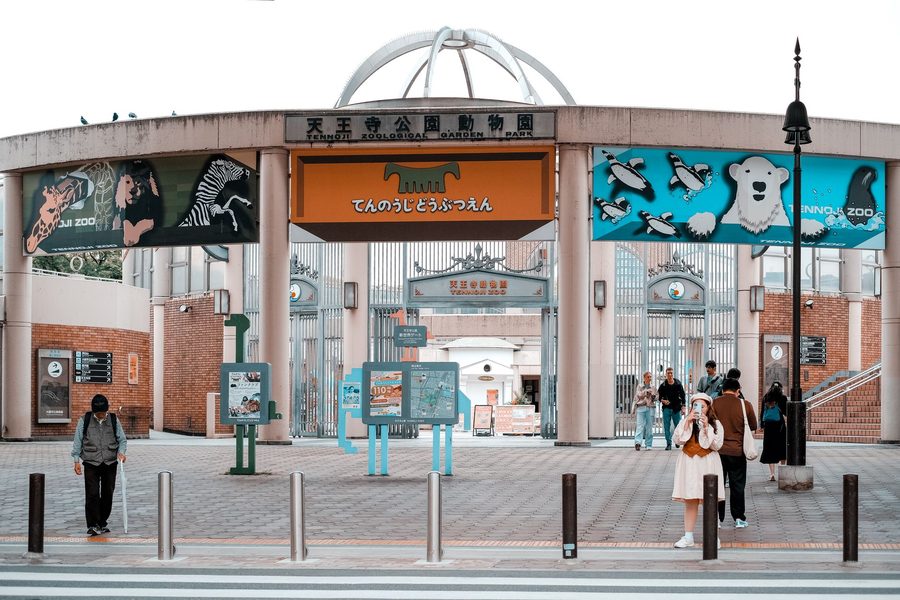
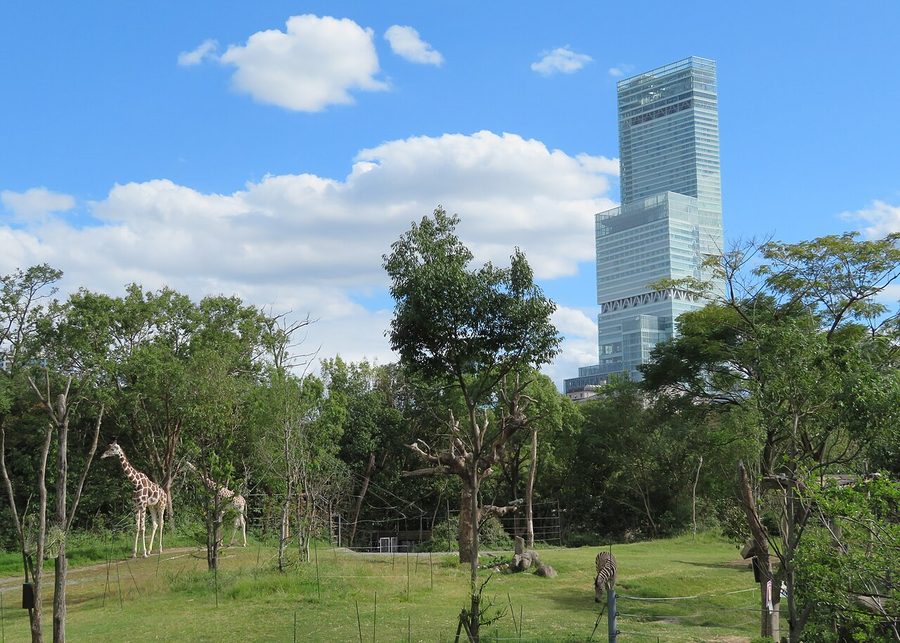
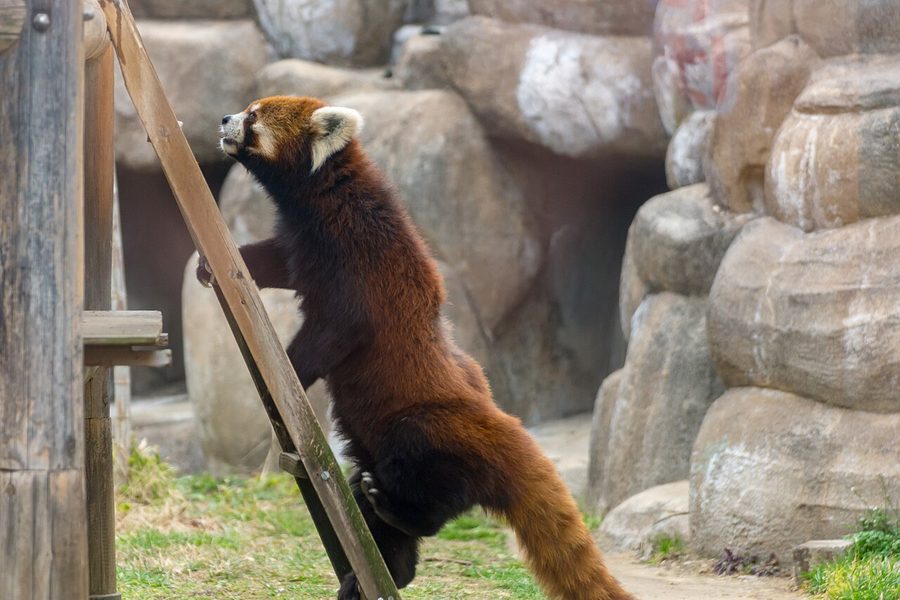
Is it worth visiting? For ¥800 it is a fair deal if you pick your route. The newest exhibits are good by any standard, and the zoo keeps three animals no other zoo in Japan does: the drill, a black-faced West African monkey; the yellow-headed vulture; and the Chinese wolf. The older parts are another matter, and I will come to them.
What is new since 2021
The building programme ran in this order: Friendship Garden, a petting area for sheep, goats, alpacas and guinea pigs (April 2022); Penguin Park and Sea Lion Wharf (April 2023); Bird World, a row of pheasant and owl aviaries (November 2023); Chimpanzee Base (April 2025); Elephant Village (April 2026); and Polar Bear Coast (August 2026).
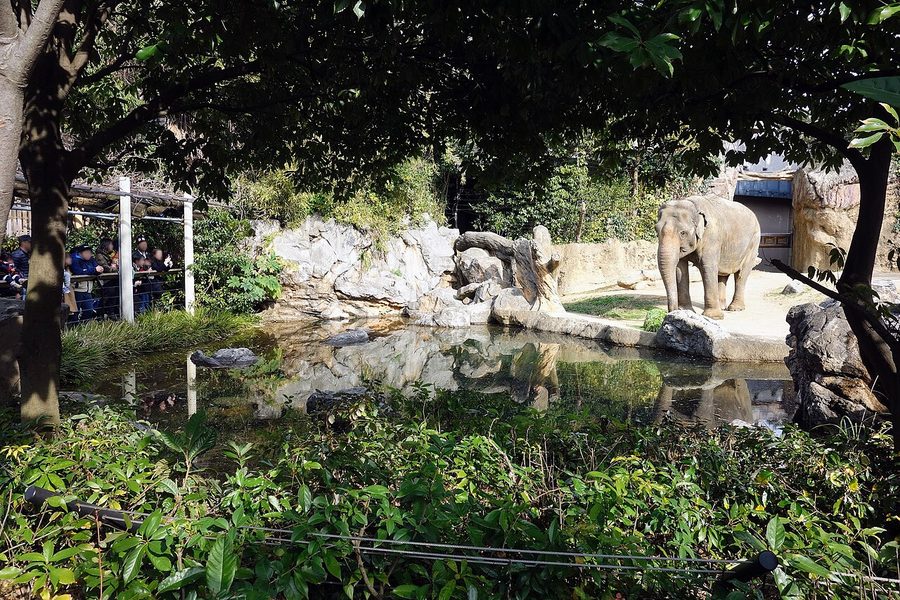
Elephant Village is the headline. The zoo had no elephants from January 2018, when its last one, Rani Hiroko, died, until three Malaysian elephants arrived on 11 March 2026 under a conservation agreement with Zoo Taiping in Malaysia: a bull called Kelat, about 20, and two cows, Dara and Amoi. They went on show on 21 April 2026 in what the zoo’s opening announcement calls one of the largest elephant facilities in Japan, with sand floors to spare their feet and a protective wall so that keepers never share space with them.
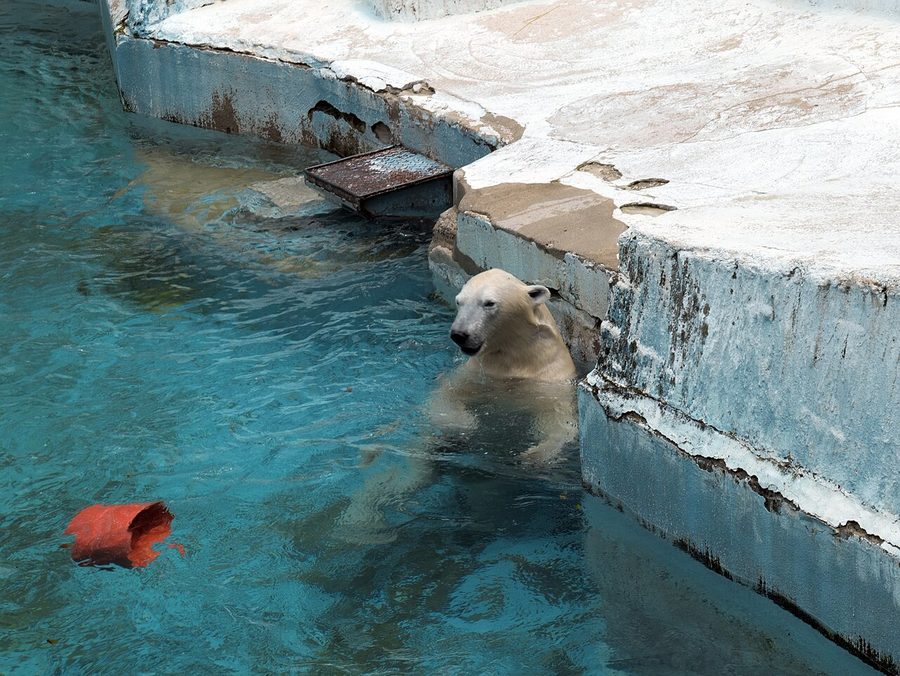
Polar Bear Coast opened on 4 August 2026, modelled on the Canadian town of Churchill on Hudson Bay. It has two outdoor yards themed on early spring and early summer, and an underwater viewing lodge where you watch the bears swim from below. The resident is Hou-chan, a female born on 25 November 2020. A male, Ikoro, arrived from Ueno Zoo on 2 November 2026 and was in quarantine through November, so check before you count on seeing two.
The chimpanzees have a new home too, and a baby: a female called Amani was born to Nanako in May 2026. The outdoor yard at Chimpanzee Base closes at 15:30, earlier than most, so go there before the afternoon slips away.
The African Savanna, and the parts that have not changed
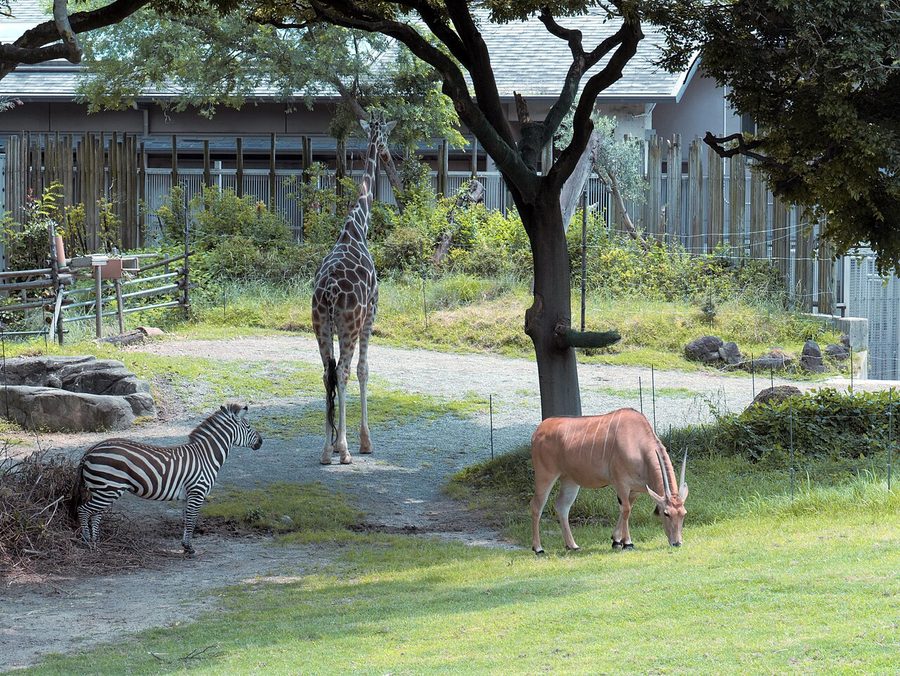
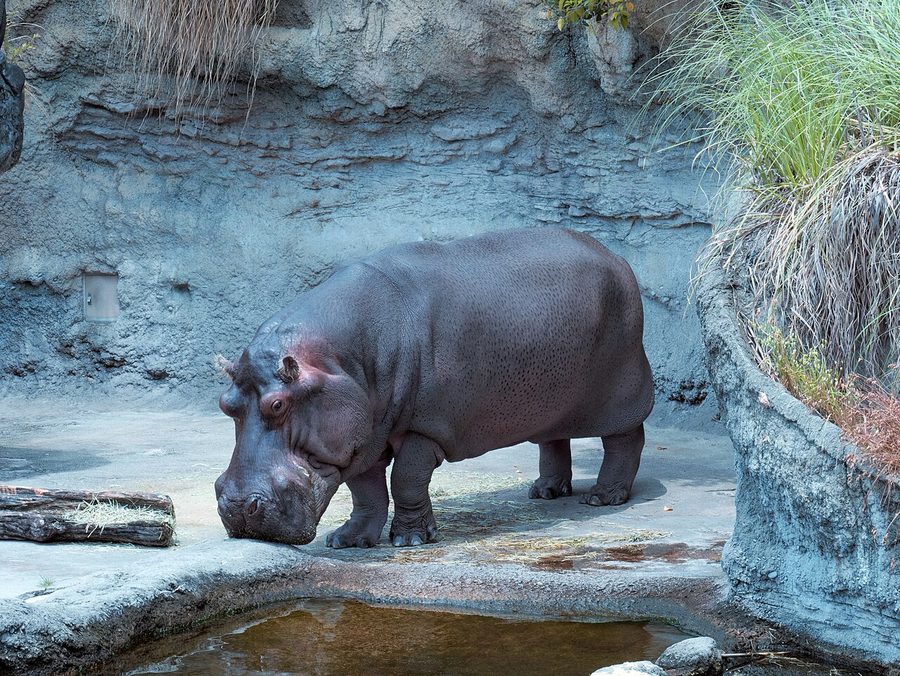
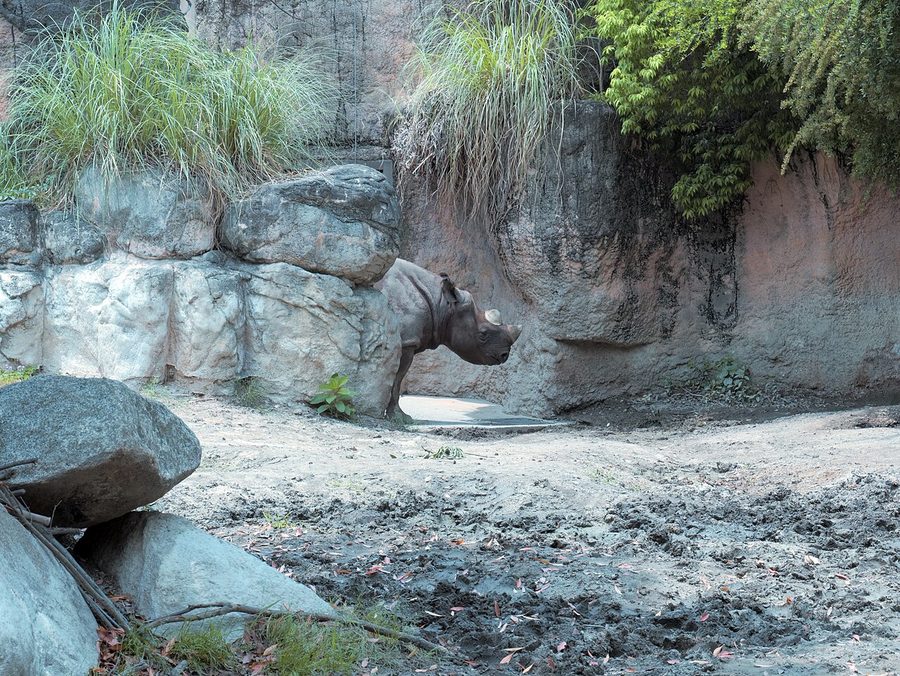
The savanna zone is the old showpiece and still holds up. Giraffes, zebras and eland share one grassy yard, the lions sit in the next one, laid out to look like part of the same plain, and the hippo house, which opened in 1997, has an underwater window that was the first of its kind in Japan. Black rhinos have their own rocky yard next door.
Is the zoo ethical? That depends on which corner you stand in.
Elephant Village, the penguin pool and the savanna are modern habitats. The row of cages for wolves, tigers and jaguars on the western edge, the sun bear house and the old monkey and baboon house are small concrete enclosures of the kind most zoos have retired, and they are the reason some visitors leave unhappy. The zoo has been replacing them one at a time; it has not finished.
Two animals the zoo was once known for are gone. The koala house now holds emus, maras and an Aldabra tortoise, and the kiwi, once the only one on show in Japan, is no longer on the zoo’s animal list.
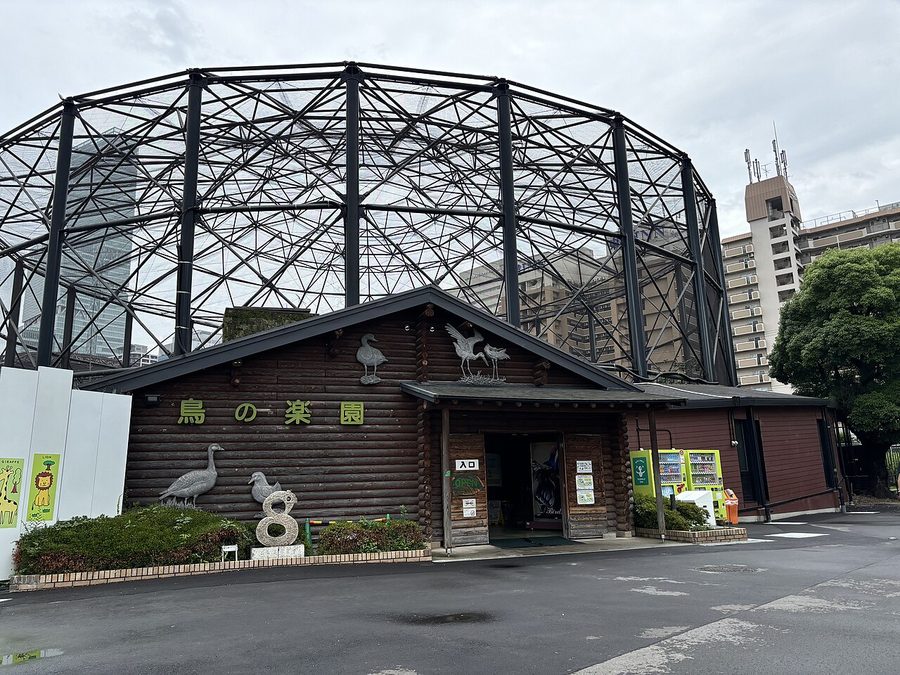
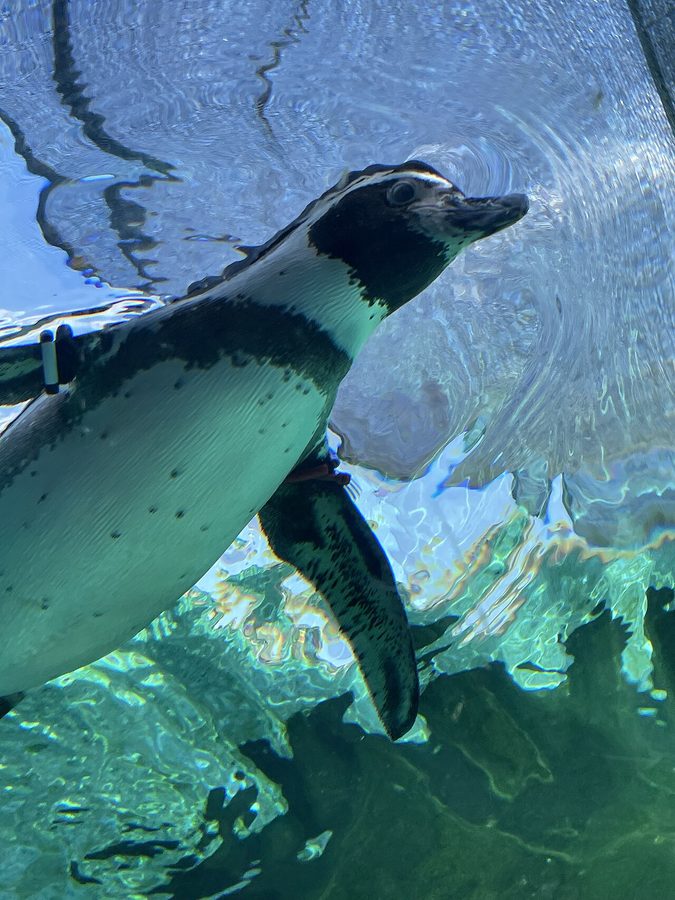
Bird flu shapes a winter visit. From 12 November 2026 the zoo closed the walk-through route in the flight aviary, moved its marabou storks off show and put barriers two metres back from the bird cages; the Humboldt penguins stayed on view. The nocturnal house is also shut from 2 November to 7 December 2026 while its slow loris enclosure is rebuilt.
The zoo’s past is on show too
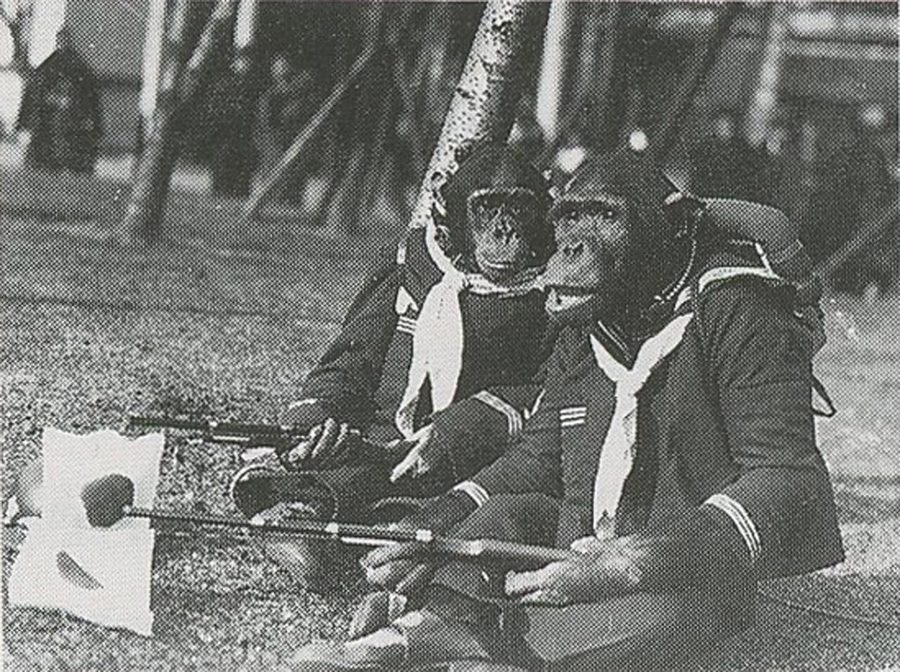
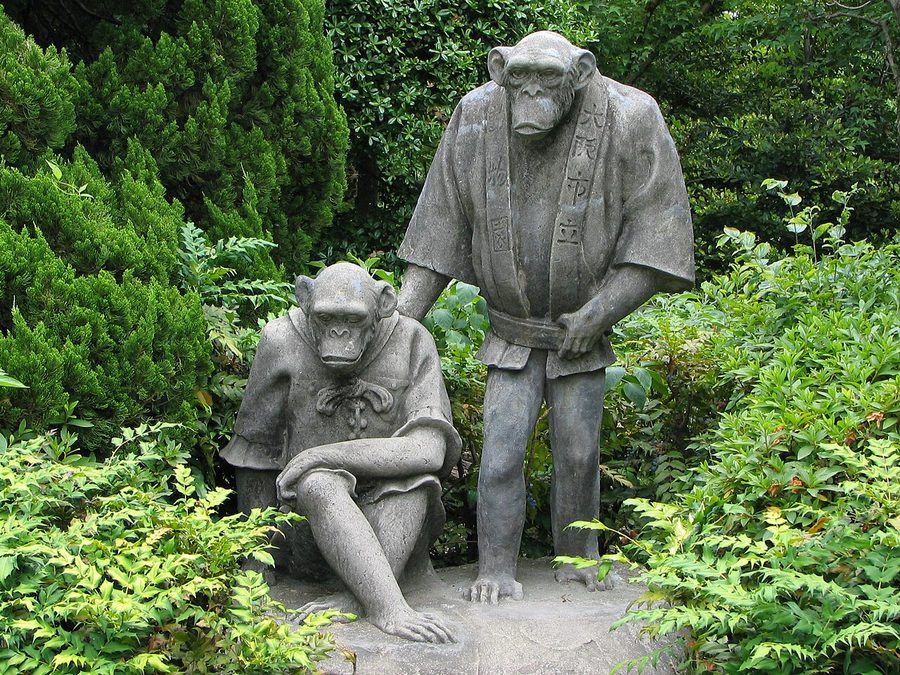
For its first half-century Tennoji was run as entertainment. Its star in the 1930s was Rita, a chimpanzee who arrived in 1932 and ate with a knife and fork, rode a tricycle and, as the war came, posed in uniform for propaganda. During the war the zoo, like Ueno, killed its large animals in case bombing set them loose. The zoo no longer trains animals to perform, and in summer 2026 it held an exhibition on those wartime years, with mounted specimens of animals that were put down.
Tickets, hours and the Tsutenkaku discount
Prices and hours below are from the zoo’s visitor information, as of November 2026. Both gates take credit cards, transport IC cards such as ICOCA and Suica, and QR payments, but you cannot top up a card at the zoo or split a payment with cash.
| Adults | ¥800 (¥500 until 30 June 2026) |
|---|---|
| Elementary and junior high school students | ¥200; free if they live or go to school in Osaka City |
| Preschool children | Free |
| Osaka City residents aged 65 and over | Free with proof of address and age |
| Annual pass | ¥3,200 adults, ¥800 children |
| Hours | 9:30–17:00, last entry 16:00 |
| Closed | Mondays (Tuesday when Monday is a holiday), and 29 December–1 January |
The best saving is the tower next door. Since 1 July 2026, under a joint scheme between the zoo and Tsutenkaku, a tower ticket cuts zoo entry to ¥720 for adults and ¥180 for children, and a zoo ticket takes ¥200 off an adult ticket to the tower’s observation deck and ¥100 off a child’s. Either stub works until the end of the month after you used it, so you can do one today and the other in a few weeks.
Over Christmas there is a second deal. Until 25 December 2026, a receipt for ¥1,000 or more from the Christmas market on the Tenshiba lawn gets your whole group 10 per cent off at the zoo gate, and a zoo ticket shown at the market’s information booth gets you a ¥100 voucher. One house rule catches people coming from the market: no alcohol may be brought in, and you will not be let in after drinking.
How long, and in what order
How long do you need? The zoo’s own suggested routes are one hour for the highlights and two hours to see everything, and two hours is about right with a lunch break. Several animals go indoors from 15:00, so arrive by 13:00 if you can.
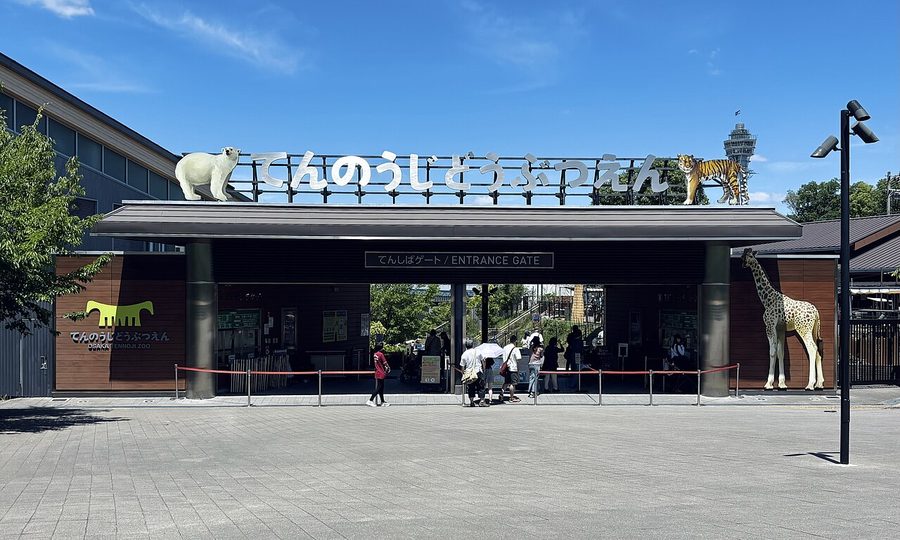
Which gate you use decides your route. From the Shinsekai Gate, the lions and red pandas come first; from the Tenshiba Gate, it is the penguins and the polar bears. Both gates lend umbrellas free of charge and keep wheelchairs, though you cannot book one. On 8 December 2026 a seated statue of Myaku-Myaku, the 2025 Expo mascot, is being unveiled in the plaza just inside the Shinsekai Gate.
Osaka City Museum of Fine Arts (大阪市立美術館)
The museum stands on the site of the Sumitomo mansion, in a 1936 building that looks like a provincial town hall from the front and gets grander the further in you go. It closed in autumn 2022 for a renovation that cost ¥10.4 billion and reopened on 1 March 2025, and 2026 is its 90th year.
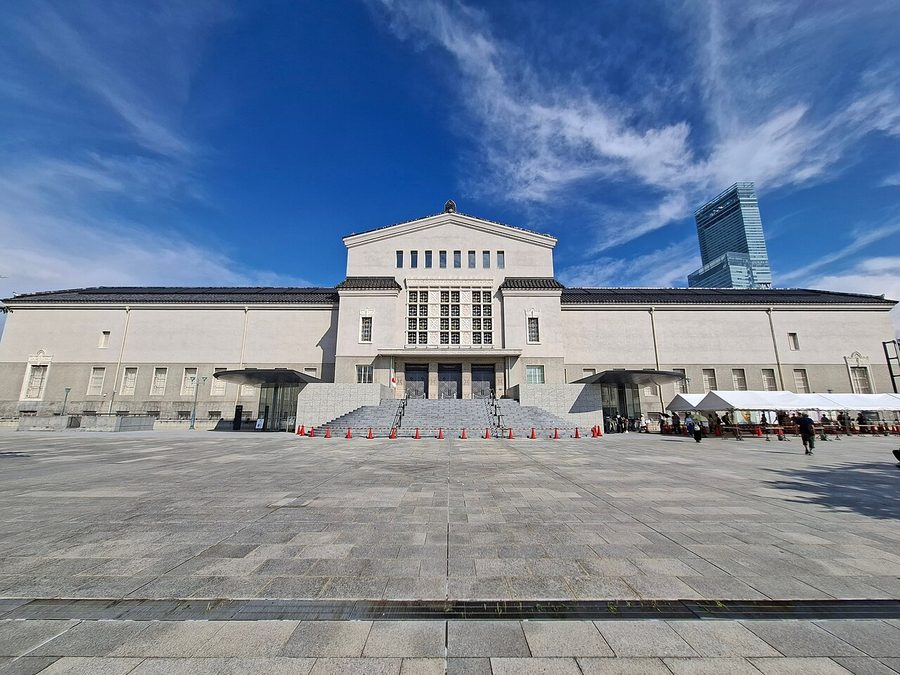
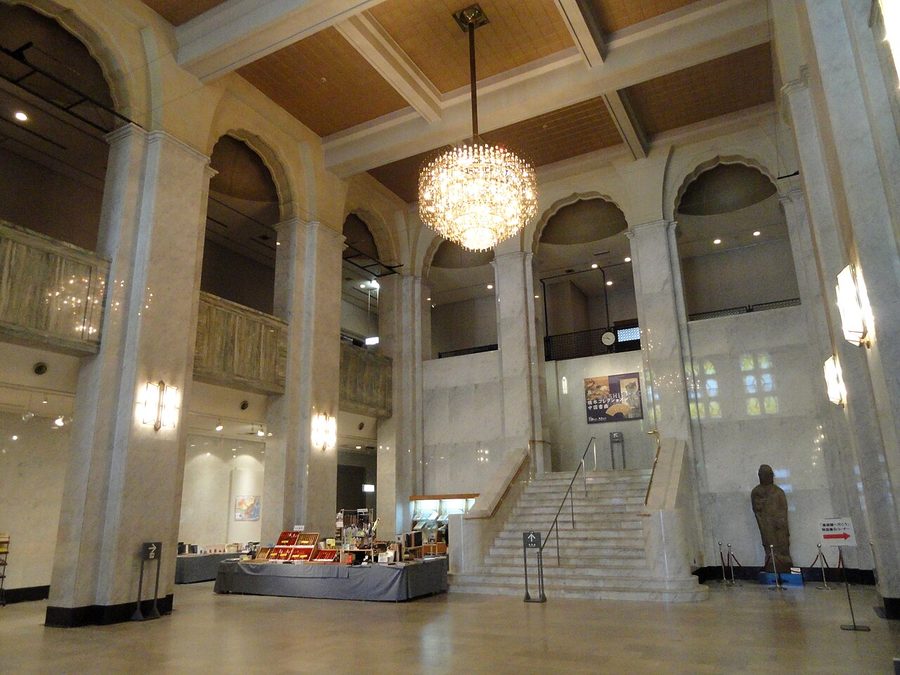
The renovation changed how you use it more than how it looks. You now enter at basement level beside the front steps, where the ticket desk and the shop are, and an escalator takes you up to the central hall. That hall, with its arches and stained glass, is now a free zone, and the work uncovered its original 1936 ceiling. The 1975 chandelier came down for earthquake safety.
What it holds
The city planned the museum from 1920, with the novelist Mori Ogai on its founding committee, yet on opening day it owned not a single work. It filled its rooms with loans from temples and private collectors, a habit it has kept, and built its own holdings by gift. The collection now runs to about 8,900 items, including three National Treasures and 58 Important Cultural Properties, according to the museum’s history of itself.
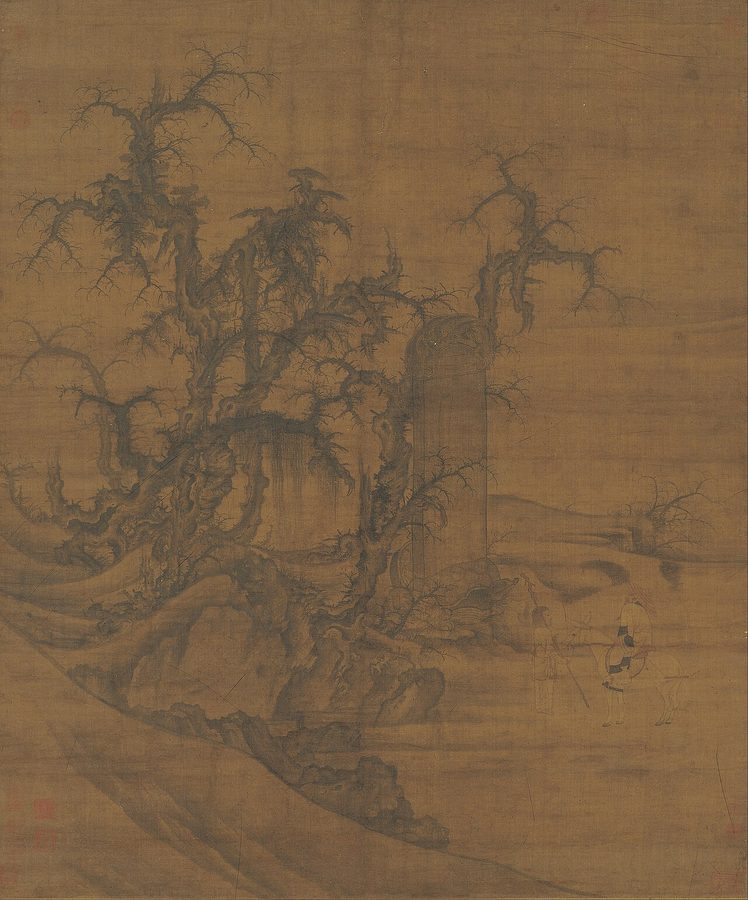
Its strength is Chinese painting, calligraphy and Buddhist stone sculpture, some of it among the best outside China. Look out for the Abe collection of Chinese painting, the Yamaguchi collection of Chinese stone Buddhas, one dated 466, and the Casal collection of about 4,000 pieces of Japanese lacquer gathered by a Swiss collector who lived in Kobe. The rooms change every few months.
Exhibitions, prices and the café
The museum is open 9:30–17:00 (last entry 16:30) and closes on Mondays, on the next weekday when Monday is a holiday, and from 28 December to 4 January. The collection displays cost ¥500, or ¥200 for high school and university students; children up to junior high and Osaka City residents over 65 get in free. Until 20 December 2026 those rooms show East Asian metalwork, Jingdezhen porcelain of the late Ming and early Qing, and Asian sculpture.
Special exhibitions are priced on their own and are where the crowds go. The current one, Ming dynasty calligraphy lent by the He Chuang Shi foundation in Taipei, runs until 20 December 2026 at ¥2,000 for adults, and its ticket covers the collection rooms the same day. Next comes Maruyama Okyo, from 6 February to 4 April 2027. Over-65s from Osaka pay full price for these.
You do not need a ticket for the café. ENFUSE, beside the central hall, is open 9:30–19:00, and the path past it leads to a free terrace that looks straight down into the garden. It is the cheapest view in the park, and a good one.
Keitakuen (慶沢園)
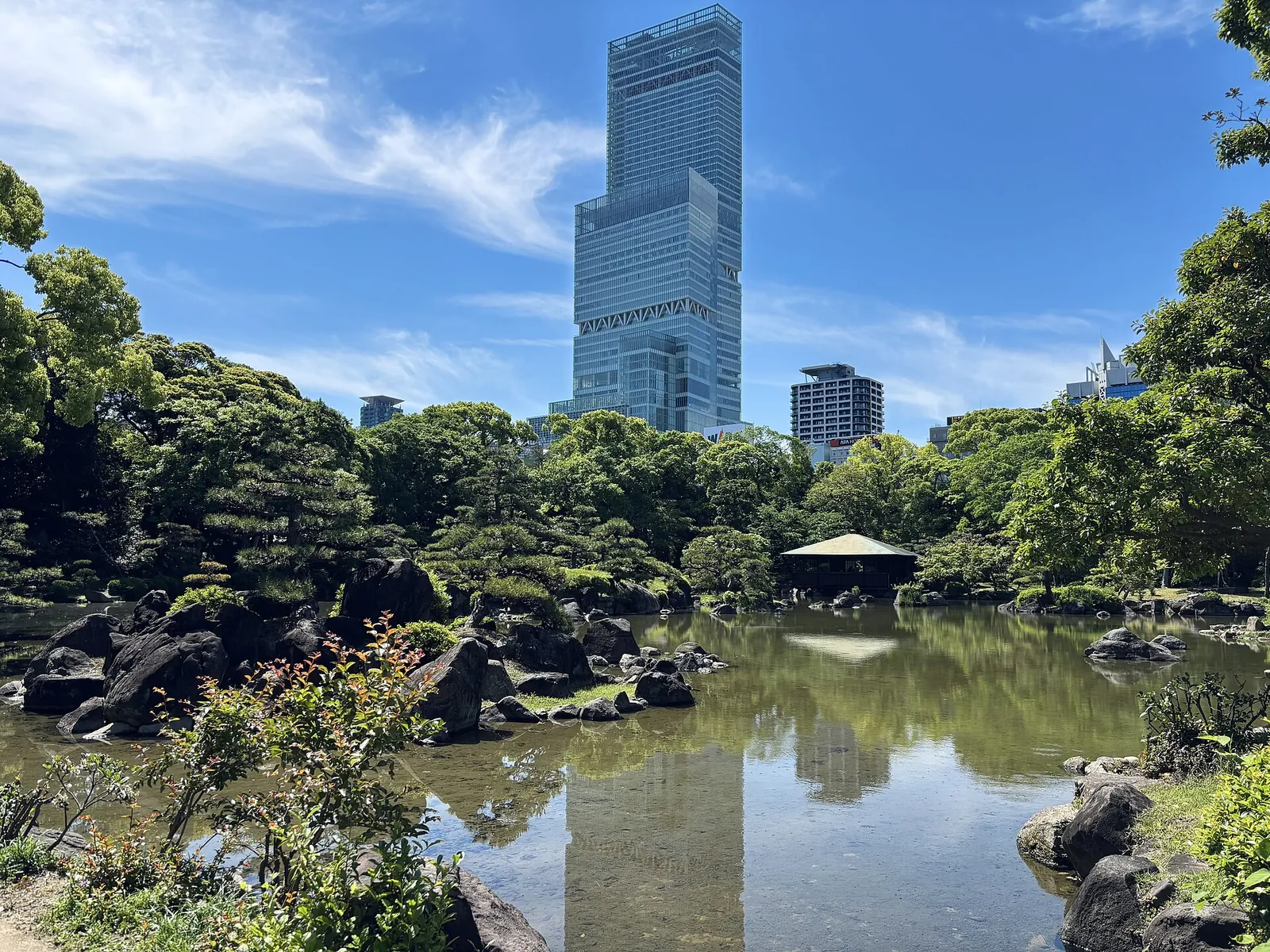
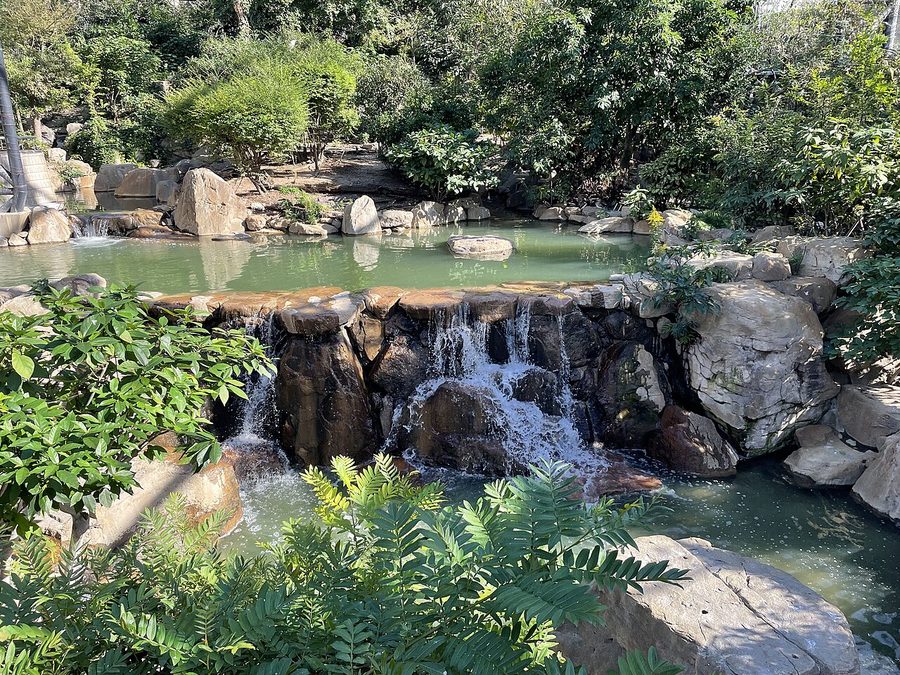
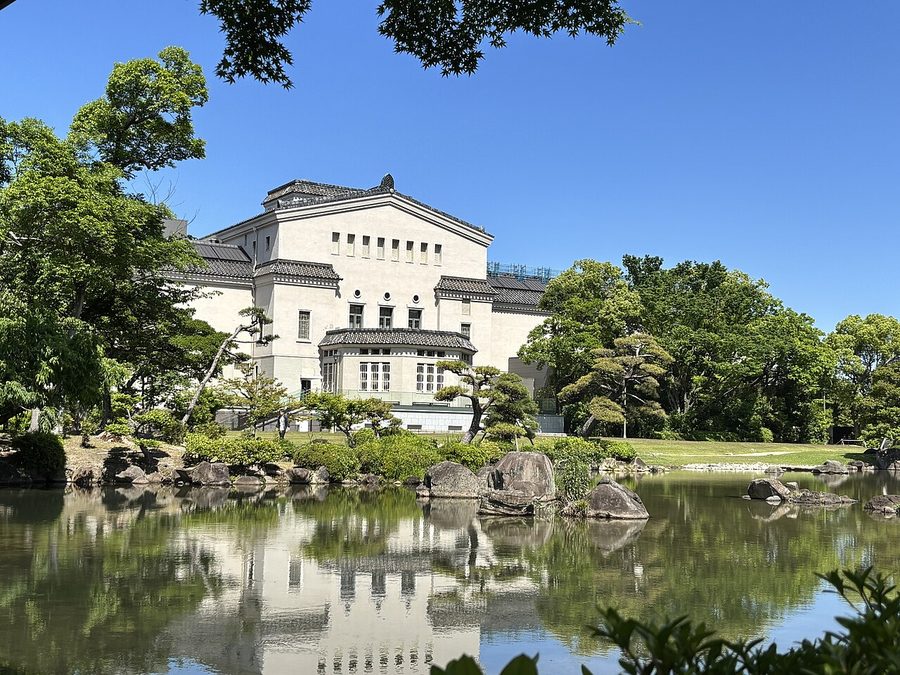
If you pay for one thing in the park, pay for this. Keitakuen was the Sumitomo family’s garden, begun in 1908 and finished in 1918 by Ogawa Jihei VII, the Kyoto gardener known as Ueji who made the garden at Heian Shrine. The name was given by Prince Fushimi Sadanaru. It is a stroll garden in the manner of the great feudal lords’ gardens: a large pond with a pine-covered island, low artificial hills round three sides, and a path that keeps changing the view.
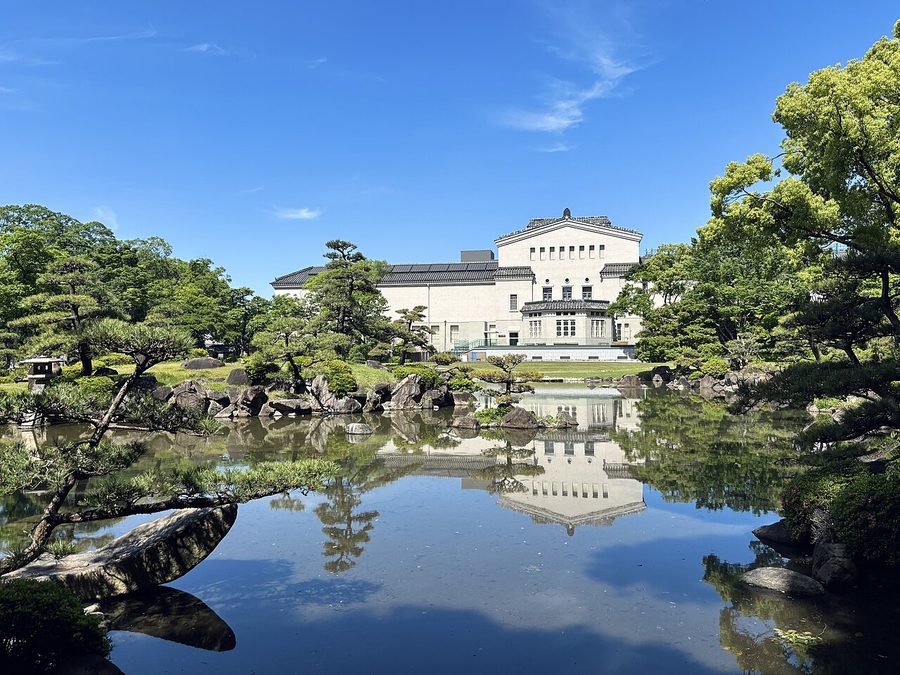
Walk it slowly, because most of the detail is small. The garden’s own guide to the main spots points out a stone dragon’s head by the water whose body is a line of clipped azaleas, a stone bridge that bends in the middle so the view changes as you turn, a lantern of the kind made famous at Kenrokuen, and stepping stones laid across the stream below the waterfall. A small spring beside the falls is thought to nod to Izumiya, the Sumitomo trading name, which means “spring house”.
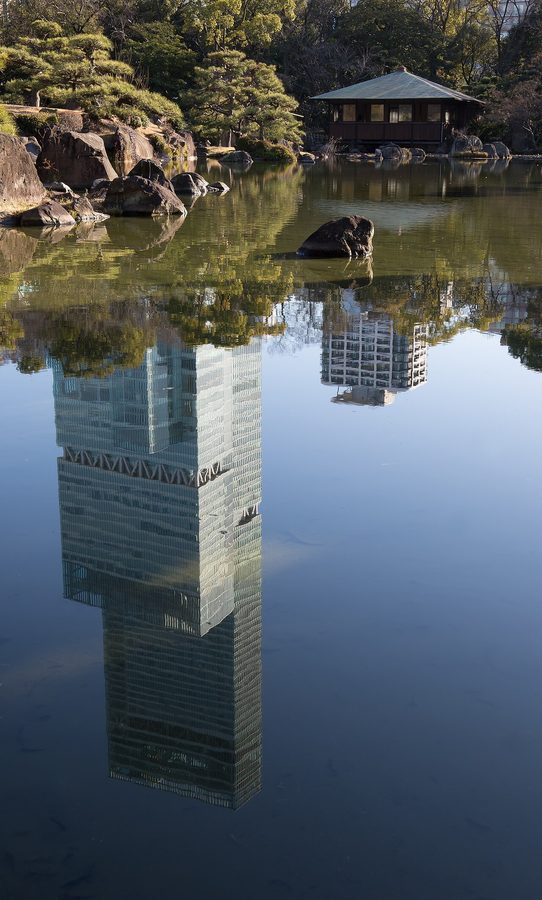
The rest house near the falls stands where Ryushuntei stood, a building put up for the 1903 exposition and visited by the then crown prince. There is a tea room, Choseian, built from the timbers of a Sumitomo tea house, which can be booked for tea gatherings. The north gate, said to have been moved here in 1958 from the Fujita family mansion in Miyakojima, is for looking at; you cannot leave through it.
The garden closed for renovation in April 2024 and reopened on 1 March 2025, the same day as the museum. Allow about 40 minutes. The opening hours and fees, as of November 2026: 9:30–17:00 with last entry at 16:30, until 18:00 on weekends and holidays in May and September; closed Mondays (the next weekday after a Monday holiday) and 29 December–1 January.
Entry is ¥300 for adults and ¥200 for high school and university students, free for younger children and for Osaka City residents over 65. A joint ticket with the museum’s collection rooms costs ¥600 instead of ¥800, and a special exhibition ticket takes ¥100 off. The ticket office takes cash only, you may not eat inside, and you can go out and back in on the same ticket.
Chausuyama and Kawazoko Pond
The north-west corner of the park is free and much quieter. Chausuyama is a wooded mound 26 metres high, sometimes counted among Osaka’s “five low mountains”, and it is where two armies camped a year apart. In the winter campaign of the Siege of Osaka in 1614, Tokugawa Ieyasu made his headquarters here. In the summer campaign of 1615 the Toyotomi side’s commander Sanada Nobushige, better known as Yukimura, held the same hill and fought from it in the last battle before the fall of Osaka Castle.
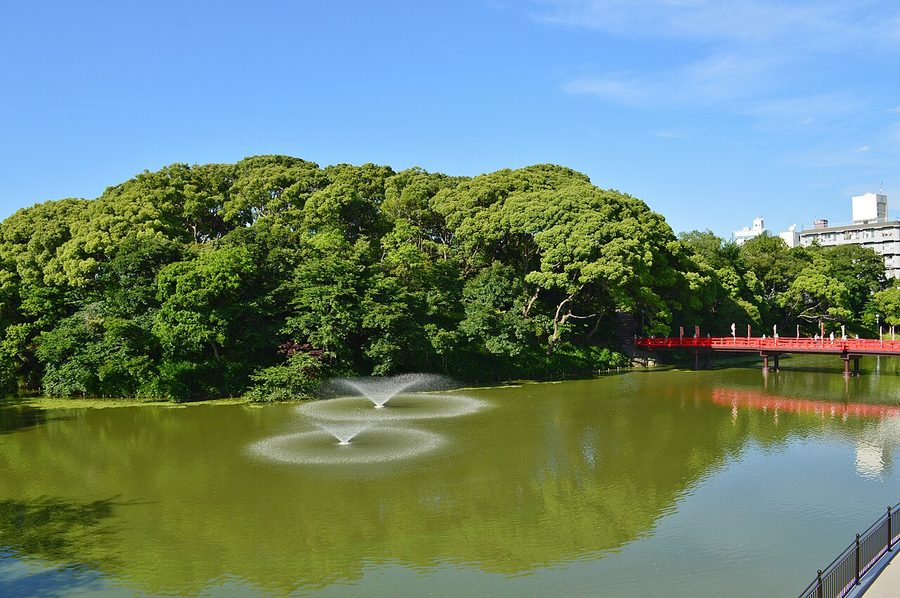
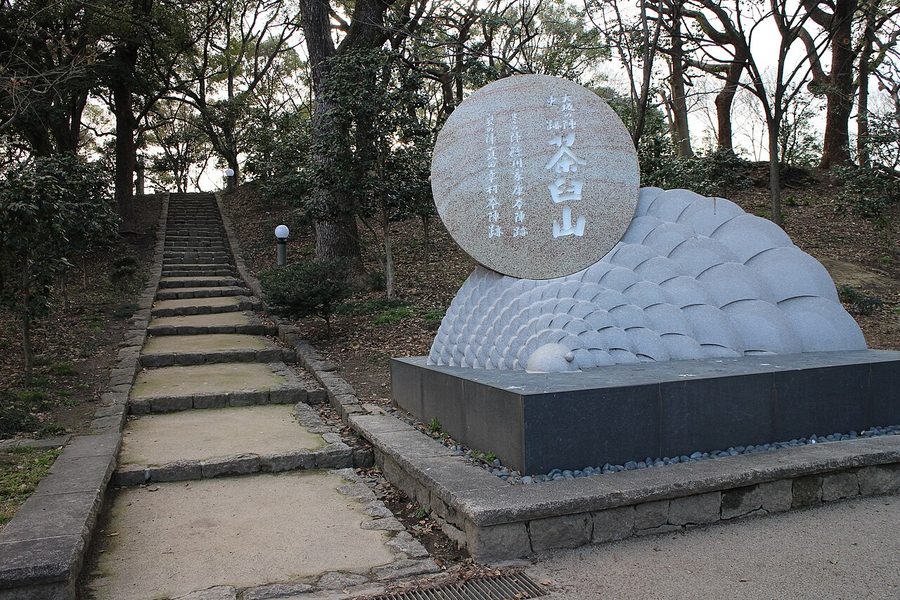
What the hill was before that is still argued over. It has long been taken for a fifth-century keyhole-shaped burial mound, and the pond below for its moat. An excavation in 1986 found none of the clay figures or stone facing such tombs usually have, which cast doubt on that. The other story, which Osaka City’s page on Keitakuen and Chausuyama gives alongside the tomb theory, is that the pond is what is left of a canal that Wake no Kiyomaro tried to cut across the Uemachi plateau in 788, and the hill is the spoil.
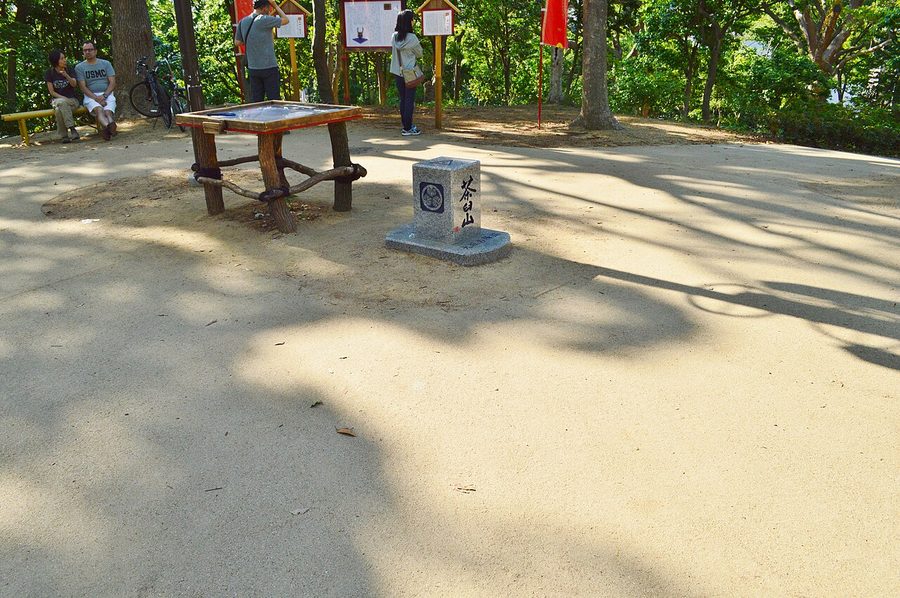
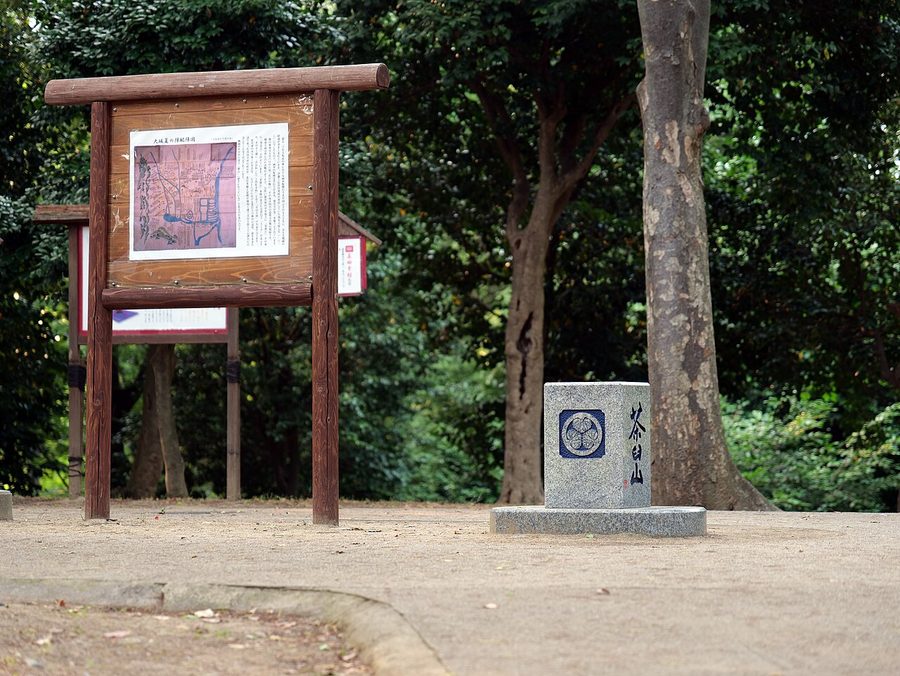
The red bridge over Kawazoko Pond (河底池) was built in 1937 and, as the pond’s official visitor listing notes, named Wake Bridge (和気橋) after him. Cross it and a path climbs to the flat top of the hill, where a signboard and a stone marker mark his camp. The city lists cherry blossom and camellias here; in autumn the maples around the bridge turn red to match it.
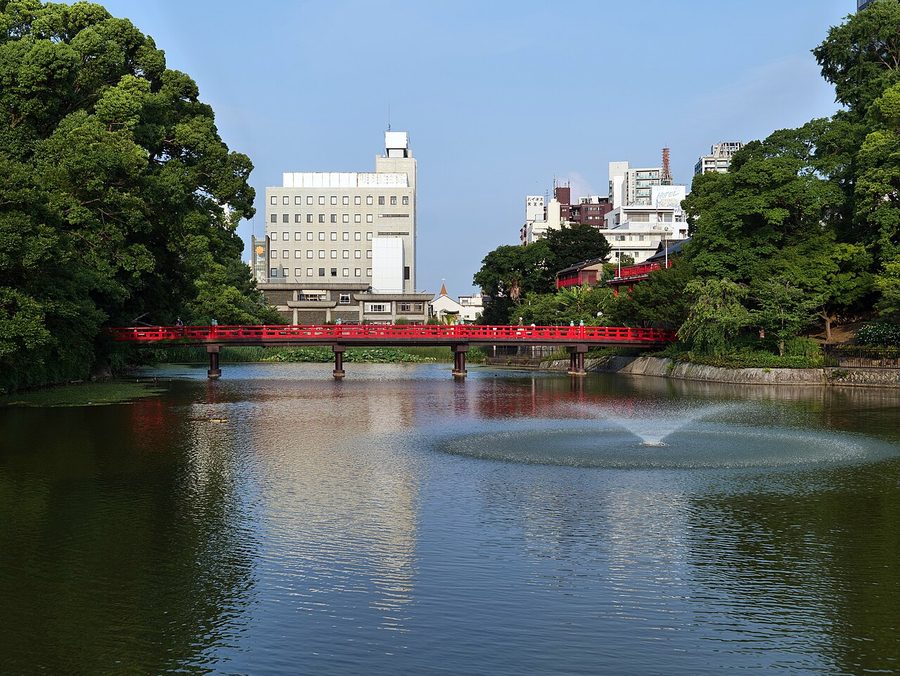
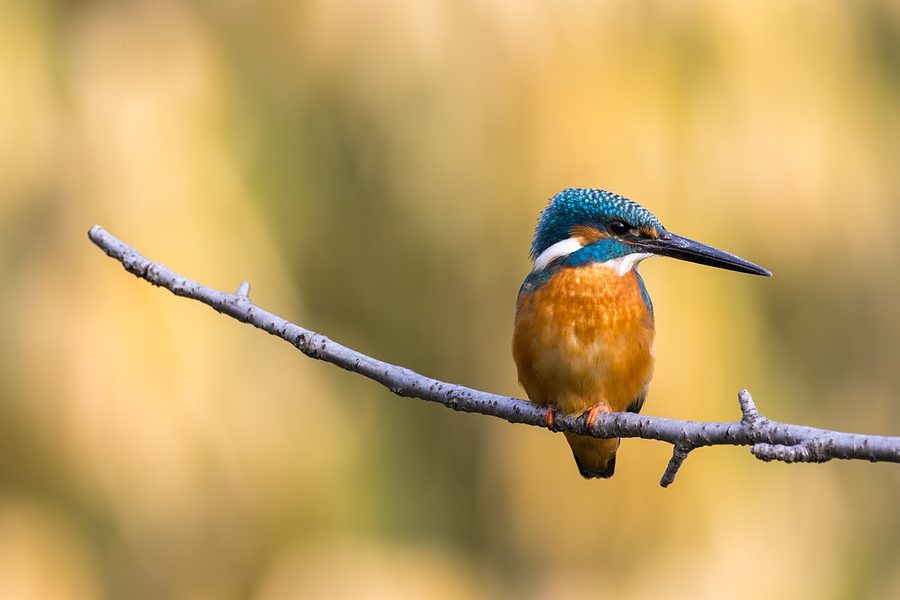
Bring patience if you like birds. Kingfishers, grey herons and egrets all fish the park’s ponds, and Kawazoko, the quietest of them, is the obvious place to wait.
Tenshiba: what costs nothing
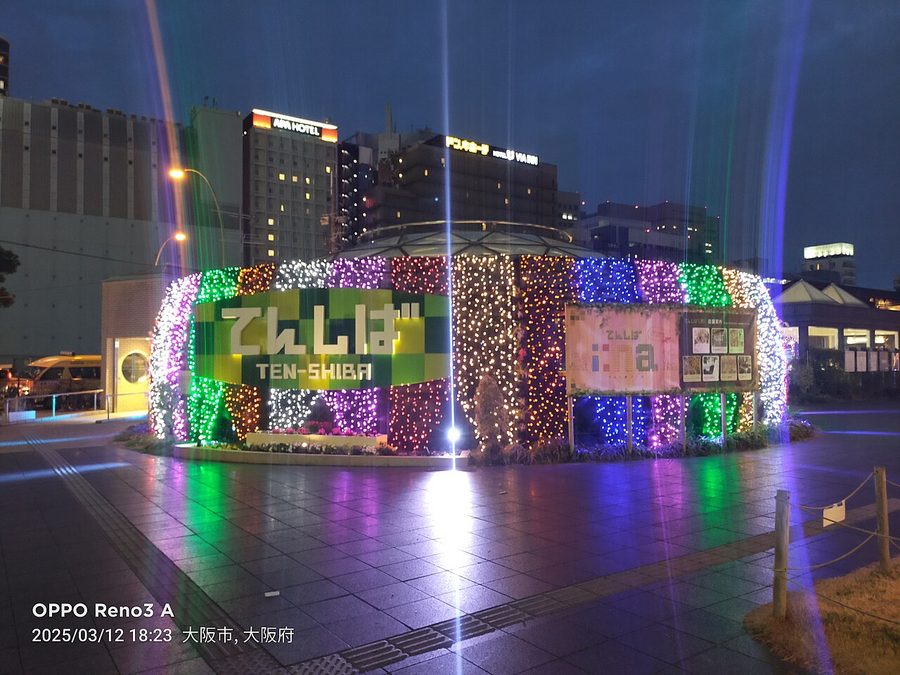
Is Tennoji Park free? Almost all of it. The paths, the lawn, Chausuyama and the pond are open from 7:00 to 22:00 at no charge; only Keitakuen, the zoo and the museum ask for money. Tenshiba, the entrance area, is where the free part is busiest.
The lawn is about 7,000 square metres, with chain cafés and restaurants around its edge: a Tully’s Coffee that opens at 8:00, a wood-fired pizza place, YARD Coffee & Craft Chocolate (10:00–18:00, closed Tuesdays and the first, third and fifth Wednesdays), and Yottette, a farm shop selling produce grown in Osaka Prefecture, open 10:00–19:00. The Tenshiba shop list keeps the hours current, and there is a 24-hour convenience store if you would rather picnic.
The house rules are strict for a lawn. No balls, frisbees, fireworks or barbecues; dogs on a lead are welcome on the paths but not on the grass; and small sunshade tents are allowed on the lawn only between 9:00 and 17:00. For children who need to run, there are two paid options: Bornelund PlayVille, an indoor playground, and a futsal court that can be booked.
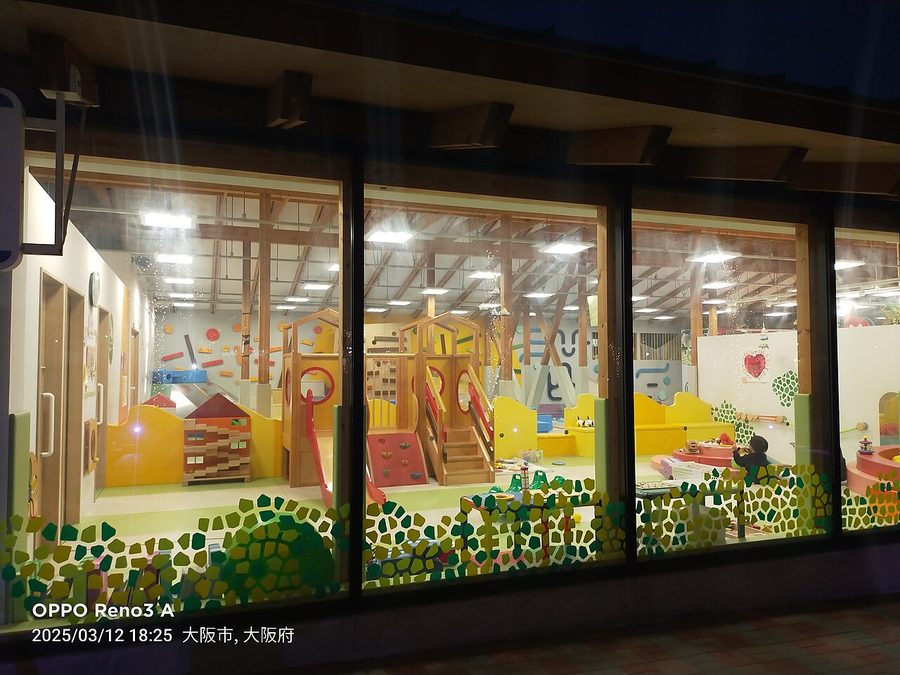
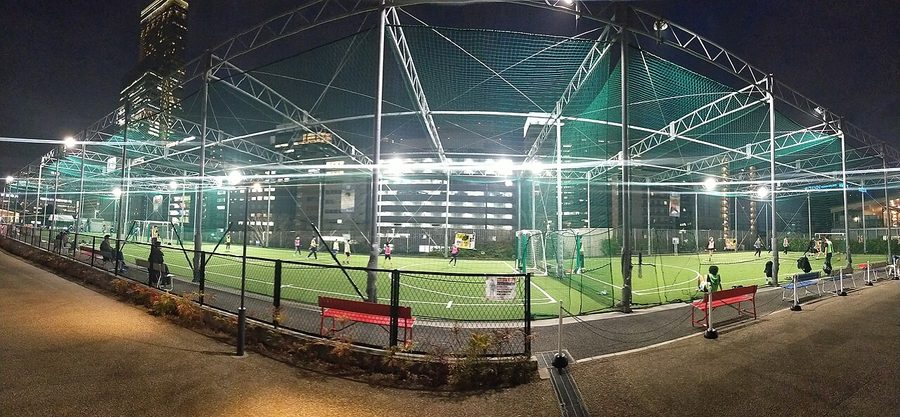
Between the lawn and the zoo’s Tenshiba Gate is Tenshiba i:na, a smaller strip of about 5,000 square metres that opened in November 2019, with the zoo’s gift shop, a buffet, a climbing course and a café. Until 25 December 2026 most of the lawn is taken over by the Christmas market, open 11:00–21:00 (21:30 from 19 December), with mulled wine, German beer and German food. It is free to wander in; it is not free to leave without buying something.
Getting there, and walking on to Shinsekai and Abeno
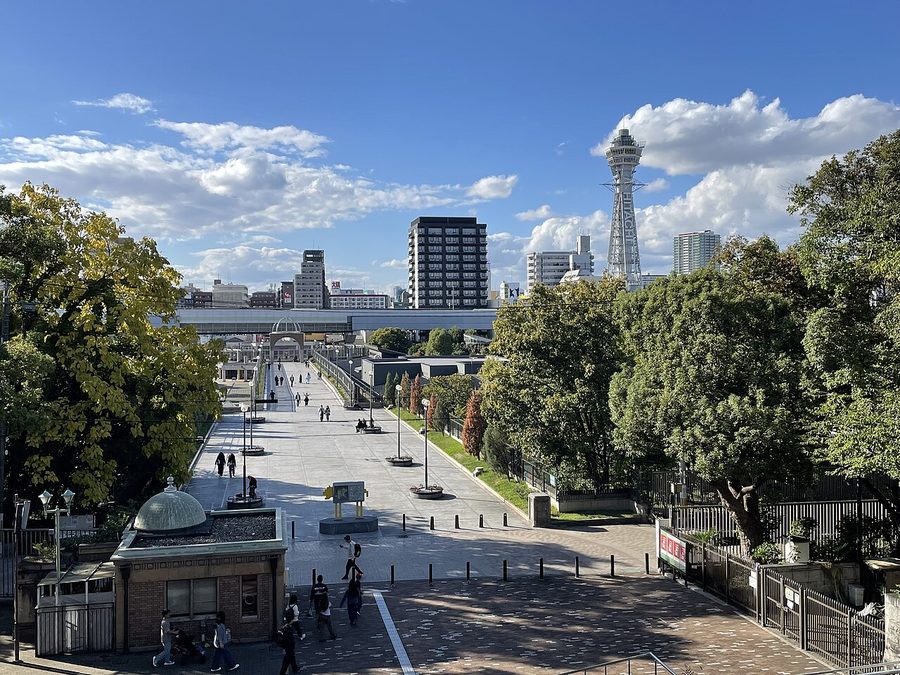
The park has two front doors, and which one you use depends on where you are going next. From the station side, Tenshiba is right outside Tennoji (天王寺): take exit 5 from the Midosuji Line’s west gate at Tennoji Station and cross the bridge over the JR tracks, use exit 21 from the Tanimachi Line, or follow signs from the JR central gate to the park exit. From Kintetsu’s Osaka Abenobashi Station, take exit 7 from the west gate. The museum and Keitakuen are about 400 metres north-west of the station, five minutes on foot.
The Shinsekai Gate of the zoo is 5 to 10 minutes from exit 1 of Dobutsuen-mae Station (Osaka Metro Midosuji and Sakaisuji lines), exit 3 of Ebisucho Station (Sakaisuji Line), the Tsutenkaku (east) exit of JR Shin-Imamiya Station, or the north exit of Nankai’s Shin-Imamiya. From Namba, Dobutsuen-mae is two stops south on the Midosuji Line, and Tennoji is three.
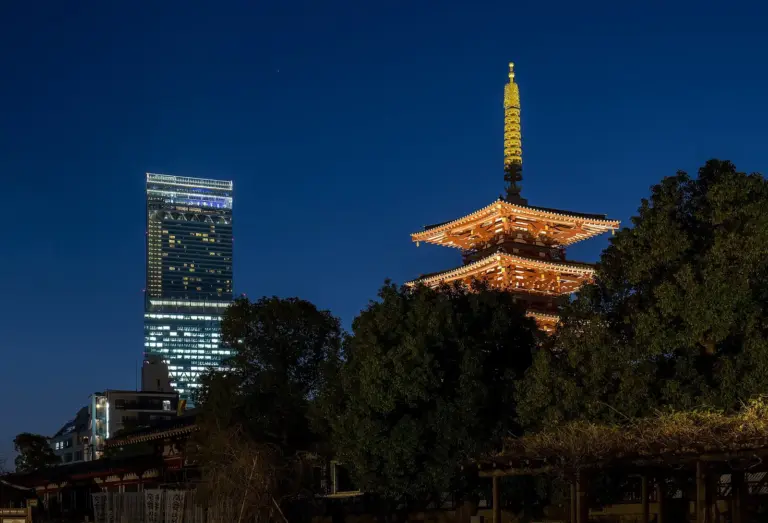
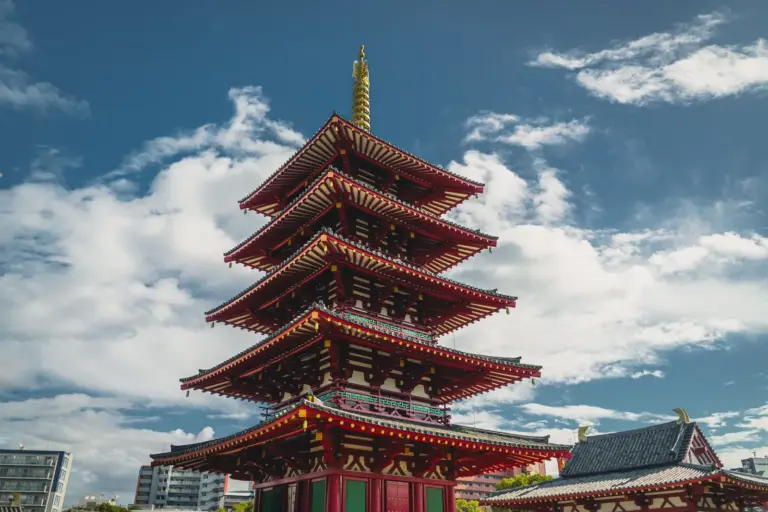
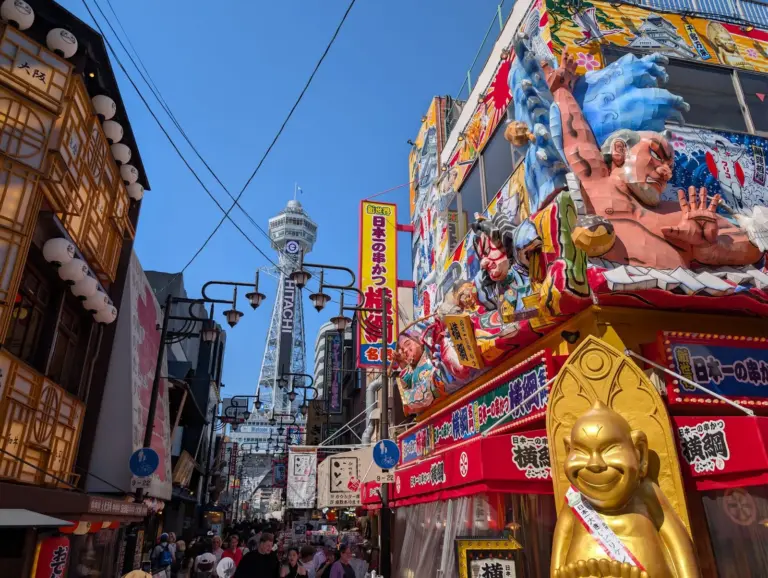
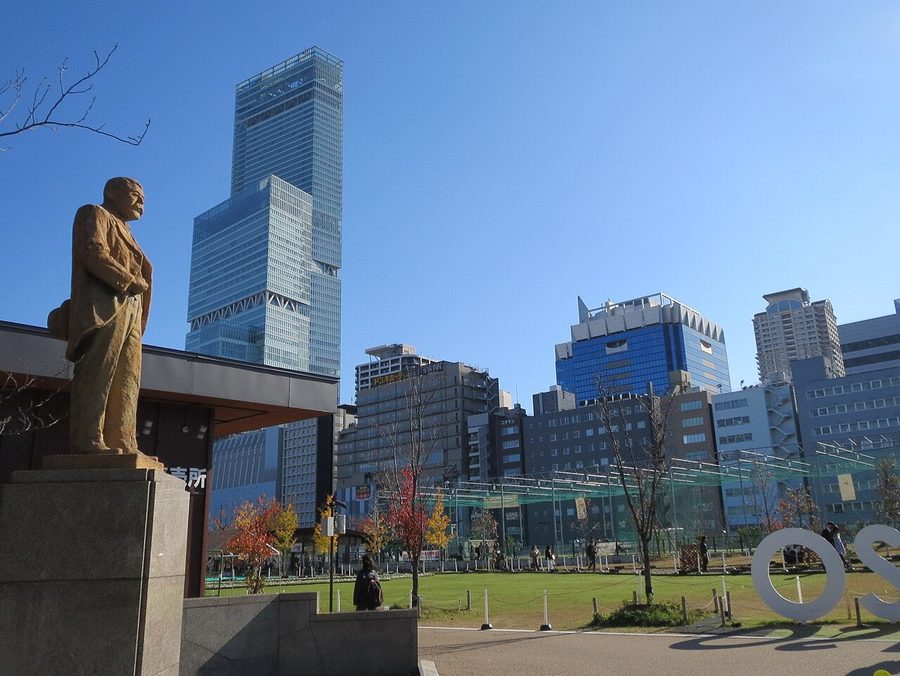
The zoo sits between the two halves of your day. Walk out of the Shinsekai Gate and you are a few minutes from Tsutenkaku (通天閣), where your zoo ticket saves ¥200 on the deck, and from the kushikatsu (deep-fried skewer) counters of Shinsekai; Spa World is at the district’s south end for a bath afterwards. Walk out the other way, past Tenshiba, and Abeno Harukas is across the road, with Shitennoji (四天王寺) a 15-minute walk north-east.
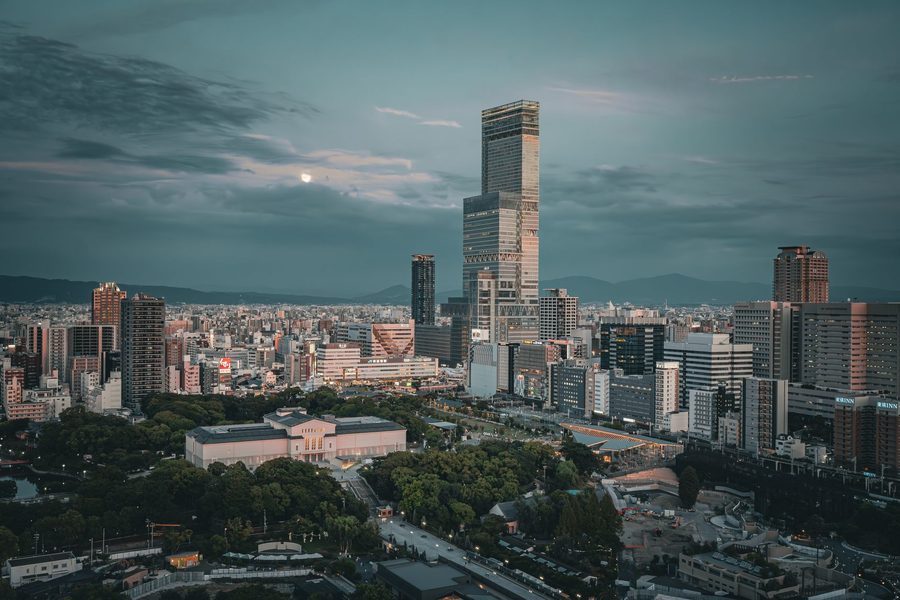
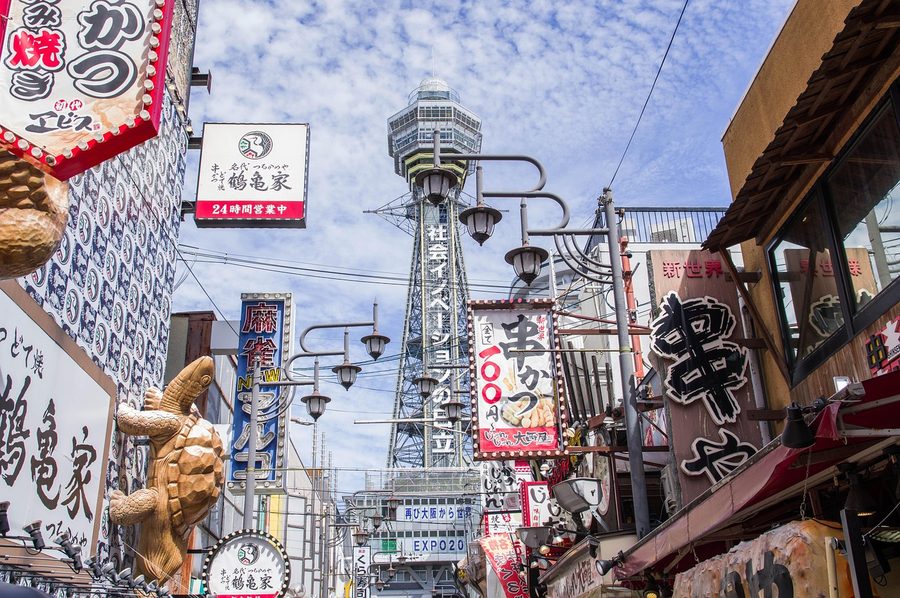
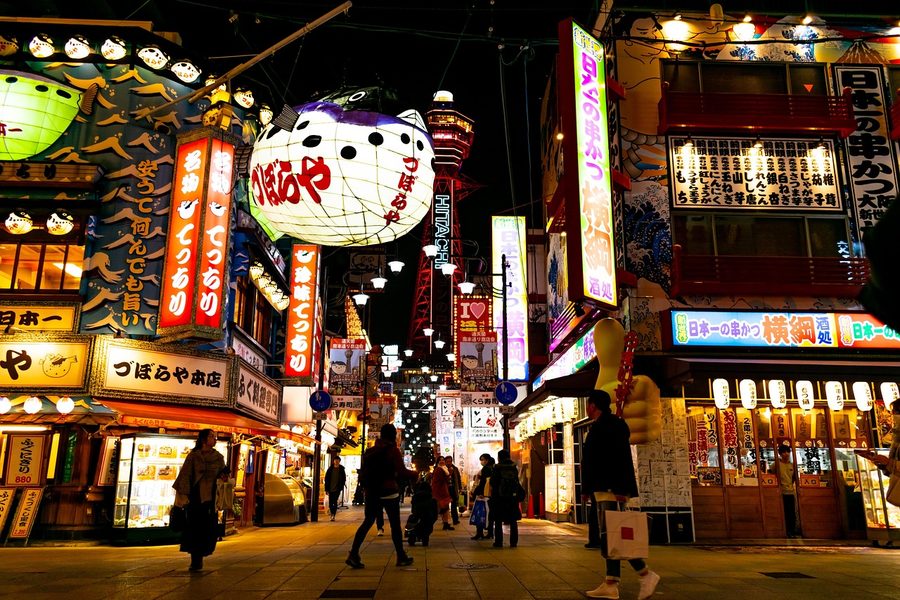
A day that works: Keitakuen when it opens at 9:30, the zoo from late morning with lunch inside, out through the Shinsekai Gate by 15:00, then the tower and an early dinner. For the rest of the city, see the best things to do in Osaka.
Then come back to that spot on the Tenshiba lawn and do the sum again. The grass is still free, the garden is still ¥300 and still the best value in the park, and if you have kept your tower stub, the zoo is ¥720 rather than ¥800. Spend the difference on a coffee at the edge of the lawn and watch the light go on Harukas.