01Kita
Senba: Osaka’s Old Merchant Quarter, Street by Street
船場駅Kitahama, exit 2
Hama, Kajiki, ima wa Ukiyo to, Ko, Fu, Do. Old Senba (船場) had a rhyme for its streets, and it runs north to south like a roll call: Kitahama, Kajikimachi, Imabashi, Ukiyo-koji, Koraibashi, Fushimimachi, Doshomachi, and on through Hiranomachi, Awajimachi, Kawaramachi, Bingomachi, Azuchimachi and Hommachi to the old canal bank at the bottom. Learn the first line and you can find your way round the old heart of Osaka’s business district.
Most of those names are still on the lamp posts. The grid is the one laid out for Toyotomi Hideyoshi’s merchants at the end of the 16th century, a rectangle about 2 kilometres long and 1 kilometre wide with water on every side. Two of the four canals are gone, one under an expressway and one under a main road, but the medicine dealers are still on Doshomachi, the cloth wholesalers are still in the middle, and the money is still at the north end, by the river.
On a weekday morning Senba is suits and delivery bikes; on a Sunday you can hear the crossing signals on Midosuji. Nobody comes here for one big sight. You come for a dozen small ones, nearly all free or cheap: a doctor’s school with its students’ room intact, a shrine whose charm is a papier-mache tiger, a 1930 clock shop, a chef’s collection of tea bowls and an ice cream shop that opened in 1913. I would give it a weekday morning and finish with lunch under the expressway.
Contents目次
Four waterways and a grid
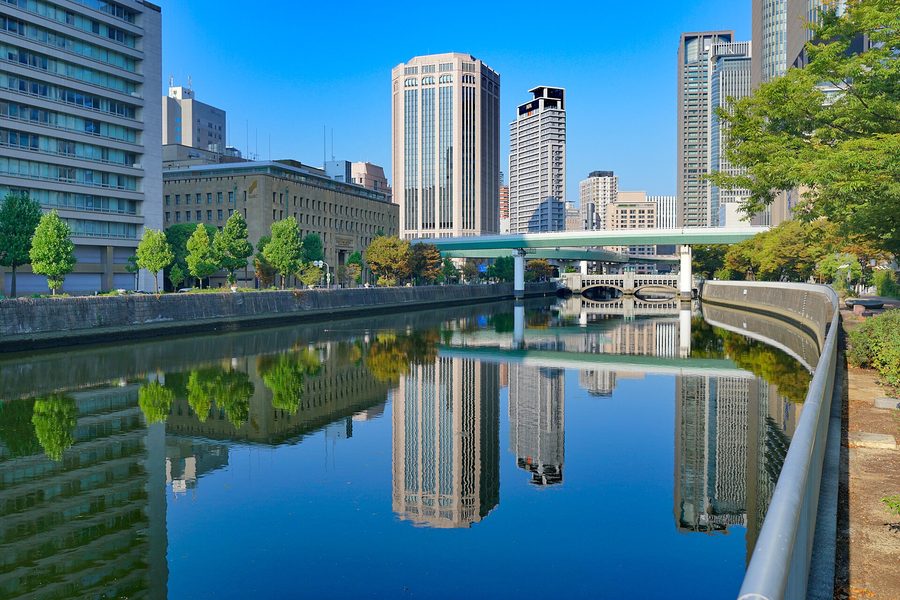
Senba is the rectangle between the Tosabori River (土佐堀川) to the north, the Higashi-Yokobori canal (東横堀川) to the east, the West Yokobori canal (西横堀川) to the west and the Nagahori canal (長堀川) to the south. The east side still has water, in the shade of the Hanshin Expressway. The west canal was filled in 1962, with the expressway built over it, and the south one in 1964 to make Nagahori-dori.
Hideyoshi began Osaka Castle in 1583, but Senba was mostly fields until 1598, when the castle’s outer enclosure swallowed the old merchant quarter and its traders were moved west. Merchants from Hirano and Sakai settled the new blocks. After the Toyotomi fell in 1615 the Tokugawa rebuilt the city around this grid, and for the next 250 years it was where the country’s goods were priced and sold.
Where the name came from is an argument Osaka has never settled. The Osaka Municipal Central Library’s answer on the place name lists a battlefield, a place where the castle’s horses were washed, a sandbank and a boat landing. The characters mean “boat place”, and most dictionaries go with the landing. The earliest written use the library found is from 1594, a courtier’s diary mentioning “a man of Senba-machi in Osaka”.
How to read the streets
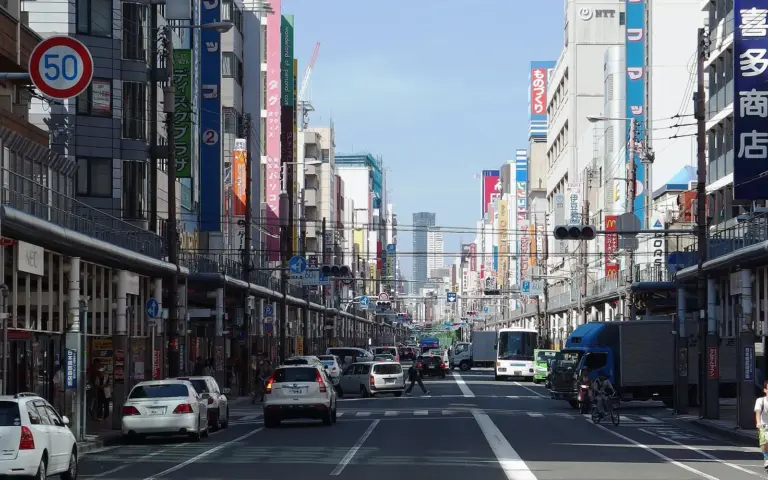
The dori (通) run east to west, towards the castle, and the suji (筋) run north to south. Goods arrived by boat on the east and west canals and were carried along the dori, so the big houses faced them and the dori were laid out wider. Only later did Midosuji and Sakaisuji, the two great north-south roads, take over.
Each block was about 40 ken square, roughly 72 metres, divided into deep, narrow plots. A merchant house was shop at the front, family home behind and storehouse at the back, with live-in apprentices called decchi (丁稚), boys who started in their teens. The way these households spoke, Senba-kotoba, was treated as the proper Osaka speech from the Edo period until the Second World War.
The wooden houses are almost all gone. What survives, especially in the north, which escaped the worst of the 1945 air raids, is a run of offices from the 1910s to the 1930s. For the wooden Senba, the Osaka Museum of History has its streets in 1/20-scale miniature.
Kitahama: the river, the exchange and the tearooms
Kitahama (北浜), the “north beach” along the Tosabori, has been Osaka’s money street for more than three centuries. The gold exchange that set the rate between Osaka’s silver and Edo’s gold was here from the 1660s and licensed by the shogunate in 1725, and Chuo Ward’s local history places Japan’s first cheque clearing house here in 1879, eight years before Tokyo’s. In the trade, Kitahama is “Hama”, the beach, as Tokyo’s Kabutocho is “Shima”, the island.
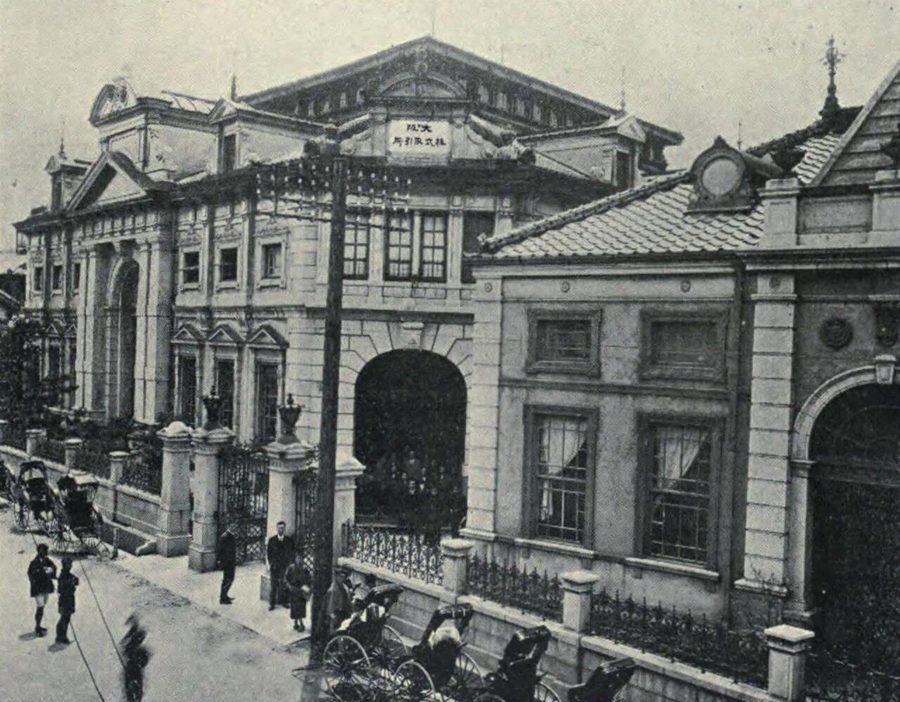
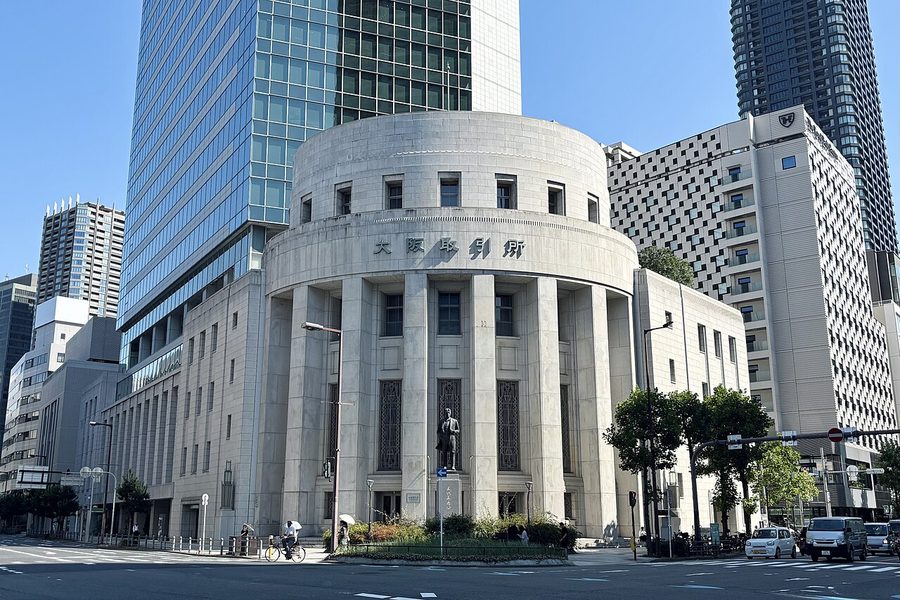
The Osaka Exchange (大阪取引所) stands at the corner of Sakaisuji, its round stone entrance of 1935 now the base of a glass tower. In front is a bronze of Godai Tomoatsu, the Satsuma samurai turned businessman who helped found the exchange and the city’s chamber of commerce. It is an office building: look, and move on.
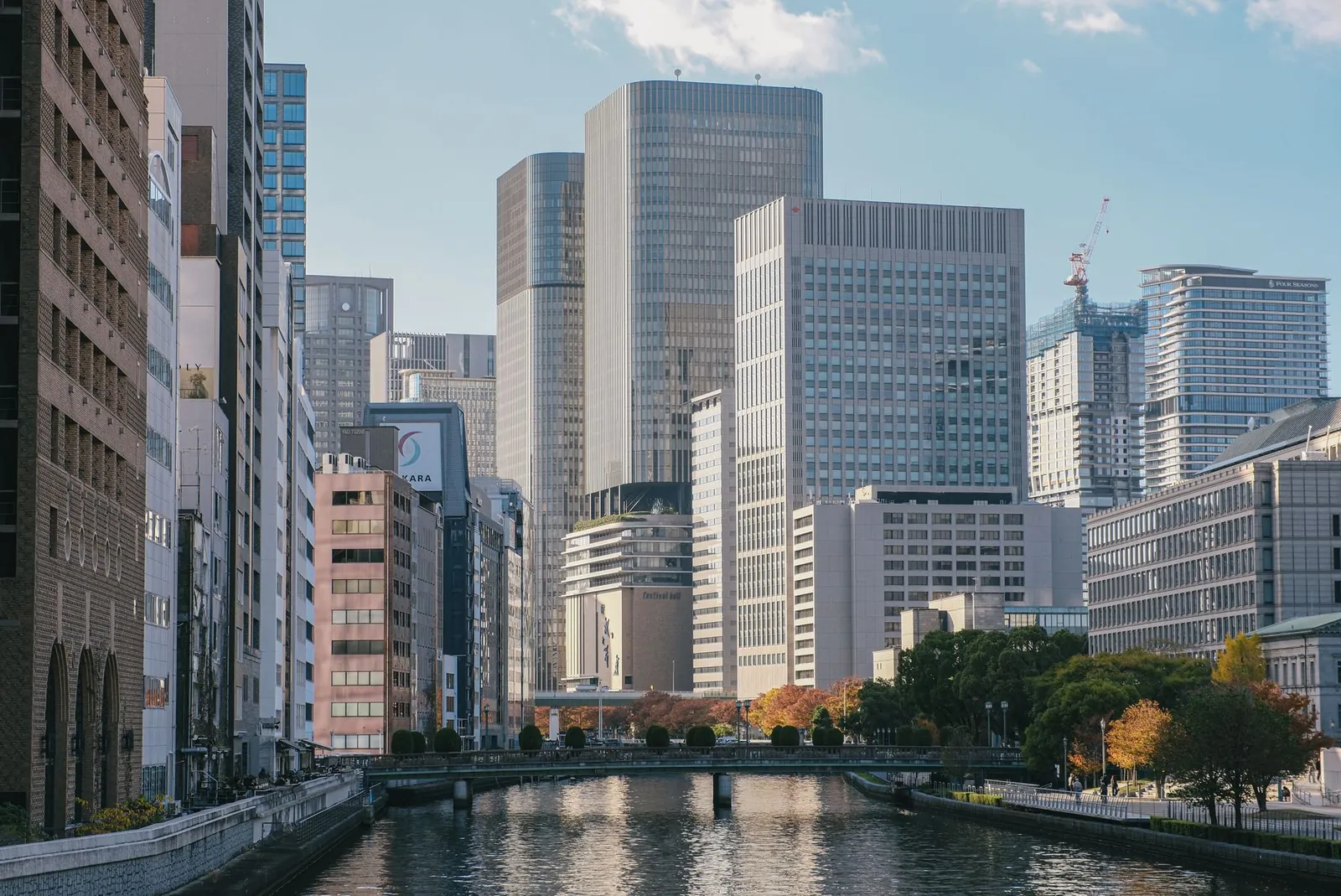
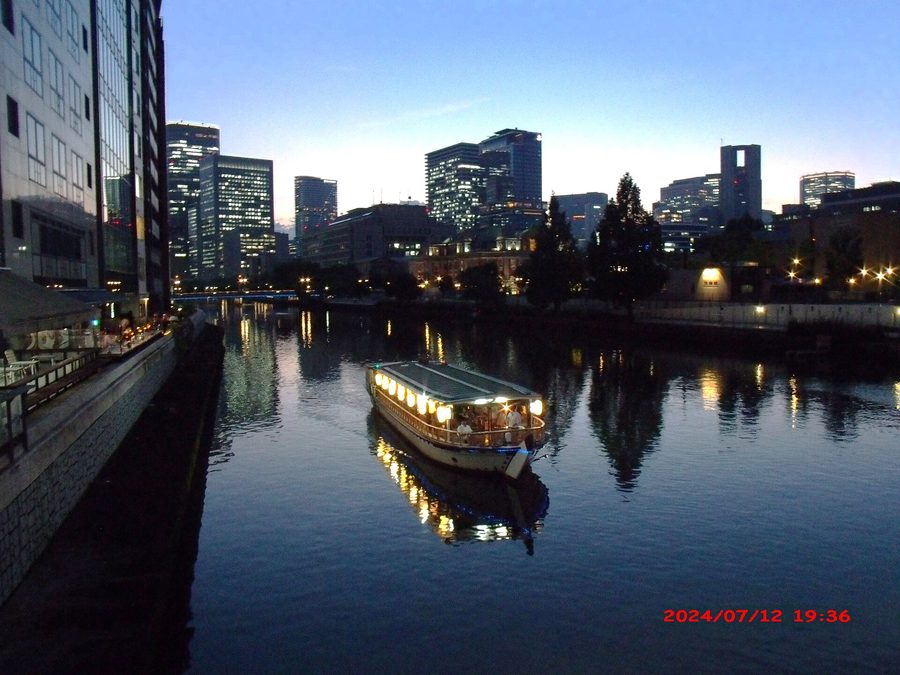
Turn down to the river. Behind the Kitahama buildings, terraces have been built out over the water, and at dusk the cafes and bars on them look across at Nakanoshima and the red brick of the Central Public Hall. It is the most pleasant place in Senba to sit at the end of a day.
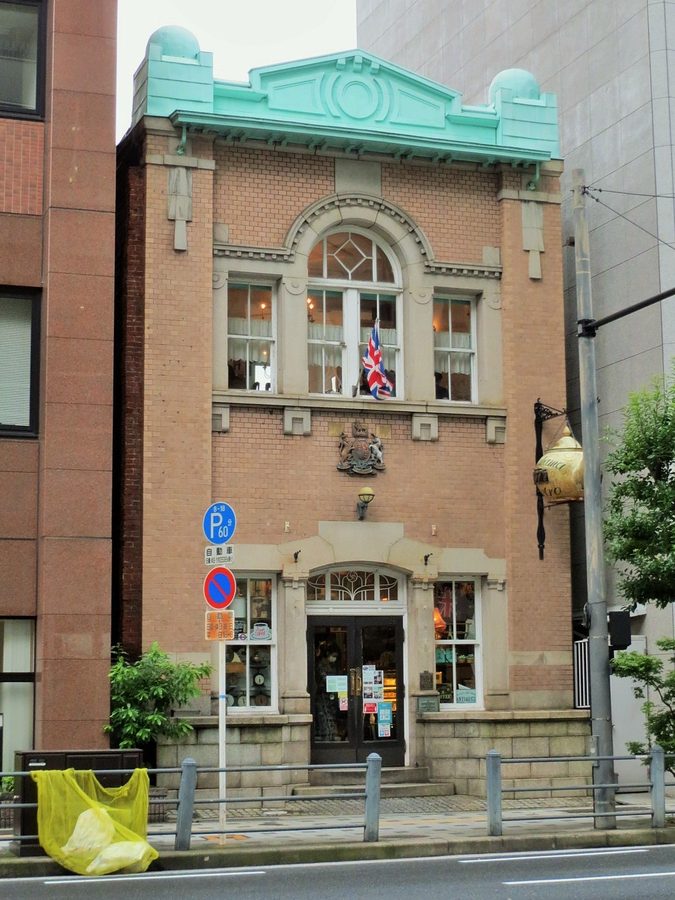
Kitahama Retro and the brokers’ buildings
The smallest building on the street is the busiest. The Kitahama Retro Building, two storeys of red brick with a green parapet, went up in 1912 as a stockbroker’s office and later sat empty for years. Its present owner bought it, drew up the plans himself and reopened it in 1997 as an English tearoom, according to the Chuo Ward’s write-up, with a shop downstairs and tables upstairs.
The shop lists its hours as 11:00–19:00 on weekdays and 10:30–19:00 at weekends and on holidays, closed only over Obon and New Year. Tables are first come, first served, there are no bookings and it takes cash only. Expect a queue at weekends; if you only want cakes or biscuits to take away, the shop asks you to skip the line and walk in.
Round the corner on Imabashi, the patisserie Gokan has its main shop and salon in the Arai Building, a former bank branch of the 1920s, selling cakes and sweets made with rice.
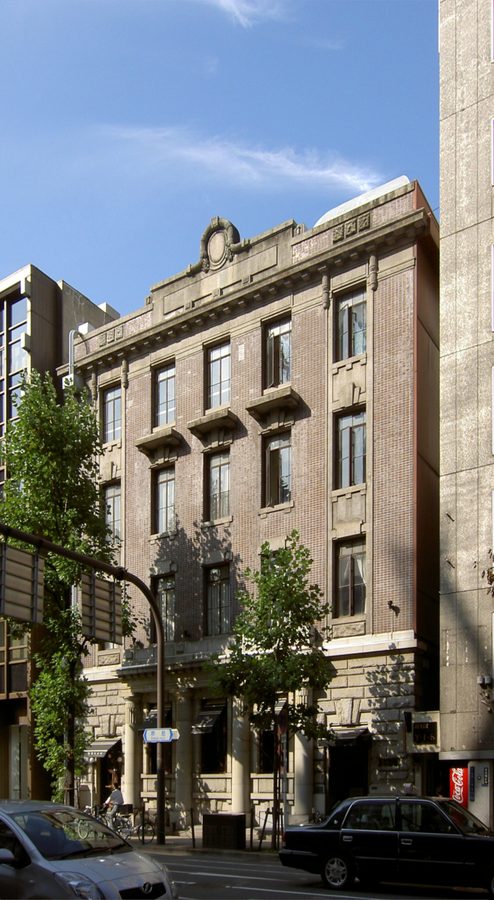
A few blocks south on Fushimimachi, the Shibakawa Building (芝川ビル) has a rounded corner and ornament that looks more Mayan than Japanese. Shibakawa Matashiro, head of a merchant house that went back to the Edo period, built it after the 1923 Great Kanto earthquake to resist fire and shaking; it later housed a finishing school for brides.
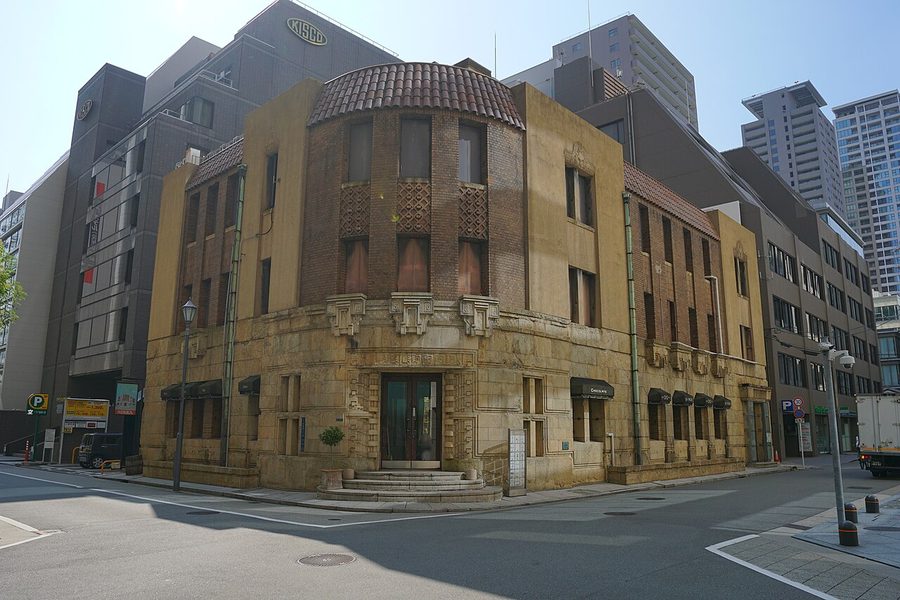
Tekijuku, Ogata Koan’s school
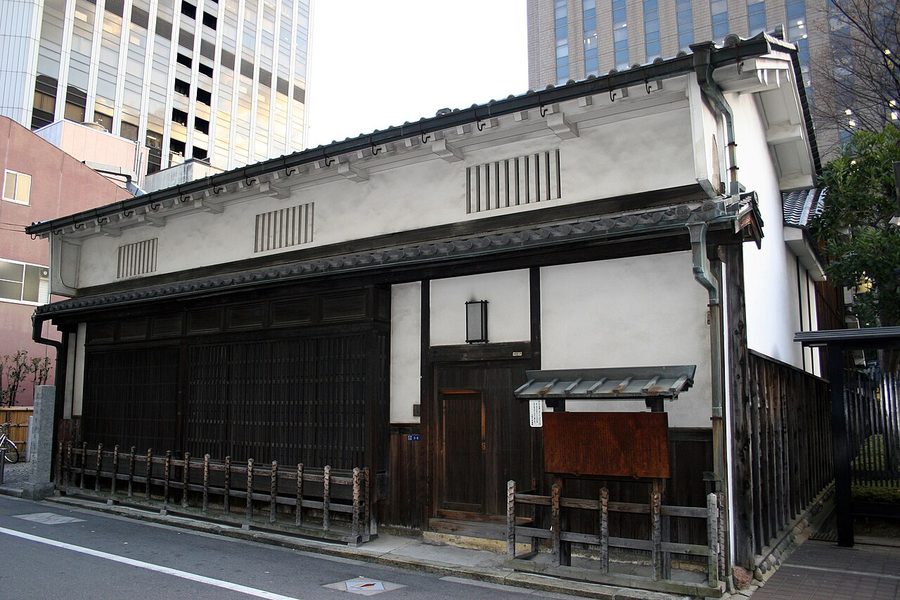
One street back from the river, among the office blocks of Kitahama 3-chome, stands a two-storey wooden town house with a lattice front. This is Tekijuku (適塾), the only surviving building of a rangaku school, a school of “Dutch learning”, the Western science that reached Japan through the Dutch at Nagasaki. It is a national Historic Site and an Important Cultural Property, cared for by Osaka University.
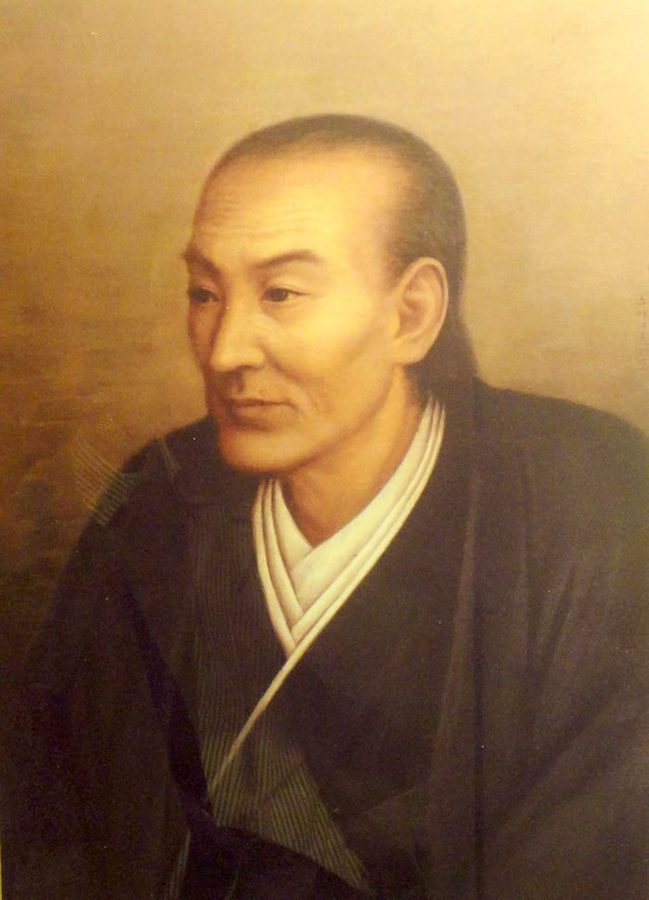
Ogata Koan (1810–1863), a physician trained in Western medicine, opened the school in 1838 and moved it here in 1845, when he bought and enlarged this merchant house. The register kept from 1844 holds 636 names, and Osaka University counts more than 1,000 students in all, among them Fukuzawa Yukichi, who founded Keio University, the military reformer Omura Masujiro and Sano Tsunetami, founder of the Japanese Red Cross. Koan also led smallpox vaccination and cholera treatment in the city, and many of his students went home to practise as local doctors.
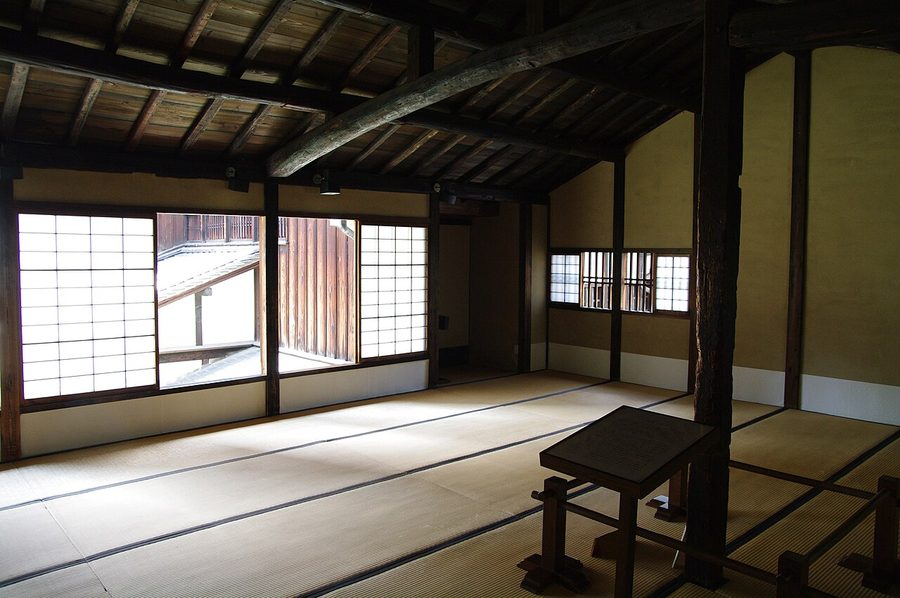
Inside, you go round in socks. Downstairs are the classrooms and the family’s rooms; upstairs is the big tatami room where the students lived, about a mat each. Next to it is the room that held the school’s Dutch-Japanese dictionary, and the ward’s history walk says the students fought over the single copy so hard that its lamp never went out. It takes half an hour, and I think it is the best ¥400 in this part of the city.
From Osaka University’s visitor page: open 10:00–16:00, closed Mondays (open on a national holiday), the day after a national holiday (unless that is a weekend or holiday) and 28 December to 4 January. Since 1 October 2024 admission has been ¥400, or ¥200 for high school and university students; junior high pupils and younger go free with an adult. Bring socks. Use Kitahama Station (Osaka Metro Sakaisuji Line) exit 2 or Yodoyabashi Station (Midosuji Line) exit 8, both five minutes away.
Next door to the west, the Aishu Kindergarten (愛珠幼稚園) has taught small children in a tiled, temple-like building since 1901. It stands on the site of the Doza, the shogunate’s copper office, where, the university notes, Siebold and the Dutch traders lodged. It is a working kindergarten, so look from the gate and keep your camera off the children.
Doshomachi, the medicine street
One street south, Doshomachi (道修町) has sold medicine for almost four centuries. The trade began in the Kan’ei era (1624–1644), when a Sakai merchant called Konishi Kichiemon opened a drug shop at the east end. In 1722 the shogun Tokugawa Yoshimune made the street’s 124 dealers an official guild, licensed to inspect, price and sell the Chinese and Japanese medicines that passed through Osaka.
The street kept its grip after the guilds were abolished. Its dealers set up their own company to test imported Western drugs, founded pharmaceutical firms and started a night school that grew into two of Osaka’s pharmacy schools. Shionogi still has its headquarters here and Takeda its Osaka head office, and the names on the doors read like a chemist’s shelf.
Sukunahikona Shrine and the paper tigers
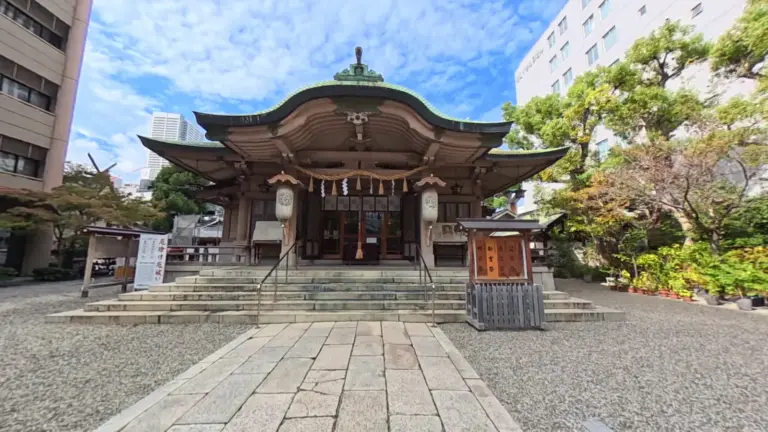
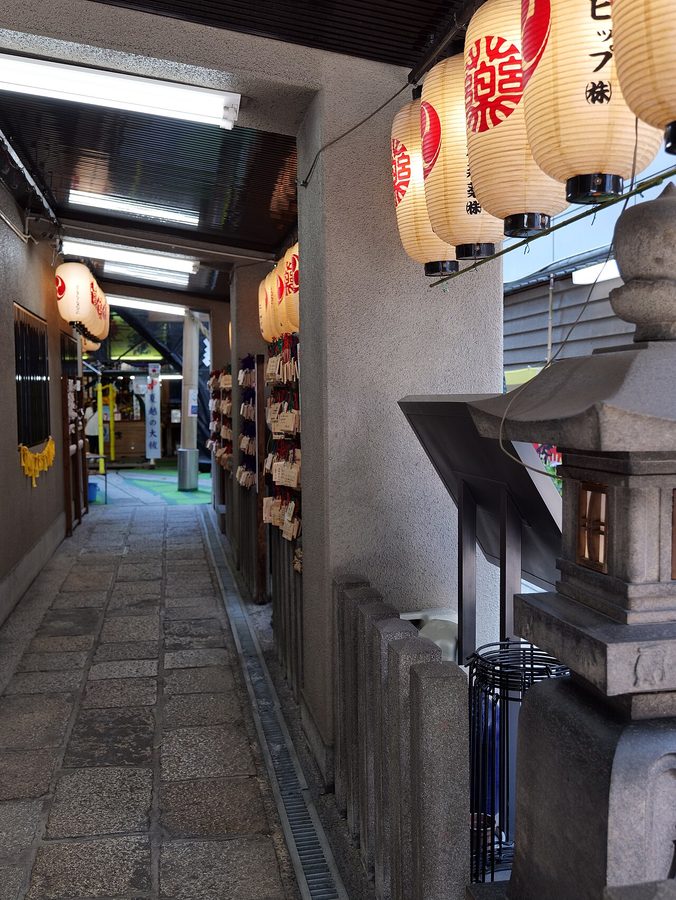
Halfway along, a narrow lantern-lit passage between office blocks leads to Sukunahikona Shrine (少彦名神社), which Osaka calls Shinno-san. In 1780, the shrine’s history says, the guild brought Sukunahikona, a Japanese god of medicine, from Gojo Tenjin in Kyoto, and set him beside Shennong, the Chinese god of herbs, whom the dealers already honoured. Medicine was a life-and-death trade.
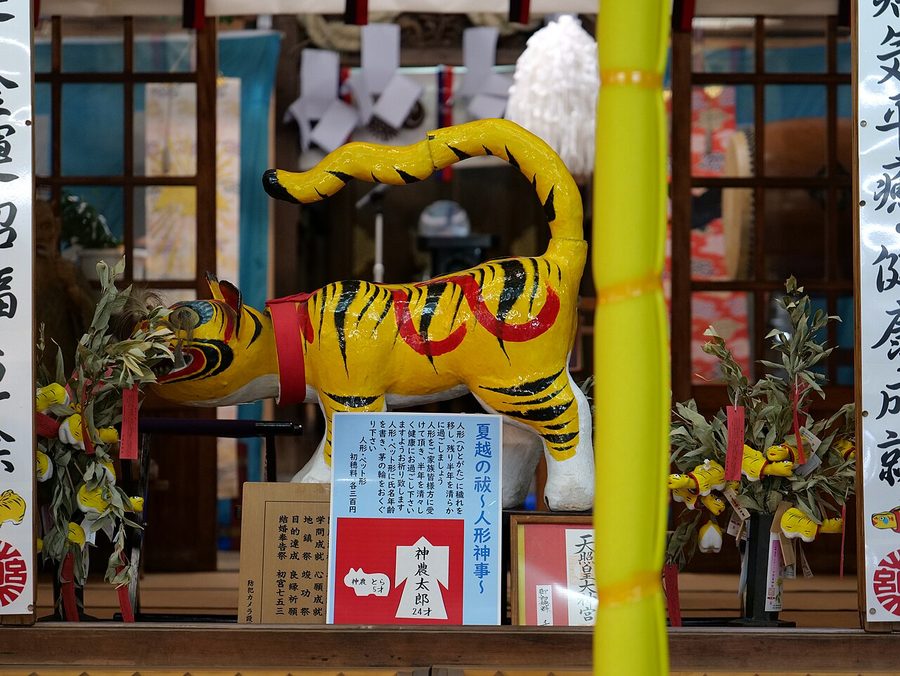
The tiger arrived in 1822. Cholera reached Osaka that year, and the word for it was written with the character for tiger. The dealers made a pill containing powdered tiger skull and handed it out from the shrine with a small papier-mache tiger as a charm, and the tiger has been the shrine’s emblem ever since.
The festival, the Shinno-sai (神農祭), is fixed on 22 and 23 November every year. Osaka says its festival year begins with Ebessan, the January festival at Imamiya Ebisu, and ends with Shinno-san, and the city lists it as an intangible folk cultural property. The shrine’s 2026 notice gave the hours as 10:00 to about 19:00 on both days, while its standing festival page says 20:00. The tiger-and-bamboo charm cost ¥3,000 at the 2026 festival; from 24 November only a ¥3,500 version with a gold votive plaque is offered.
For those two days the drug companies hang great bamboo branches decked with their own product boxes along the street, stalls fill Doshomachi, and the shrine warns of its worst crowds between 14:00 and 15:00, so come after 16:00. The rest of the year it is quiet. The grounds hold a stone for Tanizaki Jun’ichiro’s novella A Portrait of Shunkin, whose heroine is a Doshomachi drug merchant’s blind daughter.
The medicine archive and the Konishi house
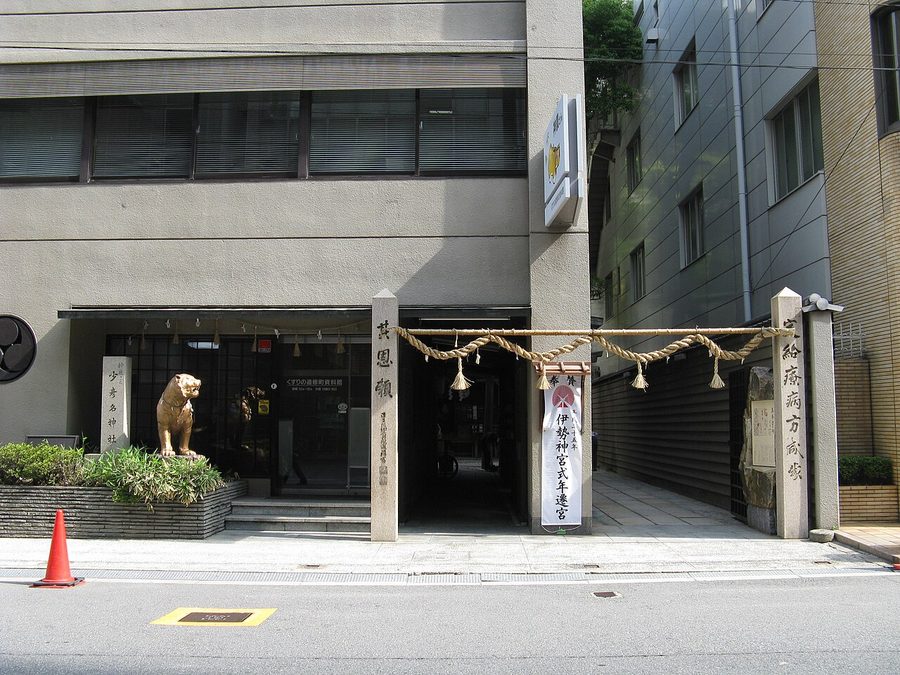
On the third floor of the shrine’s office building, the Kusuri no Doshomachi Shiryokan (くすりの道修町資料館), the medicine archive, draws on guild papers going back about 300 years, which survived the fire of the 1837 Oshio rebellion and the 1945 air raids. The shrine stands on the site of the guild’s meeting house, which is why the papers are here. It is small, free and the best short lesson in how the trade worked.
The archive’s own page gives its hours as 10:00–16:00 on weekdays and Saturdays (last entry 15:30), closed Sundays, national holidays, 11 to 16 August and 28 December to 4 January. From Kitahama Station (Sakaisuji Line) exit 6 it is five minutes, from Keihan’s Kitahama Station exit 27 about eight, and from Yodoyabashi Station exit 11 about ten, by the shrine’s access page.
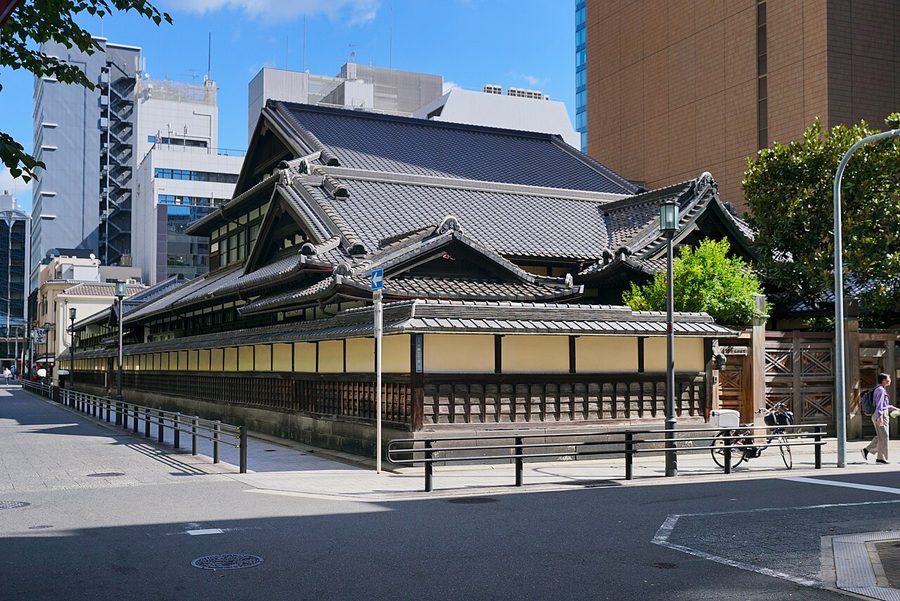
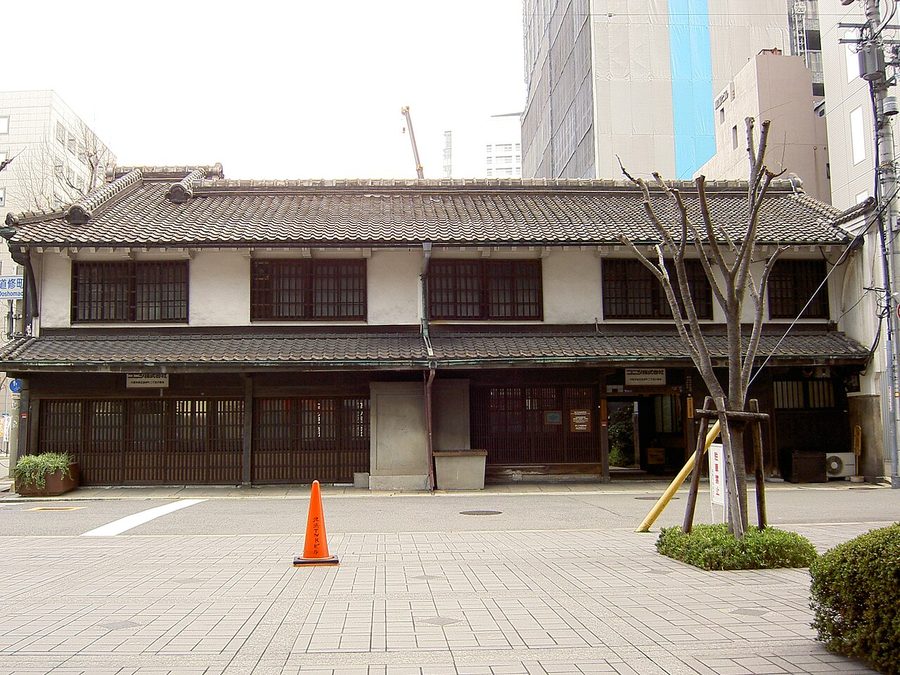
Walk east to Sakaisuji and you reach the best survivor of the old merchant city: the former Konishi house (旧小西家住宅) of 1903, a two-storey timber shop and home on the corner, built for the Konishi family’s drug business. The family firm, now best known for its Bond adhesives, is still based on the street.
Midosuji through Senba
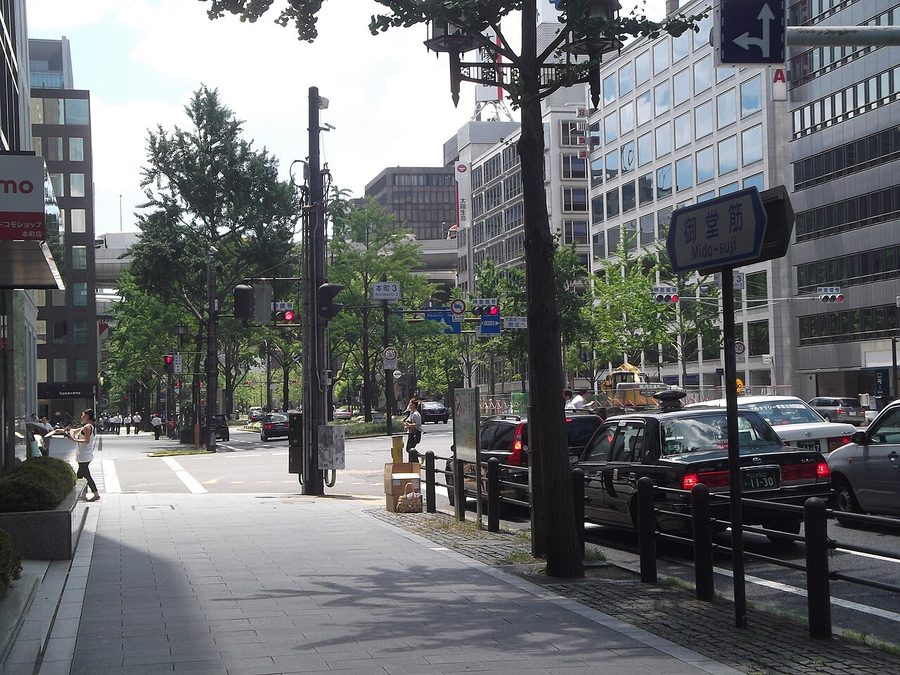
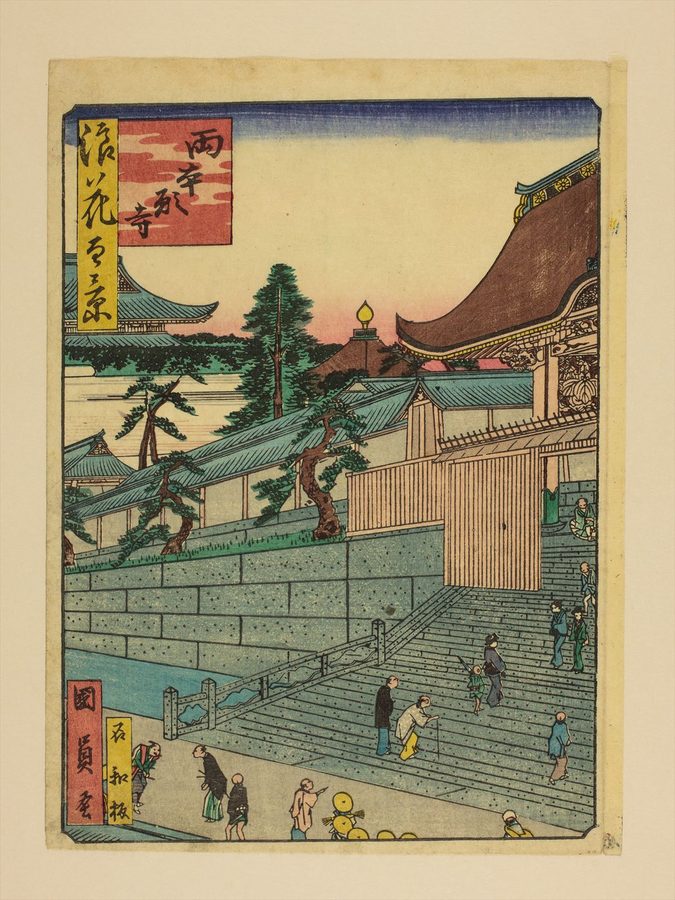
Midosuji (御堂筋) is named after two temples. Kita Mido, the Tsumura Betsuin of the Nishi Honganji branch, moved here in 1597, and a year later Minami Mido, the Namba Betsuin of the Higashi Honganji branch, was built a few blocks south, according to the ward’s architecture walk. The lane between the two “Mido” became Midosuji, a narrow street until the 1930s, when the city widened it into today’s boulevard and laid the Midosuji Line beneath.
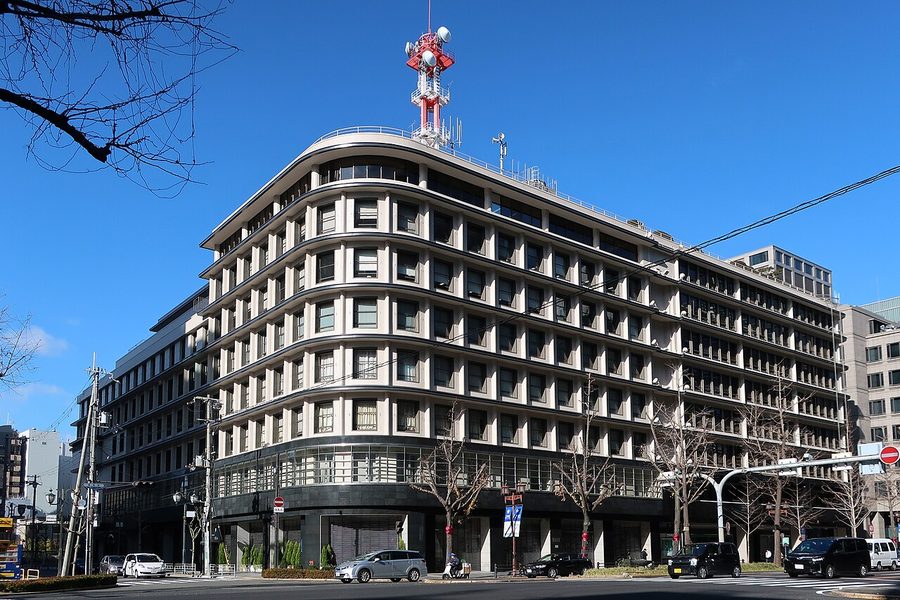
Through Senba it is banks, offices and hotels under two rows of ginkgo, with sculpture on many blocks. On the west side at Hiranomachi, the white Osaka Gas Building (大阪ガスビル) of 1933, designed by Yasui Takeo, is the handsomest old building on the street. During the war, the ward’s history notes, it was painted black with coal tar from the company’s own gasworks to hide it from bombers.
Kita Mido and Minami Mido
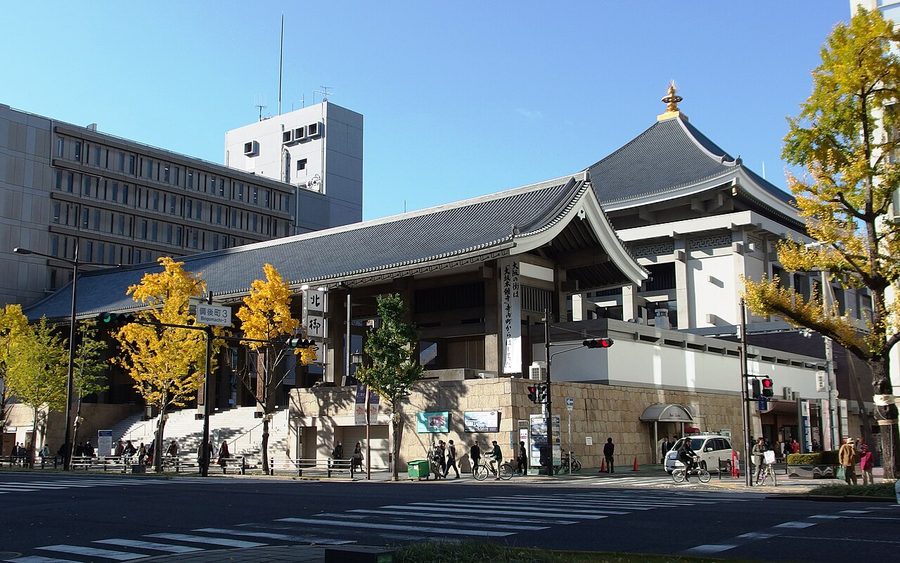
Kita Mido (北御堂) faces the boulevard at Hommachi, a concrete hall raised a storey above the street at the top of a broad flight of steps. The temple’s Kita Mido Museum mounted a special exhibition in autumn 2026 on Hideyoshi, the Honganji and the making of Osaka, and in late November the ginkgo in front go gold.
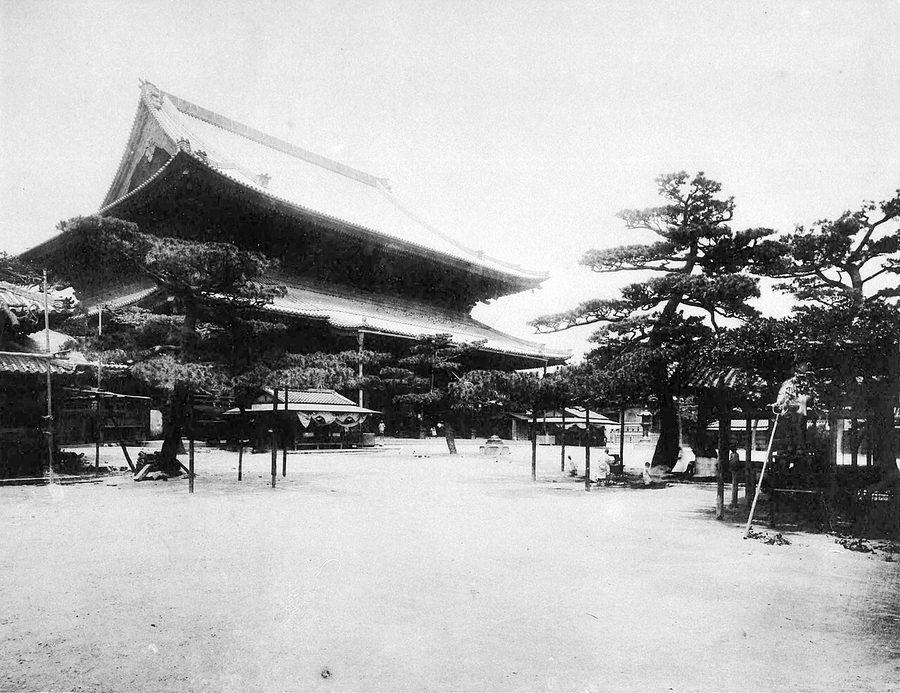
Minami Mido (南御堂), at Kyutaromachi a few blocks south, has a modern hall behind a gate building that is also a hotel. Its calendar is the easiest way in: the temple’s schedule lists a Bon dance in the grounds on 27 and 28 August (the 60th was held in 2026), the Hoonko memorial services from 25 to 28 October and the New Year’s Eve bell on 31 December.
Where Basho died
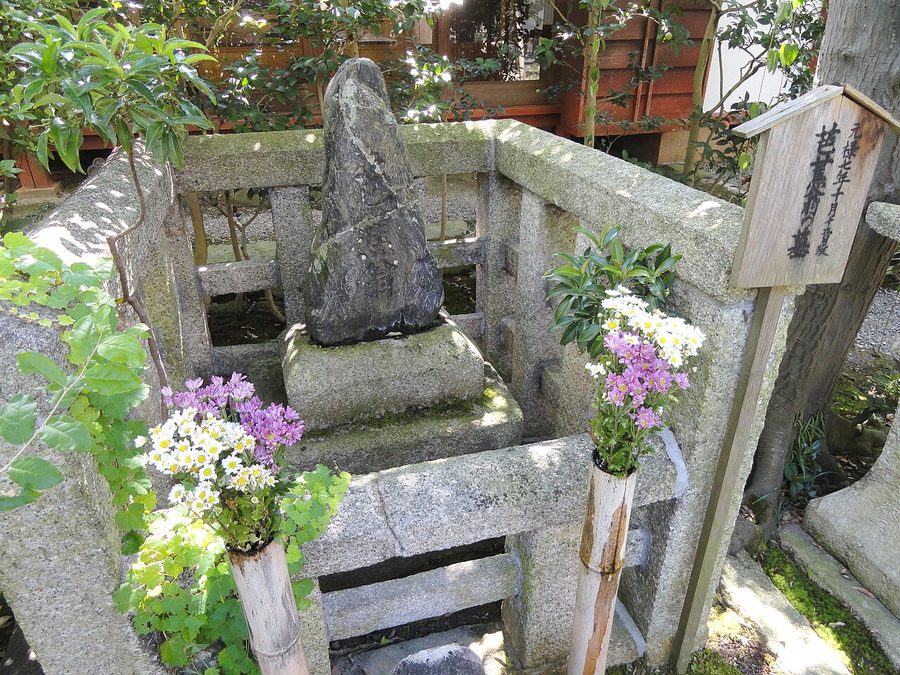
Matsuo Basho, the haiku poet, came to Osaka in the ninth month of 1694, by most accounts to make peace between two quarrelling disciples. He fell ill in a rented room in a flower dealer’s house facing Minami Mido and died on the twelfth day of the tenth month by the old calendar, late November in the modern calendar. His last poem is one of the most quoted in Japanese: tabi ni yande / yume wa kareno o / kakemeguru, “Sick on a journey, my dreams go wandering over withered fields.”
The house is long gone. The stone known as the Basho death place (芭蕉終焉の地) was put up by Osaka Prefecture in 1934 on what was then the pavement, and when Midosuji was widened it ended up in the planted strip in the middle of the road, in front of Minami Mido. The ward’s page on the site adds that Basho left no formal death poem, because he wrote every poem as if it might be his last. Read the stone from the crossing; do not walk into the traffic for a closer look.
Ikasuri Shrine and Namba Shrine
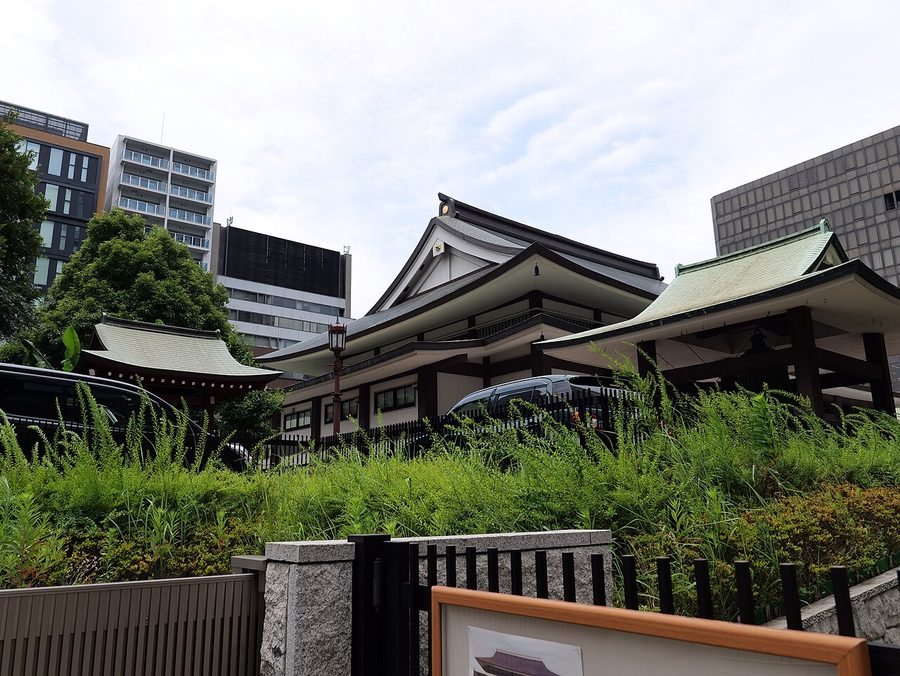
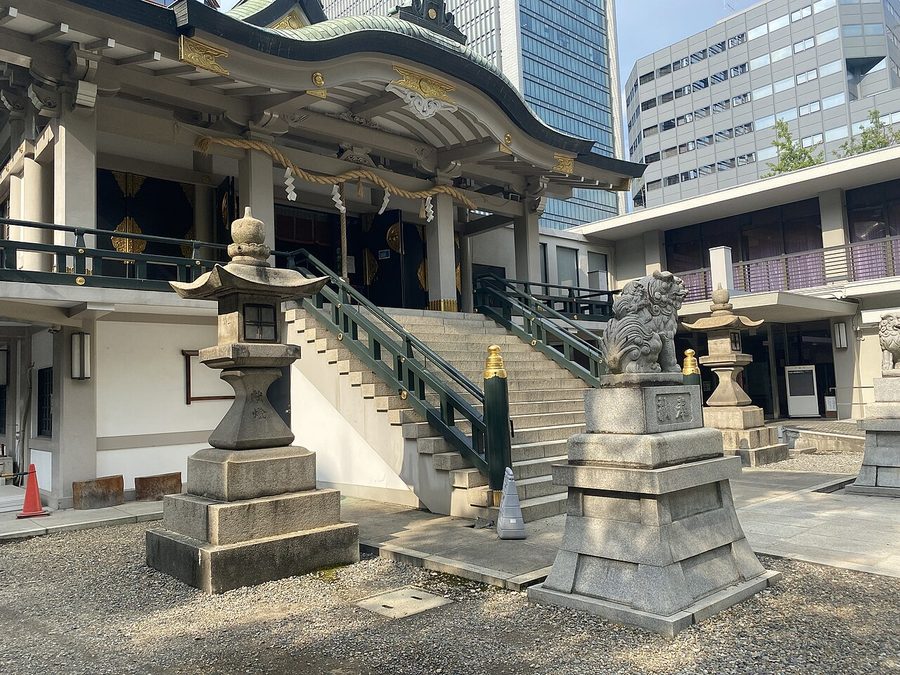
Directly behind Minami Mido is Ikasuri Shrine (坐摩神社), Senba’s local guardian, which moved here after Hideyoshi took its old site for the castle. It is worth the five-minute detour.
Three blocks further south, on the west side of Midosuji at Bakuromachi, Namba Shrine (難波神社) honours Emperor Nintoku, whose palace was at Naniwa. It prospered under Hideyoshi’s patronage and lost much of its land when the Toyotomi fell, by the ward’s notes on the shrine. Senba’s merchants paid for the puppet theatre, and in the Meiji era the Bunraku company played in these grounds before it moved a few blocks north to Goryo Shrine; stones mark both sites. The puppets now play at the National Bunraku Theatre in Nipponbashi.
Wholesalers, a chef’s tea bowls and a 1913 ice cream
Senba Center Building
The Senba Center Building (船場センタービル) is a shopping street with a motorway on its roof. When Chuo-odori was widened through Senba after the war, the wholesalers in its path could not afford to move at Osaka’s land prices. The answer was a ten-block building about 1 kilometre long, built into the structure of the expressway, with space sold to the businesses it displaced. It opened in 1970, the year of the Osaka Expo, and in 2015 its brown brick was covered in the patterned aluminium panels you see now.
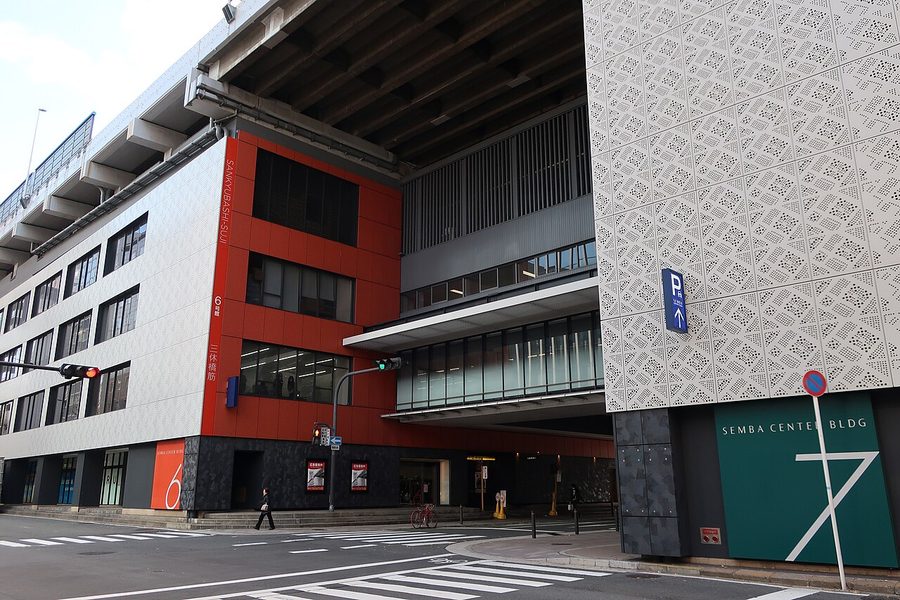
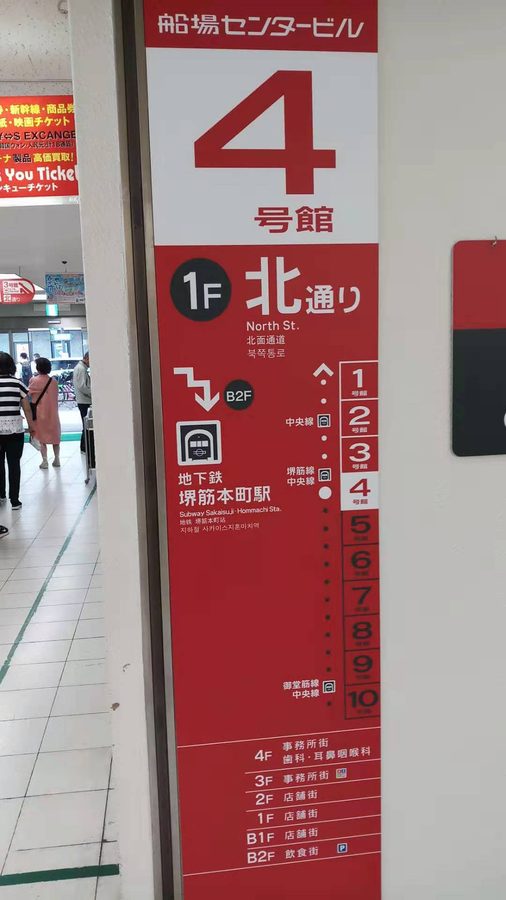
The building’s English page counts about 600 shops, mostly textile and clothing wholesalers, with an imported-goods floor and about 120 places to eat on the basement levels of blocks 2, 3, 4, 9 and 10. Many shops sell to anyone; some are trade-only and say so. The building suggests yukata and towels; I would add a cheap lunch with the office workers downstairs.
The Japanese site gives the hours as 9:00–18:00 for the shops and 7:00–22:00 for the restaurant floor, with some shops keeping their own times. It closes from 30 December to 3 January, 13 to 15 August and on other days in its closure calendar. It connects directly with Hommachi Station (Midosuji Line, exit 10) and Sakaisuji-Hommachi Station (Sakaisuji and Chuo lines), and coin lockers are on the second floor of block 2.
The Yuki Museum of Art
Yuki Teiichi founded Kitcho, the restaurant that set the standard for formal Japanese cooking, and was named a Person of Cultural Merit in 1988. He treated cooking and the tea ceremony as the two wheels of one life, and spent decades collecting tea utensils, calligraphy and paintings. The Yuki Museum of Art (湯木美術館), which he opened in November 1987, shows them in a slim building on Hiranomachi.
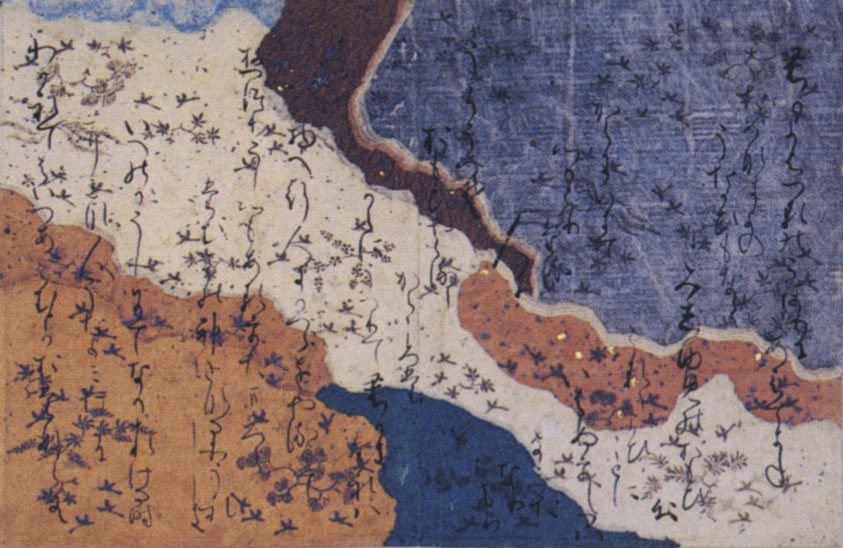
The museum’s outline lists 13 Important Cultural Properties, among them pages of the Ishiyama-gire, a Kasuga Shrine mandala and a Shino tea bowl named Hirosawa. They appear in up to four seasonal exhibitions a year; go if the current theme appeals, and check first, as it closes for weeks between shows.
Hours are 10:00–16:30 (last entry 16:00), closed Mondays (open on a holiday Monday, then closed the next day), over New Year and between exhibitions. Admission is ¥1,200, ¥500 for university students and free for high school students and younger, cash only, no booking. From Yodoyabashi Station (Midosuji Line) exit 11, the museum’s directions are 180 metres south along Midosuji, left at the Nomura Securities corner on Hiranomachi 3-chome, then 110 metres: three minutes.
The 1920s and 1930s buildings
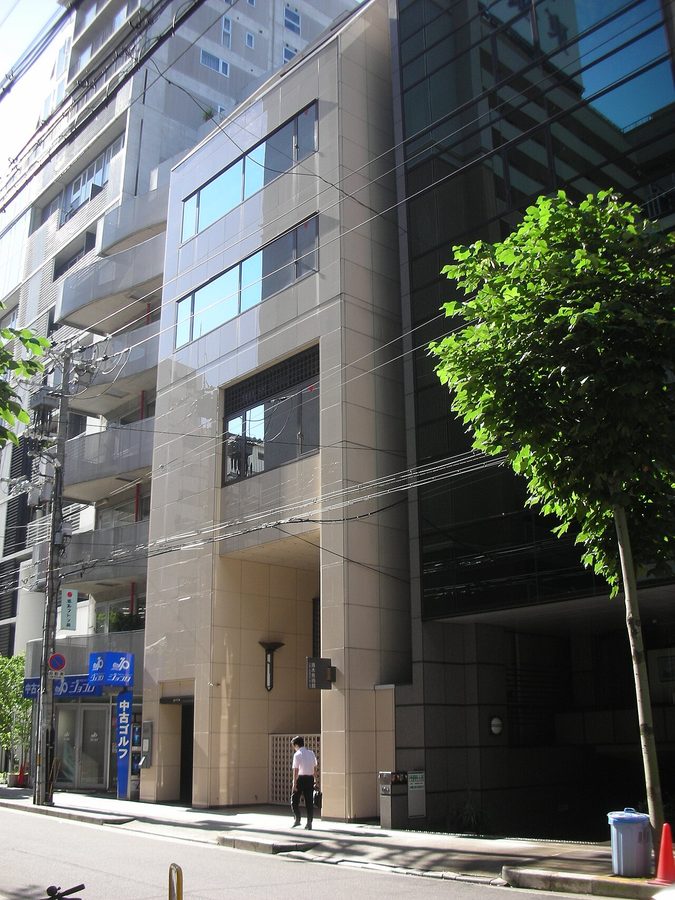
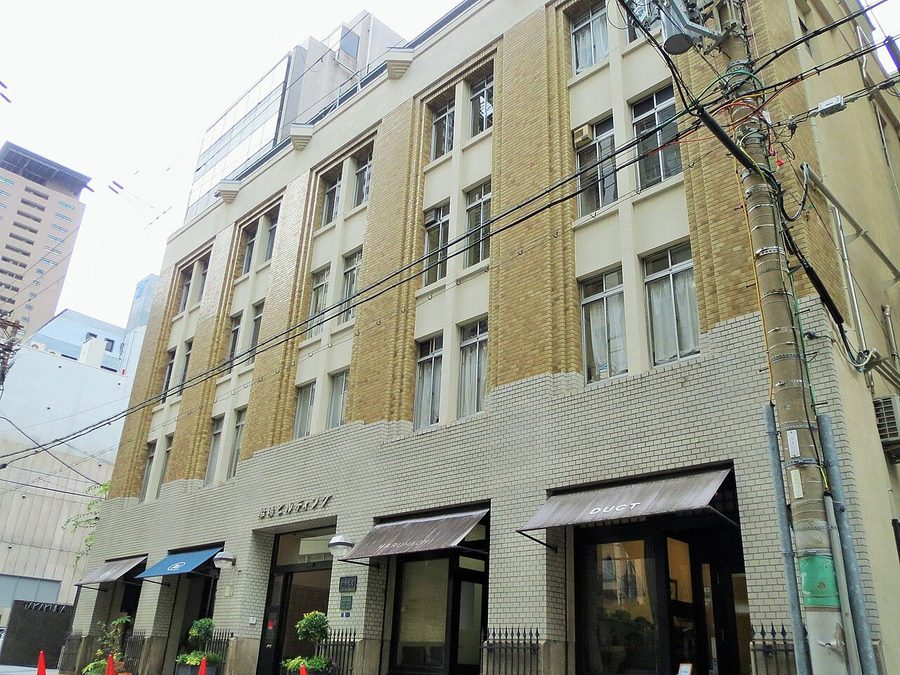
The Senba Building (船場ビルディング) on Awajimachi, finished in 1925, was built for textile wholesalers from Fukui, Yokohama, Tokyo and Ashikaga, with flats on the first and third floors, offices on the second and fourth, and a long central courtyard where horse carts pulled in to load. The ward’s notes on it add that it had Osaka’s first flush toilets. Today it is let as offices and small shops.
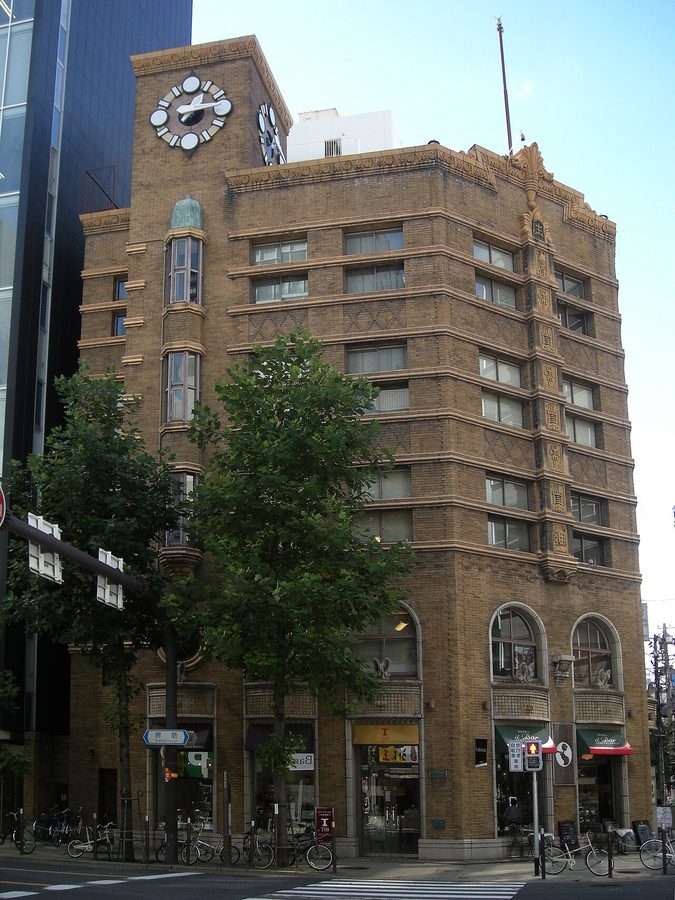
On Sakaisuji at Hiranomachi, the Ikoma Building (生駒ビルヂング) of 1930 was the showroom and office of the Ikoma clock business, and it is designed as a pendulum clock: the clock on top, bay windows for the case, a round window on the second floor for the pendulum. It is faced in scratched tiles and terracotta, materials in fashion for only about a decade. On the fifth floor was a tatami hall where, the ward’s account says, the firm’s teenage decchi lived.
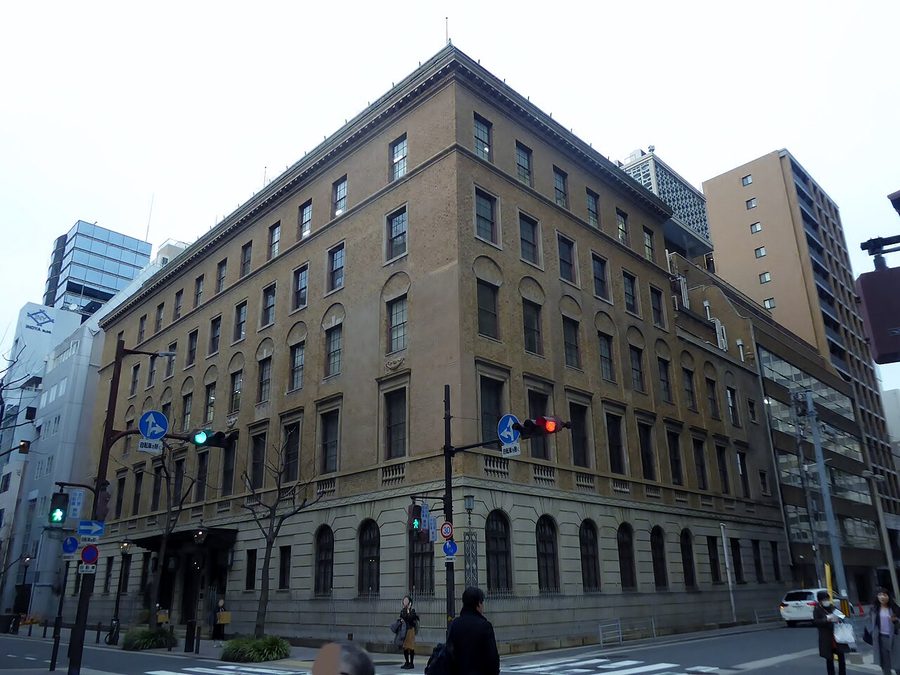
At Bingomachi, the Mengyo Kaikan (綿業会館), the Cotton Industry Hall, went up in the early 1930s as a club for the cotton trade, when Japan had overtaken Britain as the biggest exporter of cotton cloth and Osaka was called the Manchester of the East. Admire the stone front from the street.
Zeroku and the old shops
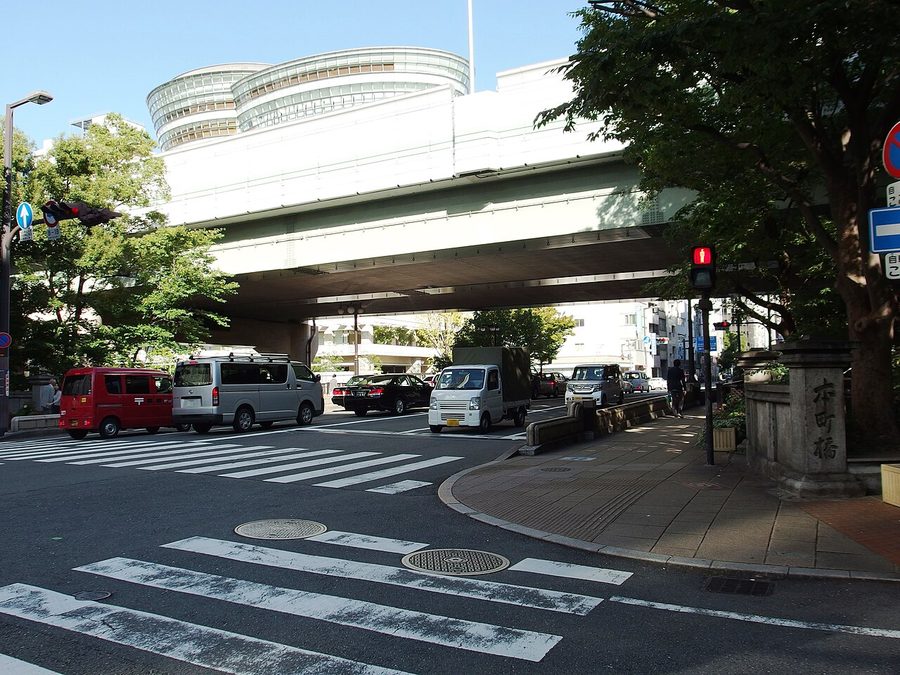
Zeroku, an ice cream shop founded in 1913, still serves at the east end of Hommachi, near the Hommachi-bashi bridge over the Higashi-Yokobori and a short walk from Sakaisuji-Hommachi Station. Order the aisu monaka, plain ice cream pressed between two crisp wafer shells. It keeps office hours, 9:00–17:00 on weekdays and closed at weekends, according to its listing updated in July 2026.
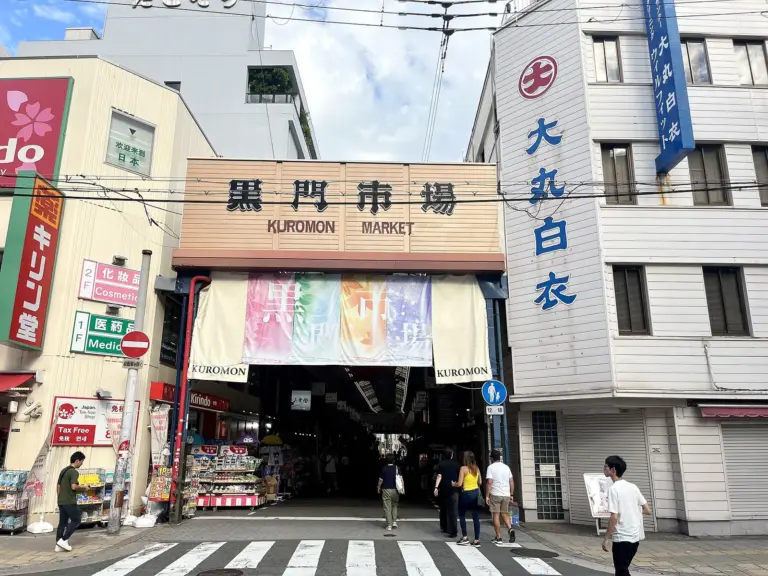
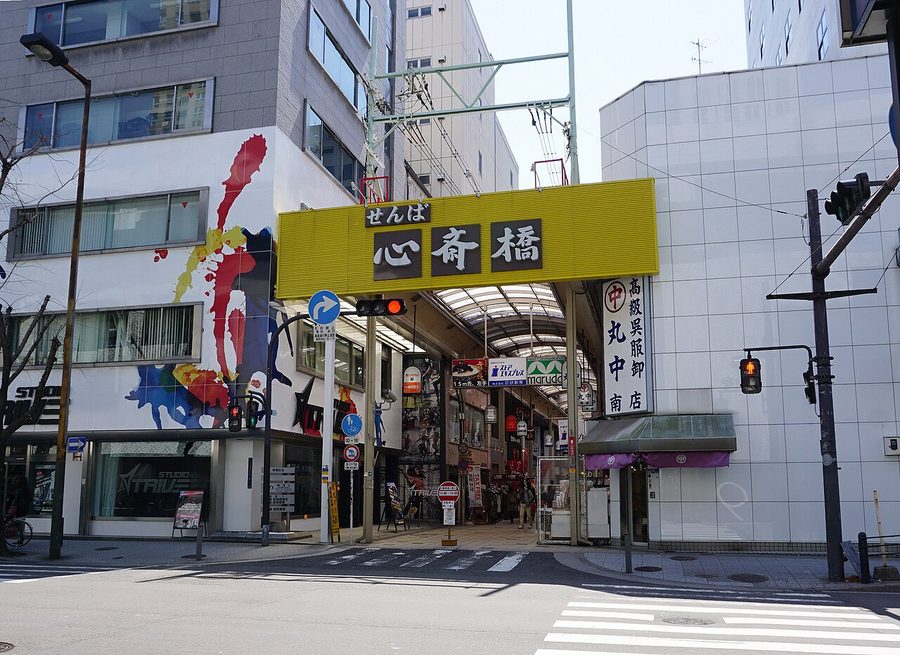
A few streets south, the Senba Shinsaibashi arcade runs north from Nagahori-dori, the quieter northern end of the main shopping street: udon counters, drugstores and everyday goods rather than flagships. It is the easiest way to walk from Senba into Shinsaibashi under cover.
Utsubo Park, one canal west
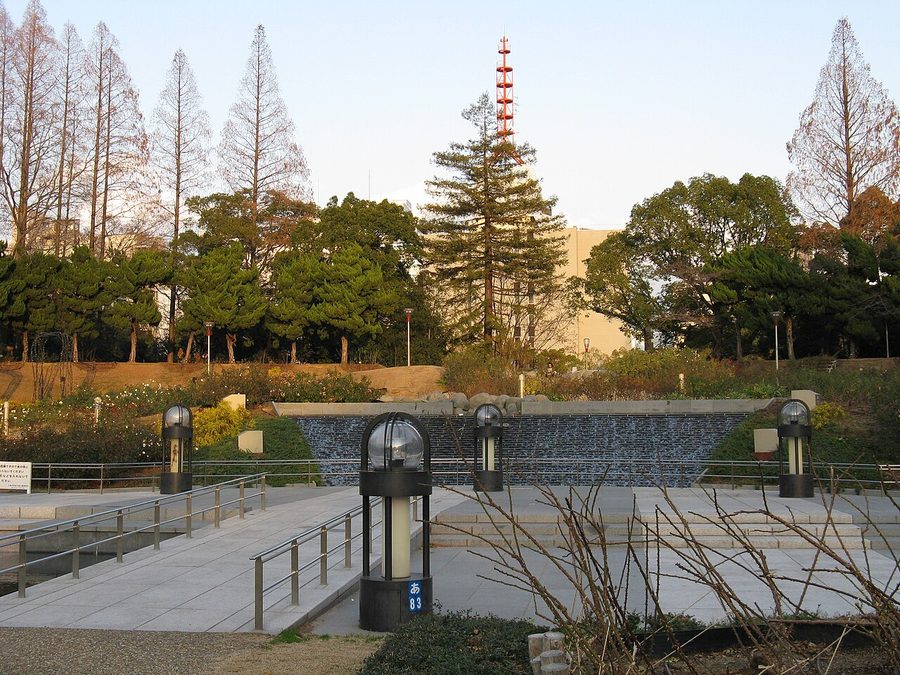
Cross the line of the old West Yokobori canal at Hommachi and keep going a few blocks, and the offices open onto Utsubo Park (靱公園), a long, thin park about 800 metres by 150, split in two by the Naniwa-suji road. It is in Nishi Ward, not Senba, but it is the nearest big green space to the Senba offices.
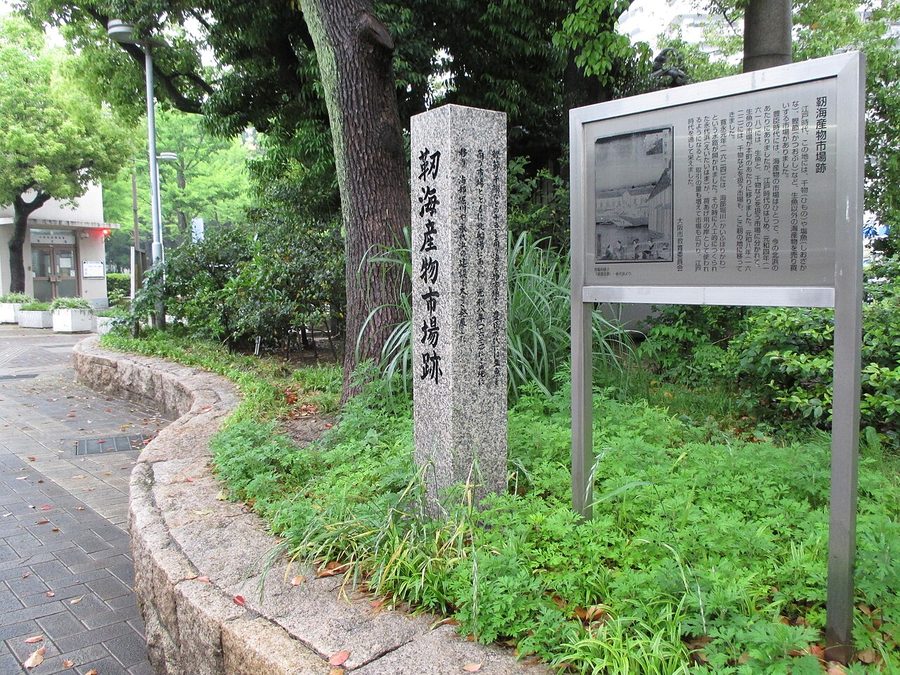
In Hideyoshi’s day this was a market for salted and dried fish, and Osaka’s official visitor guide tells the story behind the name: hearing the fishmongers cry “yasu, yasu” (cheap, cheap), Hideyoshi punned on ya-su, an arrow’s nest, and the neighbourhood became Utsubo, a quiver. The market closed after the central wholesale market opened in 1931, and the area burned in 1945.
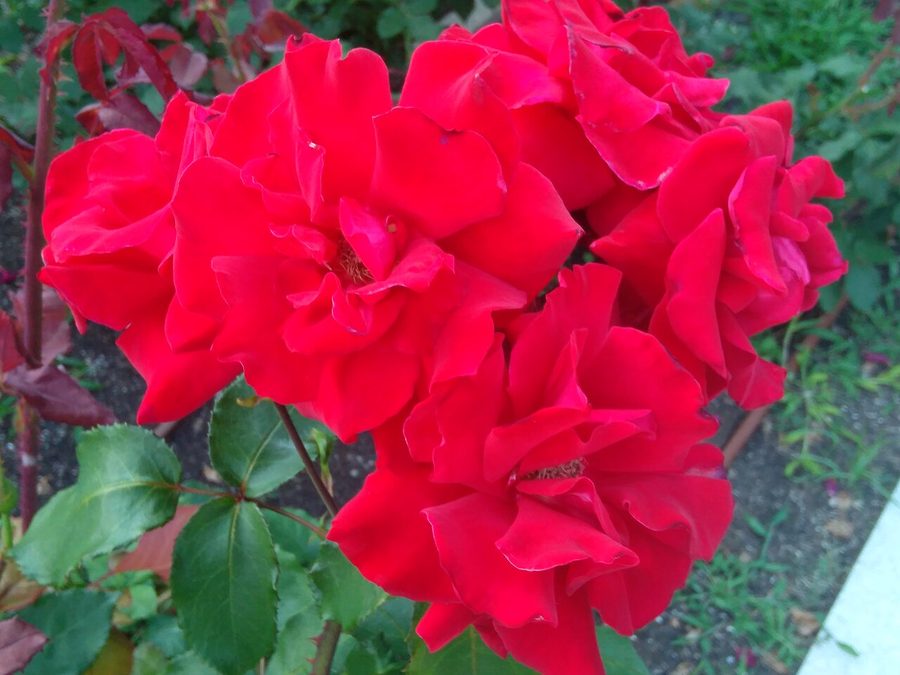
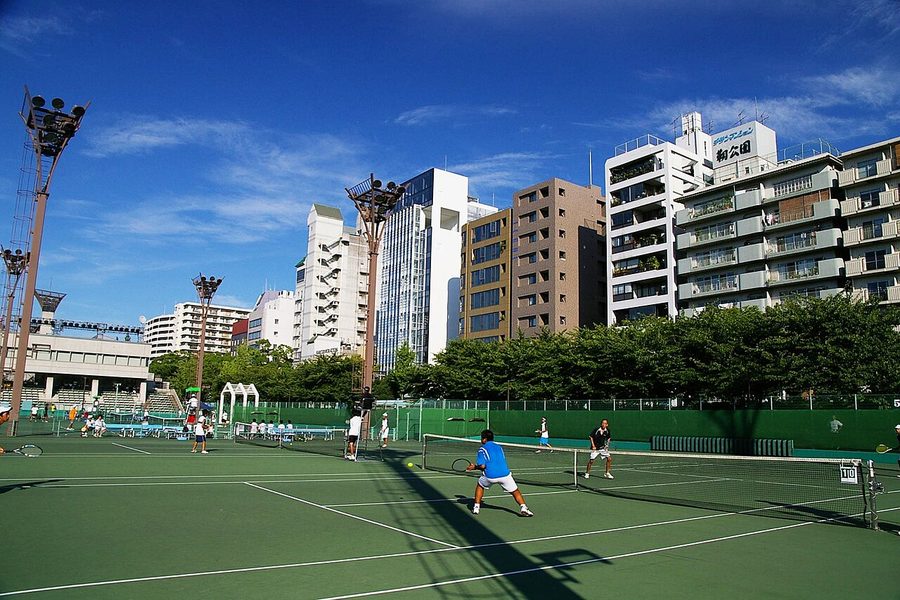
After the war the American occupation forces turned the cleared ruins into an airfield. The land went back to the city in 1952 and opened as a park in 1955. The east garden has the city’s oldest rose garden, a row of zelkova trees and tennis courts; the west garden has the Utsubo Tennis Center, with 16 courts used for international tournaments. The streets of Kyomachibori along the north edge have the cafes.
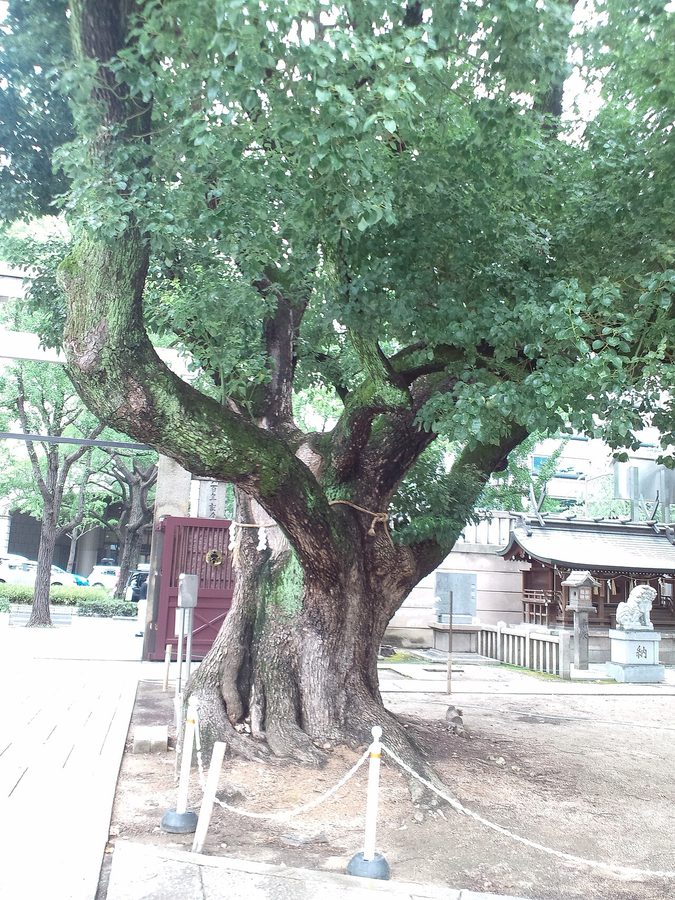
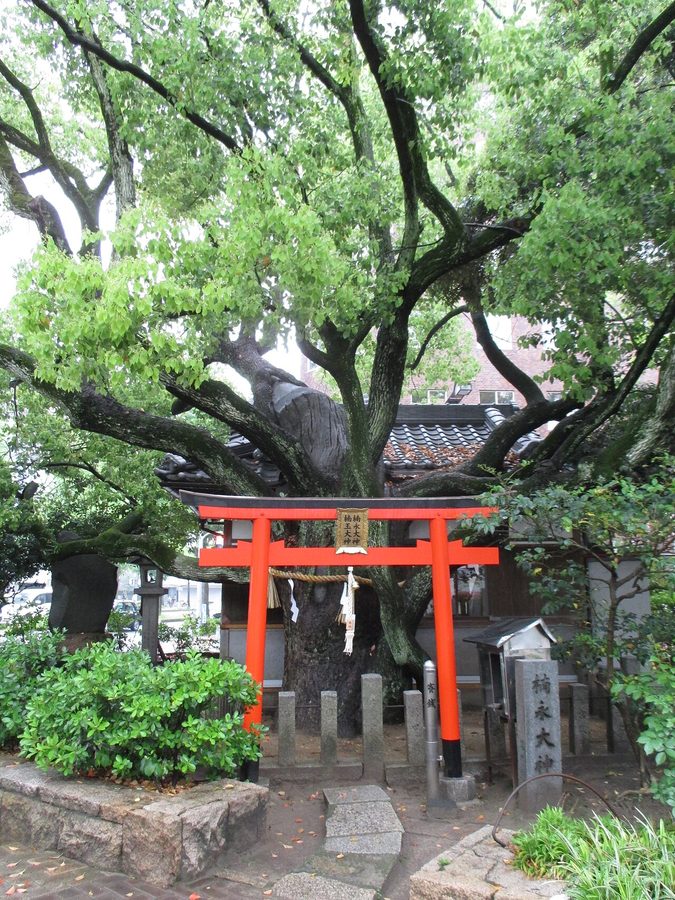
The park is free and always open. The visitor guide puts it five minutes from Hommachi Station on the Osaka Metro Yotsubashi Line. Beside Naniwa-suji, the little Kusunaga Shrine (楠永神社) keeps a camphor tree that, the local story goes, the airfield builders’ bulldozers could not bring down.
A walk through Senba, Kitahama to Hommachi
This route covers the north half of Senba and the Midosuji temples: about 4 kilometres, two to three hours with stops. Go on a weekday. Zeroku closes at weekends and the medicine archive on Sundays and holidays, and on a Sunday the wholesalers’ shutters are down.
- Kitahama Station (Osaka Metro Sakaisuji Line or Keihan Main Line). Come up by the Osaka Exchange, then walk a block west along the river past Kitahama Retro.
- Tekijuku, five minutes from exit 2, open from 10:00. Allow half an hour, and see the Aishu Kindergarten next door.
- Doshomachi, one street south. Walk east to the Konishi house on Sakaisuji, then back to Sukunahikona Shrine and the medicine archive.
- Ikoma Building, a block south on Sakaisuji, then west along Hiranomachi to the Yuki Museum of Art, if the show appeals, and on to the Gas Building on Midosuji.
- Midosuji south: Kita Mido at Hommachi, then the Senba Center Building for shopping and a basement lunch.
- Minami Mido, the Basho stone and Ikasuri Shrine, then on to Namba Shrine.
- Finish at Shinsaibashi Station (Midosuji Line) through the Senba Shinsaibashi arcade, or at Hommachi Station if you are heading west to Utsubo Park.
From Shinsaibashi, Amerikamura is just across Midosuji; for the rest of the city, see things to do in Osaka.
Hours and prices at a glance
| Place | Hours | Admission | Nearest station and exit |
|---|---|---|---|
| Tekijuku | 10:00–16:00; closed Mondays, day after national holidays, 28 Dec–4 Jan | ¥400 (students ¥200) | Kitahama, exit 2 |
| Sukunahikona Shrine | 8:00–17:00 | Free | Kitahama, exit 6 |
| Doshomachi medicine archive | 10:00–16:00 Mon–Sat; closed Sundays and holidays | Free | Kitahama, exit 6 |
| Yuki Museum of Art | 10:00–16:30; closed Mondays and between shows | ¥1,200 (university ¥500) | Yodoyabashi, exit 11 |
| Senba Center Building | Shops 9:00–18:00; restaurants 7:00–22:00 | Free | Hommachi, exit 10 |
| Kitahama Retro | 11:00–19:00 weekdays; 10:30–19:00 weekends | Pay as you order; cash only | Kitahama |
| Zeroku | 9:00–17:00 weekdays; closed weekends | Cash at the counter | Sakaisuji-Hommachi |
| Utsubo Park | Always open | Free | Hommachi (Yotsubashi Line) |
Hours and prices are as of November 2026. The old rhyme ends the way it starts, on hama, a bank: Kitahama on the river at the top, the Nagahori canal bank at the bottom. Walk it in that order and you come out on Nagahori-dori with the whole of Senba behind you and Shinsaibashi Station a few minutes away.